

5 Police Procedural TV Shows Way Better Than NCIS
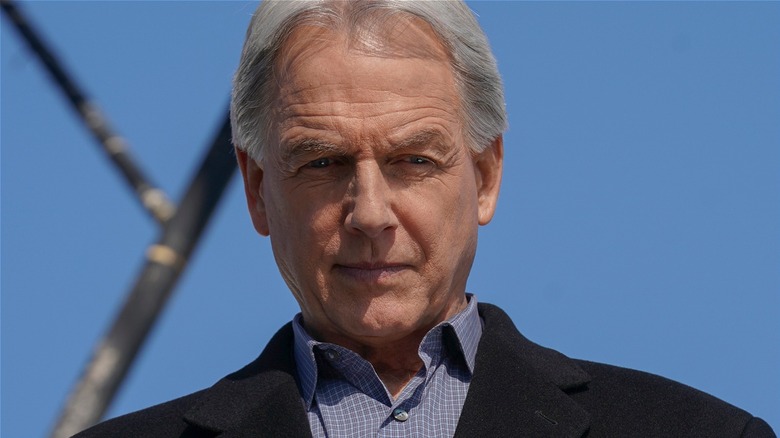
With 23 seasons and counting, "NCIS" is one of the longest-running police procedurals on television, and one of the most popular. Centered on a team of special agents working for the Naval Criminal Investigative Service, the show is a classic network TV drama, remaining defiantly old-fashioned at a time when cable and streamers are pushing television to greater artistic and thematic heights. Even with the departure of star Mark Harmon during Season 19, the show and its many spinoffs continue to be watched by a loyal fanbase.
What makes "NCIS" so popular is perhaps how easy it is to put on in the background. In a way, if you've seen one episode of "NCIS," you've seen them all, because it essentially follows the same formula week after week: a crime happens, the team solves it, and the credits roll. You pretty much know exactly what you're going to get with "NCIS," which is what makes it perfect comfort viewing. But what if you want something heartier than just comfort food?
Here are five police procedural TV shows that are way better than "NCIS." Like that program, these shows focus on the lives of detectives investigating crimes and dealing with issues at home. However, these options also feature a higher level of craft and storytelling, and some are considered among the best TV shows of all time. You won't want to just have these on the background.
Hill Street Blues
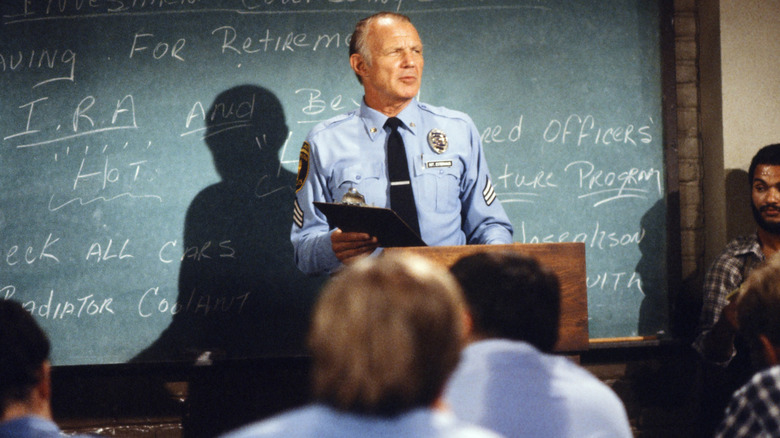
Most episodes of "Hill Street Blues" began with a roll call, as Sgt. Phil Esterhaus (Michael Conrad) briefs the police cadets about the day ahead. The kindly Sgt. Esterhaus would end each morning's meeting with a reminder to "be careful out there," and it's that humanization of the brave men and women who risk their lives that distinguished "Hill Street Blues" from every police procedural that came before it, making it an addictive '80s crime show you won't be able to stop watching.
Whereas previous cop shows focused on solving the crime of the week, "Hill Street Blues" dramatized the personal and professional lives of the officers working in the Hill Street precinct of an unnamed American city. The fully realized characters, from Captain Frank Furillo (Daniel J. Travanti) to Officer Bobby Hill (Michael Warren) to Sgt. Lucy Bates (Betty Thomas), felt authentic to the uniforms they were wearing, and were never portrayed as simply good or evil. Rather, they were flawed human beings doing their best to serve the community and look out for each other.
"Hill Street Blues" was revolutionary in its storytelling, employing serialized narratives over multiple weeks at a time where most TV shows treated each episode as its own self-contained story. In this way, it became a Rosetta Stone for some of the best cop shows of all time, as well as some of the best TV shows of all time, period. And unlike other police procedurals, the show didn't wear out its welcome, instead wrapping up after seven incredible seasons.
Homicide: Life on the Street
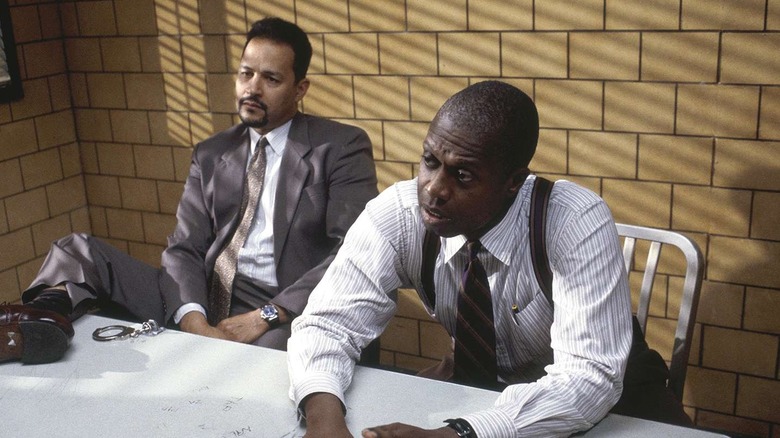
Before there was "The Wire," there was "Homicide: Life on the Street." Adapted from David Simon's non-fiction book "Homicide: A Year on the Killing Streets," the show shares a lot of DNA with the HBO series Simon would later create. Watching it today, it's almost shocking to realize that "Homicide" originally aired on NBC, where it pushed the limitations of broadcast television standards and practices to their breaking point.
Like "The Wire," "Homicide" takes place on the crime-ridden streets of Baltimore, Maryland, examining the thin line between cops and criminals with gritty naturalism. The show centers on a group of homicide detectives who have grown jaded and accustomed to the most horrific crimes imaginable. Officers like Detective Frank Pembleton (Andre Braugher in one of his five best movie and TV roles) see their job as more than just a profession, but as a spiritual calling, and most episodes of "Homicide" find the detectives grappling with the toll that it takes on their souls.
Under the guidance of executive producer Barry Levinson, "Homicide" sought to bring a cinematic quality to network television, and the show utilized stylistic techniques like handheld cameras and jump-cuts to create an almost documentary realism that matched the no-nonsense storytelling approach. Whereas most network television shows played it safe, "Homicide" took bold swings, and experimented week to week in ways that were refreshingly original. In that way, it influenced not just "The Wire," but every TV show that ushered in the era of prestige television.
Law & Order
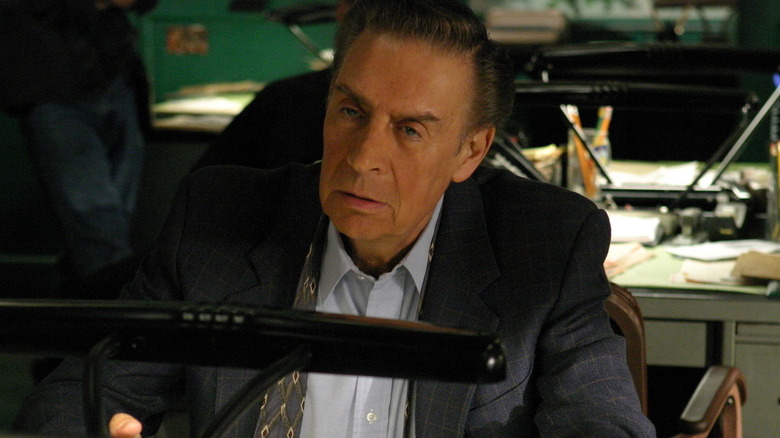
Considering how long it's been on the air, it's almost easy to take "Law & Order" for granted. It's even easier still to dismiss it now that its spin-off, "Law & Order: Special Victims Unit," has eclipsed it as the longest running live action scripted TV show in history (right behind "The Simpsons"). Yet that discounts just how revolutionary Dick Wolf's original series was, and what a huge impact it had on network television police procedurals.
As the opening narration reminded viewers each week, "In the criminal justice system, the people are represented by two separate yet equally important groups: the police who investigate crime, and the district attorneys who prosecute the offenders." The concept behind "Law & Order" was deceptively simple: each week would revolve around a new case, examining it first from the perspective of the police detectives investigating it, and second from the attorneys prosecuting it. In that way, it gave viewers two of the most popular TV genres — cop shows and law dramas — for the price of one.
Rather than center around the same group of detectives and lawyers each season, "Law & Order" utilized a revolving-door style of casting. Some characters, like Detective Lennie Briscoe (Jerry Orbach), District Attorney Jack McCoy (Sam Waterston), and Lieutenant Anita Van Buren (S. Epatha Merkerson), stuck it out so long that they almost became the faces of the series. Yet these characters never distracted from the show's core principle: portray the criminal justice system with a stark reality rarely seen on TV.
NYPD Blue
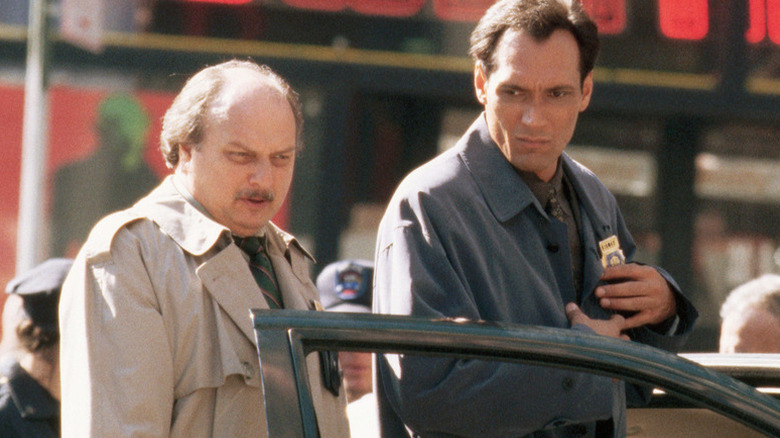
"NYPD Blue" was the brainchild of Steven Bochco, who co-created "Hill Street Blues," and David Milch, who executive produced that series and later created "Deadwood." Together, they turned the police procedural into Greek tragedy, utilizing graphic nudity, rough language, and controversial depictions of violence and alcoholism that are all the more bracing for having appeared on broadcast television in the early '90s.
"NYPD Blue" centered on the day-to-day lives of New York City police detectives both on and off the job. Front and center was Detective Andy Sipowicz (Dennis Franz), a drunken, racist loudmouth struggling toward redemption. Sipowicz began as second banana to his partner, Detective John Kelly (David Caruso, who left the show to start a failed movie career), who's caught between his duty to the badge and duty to his girlfriend, Detective Janice Licalsi (Amy Brenneman). After Kelly's exit, Sipowicz was paired with Detective Bobby Simone (Jimmy Smits), whose death in the Season 6 episode "Hearts and Souls" is heartbreaking in its abruptness — much as it would be in real life.
Although many actors came and went during the 12 seasons of "NYPD Blue," Franz stuck around to the end, winning four Emmys for his efforts. The show wouldn't have survived without Sipowicz as its beating heart: At times just as crooked as the criminals he locks away, Sipowicz is a mirror to all of us who have fallen from grace and work to pick ourselves back up again.
The Wire
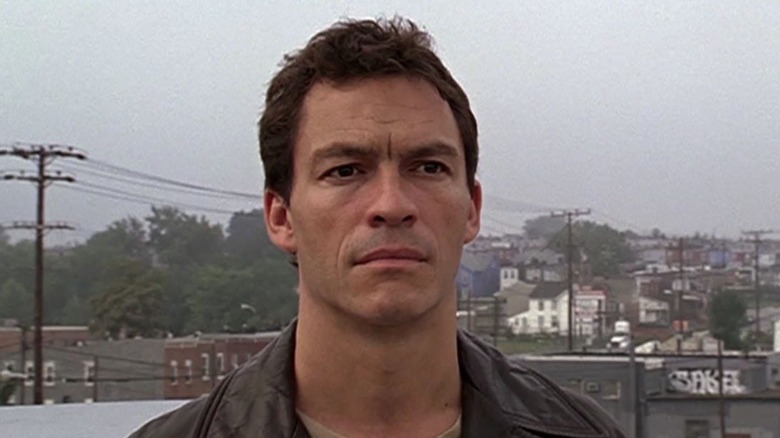
There is perhaps no police procedural more acclaimed than "The Wire," which raised the genre to almost Shakespearean heights. Created by David Simon, the show takes place on the gritty streets of Baltimore, Maryland, using it as a microcosm for the entirety of the United States. Although the show ostensibly centers on Detective Jimmy McNulty (Dominic West), its large ensemble encompasses characters on both sides of the law, all of whom could be the heroes or villains of their own stories.
Each season of "The Wire" centers on a different institution and its relationship to crime: drug dealers, the port system, municipal government, education, and newspapers. With each season, the cast of characters grew richer and the stories more complex, as Simon and his writers showed that criminality wasn't just limited to the streets. As the show went on, it became clear that local government, bureaucracy, and even the news media could be just as corrupt as the illegal drug trade, and in many ways, they are all part of the same endless cycle that destroys everyone.
Unlike most police procedurals, "The Wire" depicted criminals with just as much nuance and complexity as it did the cops. Few characters are as fascinating as Omar Little (Michael K. Williams in one of his best onscreen roles), a stick-up man who robs drug dealers like a modern day Robin Hood. In his own way, Omar is just as flawed and heroic as McNulty — which is to say, just as human.