

5 Classic Paul Newman Movies That Are Unwatchable Today

It's staggering to take a step back and process the enormity of the career Paul Newman had as an actor. Any performer would be elated to have just one movie as iconic as "Cool Hand Luke" in their filmography. Newman, though, had a deluge of beloved motion pictures in his repertoire. "The Sting," "Butch Cassidy and the Sundance Kid," "The Hustler," "Cat on a Hot Tin Roof," "Road to Perdition," "Hud," the list goes on. To look over Newman's filmography is to not only witness so many different eras of American cinema (in each of which Newman thrived), but to appreciate his quiet versatility and compelling aura.
Of course, being in motion pictures for nearly 55 years means there are bound to be some duds on the resume. Even an esteemed legend like Paul Newman couldn't evade this. The silver screen icon wasn't just in some underwhelming motion pictures, but titles that were outdated even back when they first premiered in theaters. Some of the five classic Paul Newman movies that we'd call unwatchable today are titles that, though they may have once been acclaimed, register now as boondoggles.
The reasons behind why each of these motion pictures hasn't aged well vary from one movie to the next. However, they all stand out as regrettable misfires in Paul Newman's otherwise full-of-classics career.
From the Terrace
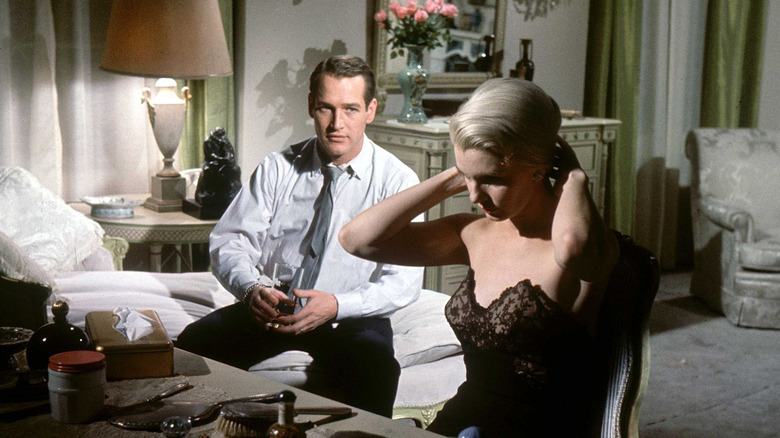
Something fascinating about watching Hays Code-era American movies is witnessing artists who deliver something transgressive, sneakily adult, and thought-provoking even in these restrictive confines. Things like nudity, profanity, or overtly upending authority figures were off-limits, sure. Titles like "No Down Payment," "All That Heaven Allows," or other titles registering as the best American movies of the 1950s, still probed raw human emotions and complex relationships, captivating audiences even today. Unfortunately, there were also a wave of American films that stumbled trying to execute their stories under Hays Code-era restrictions.
"From the Terrace," a 1960 title starring Paul Newman and Joanne Woodward, was one such project. This title saw Newman playing Alfred Eaton, a man struggling to balance his current marriage, an affair, and job-based triumphs. A conceptually sizzling condemnation of how personal fulfillment is nearly impossible in capitalism is instead realized with minimal subversive flourishes. Neither the storytelling nor the presentation of gender roles in "From the Terrace" challenges viewers or mid-20th-century American cinema norms. The result is a movie that registers as bizarre in the 2020s.
"From the Terrace" dabbles in material too heavy to fit its bubbly, classical movie ambiance. However, it also doesn't have the post-Hays Code creative freedoms to properly explore its darkest impulses. Caught between a crossroads in American cinema history, "From the Terrace" is now just a weird artifact all too obviously from another era.
A New Kind of Love
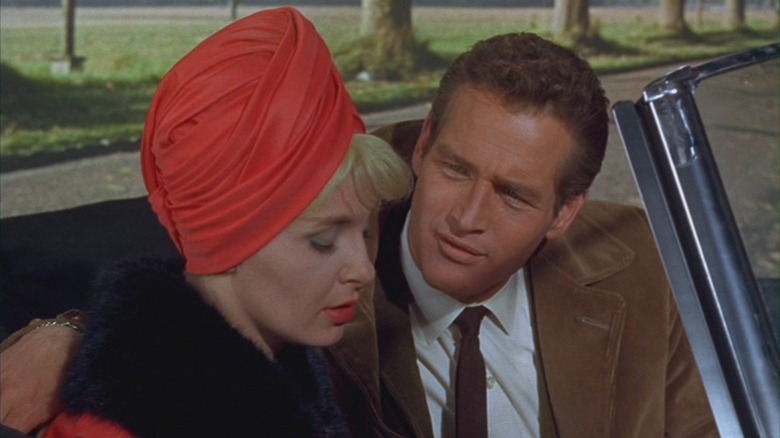
Everyone thinks of Paris as the most romantic city in the world. But in cinema history, it's mostly bittersweet movies that involve people grappling with melancholy romantic matters while the Eiffel Tower looms in the distance. "A New Kind of Love" was yet another example of this, while carrying on the legacy of the 13 best sad romance movies. This title follows Steve Sherman (Paul Newman) and Samantha Blake (Joanne Woodward), two dispirited individuals who eventually keep seeing each other. The latter also poses as a sex worker named Mimi (for convoluted vengeful reasons) providing fictitious "life stories" to enraptured reporter Sherman.
The duo fall in love with each other across these encounters, even though duplicity (not to mention Sherman's initial crude behavior towards Blake when he first met her) defines their relationship. This project from writer/director Melville Shavelson has procured dismal reviews over the years and it's only gotten worse with age. The movie's treatment of sex workers, uncomfortable visions of how women "should" present themselves, and generally poor writing was already a problem when the film opened in 1963.
Those flaws have only become more inescapable decades later. Not even Paul Newman trying to muster up his lived-in charms as Steve Sherman can distract from the gender-based issues weighing down "A New Kind of Love." For a movie aiming for bittersweet weightiness, this title sure gets caught up in surface-level approaches to women.
The Outrage
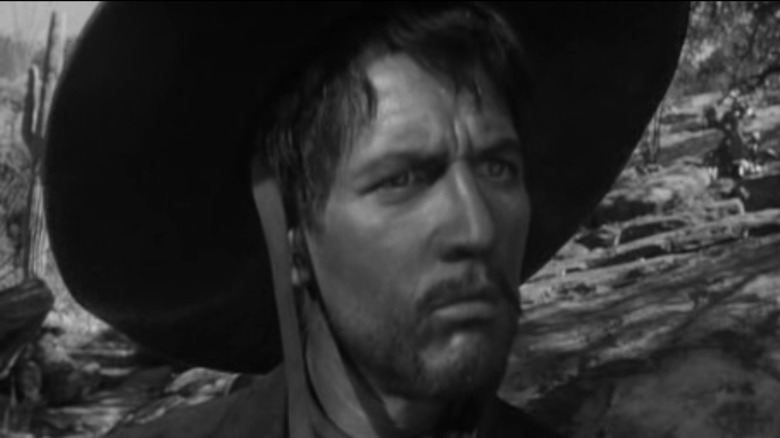
The appalling practice of blackface (not to mention parallel problems like yellowface and brownface) is everywhere in Hollywood history. From the days of D.W. Griffith's "The Birth of a Nation" and Al Jonson in "The Jazz Singer" to late 20th century works like "Soul Man," the controversial movie that ruined C. Thomas Howell's career, and even 21st century titles like "I Now Pronounce You Chuck and Larry" all engaged in cringe-inducing horrors. Systemic racism and the normalization of dehumanizing non-white faces are so ingrained into the broader world that cinema inevitably utilized these practices. That, alas, means even the most famous and beloved 20th century entertainers often engaged in this egregious act.
Paul Newman is a perfect yet frustrating example of this phenomenon with the 1964 Martin Ritt film "The Outrage." While Newman and Ritt working together previously produced the masterpiece "Hud," one of the best Paul Newman Western movies, their collaboration here saw Newman playing Juan Carrasco. Carrasco is a Mexican outlaw, and the subject of this "Rashomon" pastiche, which explores a trio of differing perspectives of the crimes he was recently put on trial for. Whether it's 1964 or the 2020s, the brownface Newman put on for his part is uncomfortable on countless levels.
When Time Ran Out
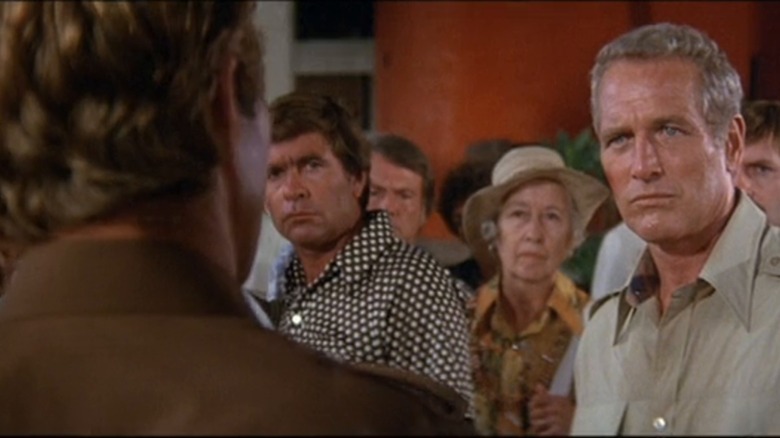
Several of the best disaster movies of all time were released in the 1970s, a golden decade for this genre. However, by the end of the '70s, the disaster film was dethroned as the go-to form for expansive American cinema. "Star Wars" and "Superman: The Movie" had toppled titles like "Airport" and "The Towering Inferno" as the ways audiences wanted to absorb visual effects-heavy motion pictures. "When Time Ran Out," then, was a relic the second it hit theaters in March 1980. This title following Hank Anderson (Paul Newman) and other ordinary people navigating the effects of a volcano erupting on a remote island, had all the crumbling buildings and vintage movie stars (like Burgess Meredith, Ernest Borgnine, and Red Buttons, among many others) populating early '70s disaster movie hits.
However, in the new year of the blockbuster, "When Time Ran Out" was laughably out of step with modern tendencies. What worked in 1973 wasn't going to register as must-see to audiences seven years later. Being so rooted in a distinctly arcane tentpole movie mold alone has ensured that "When Time Ran Out" has aged terribly. It's now totally emotionally inaccessible to 21st century audiences. Its condescending approach to the handful of Indigenous characters who do appear in this story has only exacerbated its outdated nature.
"When Time Ran Out" is such an archaic exercise that it's no wonder Paul Newman has always expressed tremendous regret for headlining it.
Exodus
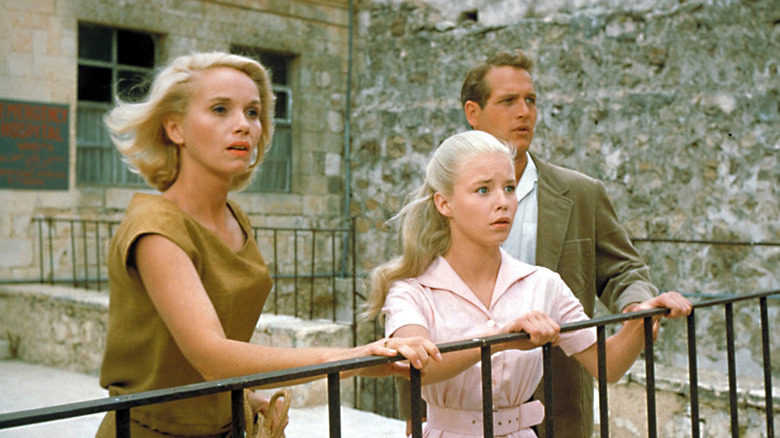
After his career was decimated by the Red Scare, the 1960 film "Exodus" saw the return of Dalton Trumbo as a fully credited screenwriter (no more pseudonyms). This epic project starred Paul Newman as Ari Ben Canaan, and focused on Israel's founding in the late 1940s. Specifically, it chronicles Ben Canaan trying to get 600 Jewish refugees to Israel. His way of getting there? A ship named the Exodus (hey, that's the name of the movie). Endless problems stemming from the British military stand in his way in a feature that also contained Ralph Richardson, Peter Lawford, Eva Marie Saint, and many more.
It may not quite have a reputation on par with the worst movies over three hours long, but "Exodus" still doesn't have the greatest estimation in the modern world. Retrospectives on the feature have lamented how it perpetuates longstanding cinematic tropes related to dehumanizing Arab and specifically Palestinian lives. A Hays Code-era film told from white Western artists was, from the ground up, a recipe for disaster in terms of treating these communities with respect. Such problems have only grown more prevalent with each passing decade.
"Exodus" coming after the golden age of American historical epics has also made its lengthy, nearly four-hour-long form cumbersome for viewers to watch in modern times. In so many respects, this Paul Newman star vehicle and Dalton Trumbo comeback effort is a relic not even Hobby Lobby would lift.