

Spider-Man: Brand New Day's Most Confusing Moments Explained
Contains spoilers for "Spider-Man: Brand New Day"
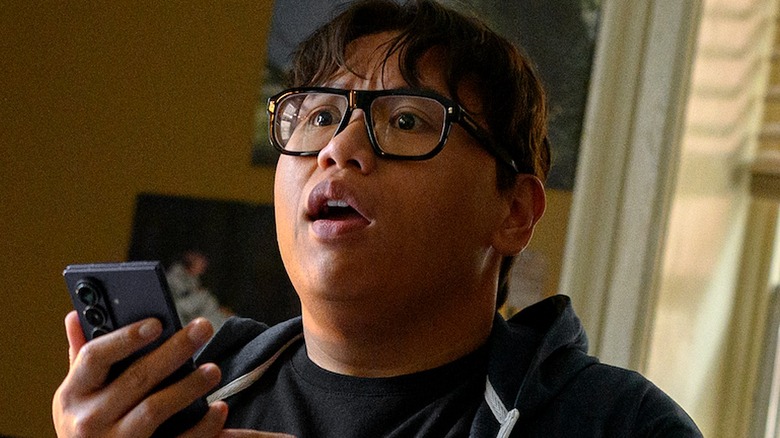
Destin Daniel Cretton's "Spider-Man: Brand New Day" juggles a whole bunch of plot points. While it all comes together rather admirably in the end, it's only natural that a movie with so many story arcs would leave a few questions lingering in the air. As Peter "Spider-Man" Parker (Tom Holland) is dealing with a strange physical transformation and solving the mystery of someone's apparent vendetta against the Department of Damage Control, he also has to figure out how — or rather, whether — to reconnect with MJ (Zendaya) and Ned (Jacob Batalon).
All of this combines with Spider-Man's day-to-day of fighting crime, coping with trauma, and occasionally dealing with vigilante frenemy Frank "The Punisher" Castle (Jon Bernthal). The end result is a big, fun, and surprisingly earnest story that critics are loving — the film is already Certified Fresh on Rotten Tomatoes, and Looper's own review of "Spider-Man: Brand New Day" dubbed it the best live-action Spidey film in decades. Now, let's dive deep into the many confusing moments this excellent movie might have left the viewers wondering about.
How can the Punisher go wherever he pleases?
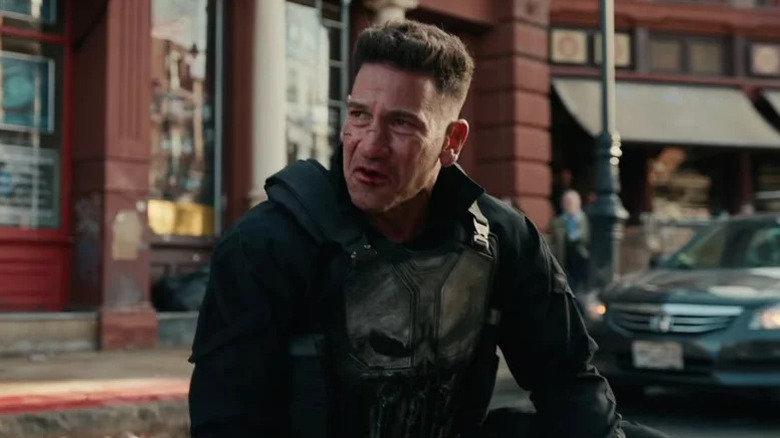
As watching Looper's video explainer on the Punisher will efficiently explain, Frank Castle has been around the block a few times, and he's shot a whole bunch of people while he's been at it. Vigilante hero or not, he's effectively a mass murderer-slash-serial killer who is — or at least should be — an actively wanted man for an absurd number of crimes, and whose identity is pretty much public knowledge. He should be in hiding and operating with utmost secrecy. Yet, in "Spider-Man: Brand New Day," Frank is able to drive around in broad daylight, openly shoot at hijacked tanks, hang around in major hospitals for extended periods of time, and generally live his gun-happy life without a worry in the world. How does he pull it off?
The Punisher's ability to come and go as he pleases is somewhat explained by the fact that the cops are sympathetic to his work, and presumably just agree to not work all that hard to catch him. This has been suggested on "Daredevil: Born Again." In the fourth episode of the hit revival show, Frank calls people using his skull logo "bulls**t fanboys," to which Matt Murdock responds, "Yeah, and a lot of them are cops." Of course, in "Brand New Day," we also find out that Frank is on team-up terms with Spidey, and being pals with the city's golden boy presumably gives him even more leeway.
Why is Peter immune to Jean Grey's telepathy?
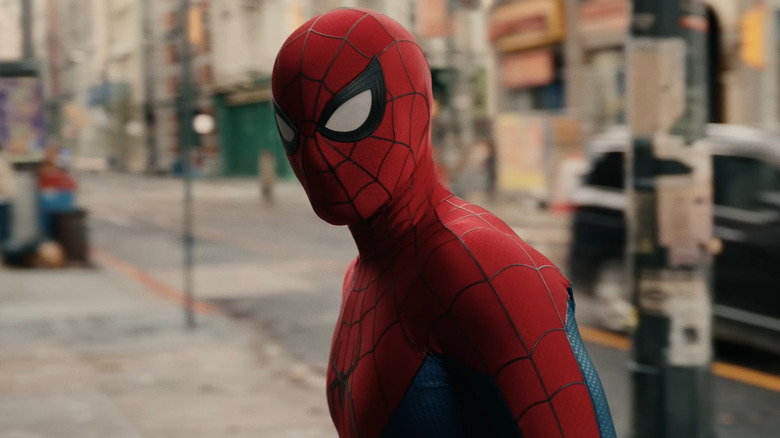
The person who has a vendetta against the Department of Damage Control is none other than Jean Grey (Sadie Sink), who is both annoyed and fascinated by Spider-Man. While the friendly neighborhood web-slinger actively tries to stop her from attacking the Department of Damage Control, she also feels a connection to him, seeing Peter as a fellow freak. Much of Jean's meddling with Spidey's personal affairs stems from her interest in his ability to kick her out of his head, rendering her unable to take control of his mind and body. This is understandable, considering how powerful Jean is even before her late-game upgrade — even Bruce Banner's (Mark Ruffalo) Hulk form takes a while to shake off her possession.
Of course, the real-world reason behind Spidey's telepathy resistance is almost certainly that it'd be a very short movie if Jean could just possess Peter and be done with it. However, within the context of the plot, it can be explained by Peter's ongoing DNA mutations, which make his brain a very difficult thing to get a hold of. In the comics, Spider-Man is considered to have particularly strong willpower. This isn't exactly telepathy resistance, but might still come in handy against a relatively inexperienced Jean. It's worth noting, though, that the fully-powered Jean has no problem getting into Peter's head during the movie's climax, and it's implied that she could do so even if Peter wasn't letting her in.
Why is Yelena always hanging out in that banya?

The movie's most delightful cameo comes courtesy of Yelena "Black Widow" Belova (Florence Pugh), who Peter goes to meet in order to uncover more information about his mysterious body-hopping foe. Yelena holds court in an unorthodox location: A banya steam bath with a very inviting-looking pool. But why does she hang out in such a place, since the post-credits scenes of "Thunderbolts*" established that the New Avengers are such a big deal that they're on a Wheaties box?
Yelena's banya "office" might seem confusing, but it makes sense when you know the character. As moments like her mac and cheese appreciation talk with Kate Bishop (Hailee Steinfeld) on "Hawkeye" show, she appreciates the small pleasures in life, and she doesn't much care for social norms. Why not have meetings in a cosy spa instead of a stuffy office?
Of course, mere comfort is unlikely to be the only reason. As a trained Black Widow, Yelena no doubt enjoys the mental advantage she gets while holding negotiations in a place as compromised as a bath. Also, the New Avengers headquarters appears to be a shared space — and let's face it, her teammates are some of the most annoying people in the world. As such, it makes sense that she'd have a separate location where they're not in her hair 24/7.
Why does Yelena act so condescendingly toward Spider-Man?

Another potentially confusing Yelena moment comes when she repeatedly dismisses Spider-Man as a "small potatoes" hero, as opposed to the New Avengers' "big potatoes" mindset. This is strange because she must know full well that Spidey is an Avengers affiliate who took part in the battle against Thanos and is more powerful than anyone in her team — Bob Reynolds' (Lewis Pullman) Sentry mode notwithstanding. However, this does actually make sense if you've followed Yelena's path in the MCU.
Apart from a few rare moments of real openness, mildly condescending humor is simply Yelena's preferred mode of communicating with the people she cares about. During the banya scene, she also expresses concern for Spidey's mental wellbeing, and near the end of the movie, she's genuinely happy to find out that he has friends. As such, all the potato talk is just a case of Yelena being Yelena, and she's clearly on far better terms with Spider-Man than it implies.
Why is the Hand working for Damage Control?
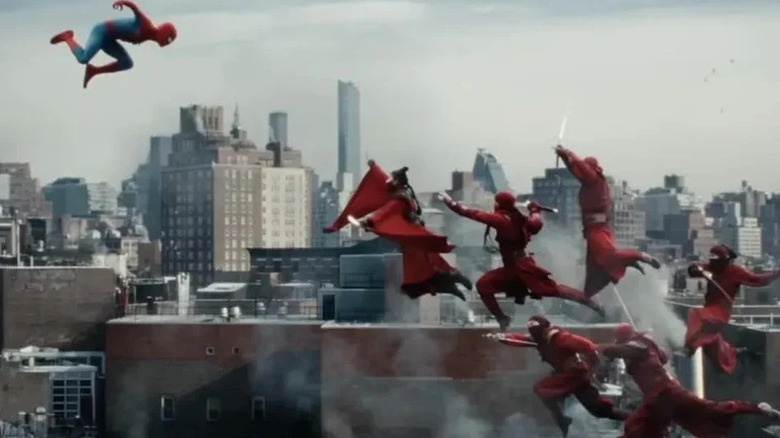
When Jean takes control of the Hand on Roosevelt Island, the ninja gang acts as the final physical opponents for Spider-Man in "Brand New Day." In an earlier twist, we also find that they're not exactly a shadowy faction of their own anymore. After Spider-Man defeats them during the villain-battling montage at the beginning of the movie, the ninjas end up on Damage Control's payroll. Damage Control head Bill Metzger (Tramell Tillman) handwaves this as the Hand basically just being a street gang of disenfranchised youths that his department repurposed.
This might seem like an almighty fall from grace, but it actually makes a lot of sense when you think about it. To find out how the Hand ended up this way, we just have to look at the shows in Marvel's Defenders saga. By the time "The Defenders" concludes, the Hand's mystical leadership has been completely wiped out, which would likely have scattered the group and turned it into little more than a bunch of pesky ninjas that look cool fighting against Spidey but pose little in the way of global threat.
What's going on with Spider-Man's powers?
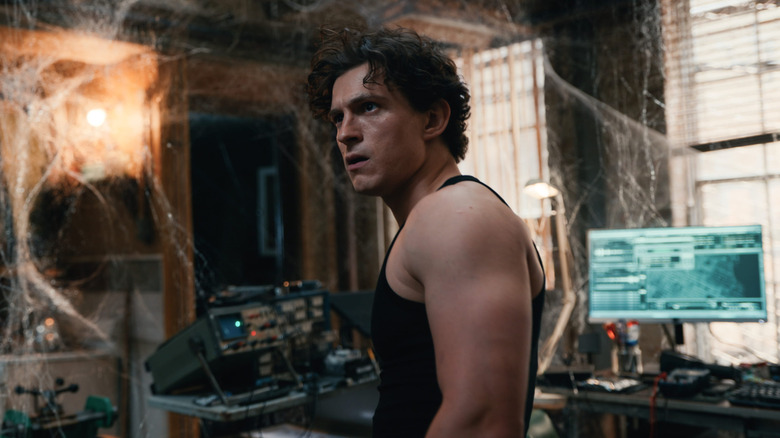
Apart from his troubles with Jean Grey, the emerging truth behind Damage Control, and personal life issues about reconnecting with MJ, Peter Parker is dealing with the fact that his body is changing. Again.
The metamorphosis arc of "Spider-Man: Brand New Day" seems to be a family friendly riff on the comic book storyline "The Spectacular Spider-Man: Disassembled," a body horror story that gives Spidey organic webshooters. Instead of a transformation triggered by supervillain Adriana "Spider-Queen" Soria, "Brand New Day" presents Peter's spider-evolution as a physical reaction to his years of isolation, longing, and heartbreak from losing MJ and Aunt May.
This is a good choice considering the movie's overall themes of coping with trauma. As an added bonus, Peter's attempts to control the transformation lead to the creation of the superpower inhibitor chip, which will likely come into play later down the MCU line as a handy way to negate characters' powers.
Why does Jean possess MJ like that?
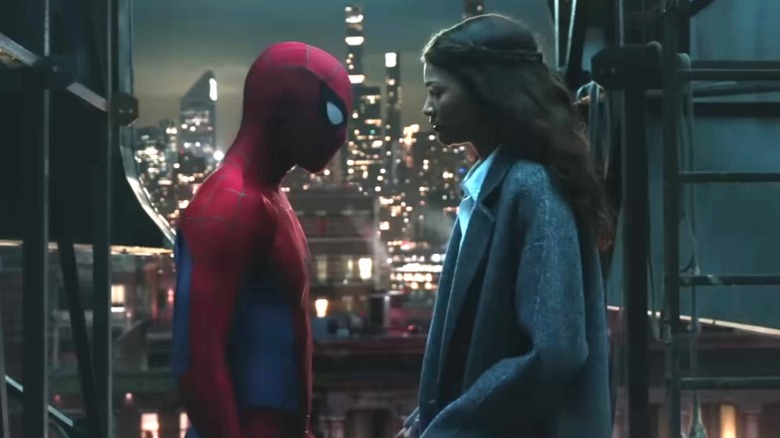
In what's easily the creepiest scene of the movie, Jean Grey possesses MJ before Peter can get to her and uses MJ's body to cosplay a very traditional Spider-Man movie meet-cute, complete with romantic web-swinging and a mask-half-removed kiss. Then, Jean mocks Peter for not realizing that the real MJ would never go along with sappy nonsense and breaks several boundaries by implying that he should take the opportunity to go beyond just a kiss while she's in control of MJ. Quite rightfully, Pete immediately balks, calls Jean's actions unforgivable, and later informs MJ of the nonconsensual kiss that happened while she was possessed.
"Spider-Man: Brand New Day" ultimately portrays Jean in a sympathetic light. Once we get to know her we can't help but feel for her, but this scene seems out of place with her overall characterization. In all likelihood, it was put there to serve a dual narrative purpose: Apart from showing just how ruthless and dangerous a telepath can be when they're truly locked in and want to make their opponent feel helpless, this scene is a pretty obvious riff on the older Spidey movies that have played such romantic encounters straight. The reveal feels even more shocking coming right on the back of a nostalgia blast.
Why does the Punisher agree to protect MJ so easily?
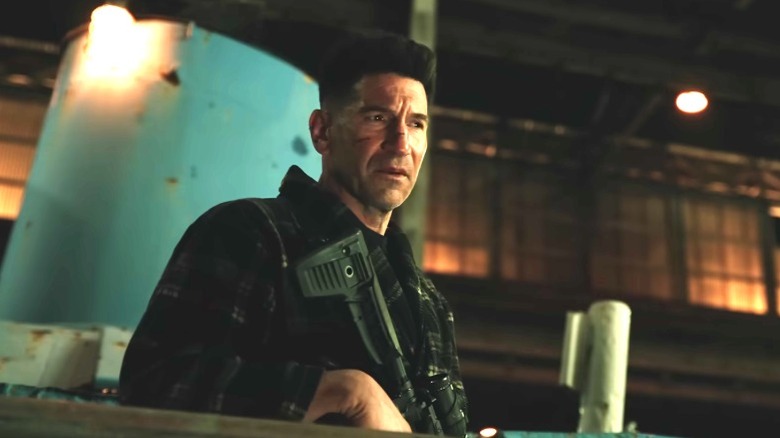
After Spider-Man and the Punisher's initial clash during the tank chase, they meet on somewhat friendlier terms when the former calls in a favor to keep MJ safe in the Punisher's secret hideout. Frank gives Spidey a hard time about it to begin with, but, all things considered, he pretty much immediately agrees to protect MJ — a strange turn of events considering their previous animosity and Frank's overall reluctance to work with others.
There's a reason behind the Punisher's actions, and while it's not stated out loud, he all but explains it during a later scene where he calls Spider-Man out for his reluctance to take the plunge with MJ. As a man whose vigilante origin story involves the loss of his loved ones, Frank recognizes MJ as someone Spidey cares about, and he wants to give him a shot at the happiness that was snatched away from him. Frank, after all, views his lonely vigilante lifestyle as a sentence, and the movie's events make clear that he wants Spider-Man to avoid that same fate.
Why does the Hulk let Spider-Man go when he has him on the ropes?
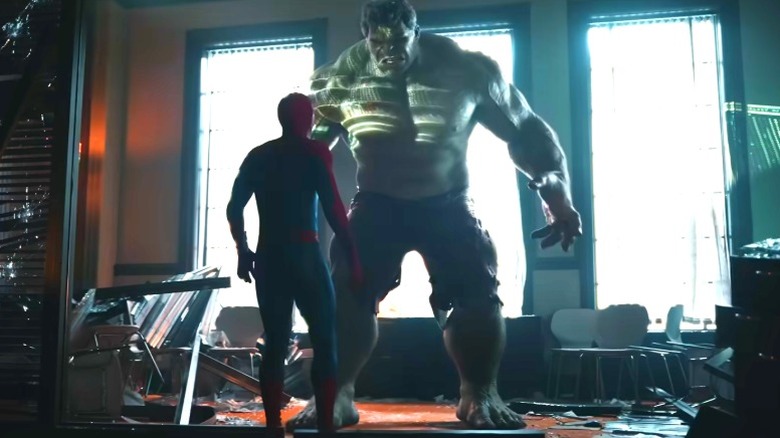
Though his final fight in the movie is against Jean Grey's possessed army of the Hand and Damage Control troops, Spider-Man's biggest "Brand New Day" battle by far is against the Hulk. When Jean attempts to control Bruce Banner's (Mark Ruffalo) "big green guy" to get into Metzger's vault-slash-panic room, the Hulk soon breaks free of her control and attacks Spidey. The fight goes just about as well as you'd expect, with Spidey barely holding his own until the Hulk gets a hold of him and easily overpowers him. However, just as the Hulk has Spidey on the ropes, he simply gives up and stops. Why is this?
It all has to do with Peter's desperate pleas for Bruce to recognize the fact that he's a friend. Though knowledge that Peter Parker is Spider-Man has been wiped from everyone's minds, Bruce still knows Spider-Man as an ally from the events of "Avengers: Infinity War" and "Avengers: Endgame," after all. This proves to be a winning strategy, because the MCU Hulk can canonically be talked into calming down by people Banner cares about, most famously the late Natasha "Black Widow" Romanoff (Scarlett Johansson) in "Avengers: Age of Ultron." By identifying as a friend, Spidey invokes this, causing the Hulk to hesitate just long enough for Banner to get a foothold.
Wait, since when did Jean Grey have a sister?
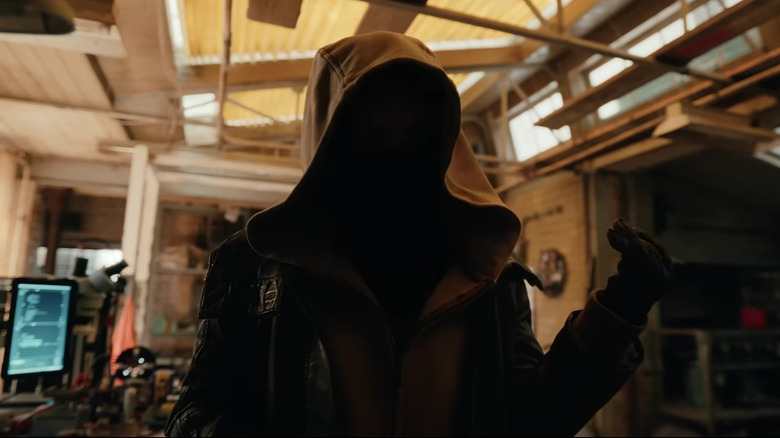
"Spider-Man: Brand New Day" is a twisty film, and one of its biggest twists is the reason Jean goes after Damage Control: They abducted her older sister, Sara (Olivia Booth-Ford). The inclusion of Sara in the Marvel Cinematic Universe might raise a few eyebrows since, in the comics, Jean Grey's family life tends to be more focused on her relationship with Cyclops than any pre-existing family contacts from her life before the X-Men. However, Sara Grey isn't an MCU-exclusive character by any means. She exists in the comics as well, though she's been heavily reimagined for the purposes of the movie.
While the Sara in "Brand New Day" is a telepath with similar powers as Jean who dies when Damage Control experiments on her, the comics version of the character is a human with some implied but unexplored latent willpower abilities. The comic book Sara is an adult, married woman with two children (Gailyn and Joey) who's an outspoken pro-mutant activist. Unfortunately, she doesn't fare much better than her MCU counterpart: She gets murdered by bigots and her body is absorbed by the galactic A.I. known as the Phalanx.
What's the significance of the V-Max reveal?
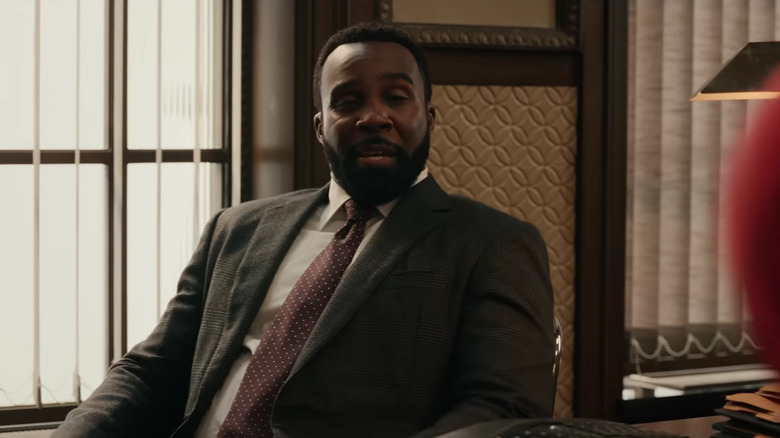
Most of Jean's actions in the movie revolve around her attempts to find out the meaning of "V-Max," the mysterious telepathic message her sister Sara sent her from captivity. For much of the movie, it's played out as some sort of major Damage Control secret — until we find out that even Bill Metzger has no idea what it is. V-Max is subtly revealed to stand for the damaged label of a Ventmax AC grill cover that was the last thing Sara saw, sent out as a telepathic S.O.S. as she died during Metzger's experiments. While the twist is mundane, it has meaning.
When Jean realizes that the Ventmax cover was the last thing Sara saw, she's sitting in the very same chair that Sara was strapped to. The despair and fury cause her to experience a rapid power growth, which grants her telekinesis and brings her telepathy to Omega mutant level strengths, similar to her abilities in the comics. It's a powerful moment that goes above and beyond any government secret, and it goes to show that sometimes simple revelations can be the most shocking ones.
How does Spider-Man's identity remain secret when he's hospitalized?
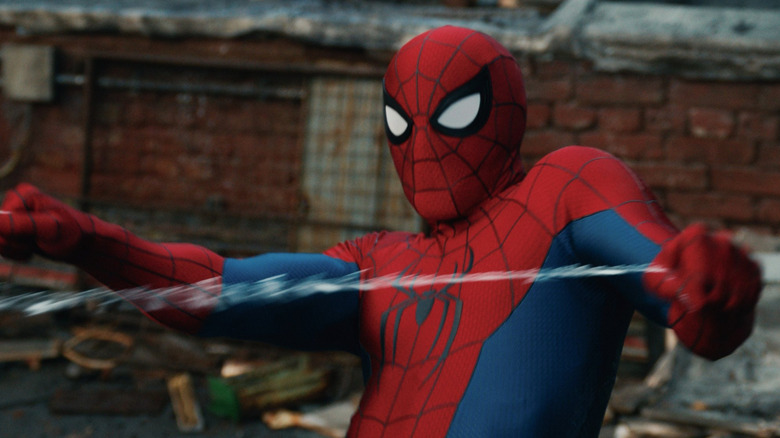
As Jean's telepathic bubble traps a chunk of New York City's residents into forced, immobile containment, the Punisher decides to solve things his way and attempts to snipe her. However, Spider-Man now knows that Jean is no villain. He takes the bullet for her, much to the shock of both Jean and Frank. Fortunately, Spidey makes it to the hospital in time. As he fights for his life, the city honors its fallen hero in a multitude of ways, which makes for a touching montage. It also raises a pretty pressing question: How does Peter Parker, who spends days or weeks being treated at the hospital, manage to keep his identity secret?
It all comes down to the Punisher and his apparent ability to come and go however he pleases. He stands vigil by Spider-Man's bed out of guilt, and says he's "taken care" of the whole secret identity thing. This must've been a challenge considering that he, again, should be a wanted criminal, not to mention that the hospital is full of staff that has presumably needed to admit Peter, treat him, and so forth. What's more, pretty much the whole city must have wanted to take a peek at their hero's real visage.
It's unlikely that the Punisher could have kept all this at bay by himself. However, he does mention that Jean has also been around. As a powerful telepath, it's entirely possible that she may have been able to prevent people from seeing — or at least remembering — Peter's true face and identity during his stay at the hospital. The movie doesn't outright state this, but it would be well within Jean's powers to do so.
Where's Jean going at the end of the movie?
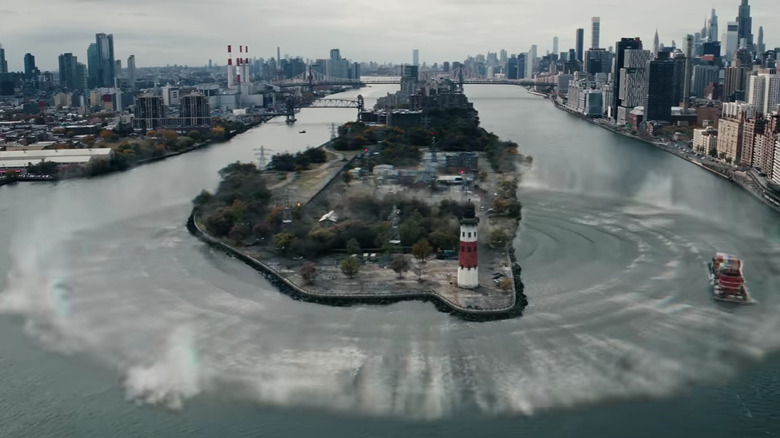
Whether or not Jean initially stuck around to help Peter maintain his secret identity, she definitely isn't there to see him wake up. Instead, she's sitting in a bus, very wisely getting away from New York City after terrorizing its residents with tank attacks and telepathy. So, what's next for her?
While Jean's destination is deliberately kept unclear, the view around her could well be from upstate New York. Since she's almost certainly going to join the Marvel Cinematic Universe version of the X-Men before long, we can be pretty certain that she'll end up in Westchester County, where Charles Xavier's School of Gifted Youngsters is located in the comics.
Due to her large role in "Spider-Man: Brand New Day," It doesn't seem likely that the MCU would use Jean in too many projects before the MCU introduces its spin on the X-Men. As such, removing her from the superhero-filled New York City and sending her in the general direction of the mutant team's traditional base of operations makes narrative sense.