

5 Classic Western Movies That Are Unwatchable Today
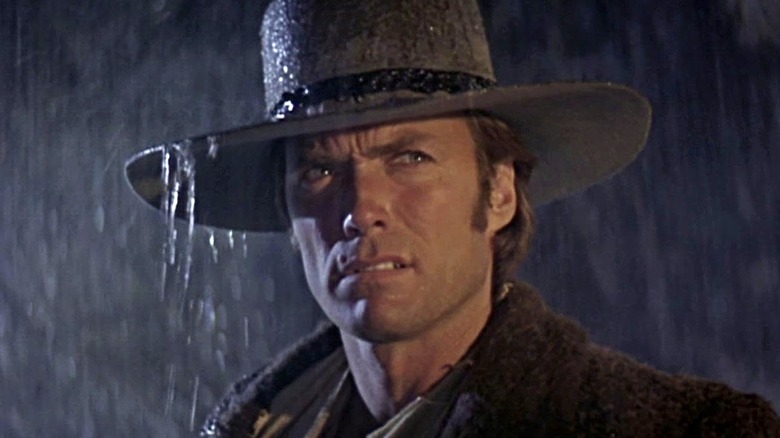
There are few movie genres more popular than the Western. Even though it's difficult to get a cowboy flick made today, classic Westerns continue to be enjoyed thanks to re-runs, streaming, and home video. It's not just dads who love a good shoot-em-up: audiences from all walks of life can appreciate stories of the American frontier, from the earliest silents to revisionist films of the modern era. You can't go wrong when putting on a good Western — well, you almost can't go wrong.
Not every classic Western has aged particularly well. As is the case with every movie genre, some have aged poorly as attitudes about race and gender have evolved. The refinement of filmmaking techniques have made some older Westerns look amateurish, while modern pacing has made others feel slugish and slow. While some classic Westerns have survived changing times thanks to their stories, filmmaking, and thematic maturity, others are now almost unwatchable.
Here are five classic Western movies that are unwatchable today. In assembling this list, we left off titles that are still considered masterpieces despite elements that feel outdated by todays standards. Instead, we focused on films that have aged like rawhide in the hot desert sun, inspiring more cringes than smiles among modern audiences. These films may have been praised in their day, but time has rendered a different verdict. It's safe to say that none of these are among the Westerns you need to see before you die, even if some of them do star John Wayne or Clint Eastwood.
The Alamo
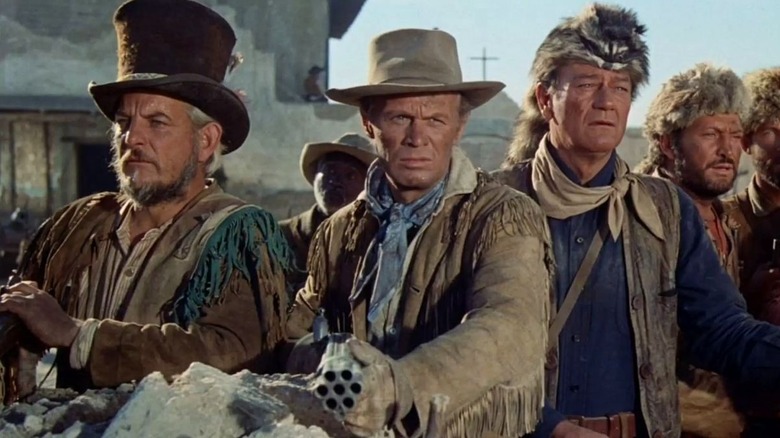
In 1836, General Santa Anna (Ruben Padilla) is leading a full-on invasion of Texas with his highly-trained Mexican Army. Needing time to build the Texas Army into a force to rival Santa Anna's, General Sam Houston (Richard Boone) tasks Lt. Col. William Travis (Laurence Harvey) with defending the Alamo, a historic Spanish mission located in San Antonio. Travis relies upon a pair of larger-than-life figures — Davy Crockett (John Wayne) and Jim Bowie (Richard Widmark) — to bring in new recruits.
"The Alamo" was a passion project for Wayne, who also directed it. Incredible as he was in front of the camera, the Duke was less impressive behind it. Clocking in at 161 interminable minutes, it's slow as molasses and dramatically inert, with only the battle sequences providing any interest. The film takes a simplistic view of the historical events, making little effort to explain the background of the Texas Revolution, and plays like an excuse for Wayne to espouse anti-Communist sentiments.
Despite receiving mixed reviews, the 1960 release earned a best picture Oscar nomination over "Psycho" (one of Alfred Hitchcock's best movies) and "Spartacus" (an early title that established Stanley Kubrick as one of the best directors of all time), due more to intense lobbying by Wayne than the film's actual quality. Chill Wills, who reaped a supporting actor bid for playing the cartoonishly colorful soldier Beekeeper, infamously took out an ad in The Hollywood Reporter that read, "We of the Alamo cast are praying harder — than the real Texans prayed for their lives in the Alamo — for Chill Wills to win the Oscar," which even Wayne found distasteful.
Apache
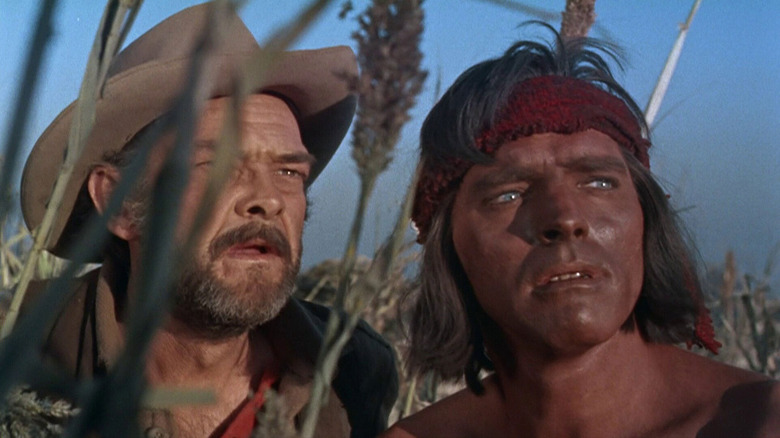
A criticism that can rightfully be held against even some of the best Western movies of all time is their treatment of Native Americans. From the earliest days of the genre, Native Americans were portrayed as savages, and that negative stereotype was further perpetuated by having white actors play Indigenous People with brown or red makeup. Although most classic Westerns cast Natives as villains, a few tried to show them in a more humanistic light, for better and for worse. An early example of this was "Apache," released in 1954 and directed by Robert Aldrich.
After Native American leader Geronimo surrenders, one of his loyal Apache warriors, Massai (Burt Lancaster), refuses to go quietly. He is eventually captured and put on a train headed toward Florida, where he will spend the rest of his life in prison. Massai manages to escape and travels by foot to his homeland, where he's reunited with his wife, Nalinle (Jean Peters), and starts growing crops. Although he hopes to settle down in peace, his captors have been pursuing him throughout the arduous trek, and won't stop until he's taken back into custody.
You can't fault the film's intentions, which was to center a sympathetic Native American as the hero in order to raise questions about our country's history. Yet it's glaring to see Lancaster, who also produced the movie, caked in brown makeup, made worse by vibrant Technicolor. "Apache" isn't exactly bad, and its heart is in the right place, but it's safe to say this wouldn't be made today.
Cimarron
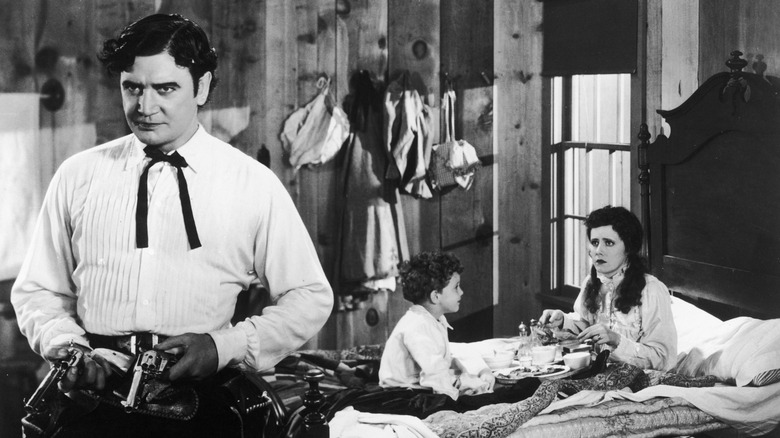
In 1889, newspaper editor Yancey Cravet (Richard Dix) and his young wife, Sabra (Irene Dunne), move to the Oklahoma Territory to take advantage of a land rush. As Oklahoma becomes overrun with newcomers, Yancey must face down several outlaws while establishing the territory's first newspaper. After killing a gunslinger, Yancey leaves his wife and children to go further westward, forcing Sabra to take control of the paper. Over the course of four decades, Oklahoma gains statehood, and Sabra is forced to confront her prejudices when her son becomes romantically involved with a Native woman.
Released in 1931, "Cimarron" was the first Western to win the Oscar for best picture, and at the time, it was seen as a monumental achievement. Several critics praised the film, with The New York Times calling it "a graphic and engrossing screen conception of Edna Ferber's widely read novel," while Variety proclaimed it "an elegant example of super film making and a big money picture." Yet today, it's considered one of the worst Oscar winners of all time, not just for Wesley Ruggles's creaky direction and Dix's hammy performance, but for its virulent racism.
Obviously, some degree of slack is cut for films made during the early sound era, as their ideas and approach are often outdated. Yet "Cimarron" is particularly egregious in its depiction of black and Indigenous people, who are portrayed as savages or simpletons in need of white paternalistic protection. It's all the more glaring for being adapted from a book that seeks to criticize stereotypes rather than perpetuate them.
McLintock!
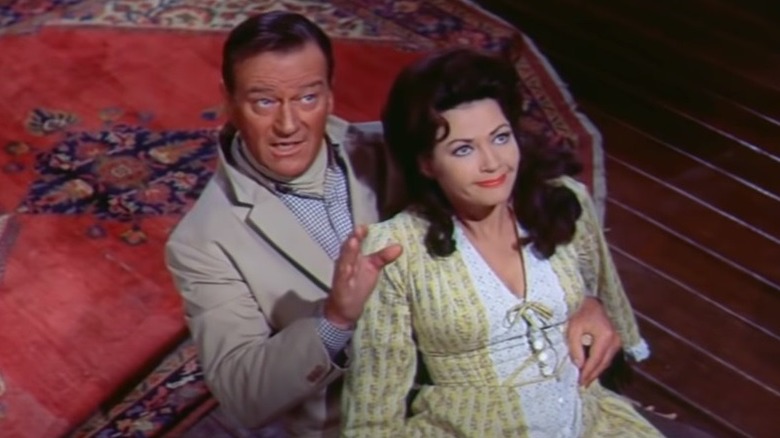
Aging cattle baron George Washington "G.W." McLintock (John Wayne) is on his own after his wife, Katherine (Maureen O'Hara), heads east to become a socialite. G.W. is at odds with just about everybody over his enormous plot of land, battling government bureaucrats, encroaching settlers, and even his own sons. His daughter, Becky (Stefanie Powers), is home from college with her new beau (Jerry Van Dyke), whose father (Gordon Jones) is a thorn in G.W.'s side. But the real fight is between G.W. and his estranged wife, who returns intent on gaining custody of their daughter.
Although it's a famously masculine genre, several classic Westerns had female protagonists, including "Johnny Guitar," "Forty Guns," and "Calamity Jane." While those films subverted gender roles, just as many from that era reinforced them, and some Westerns portrayed women as wild creatures meant to be tamed and controlled. That's certainly the case with Andrew V. McLaglen's "McLintock!," which is retrograde even by the standards of that time.
Released in 1963, it was a reunion between Wayne and O'Hara, who starred in one of the Duke's 25 best movies, "The Quiet Man." That John Ford-directed drama famously ended with Wayne dragging O'Hara home before fighting her brother (Victor McLaglen) for her dowry, and "McLintock!" seeks to replicate that with a scene in which G.W. teaches his wife a lesson with a public spanking. Considering it was released right as the Women's Liberation Movement was gaining steam, the scene feels like a way to put all women in their place, not just O'Hara.
Paint Your Wagon
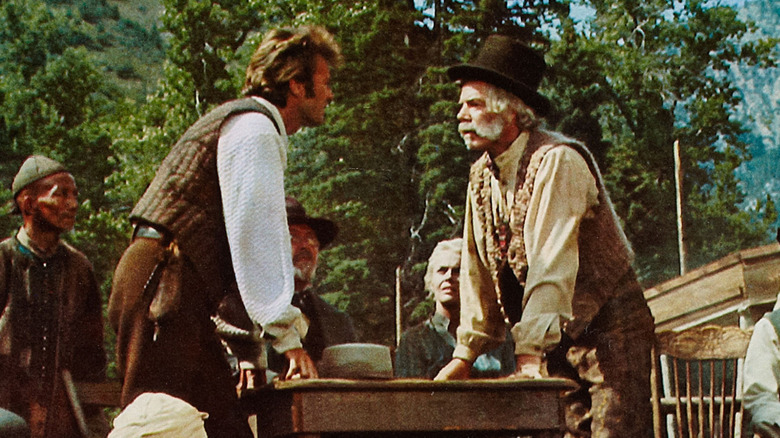
During the California Gold Rush, prospector Ben Rumson (Lee Marvin) stumbles upon a wagon where an injured young man, Sylvester Newel (Clint Eastwood), lies next to his dead brother. Ben stakes a claim and takes Sylvester on as his "Pardner." Before long, a mining settlement dubbed "No Name City" pops up, with newcomers looking to strike it rich. But all the gold in the world can't replace the love of a good woman, and before long, loneliness sets in among the men. When a polygamous Mormon rides into town, he offers to sell one of his wives, Elizabeth (Jean Seberg), to the highest bidder, driving a wedge between Ben and Pardner.
Fans of "The Simpsons" undoubtedly remember "Paint Your Wagon" thanks to the ninth season episode "All Singing, All Dancing," in which Bart brings a home a rental tape expecting a classic shoot-em-up. The horrified look on Homer's face when Eastwood and Marvin break into song mirrored that of many critics and audiences at the time. Directed by Joshua Logan, "Paint Your Wagon" failed to recoup its enormous investment, and was one of the last gasps of both the traditional big budget musical and the old-fashioned Hollywood Western.
Arriving in 1969, "Paint Your Wagon" feels glaringly outdated alongside "Butch Cassidy and the Sundance Kid" and "The Wild Bunch," revisionist Westerns that proved 1969 was the best year for the genre. Suffice it to say, this is not one of Clint Eastwood's best Westerns either, and he ran far away from the stench of its failure.