

10 Biggest Changes Supergirl Made From The Comics
Contains spoilers for "Supergirl"
It's natural for comic book movies to take some inspiration from the comics rather than come up with an entire new story. "The Dark Knight" borrows elements from "The Killing Joke" and "The Long Halloween," for example. Director James Gunn had "All-Star Superman" in mind when making his 2025 Superman film. But when it comes to the new "Supergirl," there's really only one comic book you need to look to for insight.
The film borrows almost exclusively from the 2021 comic book run "Supergirl: Woman of Tomorrow" from writer Tom King and artist Bilquis Evely. The story involves Kara Zor-El, aka Supergirl, getting recruited by a young girl whose father was murdered by the villainous Krem of the Yellow Hills. The two embark on a "True Grit"-like journey where Ruthye wants Kara's help in killing the man who destroyed her family.
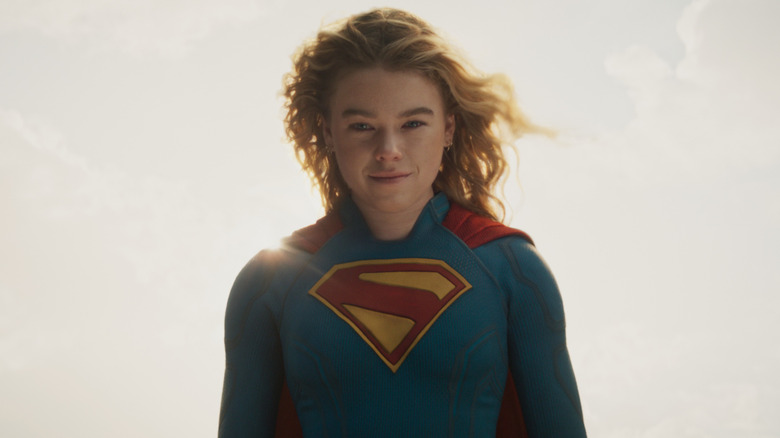
The film has pretty much the same inciting incident. Krem (Matthias Schoenaerts) commits a grave injustice against Ruthye (Eve Ridley), and only Supergirl (Milly Alcock) can help. Looper's review of "Supergirl" called it a "flawed superhero movie," and once you see what the comic was able to accomplish, you'll probably agree there was a better movie hiding under the surface.
Krem of the Yellow Hills kills Ruthye's entire family
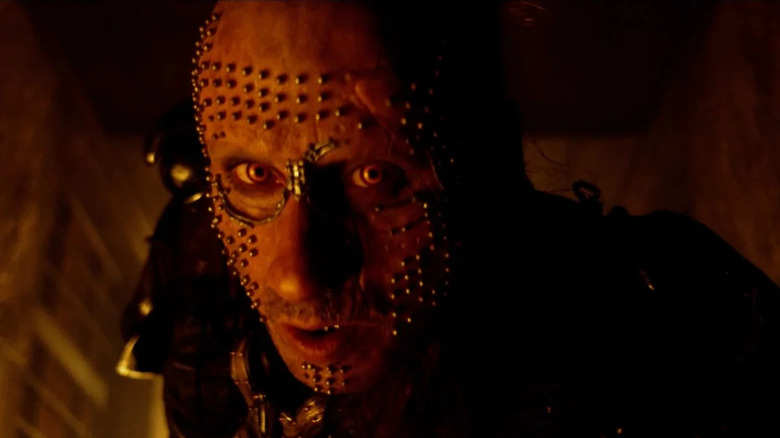
Krem of the Yellow Hills gets updates in more ways than one. In "Supergirl: Woman of Tomorrow," he simply looks like a man, but the movie provides him with metallic beads covering his face. He's also much stronger in the film, making him more of a formidable foe against Supergirl.
To prove he means business right off the bat, the film makes Krem kill Ruthye's entire family, rather than just her father. Krem and the rest of his band are there to acquire swords made by Ruthye's father (Ferdinand Kingsley), but the meeting goes awry when Ruthye's sibling jumps out, unaware of the treacherous meeting happening in the other room. Krem kills the sibling and then Ruthye's parents, leaving her with no one else in the world to care for her.
All of that death and bloodshed over a petty misunderstanding. But there's even less of a reason for Krem to harm Ruthye's family in the book. There, he's a Kingsagent sent to test their loyalty. Ruthye's father doesn't badmouth the king at all and provides food and shelter for Krem. But when Krem tells a bawdy joke about the king, her father admonishes him for his disrespect and refuses to laugh. Her father actually passes the loyalty test but loses his life because Krem's ego was stricken. It's such a nothing way to die and shows how all of this madness was truly pointless in the end.
Lobo is in the movie
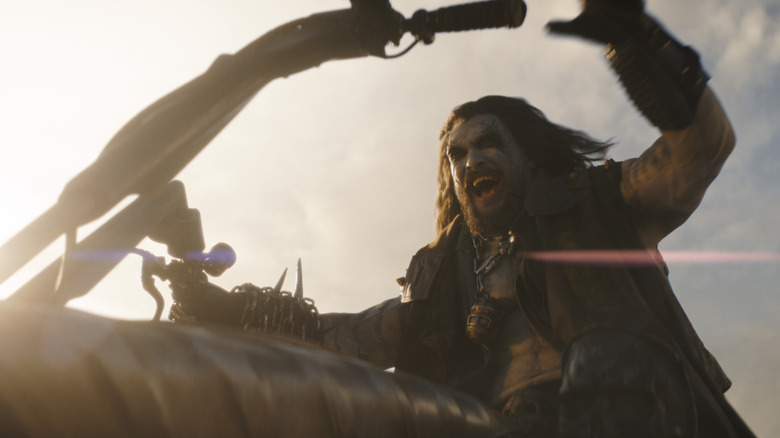
Fans all said the same thing about Jason Momoa's first look as Lobo in "Supergirl," and it was a statement of unanimous praise. Everyone agreed that Momoa had the look down perfectly, embodying the Main Man's hedonistic energy. When the movie finally came out, Lobo did, indeed, prove to be a highlight, which is astonishing considering he's nowhere to be found in "Superman: Woman of Tomorrow."
It wasn't for a lack of trying. Tom King originally envisioned "Woman of Tomorrow" to be a team-up story between Lobo and Supergirl, but he told Gizmodo that his editor gave him another idea. "In the beginning I thought Supergirl would be the younger of the two and I was actually going to put Lobo. But it was my editor who switched it out, my editor Brittany [Holzherr], was like 'Make Supergirl the veteran.' So then I invented Ruthye, and we were off to the races."
In the film, Lobo isn't much of a mentor to anyone. He's trying to track down one of Krem's Brigands simply to collect the bounty on his head. During the final battle, he even helps Supergirl and Ruthye take on the Brigands before bailing, because that's just the kind of guy he is. Two's company but three's a crowd. Hopefully "Supergirl" is merely an introduction to Lobo, who will have a much larger role to play in the DC Extended Universe's future.
Superman is in the movie

Supergirl has a quick cameo at the end of 2025's "Superman," so it's only appropriate that Superman (David Corenswet) has a small role in his cousin's movie, too. He pops up periodically, often as a video recording, to ask Kara when she plans on returning to Earth. She's in the midst of an intergalactic pub crawl since she's a bit of a party girl now, but Superman thinks it would be best for her to settle down on Earth so that she can actually put down roots following Krypton's destruction.
Superman's role largely exists to provide connective tissue between "Supergirl" and "Superman." And it's already been confirmed that Supergirl will have a role to play in next year's "Superman: Man of Tomorrow," so that has to be set up as well. None of that happens in "Supergirl: Woman of Tomorrow" because it was its own standalone story. Plus, in the comics, Supergirl doesn't need nudging to get back to Earth.
When Ruthye first approaches Supergirl about helping her on her quest in King's story, Supergirl turns it down specifically so that she can get back home. She tells Ruthye, "You don't know this about me, but I have a job, a very responsible job that I need to go back home to do." Yes, she went off-world specifically to get drunk because she's still haunted by her memories of Krypton, but she does have a soft spot for Earth. It's a far cry from the immensely more jaded version of Supergirl we saw on the big screen; one who has no idea where her place in the universe lies.
Comet isn't in the movie
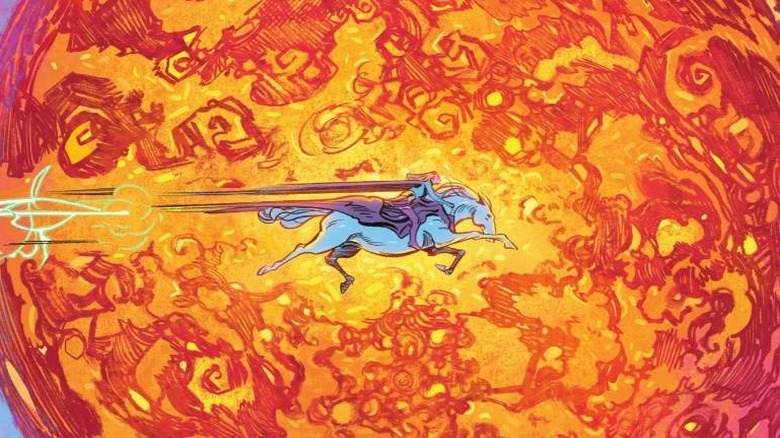
In the film "Supergirl," the titular heroine agrees to escort Ruthye on her crusade against Krem because she also has a score to settle. Krem shot Krypto with a poison dart, and Kara needs to get the antidote within three days or else Krypto will die. But in "Supergirl: Woman of Tomorrow," she has another animal companion by her side.
Part of Supergirl's insane history is that she also has a horse companion, Comet. But calling him just a companion is selling it short, as the two have had a bit of a romantic connection in the past. Comet hails from ancient Greece as a centaur who had a curse put on him to turn him fully into a horse. However, he has amazing abilities, like near-invulnerability and telepathy. He can also turn into a human when a comet passes over Earth, at which point, he and Kara have kissed.
Comet has a small but pivotal role in "Supergirl: Woman of Tomorrow." At one point, Krem uses a Mordru Globe to teleport Kara and Ruthye to a planet with a green sun, severely weakening Kara. They manage to catch up with him later, and when he tries to use the globe again, Kara summons Comet, who's able to outrun it. That's a whole lot of comic fantasticalness to throw at an audience, so we can't blame the movie for skipping over that part.
Krem is already part of the Brigands

Krem doesn't just get a makeover in the new movie; he gets a whole new job title. When Krem is first introduced, he's a leader for the Brigands, a ruthless collective of space pirates who traffic young girls as forced brides. "Supergirl: Woman of Tomorrow" introduces him as a lone Kingsagent at first. He visits Ruthye's family to test their loyalty, but later, we learn that he aligned himself with the Brigands after getting imprisoned on the planet Maypole.
The Brigands soon arrive on Maypole, and Krem offers them money and his assistance in wiping out one of the native populations. He's not a leader for the Brigands, but he joins them out of a common desire to inflict as much harm in the universe as possible. His alliance with the Brigands is also how he acquires the aforementioned Mordru Globe, as it can only be gained by slaughtering thousands of life forms.
The movie gives Krem greater strength and more power compared to what he had in the comics, probably as a way to make him more intimidating. But to be honest, him being a man with no inherent supernatural abilities also makes him more threatening in the comics. He's not some all-powerful tyrant. He's just a dude who's still capable of inflicting so much harm onto so many worlds. It shows how the villain isn't always the person who looks like they're evil because they have a bunch of weird beads on their face. It can be someone who looks like they could be your neighbor.
The entire Maypole storyline is gone
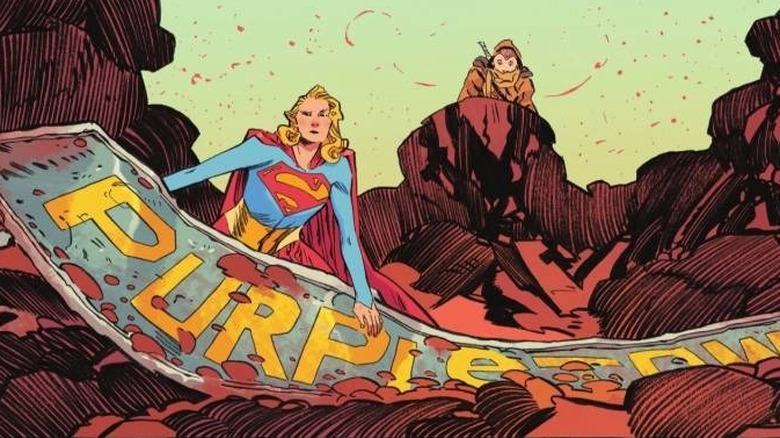
An eight-issue comic book series can cover a lot more story than a two-hour film. It's understandable that "Supergirl" would have to cut out some of the meat in "Woman of Tomorrow." Still, it's disappointing that the Maypole subplot got cut out entirely.
The third issue sees Supergirl and Ruthye wind up on the planet Maypole. It's seemingly nice and idyllic on the surface, but eventually, the pair discover that there's deep-seated racism. The world's society was divided between two different races — aliens with blue skin and aliens with purple skin. It's a fairly obvious metaphor.
But racism gives way to full-blown genocide, as Kara learns the blue aliens worked with the Brigands to displace and slaughter the purple population. In exchange, the Brigands leave the rest of their world alone. It's a symbol of the kind of institutional apathy that plagues so many societies. Many wouldn't consider themselves to be like the violent psychopaths that are the Brigands. But many are fine with injustices in the world as long as it means their way of life is safe.
This leads to the mantra repeated throughout the story: "It's too big. We're too small." It exemplifies how there's so much evil and suffering in the universe that no one, not even Supergirl, can stop it all. Maypole functions as a moral mirror to the entirety of "Woman of Tomorrow." Supergirl can't save everyone, but the last thing she should do is allow her apathy to get in the way of trying to do good when possible.
Ruthye doesn't narrate
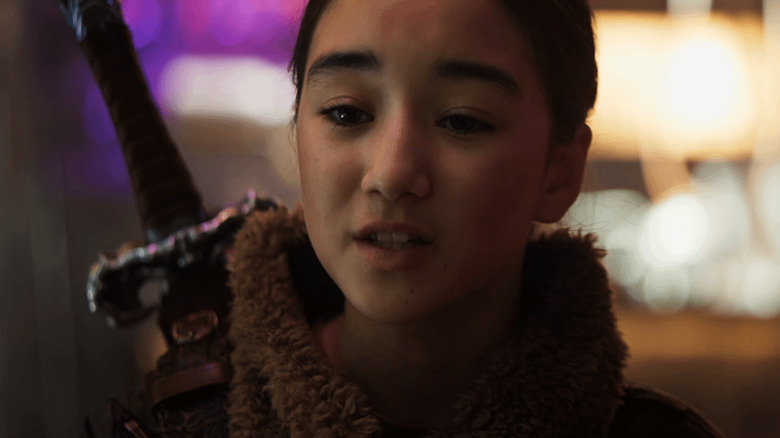
"Supergirl" is presented as a straightforward narrative. We see most everything play out in real-time, from Krem's slaughter of Ruthye's family to Kara embarking on a mission to acquire an antidote to save Krypto.
But "Supergirl: Woman of Tomorrow" uses a framing device to contextualize everything we're seeing. The narration comes from Ruthye when she's much older, and at the end of the comic run, we learn that an older Ruthye wrote a book about her adventures with Supergirl. In a way, this does spoil the story somewhat because we're aware that Ruthye lives. But when the story's as good as "Woman of Tomorrow," that's hardly an issue.
Ruthye's narration is also another way "Woman of Tomorrow" connects with a pretty obvious inspiration — "True Grit." The novel "True Grit," by Charles Portis, is told from the perspective of a 60-year-old Mattie Ross, who tells the reader the story of when she was 14 and hired Rooster Cogburn to aid her in her quest to kill the man who murdered her father. Time allows Mattie to reflect on what she's done, and in the case of "Woman of Tomorrow," an older Ruthye can look back on everything she did with Supergirl with greater maturity.
The Krypto twist is gone

"Supergirl" sees Krem steal Kara's ship, and when Krypto rushes toward the Brigands to stop them, Krem shoots the pup with a poison-laced arrow. Kara and Ruthye take Krypto to a healer and learn that the poison will kill Krypto within three days unless he gets the antidote, which is kept around Krem's neck. It's a ticking clock plot device to give Kara an excuse to go on this journey and help bring down Krem.
"Supergirl: Woman of Tomorrow" opens in a similar manner. Krem shoots both Kara and Krypto with arrows, which have an impact since they're on a planet with a red sun that weakens them, instead of the usual yellow sun of Earth. Kara's fine from the poison, but it's slowly killing Krypto ... at least, that's what we think throughout most of the story.
Kara willingly takes Ruthye on this quest, initially stating how she'll need Ruthye's help to identify Krem since she couldn't remember what he looked like amid the chaos. But by the end, Kara reveals that Krypto was fine the entire time. He just needed to see a veterinarian. Kara reveals that she lied about Krypto because she wanted an excuse to accompany Ruthye on her quest for vengeance, and hopefully show her through their journey that more violence and death wouldn't be the answer.
The film doesn't share that final revelation. Krypto really is dying, but luckily, Kara gets the antidote back to the dog just in time.
Krem gets a more straightforward ending in Supergirl
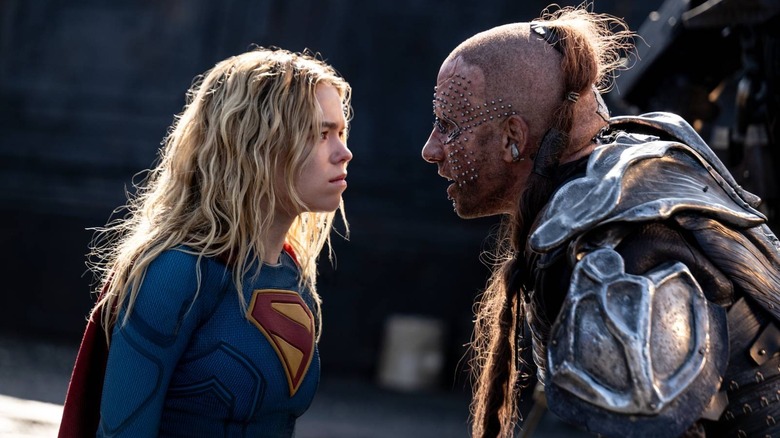
Throughout the "Supergirl" film, there's the question as to whether Kara will allow Ruthye to kill Krem. Granted, they wind up killing a lot of other Brigands in the process, so it's weird to draw the line at Krem, who actually did something to Ruthye's family. Just when it seems like Ruthye will kill Krem, Supergirl shows up to talk her out of it. Krem isn't allowed to walk off into the sunset, though. When the girl is gone, Kara stabs Krem with Ruthye's sword and then retrieves the antidote from his body.
Comparatively, "Supergirl: Woman of Tomorrow" commits to its theme that justice isn't always revenge. Ruthye wants to kill Krem but finds herself unable to do so, realizing that killing Krem won't bring back her father. In the comic, this is when Supergirl tells Ruthye about the Krypto lie and how she wanted to impart wisdom throughout their journey. In fact, the roles are reversed, and it's Ruthye who has to talk Supergirl out of killing Krem. Krem's punishment instead involves being sent to the Phantom Zone for 300 years. Centuries later, Kara and Ruthye reunite to let Krem out, who has repented for his past crimes.
Even then, "Woman of Tomorrow" ends on a gag where Krem apologizes to a much older Ruthye, who responds by knocking him on the head with her cane. At first, it might seem like Ruthye kills Krem, but Tom King clarified on the "Comic Book Couples Counseling Podcast" that Krem is supposed to be alive at the end. "This is not supposed to be ambiguous," King stated. "[Krem's] supposed to be alive at the end. That's why he grabs his head." Krem lives in the book, but he won't be hurting anyone else. The film does not come even close to this tone.
The movie completely undoes the final message of the book

"Supergirl: Woman of Tomorrow" is a classic revenge story. Ruthye wants to kill Krem because he killed her father, and Kara accompanies her to teach her how revenge won't make her feel better. Ruthye gets her chance to decapitate Krem, but can't. Supergirl then reveals her intentions behind letting Ruthye come on this journey even though Supergirl could've handled it all on her own: "You weren't going to learn that killing is wrong just by me saying it. You were going to waste the rest of your life chasing this %#@%#, dreaming about this worthless %#@%. Like I would dream about Krypton."
It's about how revenge perpetuates a never-ending cycle. Supergirl wants to show Ruthye a better path, but the truth is that Kara herself struggles with the same violent urges, especially after Comet sacrifices his life to protect her. Supergirl almost kills Krem herself, but Ruthye talks her down from it. It shows how Ruthye has embraced the message of her odyssey.
So how does "Supergirl" end? Despite Kara saying in the comic that Ruthye wouldn't learn by just being told, the film sees Kara telling Ruthye not to kill Krem. And then, Kara stabs him instead.
Ruthye reaches the same endpoint in both stories, but "Woman of Tomorrow" has a much more interesting conclusion. Ruthye didn't need Kara to tell her that killing Krem wouldn't solve anything because she'd already learned. "It's too big. We're too small" is both defied and underlined. Kara can't help everyone, but she can at least show Ruthye how to live without anger consuming her. Well, she could in the comic, anyway. The film takes a darker road.