

5 Best Picture Oscar Winners That Are Unwatchable Today
The best picture Oscar category has housed hundreds of nominees over the years. This has included a wide array of films, such as the only foreign language movies ever nominated for the best picture Oscar. Thanks to the Oscars now spanning 98 ceremonies, even the collection of best picture winners are a dense bunch. Sometimes, the Academy bequeaths their most prestigious award to something incredible. In these instances, the best picture trophy is handed to a film that forever reshapes cinema and influences generations of artists seeking northern stars to guide their own distinctive visions.
As everyone knows, though, not every best picture Oscar winner is outstanding. There are many infamous champions in this category, including some best picture Oscar victors that are unwatchable today. What makes these five movies "unwatchable," though, varies from one film to the next. Some reflect distinct cinematic trends that don't translate well to modern home viewing. Others crystallize limited views of marginalized voices that were always deeply suspect. Still, others have proven tremendously boring once the Oscar glory sheen wore off.
There's endless ways one era's award season darling can eventually curdle into something unwatchable for subsequent generations. While the movies themselves are slogs to endure, it is fascinating to parse through these five films and examine how their long-term reputations went so awry. Not even a historic Oscar win could prevent such bleak outcomes.
Cimarron
On average, the 1930s possibly had the worst crop of best picture Oscar winners amongst any decade. This isn't to say no quality features from this era scored the award ("It Happened One Night" and "All Quiet on the Western Front" are still all-time keepers), nor is it a reflection of the '30s being devoid of stellar cinema. This decade delivered "Bringing Up Baby," "Make Way For Tomorrow," "Madchen in Uniform," "Street Scene" and countless other sublime titles. However, the best picture Oscar in the '30s largely went to disposable biopics, stuffy literary adaptations, or one of the worst movies over three hours, "Gone with the Wind."
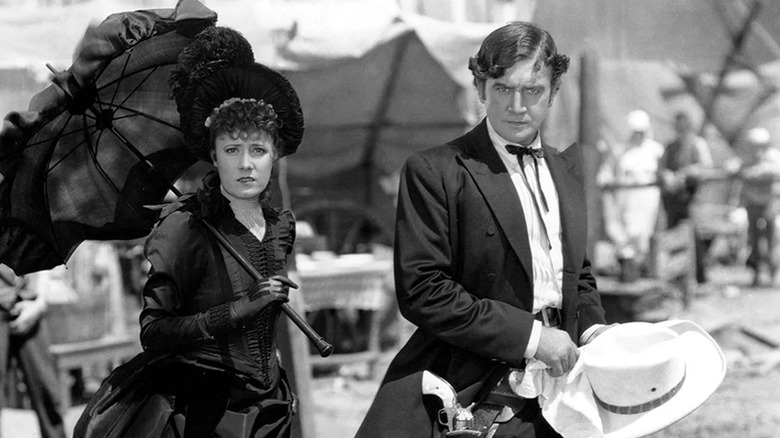
1931's Western "Cimarron" unfortunately encapsulates these misguided creative tendencies. Director Wesley Ruggles begins "Cimarron" in 1889 as lawyer Yancey Cravat (Richard Dix) and his wife Sabra (Irene Dunne) move into Osage, Oklahoma. The story then spans four decades as the couple navigates a hagiographic vision of "manifest destiny" and colonialism. The deeply disturbing politics underpinning this story (in which white characters must "tame" stolen land) are impossible to ignore, made all the more egregious by its glacial pacing.
In 1931, "talkies" were so rare that the length of "Cimarron" might've been seen as a "gift." However, today that bloated form just offers up more time to stew on its disturbing core. Go watch movies from indigenous filmmakers and skip this example of why the 30s weren't ideal for best picture winners.
Cavalcade
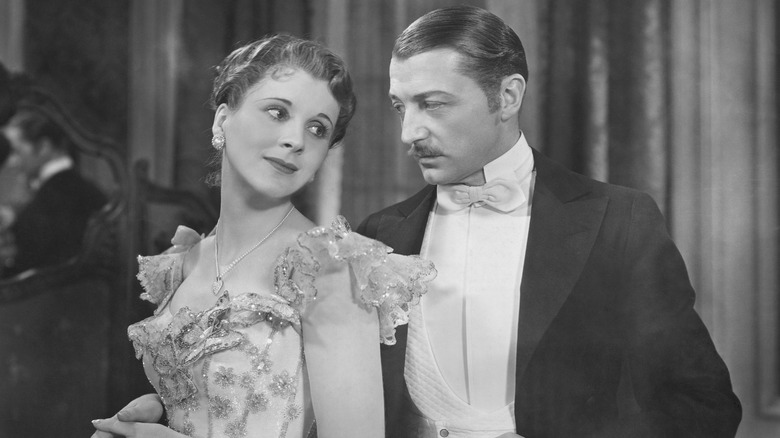
"Cavalcade" is another movie starting in the 1800s (albeit on 1899's final day) before delving into a plot that spans decades. The anchors for this expansive story are Jane (Diana Wynyard) and Robert Marryot (Clive Brook), whose family keep intersecting with pivotal events from the earliest decades of the 20th century. They're basically an entire family of Forrest Gumps. Today, "Cavalcade" is most famous for its weird scarcity on physical media, a testament to how little there is to the supposed epic. While critically hated movies that actually won Oscars continue to stir passionate debate, the largely shrug-worthy "Cavalcade" has faded into obscurity.
Modern reviews of this Frank Lloyd directorial effort have primarily criticized "Cavalcade" for leaning heavily on dialogue (a reflection of its origins as a play of the same name by Noël Coward) while featuring tin-eared verbiage. Having to endure so many clumsy lines and flatly written characters is more painful than any early 20th century turmoil the Marryot family experiences. It's hard to imagine such writing ever transfixing audiences, but at the time, "Cavalcade" at least had the mild novelty of being an early example of epic cinema chronicling British history.
Subsequent superior films depicting British history like 1943's "The Life and Death of Colonel Blimp" have ensured that audiences don't have to settle for "Cavalcade." Like "Cimarron," "Cavalcade" reflects what a weak time the '30s was for best picture Oscar winners.
Around the World in 80 Days
By the 1950s, Hollywood had grown attached to the roadshow epic. These films were defined by their towering runtimes, gargantuan scopes, and being exhibited through roadshow releases. These titles made theatrical movies a big event (an essential quality in the age of television) and gave studios a chance to wring higher ticket prices out of audiences. Many great movies came out of this phenomenon, like "The Bridge on the River Kwai," "2001: A Space Odyssey," and "West Side Story." Unfortunately, for every enduring classic, the roadshow realm also delivered bloated messes (like 1967's "Doctor Dolittle") that are practically unwatchable today. The excessive lengths of these subpar films made their flaws torturously obvious.
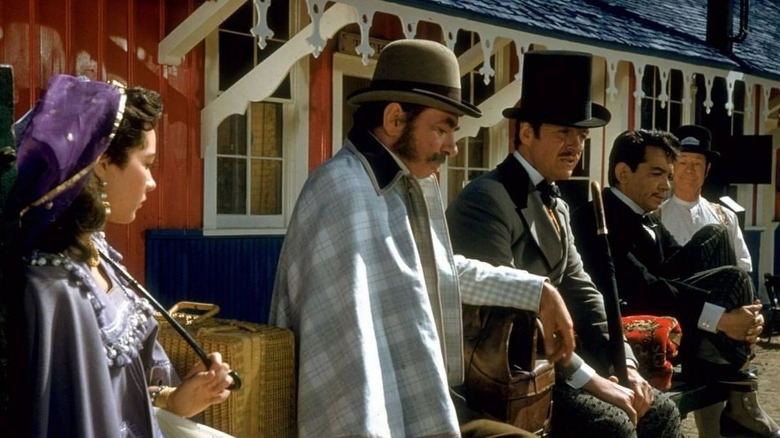
"Around the World in 80 Days," which won best picture along with four other Oscars at the 29th Academy Awards, is a feature that well overstays its welcome at 182 minutes. Certain qualities, like its episodic structure and slow pacing, meant to give 1956 audiences the biggest bang for their roadshow tickets now make it a nightmare to sit through. Meanwhile, grandiose imagery and visual effects that might've looked passable for mid-'50s audiences haven't aged nearly as well as those from other epics of the era.
That's not even getting into the deluge of racial stereotypes populating this film's trip to every corner of the globe. Despite its overstuffed script, "Around the World in 80 Days" direly lacks a pulse.
Gigi
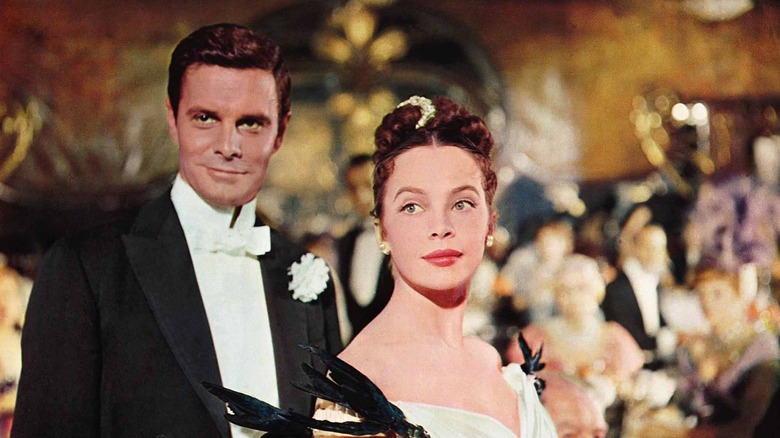
The best musical movies exemplify the artistic strengths this category of cinema possesses, with many featuring some of the best movie soundtracks of all time. Titles like "Singin' in the Rain" or "Mary Poppins" delivered exquisitely catchy and well written ditties that have yet to go out of style. Not every musical movie tune, though, holds up as well over time. Case in point: the 1958 Vincente Minnelli directorial effort "Gigi," which won the best picture Oscar. One of its first tunes sees Honoré Lachaille (played by then 70-year-old Maurice Chevalier) crooning a ditty entitled "Thank Heaven for Little Girls."
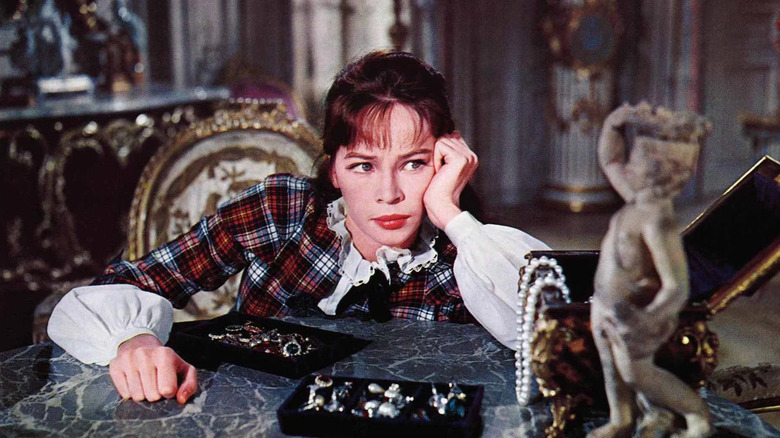
This track features phrases like "Thank heaven for little girls/For little girls get bigger every day/Thank heaven for little girls/They grow up in the most delightful way." There was no era in which these phrases weren't creepy. In the 2020s, though, this verbiage is insufferably unnerving. That disturbing material foreshadows the equally chilling main plot, which involves the underage Gigi (Leslie Caron) being groomed to become an older man's wife. The whole movie is an unsettling experience that only gets more disturbing with each passing year.
There are countless more superior movie musicals or even Vincente Minnelli films in existence to choose from. "Gigi" doesn't deserve anyone's time when such titles exist. Even the tritest Pasek & Paul songs are preferable to "Thank Heaven for Little Girls."
Crash
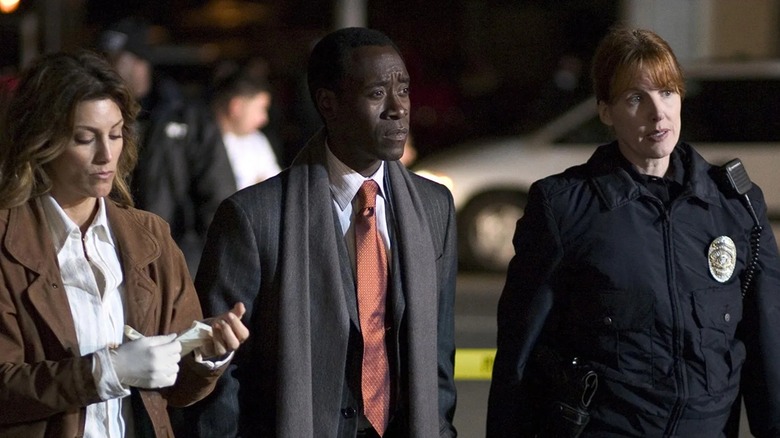
There wasn't ever a time where "Crash," one of the worst best picture Oscar winners, wasn't either controversial or considered outdated. All the way back at its September 2004 Toronto International Film Festival premiere, this feature from writer/director Paul Haggis and co-writer Robert Moresco drew criticism for how it handled race, particularly its caricatured depictions of non-white characters. Attention to these shortcomings persisted well into the end of the 2000s and have only scored further scorn in the years since. "Crash" didn't go from thoughtful to out-of-touch. It's just constantly secured new levels of cringe-inducing outdatedness.
"Crash" only serves as a treatise for Haggis' surface-level approach to race in modern America. The film doesn't function in any other form. It's not like it's a thriller so propulsive it can mitigate potentially clunky social commentary. Nor is it a gripping and multi-layered character study. Instead, "Crash" is plagued by ham-fisted explorations of different forms of racism. That makes it impossible to minimize its dreadfully tedious writing or outright toxic qualities, the latter epitomized by how much grace is afforded a racist white police officer.
With "Crash" only functioning in one deeply flawed mode, its shortcomings have become impossible to ignore. Plus, subsequent and significantly superior movies tackling modern race relations (like "Blindspotting") have only further highlighted the outdated nature of "Crash" from the moment it premiered in 2004.