

5 Best Cyberpunk Movies Nobody Talks About Anymore
Is there anything better than a good science fiction movie? The best sci-fi movies of all time transport us to worlds beyond our wildest imaginations, be they in the future, outer space, or a galaxy far, far away. Among the most popular sub-genres of sci-fi is cyberpunk, which focuses on high tech and low life in the near future. In cyberpunk, advances in artificial intelligence have led to societal collapse and ecological decay, leaving only the ruthless to survive. It's every man for himself in the world of cyberpunk, and ultimately, every man against the machine.
The origins of cyberpunk are rooted in the raunch, drugs, and rock-and-roll revolution of the late 1960s, which coincided with rapid technological advances. As the genre evolved, it became heavily influenced by the emerging hacker culture and growing punk subculture. What began in graphic novels and anime found its way into '80s sci-fi movies that were way ahead of their time, including "Blade Runner," "Videodrome," and "Repo Man." So fertile was the soil of cyberpunk that there emerged a number of lesser known films that fell into the genre, most of which were made on low budgets that complemented their punk rock aesthetic.
Here are the five best cyberpunk movies nobody talks about anymore. These films span decades, from the 1980s through the 2010s, showcasing not just the durability of the genre, but how it continues to influence sci-fi filmmakers today. These films may be bleak, but it doesn't mean they aren't worthy of rediscovery and reassessment.
Brainstorm
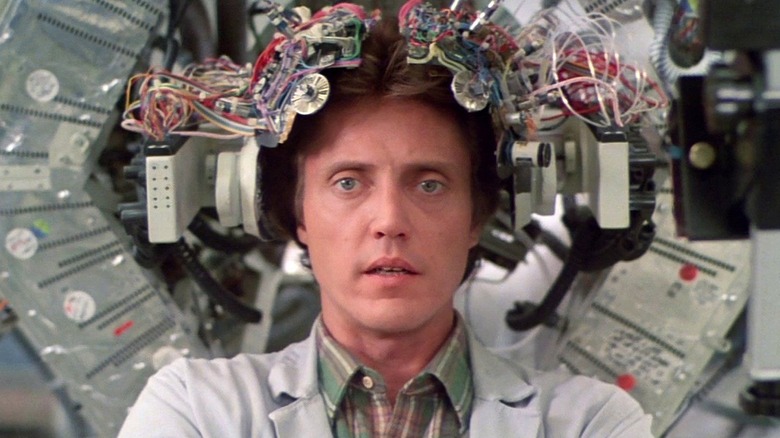
Scientists Michael Brace (Christopher Walken) and Lillian Reynolds (Louise Fletcher) have developed a radical new technology that can record thoughts and feelings onto videotape. Dr. Brace uses the device to record memories of his ex-wife, Karen (Natalie Wood in her final film role), leading to their reconciliation. Yet the good doctor and his investors soon realize that the device can be used for more than just the recording of past experiences: Through their research, they find they can document near-death and other intimate experiences.
This technology soon catches the eye of the US military, who want to harness it for torture and brainwashing. Hoping to keep it from falling into the wrong hands, Dr. Brace and his ex-wife must outwit the government before it's too late. In so doing, Dr. Brace inadvertently records visions of the afterlife; full of angels, demons, and the great cosmic light, blurring the line between science and faith.
Released in 1983, "Brainstorm" was one of only two feature films directed by Douglas Trumbull, the Oscar-nominated special effects wizard behind "2001: A Space Odyssey," "Close Encounters of the Third Kind," and "Blade Runner." Although his directorial debut, 1972's "Silent Running," is indebted to classic sci-fi, "Brainstorm" is more heavily influenced by cyberpunk, as Trumbull's work on "Blade Runner" the year before inevitably found its way into the designs for this film. Although its critical and commercial failure led to Trumbull never directing another feature film again, it's worth seeking out for its blend of sci-fi horror and mysticism.
Hardware
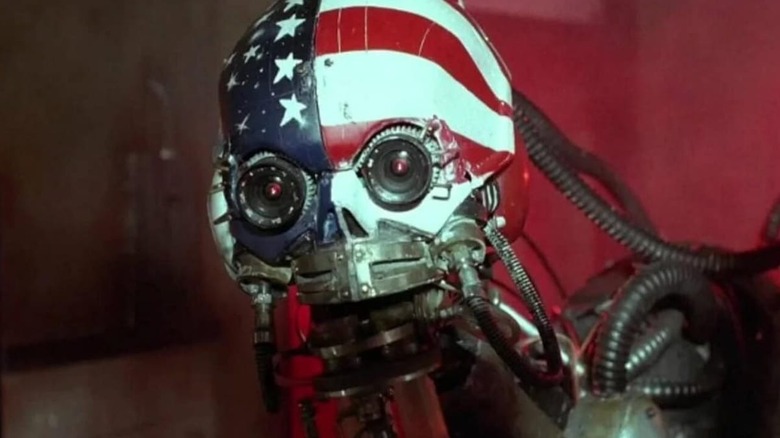
In a post-apocalyptic wasteland, scavengers dig through scraps of metal searching for something valuable enough to trade. One such scavenger stumbles upon the remains of a buried robot, which he pawns off to ex-soldier Moses "Hard Mo" Baxter (Dylan McDermott). Moses sells all but the head to his junk dealer pal, Alvy (Mark Northover), keeping the skull as a gift for his artist girlfriend, Jill (Stacey Travis). Although she plans to use the head for a sculpture, the android has other plans, and it quickly reassembles itself and starts wreaking havoc throughout the land.
Released in 1990, "Hardware" was the directorial debut of Richard Stanley, who would later be famously fired from the disastrous 1996 adaptation of "The Island of Dr. Moreau" (a film whose failure initially started with the departure of leading man Bruce Willis). Much like Stanley's 1992 film "Dust Devil," "Hardware" is a western/sci-fi hybrid with a punk rock aesthetic, drawing its influence from Philip K. Dick to "Soylent Green." Like those works, it imagines a future suffering from overpopulation and destroyed by technological advances, forcing society to revert to a form of feudalism that rivals the Old West for its mercilessness.
Although it wasn't exactly a critical darling upon release, "Hardware" has since gained a cult following, as its handmade, low-budget approach feel refreshingly analog in an age of endless CGI slop. The design of its robot is particularly ingenious, making something menacing out of something no less iconic than an American flag helmet.
Nemesis
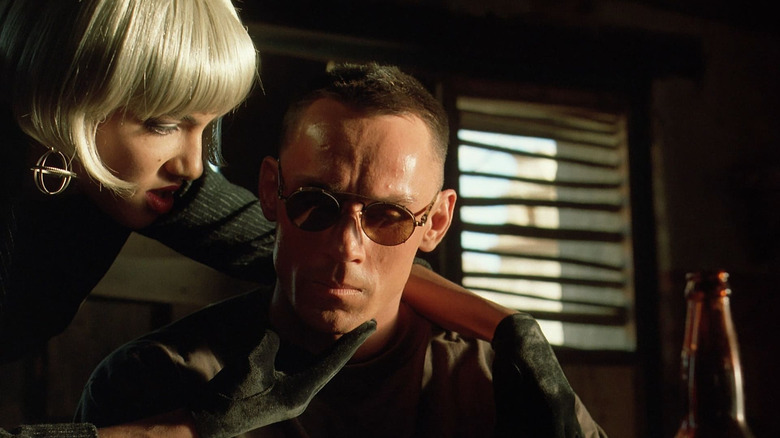
In the near-future (uncomfortably near, seeing as how this takes place in 2027), criminals have found a way to make illegal robots appear more human via cybernetic components. LAPD bounty hunter Alex Rain (Olivier Gruner) is attacked by The Red Army Hammerheads, a militant group of "information terrorists" who inform him that he is one such genetically-modified robot. Rocked to his core by this news, Alex resigns from the LAPD, only to be kidnapped by Commissioner Sam Farnsworth (Tim Thomerson) and tasked with one last assignment: stop his robot ex-girlfriend, Jared (Marjorie Monaghan) from leaking classified information to the Hammerheads.
Released in 1992, "Nemesis" was a sort of magnum opus for Albert Pyun, the direct-to-video auteur behind such B-movie classics as "Cyborg," "The Sword and the Sorcerer," and "Captain America" (no, not the MCU "Captain America," but rather the 1990 disaster that ended Matt Salinger's acting career). As per usual with Pyun, "Nemesis" is short on plot and high on action, emphasizing explosions over exposition. There's also a high level of style, and the influence of punk rock, anime, and classic Hollywood Westerns is hard to miss.
"Nemesis" was such an artistic highpoint for Pyun that he returned to it three times with the sequels "Nemesis 2: Nebula," "Nemesis 3: Prey Harder," and "Nemesis 4: Death Angel" (he produced a fifth sequel, "Nemesis 5: The New Model," in 2017). As you might imagine, the sequels aren't in the same league as the original, which has a low-grade charm reminiscent of B-movie king Roger Corman.
Strange Days
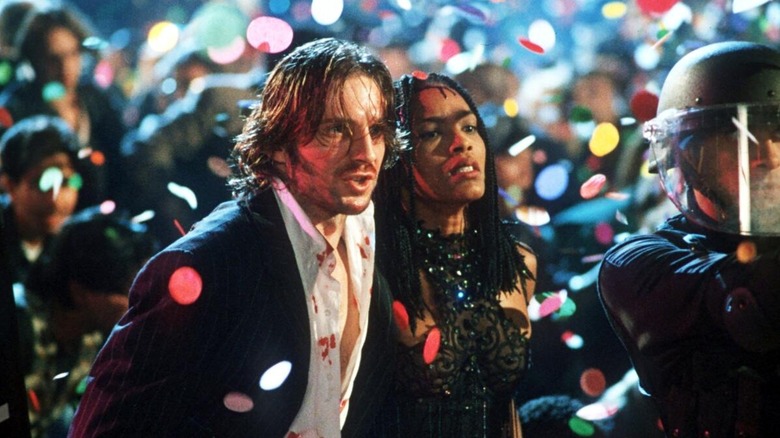
In the lead up to the new millennium, Los Angeles is overrun with chaos as it prepares for New Year's Eve. Former LAPD officer Lenny Nero (Ralph Fiennes) has put his badge away to become a black marketeer, trading in an illegal form of virtual reality known as SQUID tapes. Working with willing participants, Nero records memories of violence, crime, and intimacy which are later sold to customers wishing to experience these illicit thrills free of consequence.
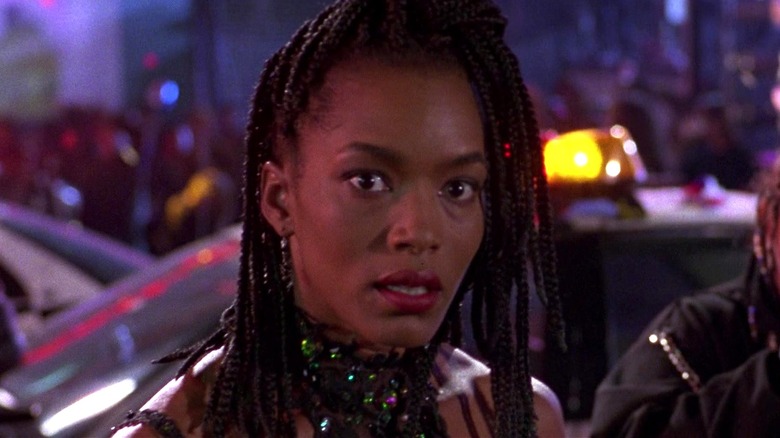
When Lenny receives a SQUID tape of a brutal murder, he enlists his friend, Mace (Angela Bassett), to track down its roots, and finds it implicates his ex-girlfriend's (Juliette Lewis) scumbag boyfriend, music mogul Philo Grant (Michael Wincott) — and possibly her, too. But that's only half the story, with tension about to set fire to the city, as the conspiracy soon involves LAPD corruption.
Before it was reclaimed as one of five smart sci-fi thrillers that still hold up today, "Strange Days" was a massive commercial flop for Kathryn Bigelow, who later rebounded with the Oscar-winning "The Hurt Locker." Seen today, the 1995 release has cemented Bigelow's legacy as one of the best directors of all time. Like "Blade Runner," it imagines a future LA overrun by crime, consumerism, and ecological disaster, where the only escape from your grim life is the very technology that has destroyed it.
Co-written by Bigelow's ex-husband, James Cameron, "Strange Days" was shockingly prescient in its depictions of virtual reality, even if those predictions were off by a few decades. That hardly matters, as it was spot-on when it comes to capturing the fears and anxieties everyone felt in the final days of 1999.
Upgrade
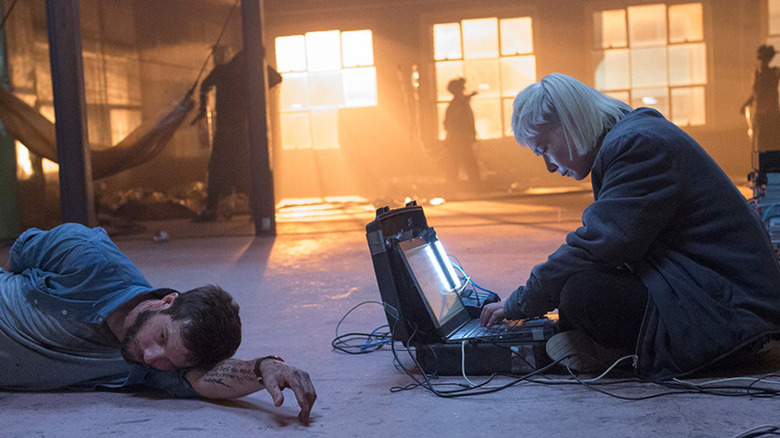
In the year 2046, auto mechanic Grey Trace (Logan Marshall-Green) is left paralyzed and widowed after a brutal mugging. Bereft with grief over his wife's murder, the usually technophobic Grey entertains an offer by tech innovator Eron Keen (Harrison Gilbertson) to regain his ability to walk by way of a STEM implant. After undergoing the surgery, Grey discovers that not only can he walk again, but he's also been granted superhuman abilities. With enhanced strength and agility, Grey tracks down the men who put him in a wheelchair and his wife in the grave, only to discover that he was the victim of a vast conspiracy to test out the radical new technology.
Released in 2018, "Upgrade" was directed by Leigh Whannell, the man behind "Insidious: Chapter 3," "The Invisible Man," and "Wolf Man." Unlike those more traditional horror movies, "Upgrade" is more heavily steeped in sci-fi, but that doesn't make it any less terrifying. Indeed, the film shares a lot of DNA with the body horror works of David Cronenberg, examining the dangers of merging the human form with the latest technological advances.
The film's main influences can be traced to cyberpunk films of the '80s and '90s, examining the dangers of technology from the ground level. "Upgrade" couches these terrors in the tried-and-true revenge genre, and like the best revenge movies of all time, it shows that vengeance is only a temporary salve for long-term pain. And like the best cyberpunk sci-fi, it conveys this message in a stylistically vibrant, aggressive way.