

The Backrooms Movie's Most Confusing Moments Explained
Contains spoilers for "Backrooms"
Kane Parsons' psychological horror flick "Backrooms" has exceeded expectations, exploding into popularity as A24's record-breaking box office opener with a whopping $118 million worldwide on its opening weekend. Interwoven with surrealism and analog horror elements, "Backrooms" is full of small details and nods to Parsons' web series of the same name, which was based on a Creepypasta born out of a post on 4chan's paranormal board. The film follows furniture store owner Clark (Chiwetel Ejiofor) as he discovers and becomes obsessed with a seemingly endless liminal space outside of reality. Against its haunting, Escher-esque backdrop, "Backrooms" probes the existential dread lurking in the corners of the human psyche, dragging viewers through an uncanny valley mirror universe that feels extra relevant in the AI era.
Unlike the web series and other surrealist horror films like Kyle Edward Ball's "Skinamarink," "Backrooms" is more or less glued together by what strives to be a conventional plot. However, that doesn't mean the film is easy to follow. Explanations for the existence of the Backrooms and other related lore are kept vague or only shown in fragmentary glimpses, leaving plenty of room for audience interpretation — and that seems to be the point. Plot transitions are unconventional, the POV character shifts fairly far into film, and there's no clear resolution by the time the credits start to roll. To clear up some of that murky water, here's a closer look at the most confusing moments in the "Backrooms" movie and what they really mean.
Who is the guy in the cold open?
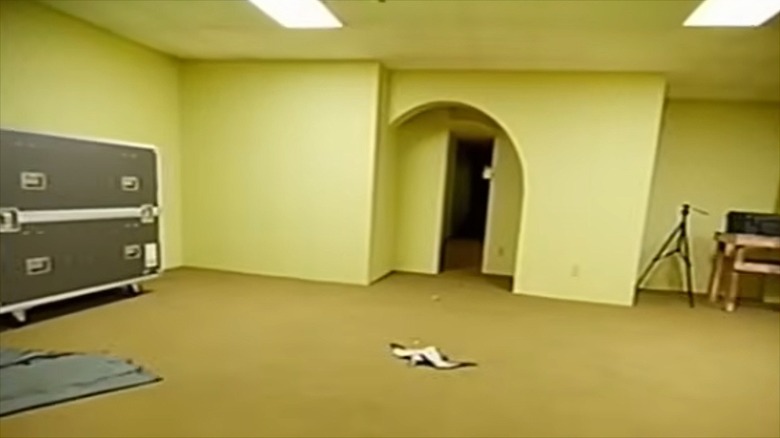
Throwing audience members into the deep end without so much as a context clue, "Backrooms" begins with a found footage-style cold open of someone making their way through the Backrooms, a labyrinthine liminal space just outside of familiar reality that serves as the main backdrop for the film. Labeled "Async," "KLWNA SVY Rec 446 N. Warne," and dated June 19, 1990, the POV VHS footage comes from someone breathing heavily as they flee something off-screen. Charging forward to find a room filled with equipment — and then using some of it to block a door behind him as he goes — the cameraman picks up a radio microphone to request some help. "This is Naren," he pleads, explaining that he's been separated from his group and has "never been out this far before."
Through Naren (Avan Jogia), we experience the sights and sounds of the Backrooms: a seagull that flies directly into the floor before taking off again, signs with backward text, and endless pale-yellow walls littered with furniture, much of it strangely rendered. Eventually, the creature catches up with Naren and he screams as he drops the camera. The VHS tape then ends, revealing a row of four blurry figures in white lab coats reflected in a dark TV monitor. Exactly who the camera operator and the people watching the tape are is unclear for much of the movie, until it's revealed Async is a former MRI company studying the Backrooms, suggesting Naren was with them. 10 days later, they watch as Clark enters the Backrooms, eventually finding Naren's blue backpack. By this point, Async already has a well-established presence in the Backrooms, suggesting they watched and stood by for scientific purposes.
Why does Kat see a window when Clark doesn't?
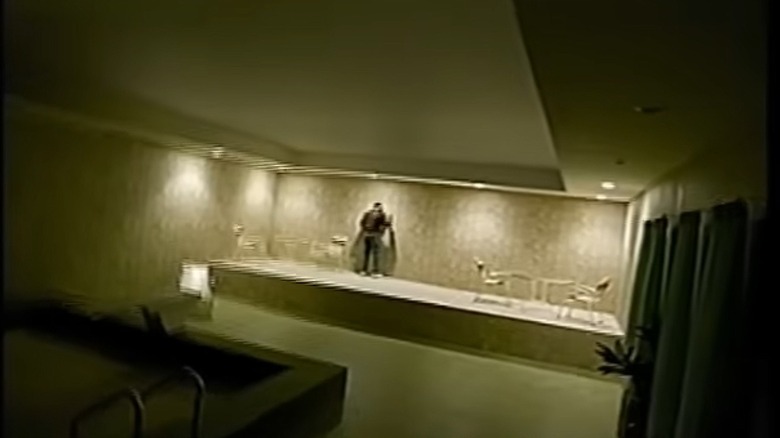
It doesn't take long after Clark convinces his young employee Kat (Lukita Maxwell) and her cameraman boyfriend Bobby (Finn Bennett) to enter the Backrooms that they encounter the space's more dangerous properties, leading to Bobby's almost immediate death after he is lowered into the Laundry Room. After nearly escaping, Bobby is yanked down by his rope, leaving a trail of blood as Kat runs off after him. Clark follows behind, making his way through a series of rooms like the terrifying Christmas Room until he finds himself in the last of a series of Pool Rooms, where he hears Kat but can't see her. A sobbing Kat begs him to please let her in. "I'm on the other side of the glass," she cries, pleading, "How can you not see me?" In this space, Kat and Clark experience the Backrooms in completely different ways, but why is that?
This scene establishes a frightening truth about the Backrooms (also known as "The Complex" to Backrooms fans). Like the eponymous house in the surrealist psychological horror novel "House of Leaves," Backrooms space is governed by subjective experience and thus mutable, which explains how Clark and Async create maps of the Complex while Clark's therapist Mary (Renate Reinsve) perceives its layout differently. As Kane Parsons told James Wan in the A24 podcast, the Backrooms aren't inherently good or evil. "It's a mazelike world that doesn't have an inherent point to it," the director explained. "It's a natural phenomenon." There's no morality or judgment here — it's just a place you can get stuck in that generates wonky reality from your mind. It makes sense, then, that Kat, who selflessly leaped after Bobby while Clark looked for a more self-preservationist route, would perceive a window whereas Clark only perceives a wall.
Who picks up the camera after Clark puts it down?
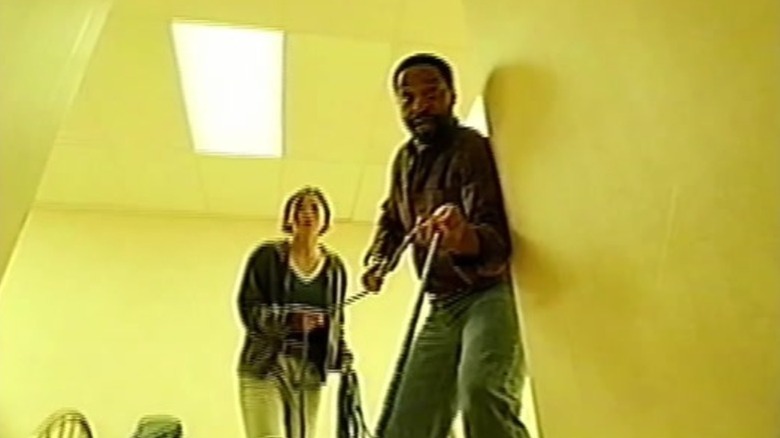
As Clark enters that last Pool Room and tries to figure out where Kat is, he sets the camera down on a patio table just inside the door. Thus ends a long stream of POV mirroring the found footage that began the film with an atmospheric shot of Clark gesturing in the distance as he faces the wall Kat is purportedly on the other side of. Although Clark can't see her, the window she sees him through is every bit as real as that wall thanks to Backrooms logic, which means she can see everything Clark is doing and experiencing. As Clark places his hands against the wall, a dark, blurry shadow edges into the corner of the frame. With the sound of shuffling, the camera view shifts at first and then begins to shake as if being handled by someone incompetent with a camera.
As Kat cries out, "Clark! Behind you!," the camera cuts out, marking the film's POV shift to Mary beginning with a traumatic recollection from her childhood. What happens to Clark after the camera cuts is never fully explained — we only get a glimpse at Kat's ultimate fate in the kitchen dinner scene later in the film. Although we never learn who picked up the camera, it's established that this moment marks the end of any potential redemption arc for Clark, who comes to realize how much he loves stewing in his own narcissism in the immersive world created by his own gaslighting of everyone around him. Whatever picked up the camera was undoubtedly a product of Clark's maladjusted personality (likely Pirate Clark, the distorted lifeform reflecting his most toxic tendencies).
Did Mary's scary memory really happen?
"Backrooms" does a good job of presenting memory as the source of unreliable narration from everyone. Through Clark's therapeutic role-playing sessions, we see a man who ruminates on his last fight with his ex-wife, editing his recollection as he revisits it. She's not even present in the room, and Clark still insists on litigating their marriage. And although he recounts breaking a glass as if it was an accident, there's a heavy implication that Clark is downplaying his aggressive behavior. The recollections of Clark's therapist, Mary, are similarly subjective. Whereas Clark recreates his version of reality with his words, Mary holds her cards closer to the chest, silently revisiting a relationship from her past inwardly as she ruminates on her own childhood trauma.
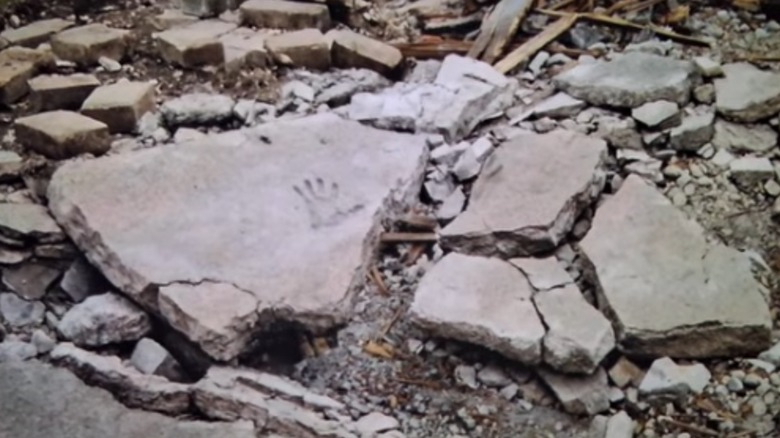
Like Clark, Mary is caught in a mental loop — ironic given that this is the subject of her failed self-help book. And, like Clark, Mary remembers things by the way they felt, making it very difficult to decipher what actually happened. In the first of Mary's memories, we see her as a child placing handprints in cement with her mother nearby. But Mary's later recollections are much more frightening, depicting a mentally ill mother who physically shut them inside a filthy house before she was institutionalized. Mary recalls her mother's distorted voice warning her against going outside moments before the barricaded front door gets knocked down by what appears to be a bulldozer. How much of this actually happened is unclear, as, like Clark, Mary's mind is revisiting the feeling associated with a specific trauma rather than a traditional memory.
Why does Mary enter the Backrooms?
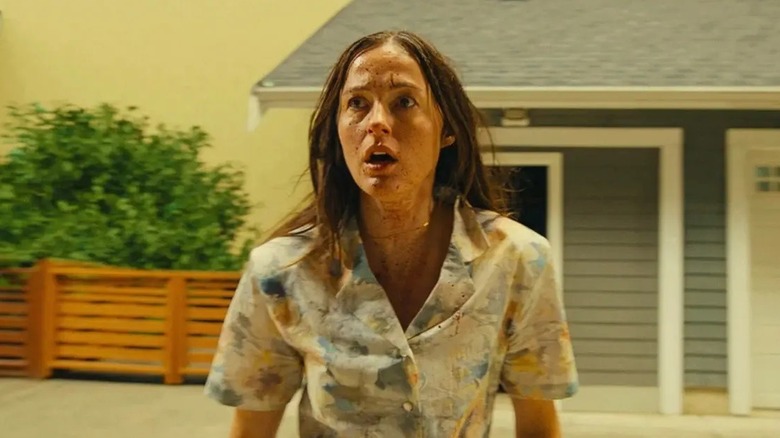
By the time Mary shows up at Clark's store, it's unclear how much time has passed or what has been going on since we last saw Clark. It's pretty clear that he's gone off the deep end by the voicemail he leaves her: a hoarse, manic-sounding message referencing Mary's own "window to the mind" theory. "I opened the window," Clark half-whispers, declaring, "I won't be coming back." As she descends to the lower level of the furniture store, Mary sees a mess that we understand means Clark has been exploring and potentially experimenting with the place.
The power in the room is going haywire, there's a whiteboard map that builds on the one Clark already showed Mary, there are windchimes hanging all over the place, and there's a ton of furniture that Clark has clearly pilfered from the Backrooms. But even after watching a fly buzz through the door, Mary barely hesitates before pushing her hand through Clark's Backrooms entrance. Why doesn't she hesitate more, and why did she go to the furniture store to visit Clark in the first place?
As Clark's therapist, Mary should be maintaining a professional distance, but instead, she somehow ends up creeping around a liminal space filled with his psychological problems. What compels Mary to personally check on Clark is unclear. It's possible that something inside her believes him, though, as the child of someone who was involuntarily detained on mental health grounds, it's more probable that she feels responsible due to her past with her mother.
Why does Clark hold a dinner party?
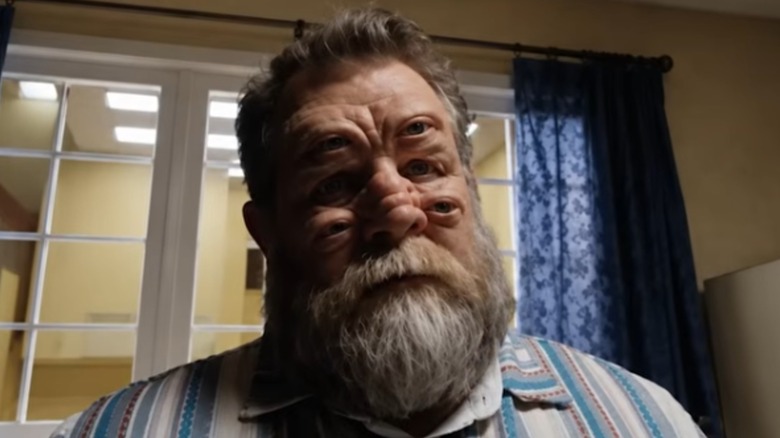
When our main POV character shifts from Clark to Mary and we temporarily lose track of Clark, we're left with concern for him, especially when the camera suddenly cuts out as he is warned of something standing behind him. That makes it all the more jarring when the next time we see him, Clark knocks her out with a chokehold and she wakes up strapped to a chair. As the film's first major POV character, someone who is clearly down on his luck after a painful divorce that cost him his home, and a man who seems to be working on his issues in therapy, Clark presents as a sympathetic figure at first. Cracks start to show when he loses his temper first in therapy and later with his employees, or when he sits outside his old home presumably stalking his ex-wife.
When Clark discovers the surreally mimetic world of the Backrooms, he loves all of it. In the world outside, he exists as a failed architect. Inside the Complex, Clark finds he can literally create reality with his mind, a dream come true for an architect. Of course, the reality he creates is warped, but it doesn't matter to Clark — here, the only person he has to answer to is himself, and there's no one to be accountable to when his failures harm others. Clark's dinner table represents a place where he is always right and others defer to him. When Mary asks what she can do to help, Clark demands she tell her he didn't do anything wrong and that she was wrong about him, forcing her to recreate their therapeutic roleplay in a humiliation ritual.
Who is the redhead Still Life?
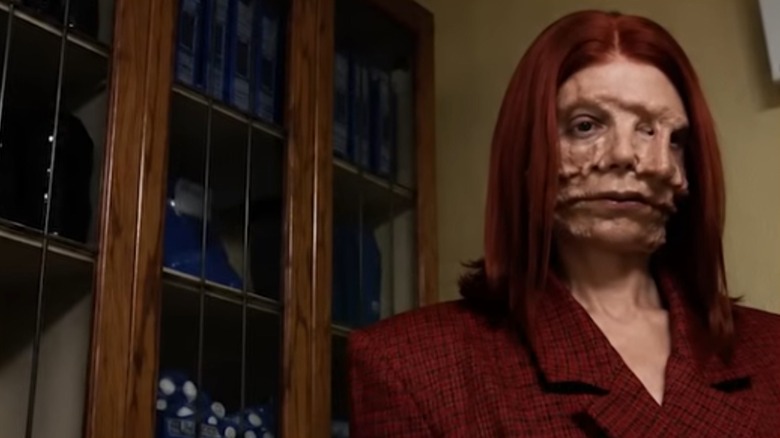
Mary isn't the only guest at Clark's dinner party. They're joined by three strange but silent figures, one standing in a corner, one seated at the table, and the other in an old-timey wheelchair on the opposite side of the room. Their appearances are disconcerting if not downright frightening: They all have the wrong number of facial features in a way that feels very much like badly-rendered AI. But it's their mannequin-like lack of movement and emotionless faces that make them truly chilling to look at. It's as if they are empty husks pretending to be human and failing at it, but not failing badly enough to reassure us that they won't be able to pass for it someday.
Unlike the monstrous Pirate Clark and other malevolent byproducts of human consciousness lurking in the Backrooms, these creatures appear to be relatively harmless (even if they are nightmare fuel). Known as Still Lifes in Backrooms fandom, they seem to be quasi-living mimetic copies of existing humans from the real world. It seems that the female-appearing Still Life, a redheaded figure first seen in the Christmas Room, may be a copy of Clark's wife. He repurposes her scalp as a wig for Mary to wear in their dinnertime roleplay session, and when Pirate Clark (who seems to be Clark's toxicity incarnate) appears, the redhead abruptly looks up as if suddenly awakened before running away screaming.
Kat's death marks the point of no return for Clark
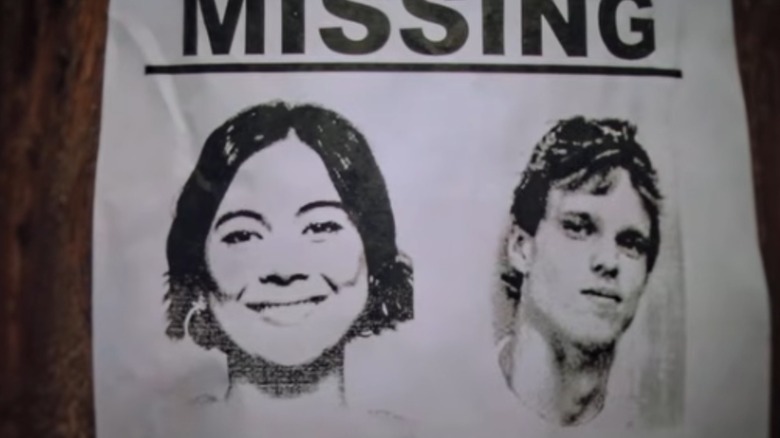
We never actually get to see what happens to Kat after the Pool Room fiasco. Her whereabouts remain a mystery until Clark reveals them in the dinner scene somewhere between tormenting Mary, whining about himself, and eating the burly six-eyed Still Life guy, which is apparently how he's been sustaining himself. Clark digs into the bearded Still Life's belly with his hands, scooping out chunks of flesh like pieces of cake and placing one on each person's plate (including the Still Life guy he took them from). He then walks to the fridge, casually throwing the door open before letting out the surprised "Oh" of someone suddenly realizing they've forgotten to put away their leftovers.
Clark swings the door wide open to reveal Kat's head sitting on a shelf inside. He then mutters to his alarmed therapist, now squirming desperately to get free, "That's my assistant manager. I tried to help her, but she just...," his voice trailing off with disinterest. Exactly how Kat's head got detached from her body and into that fridge is never explained. Even if we conclude that Pirate Clark killed her, a likely possibility since he was nearby when she died, there's no denying Clark saved her head, something confirmed by Mary's strong reaction. Whether he did this because he personally killed her, for cannibalistic reasons, or out of some misplaced performative sentimentalism, the head serves as a signpost that no matter how reasonable he might seem, Clark is a dangerous loose cannon who is capable of just about anything at this point.
Why did Pirate Clark turn on Clark?
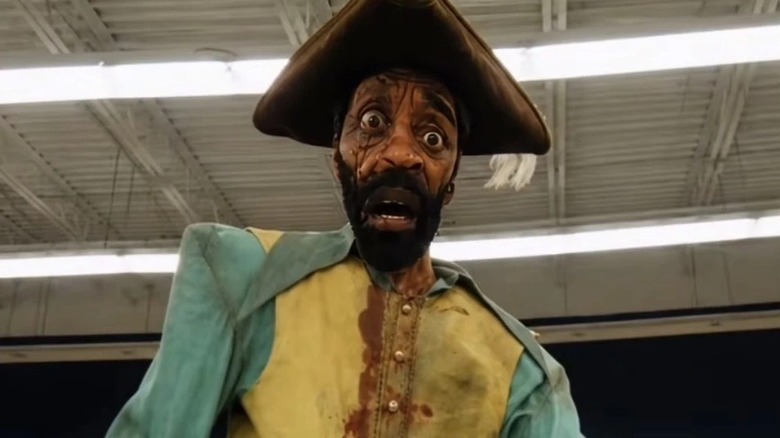
As Clark holds Mary captive, tormenting her with his self-gratifying theatrics, their commotion summons Pirate Clark. But Pirate Clark isn't a tool to be weaponized; he's a Promethean monster with no sense of rules or morality. Pirate Clark picks up his creator in both hands, reflecting Clark's mural. As Clark gazes into the face of the creature spawned from him, he comes out with, "She says we don't need to change." Pirate Clark proceeds to bite into Clark's flesh, but why then?
Speaking to Polygon, Kane Parsons suggested that Mary showing up burst the bubble that Clark had been living in since entering the Backrooms, reminding him that no matter where he is, his problems won't just simply vanish. "I think it's very much showing that, for all the understanding he seems to state about this place, [Clark] allowing himself to realize he's been deluding himself in some way, or realizing he has not found the peace he was searching for, breaks the stability of this little roleplay life he's been in." Pirate Clark knows that Clark is putting words in Mary's mouth and that, deep down, he's aware he can't go on the way he has been.
What happened to Mary at the end?
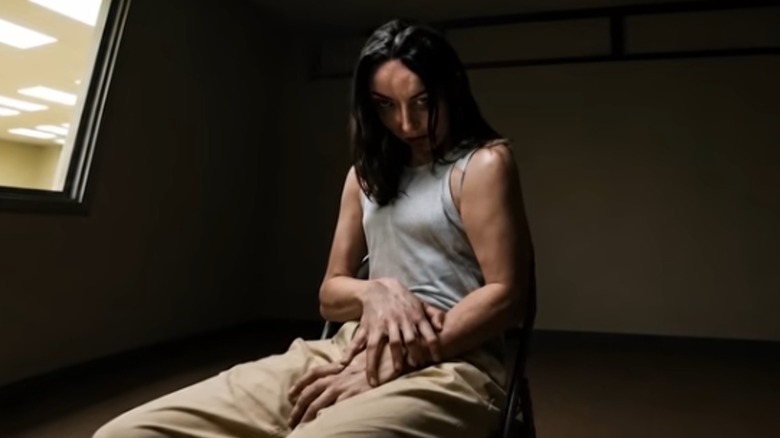
Mary passes out after being chased by Pirate Clark, though not before throwing the concrete handprint from her childhood. She's rescued after it breaks, so this can read as Mary finally letting go of her childhood trauma and being rewarded for that. However, whether or not she gains her freedom is up for debate. Mary ends up being interviewed by Async's Phil (Mark Duplass) about the Backrooms, which, as we soon see, has made a Still Life copy of Mary. Will she be allowed to get on with her life after Async is done with her? And what is the meaning of the windows in the room she's interviewed in? There are already plenty of theories, but the truth is that it's all about how you personally interpret it.
The ending of "Backrooms," which has no post credits scene, contains some of the film's most confusing moments, and that's by design on the part of the creator. "I have always felt disappointed when I hear someone I look up to tell me about their work. I don't really care for that too much," Kane Parsons told Esquire. "I could tell you exactly what it means to me and what it was meant to be, but I don't want that information being out as fact." For longtime Backrooms fans, much of the fun comes from combing through the content and then debating various theories online. One thing most fans agree on when it comes to the film's ending is that Parsons did an excellent job of subverting viewer expectations.