

Every 2020s Pixar Movie Ranked (Including Hoppers)
Pixar Animation Studios isn't just another Disney label for many people. The company has produced computer-animated features that frequently raised the bar for what kind of stories and visuals American animation could explore on the big screen. Elements like the 10 best Pixar duos of all time have solidified titles like "Finding Nemo" or "Coco" among the most beloved movies ever in any genre or medium. For so long, Pixar was perceived as bulletproof both artistically and financially, but the 2020s have brought some unexpected challenges for the house that Buzz and Woody built.
Thanks to major Pixar titles "Soul," "Luca," and "Turning Red" getting dumped to streaming, plus costly flops like "Lightyear" and "Elio" failing to take off at the box office, there's been a lot of negativity surrounding this legendary animation studio. However, just because the current decade has been full of turmoil for Pixar, that doesn't mean that this has been an entirely disposable era for the creators of "The Incredibles" and "Up." Ranking all of the 2020s Pixar movies (including "Hoppers") from worst to best reaffirms the finer nuances of what the studio that gave us "Ratatouille" has been up to lately.
This ranking illustrates that, yes, the 2020s have seen the Pixar name attached to some creative clunkers. But the very best 2020s Pixar features can easily go toe-to-toe with masterpieces like "WALL-E" and "Toy Story 3." Let's explore how the 2020s have meant more than just doom and gloom for the Pixar brand.
9. Lightyear
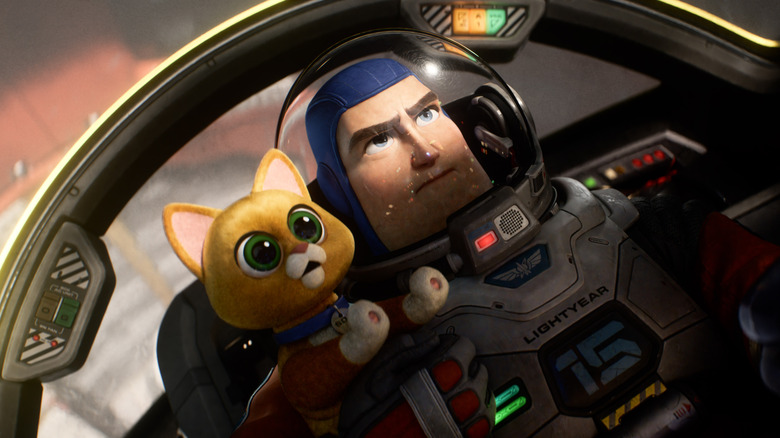
Putting "Lightyear" at the bottom of this list feels a bit like kicking someone while they're down. It's already well-documented that "Lightyear" bombed at the box office, the film's director and producer were laid off from Pixar a year after its release, and it's often pinpointed as an especially cynical Pixar enterprise. To the movie's credit, it does have some fun old-school sci-fi action and tries its hardest to establish new characters without just retreading "Toy Story" nostalgia. Robotic feline Sox (Peter Sohn) is also incredibly charming and cuddly.
Unfortunately, "Lightyear" suffers from an overly complicated screenplay. Specifically, its third act struggles to balance "Toy Story 2" callbacks (including the return of Emperor Zurg and the character's true identity) with convoluted time travel mechanics. It also lacks the zest and energy one would expect from a sci-fi adventure. Too many drably colored environments and meditations on aging bog down something that needed more "Speed Racer" and "Flash Gordon" propulsion.
Chris Evans also fails to shed away his pre-existing star persona while voicing this incarnation of Buzz Lightyear. Echoing Steve Rogers and other past Evans role, this Buzz epitomizes how "Lightyear" as a whole fails to establish its own identity. It's hard to entirely dismiss a movie making good use of a scene-stealer feline like Sox, as well as Keke Palmer's talents as a voice-over performer. However, "Lightyear" can't reach liftoff with its mopey, frustratingly familiar impulses. Just rewatch one of the "Toy Story" movies instead.
8. Elemental
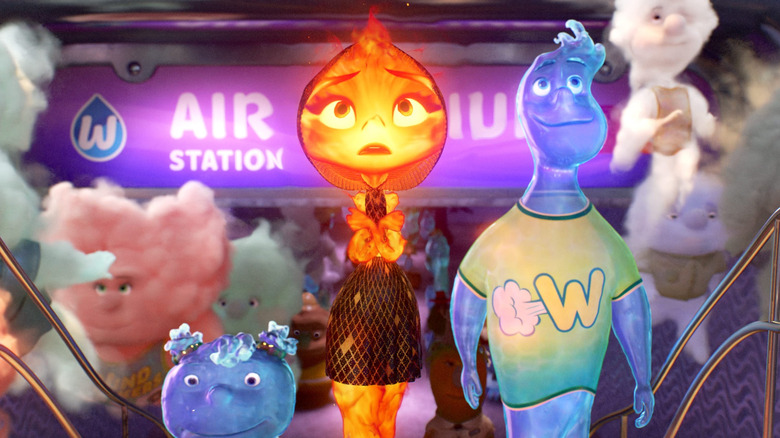
Early in "Elemental," lead character Ember Lumen (Leah Lewis) implores a customer at her dad's store to "get off your ash," a very obvious pun that sets the bar for the kind of creativity director Peter Sohn and screenwriters John Hoberg, Kat Likkel, and Brenda Hsueh are embracing for this enterprise. Credit where credit is due: this creative team really leans into making a modern animated movie that's content to be a classical rom-com rather than a more hyperactive action film. In an age of exhausting "Minions" sequels, that more intimate aesthetic is a welcome change of pace.
Unfortunately, that narrative scope makes it more apparent that the characters here don't quite click like they should. Whereas past Pixar films like "Finding Nemo" and "Ratatouille" had memorable supporting characters at every turn, the various ensemble members in "Elemental" are generic office workers, fleetingly seen athletes, or cringey kid sidekick Clod. Lewis and Mamoudou Athie deliver richly emotional voice work as lead character Ember and Wade Ripple, respectively, but they're still given some really tin-eared dialogue to deliver.
On a more positive note, the animation in "Elemental" is gorgeous, particularly in the richly realized textures of the various water and fire creatures. Thomas Newman's score is also a triumph, packed with distinctive instrumentation and personality. Furthermore, a handful of the sentimental moments work, though some of these stabs at poignancy suffer from ham-fisted writing. "Elemental" has its share of lovely qualities, but its derivative elements make it hard to fall in love with.
7. Luca
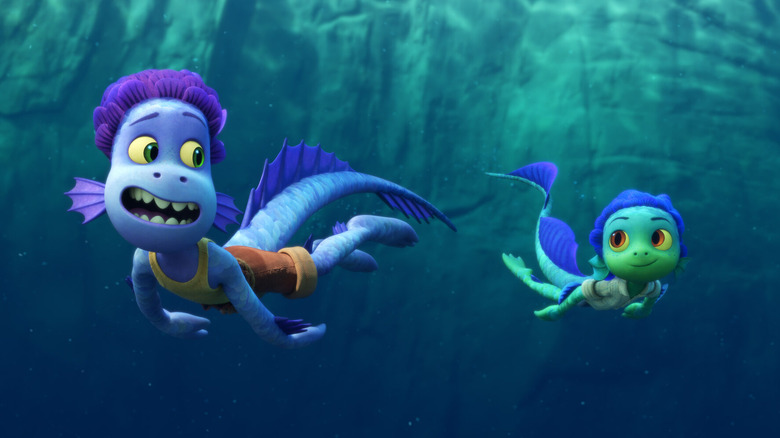
In "Luca," director Enrico Casarosa bring viewers to the fictional Italian town of Portorosso, where two adolescent sea monsters, Luca (Jacob Tremblay) and Alberto (Jack Dylan Grazer), take on human forms to carry out their dreams of living among humans. So long as nobody gets water on the pair (thus revealing their true, scaly forms), they can make those long-simmering ambitions come true. The storytelling priorities in "Luca," which prioritize a scooter race and small-scale comedic interactions, hew closer to a laid-back Studio Ghibli movie rather than a sprawling action film.
That's a lovely creative star to aim for, but unfortunately, the script (credited to Jesse Andrews and Mike Jones) can't help but indulge in louder, brasher elements, such as stretches of excessive slapstick or an outsized bully character named Ercole (Saverio Raimondo). Whereas titles like "My Neighbor Totoro" are confidently relaxed, "Luca" nervously lapses into incongruous bursts of noise, as if worried that younger viewers will tune out if a window isn't shattered every few minutes.
Thankfully, "Luca," like so many Pixar enterprises, excels as a visual exercise. Rarely has the sea looked so inviting in cinema. Sunny Portorosso also looks like a radiant destination that you want to stroll right into. Voice-over performers such as Maya Rudolph and Tremblay also deliver stellar work. Meanwhile, a moving finale that hinges on a parting train is both well-executed and a fittingly small-scale capper to the film's hangout vibes. Unfortunately, concessions to standard, hyperactive American family features undercut the better, easygoing traits in "Luca."
6. Onward
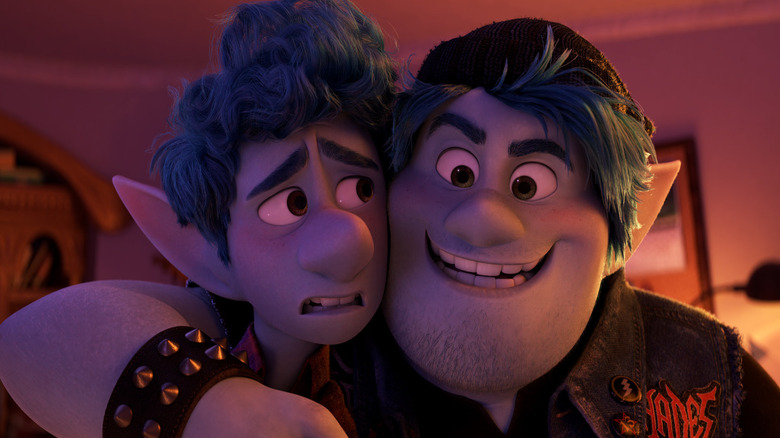
The biggest problem with director Dan Scanlon's "Onward" is easily its urban fantasy setting. Pixar has too often defaulted to a visual aesthetic consisting of cartoony characters inhabiting ultra-realistic backdrops. That problem especially plagues "Onward," which has elves, mermaids, centaurs, and other creatures existing in a generically defined city. Moviegoers can "marvel" at locales like a crusty parking lot, a Manticore-run T.G.I.F. pastiche, or a dingy pawn shop, but none of it's very imaginative, particularly since these settings don't even specify how they service creatures of various shapes and sizes. They just look like standard human dwellings that happen to feature cartoony fantasy figures.
This more uninspired approach to urban fantasy keeps the world of "Onward" from being either emotionally absorbing or visually dazzling. The latter problem is also exacerbated by a strange lack of bright hues in the production. But even with that grave defect, there are still standout qualities to recommend in this saga of elf brothers Ian (Tom Holland) and Barley Lightfoot (Chris Pratt), who use magic to gain closure with their deceased dad.
That includes a shockingly moving performance from Pratt and some clever visual comedy involving the use of magical elements (like a rickety disguise spell). "Onward" also nails its final emotional beat, an impressive feat since said beat juggles two very different character arcs for Ian and Barley. The poignancy and voice acting work here, but they deserve a more visually creative and vibrant world.
5. Elio
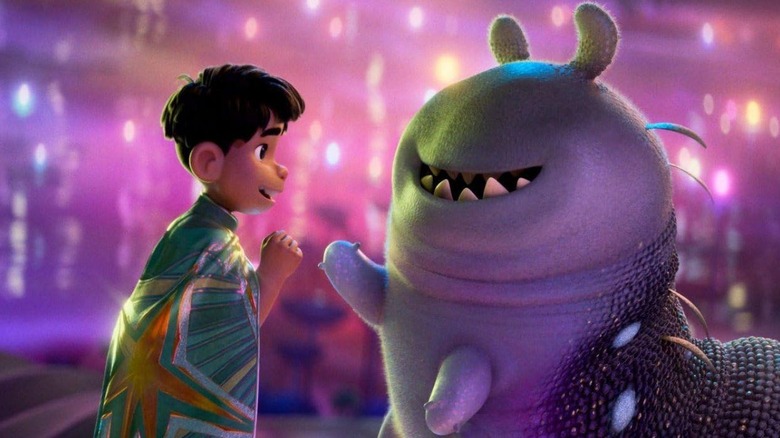
If nothing else, 2025's "Elio" gave the world Glordon (Remy Edgerly), an incredibly adorable grub alien with no eyes, rows of sharp teeth, and a bubbly, instantly endearing personality. Glordon's never short on either optimism or fondness for his newfound human pal Elio Solis (Yonas Kibreab), an adolescent Earthling who's finally fulfilled his dream of being abducted by aliens. Glordon is also terrified to tell his warlord dad Lord Grigon (Brad Garrett) that he doesn't want to kill or conquer people.
Maybe "Elio" should have been called "Glordon" instead, since the latter critter is way more compelling than the titular lead. It's no surprise to learn that significant LGBTQIA+ elements were hastily removed from Elio's character, since his final version feels vacantly defined. Too often, he's just reacting to other, more textured characters, while figures like Glordon or his aunt Olga (Zoe Saldaña) have actually interesting, concrete emotional struggles.
With such a rudimentary protagonist, "Elio" struggles to take off. Its best moments involve kooky body horror (which happily radiate the fingerprints of one of its three directors, Domee Shi), such as a gelatinous Elio clone nonchalantly snapping one of his fingers off while trimming a hedge. In contrast, the film's idea of heart is long-winded speeches, while few of the alien supporting characters leave an impression. Glordon can only do so much to sand the roughest, most forgettable edges off "Elio."
4. Inside Out 2
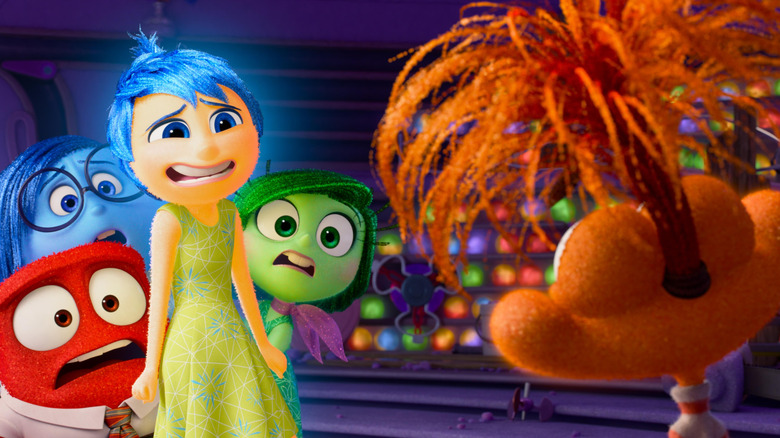
Emotions proved enduringly popular once "Inside Out 2" blew everyone away at the box office. It's clear this title was a monetary and cultural success, the latter reflected in the deluge of memes made about the project. Beneath all this, however, is the film itself, which follows Riley's emotions, like Joy (Amy Poehler), dealing with the sudden presence of new emotions like Anxiety (Maya Hawke) taking over this youngster's mind.
If nothing else, director Kelsey Mann and company prove there's a lot of mileage in visual gags based on mind or emotion-based phenomena. Plenty of giggle-inducing imagery is stuffed in here, while the character designs for new, colorful characters like Anxiety, Envy, and Ennui are inspired. However, "Inside Out 2" is more flawed when it comes to separating itself from its predecessor. The story follows too many beats reheated from the first "Inside Out," though Riley's personal struggles are frustratingly less defined and specific than they were in that 2015 outing.
The rawest emotional beats also can't hold a candle to the first film's unforgettably moving set pieces. Given how often "Inside Out 2" reminds audiences of that initial endeavor, the sequel's lack of true poignancy becomes unavoidable. Overall, "Inside Out 2" is a pleasant enough time at the movies, especially since new voice-over performers like Hawke and Ayo Edebiri are so hysterical. But while other Pixar sequels admirably attempt to be radically different, "Inside Out 2" too often settles for just remaking the original film again.
3. Hoppers
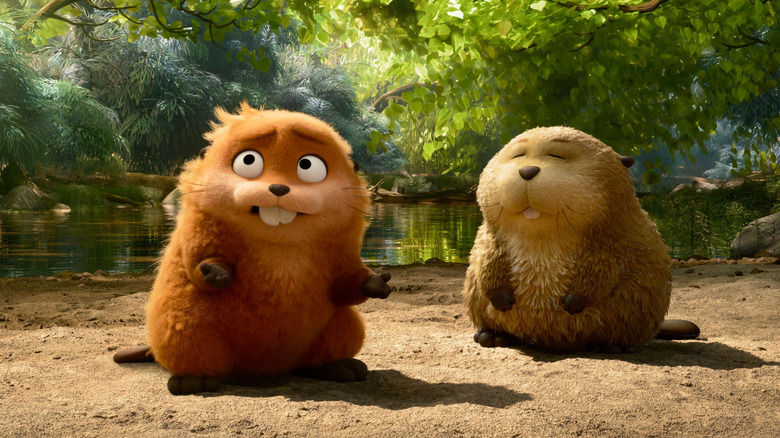
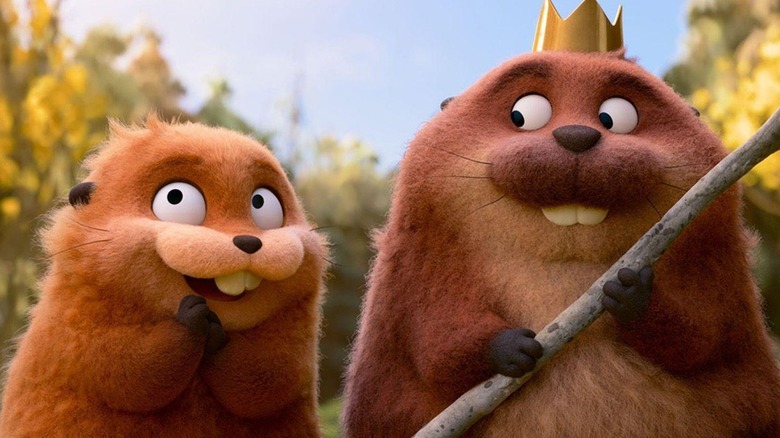
The 2020s have seen some underwhelming Pixar endeavors, but the studio has still produced three different films in this decade that could stand side-by-side with its greatest efforts. One of those is "Hoppers," Pixar's wildest comedy in years. The story of Mabel Tanaka (Piper Curda) using mind-"hopping" technology to put her brain into a robot beaver and save animals from a nearby glade is an incredibly wacky enterprise that isn't afraid to embrace its cartoony side. After tremendously buttoned-up Pixar projects like "Lightyear" and "Elemental," that goofy streak is a welcome sight.
Director Daniel Chung delivers all that unpredictable zaniness with a colorful cast of characters that includes fellow beaver King George (Bobby Moynihan) and grizzly bear Ellen (Melissa Villaseñor). The sheer number of entertaining critters contained within "Hoppers" is one key reason it works so well. Another of its best assets is its animation style, which happily opts for painterly backgrounds and streamlined character designs (especially in the simplified eyes for the animals). These qualities provide a cozy, endearing quality to the entire production.
"Hoppers" even threads a delicate needle between pathos and silliness in its finale. Dave Franco gets to chew the scenery as the film's final villain, while a climactic display of communal cooperation still hits you right in the heart. A rollicking ride unafraid to get weird, "Hoppers" is a blast of a comedy packed with creativity and inventive imagery.
2. Soul
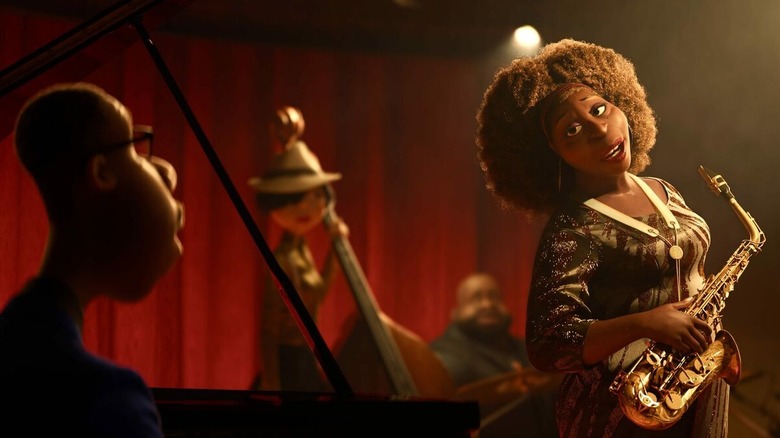
Pete Docter's fourth directorial effort, "Soul," was one of his most moving filmmaking achievements yet. Co-directed by Kemp Powers, "Soul" follows music teacher Joe Gardner (Jamie Foxx) as he contends with possibly making his longstanding dream to perform as a pianist come true, only to suddenly die and enter the afterlife. Now he and unborn soul 22 (Tina Fey) must work together to get Gardner back to the world of the living, all while discovering the qualities that make existence so worthwhile.
There's a tenderness to "Soul" that works beautifully to reinforce its central theme. Every Earthbound location, from a barbershop to a subway train car to a lived-in classroom, radiates warmth and the stories of the various human beings who've existed in these spaces. Meanwhile, Docter, a master of poignancy after helming "Up" and "Inside Out," absolutely nails the most emotionally raw "Soul" segments. This is an incredibly touching enterprise that works on so many levels, including things in "Soul" that only adults will notice.
This particular entry in the Pixar canon doesn't just contain some of the studios' most stunning animation, but also a remarkable orchestral score courtesy of Trent Reznor, Atticus Ross, and Jon Batiste. This combination of talent creates a fascinating sonic landscape that maintains the distinctive motifs of all three musicians without sacrificing the film's idiosyncratic ambiance in the process. Not every movie could pull off a balancing act that impressive. Not every movie, though, is as sublime and overflowing with wisdom as "Soul."
1. Turning Red
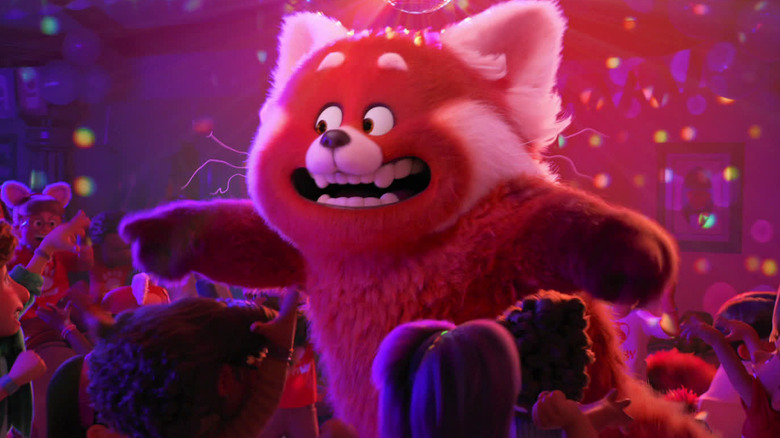
With her 2018 short film "Bao," director Domee Shi demonstrated a gift for dark comedy, very realistic parent/child relationships, and distinctive animation. There's always a risk that when short film helmers transfer to features, the charms of their briefer works will suddenly vanish. That didn't happen with Shi's first feature-length movie, "Turning Red." On the contrary, the story of Meilin "Mei" Lee (Rosalie Chiang) and her mother, Ming Lee (Sandra Oh) is a superb creation that dares to embrace a delightfully more chaotic aesthetic than past Pixar films.
The world of "Turning Red" moves at a breakneck pace, matching the rapid-fire life of teenagers navigating puberty. The feral and messy nature of Mei and her friends is also a treat, especially in the unique gags their rapport inspires. Everything, from the finer intricacies of the film's fictional boy band to the dynamic between Mei and her mother, radiates specificity. There's a tangible sense of care woven into this project, which also emphasizes a distinct brand of wackiness.
It takes a certain finesse to make a movie this enjoyable. After all, if anyone could deliver entertainment like this, audiences would be treated to zany gems every week. Domee Shi and company consistently exemplify the artistry needed to make this film soar. No wonder "Turning Red" smashed an important Disney+ record shortly after its debut. It is, after all, the best Pixar movie of the 2020s (so far) and a worthy spiritual successor to "Bao."