

The Lord Of The Rings: The Rings Of Power Season 3 Ending Explained
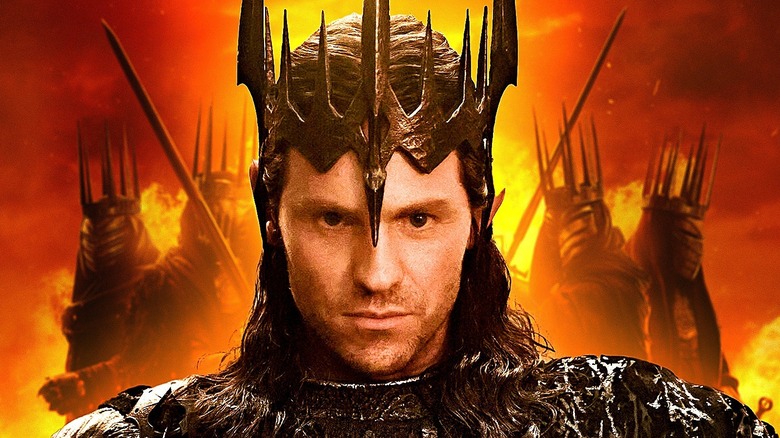
Contains spoilers for "The Lord of the Rings: The Rings of Power" Season 3, Episodes 7 and 8 — "Orodruin" and "The Doom of Men"
"The Lord of the Rings: The Rings of Power" Season 3 has officially wrapped up. After a harrowing release schedule that saw all eight episodes arrive in under two weeks, the season ended with Episode 7 and Episode 8 dropping at the same time as a two-part ending for the show. The two-hour ordeal is necessary when you're covering so many different stories and trying to get over a dozen main characters into place before Season 4 picks the narrative up again.
With so much happening, it's easy to lose track of where the season actually ended. By the time the credits roll, Sauron (Charlie Vickers) has distributed Rings of Power to Mortal Men, and he's finally forged his own Ring to rule them all. The Elves are saved from destruction thanks to the timely arrival of Númenor's army, but what the heck happens at the end there when Sauron kneels to Ar-Pharazôn (Trystan Gravelle)? And that doesn't even touch on the fact that there's a Wizard duel, the Dwarves exile their king, a Balrog shocks everyone by talking — the list goes on.
There are plenty of questions swirling around in the wake of the last two episodes, so let's try to sort out what exactly happened at the end of Season 3. Before we look at that, though, let's see how we got here, complete with all the convoluted Tolkienian names and places.
What you need to remember about the plot of The Rings of Power Season 3
Season 3 of "The Rings of Power" was described as a soft reboot, with showrunner Patrick McKay even characterizing the new season as "a great jumping-on point for fans." It's a natural point to reset the story's momentum, thanks to a five-year time jump as the season starts. That said, it was also a little jarring trying to catch up with all the changes during the first six episodes.
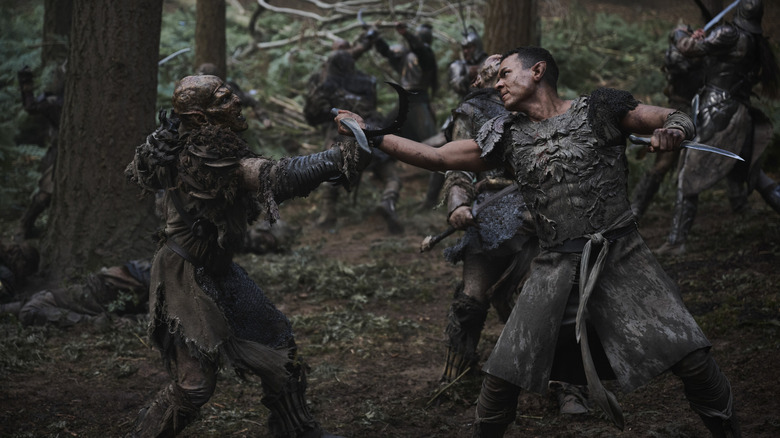
When the season starts, the self-defining "War of the Elves and Sauron" is in full swing. The Dark Lord also spends a lot of the season distributing his Rings of Power and creating the Nazgnagôl (proto-Nazgûl who have the Nine Rings of Power but haven't become ghosts yet).
The Elves continue to resist Sauron's growing power and his desire to forge a master Ring. This leads to Galadriel (Morfydd Clark) and Arondir (Ismael Cruz Córdova) teaming up with the rogue orc Marnûkh (Adam Young) to go on a quest to the chilling fortress of Gundabad. There, Arondir dies, but Galadriel finds her long-lost hubby in the form of Celeborn, played by Jamie Campbell Bower.
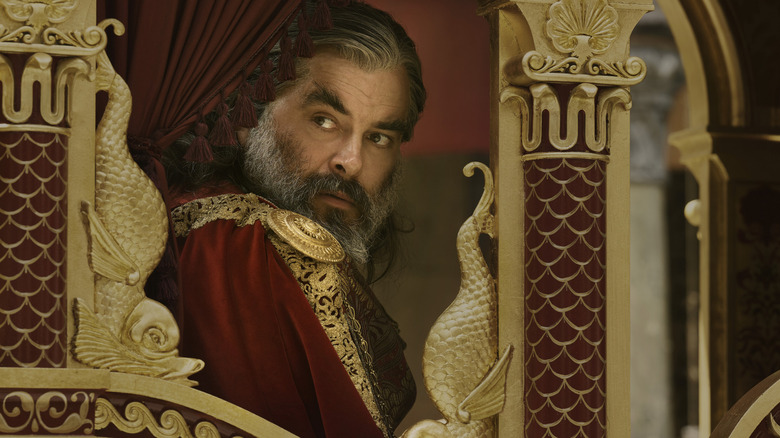
While Galadriel and Celeborn reunite and try to talk through why the latter has been missing for so long, Elrond (Robert Aramayo) meets with the High King Gil-galad (Benjamin Walker) and decides to visit the humans on the island of Númenor to recruit their help. There, they find the people in a civil war, which only ends when Míriel (Cynthia Addai-Robinson) agrees to marry her first cousin Pharazôn to bring their two parties to peace. With the crisis resolved, Pharazôn then takes a united Númenórean fleet back to Middle-earth to challenge Sauron in the finale.
A lot of other stuff happens in Season 3
While Sauron, the Elves, and Númenor are the main focal points of the season, there are other areas of the story that soak up a lot of screen time across the first six episodes (even with the showrunners changing Season 3 by cutting out the Harfoots).
One of the main storylines traces the many adventures of Gandalf (Daniel Weyman) across the dusty plains and dry mountains of Rhûn. Tolkien didn't talk much about Rhûn in his source material, but the show has dived into depicting this rich and disturbing cult-like civilization off in the eastern regions of Middle-earth.
There, Gandalf spends the season completing his training under Tom Bombadil (Rory Kinnear) and connecting with the Secret Fire (a form of the Creator God in Tolkien's world). He also realizes that he needs to help the Dark Wizard (Ciarán Hinds), who is a fallen version of Pallando, one of Tolkien's two Blue Wizards. Pallando and the Nazgnagôl Khamûl capture Gandalf and bring him along with their army back west to aid Sauron in his wars of conquest.
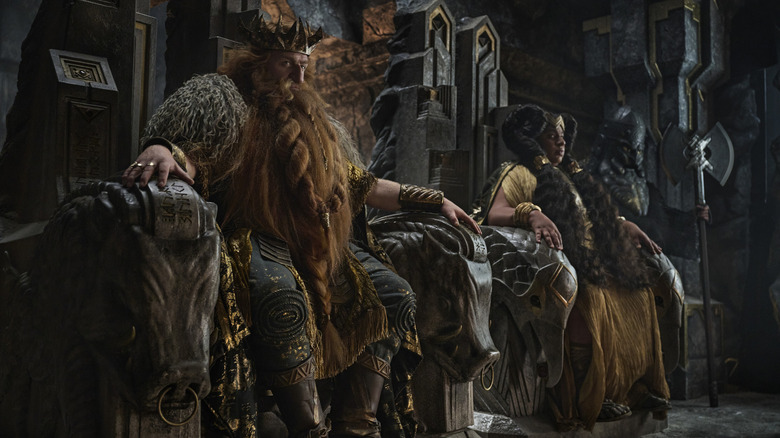
Meanwhile, the Dwarven mansion of Khazad-dûm is in a political crisis this season. Durin (Owain Arthur) is king, but his brother Thráin shows up and claims the throne. It turns out Thráin is working for Sauron, too, and is looking for the Dwarven Rings of Power, which his brother has hidden. Again, a lot going on here. The good news is that a lot of the stories came together in the final two episodes.
What happened at the end of The Rings of Power Season 3?
This brings us to Episode 7, "Orodruin," and Episode 8, "The Doom of Men." After recapturing and torturing Celeborn, Sauron discovers what he needs to forge the One Ring: a hallowed metal from the Undying Lands in the West. He addresses this non-canon detail by using metal from the ancient Elven smith Fëanor's hammer. Sauron also visits the Balrog in Moria to learn how to handle the heat better. After learning the fiery demon's secrets, he ends Episode 7 with an epic session of forging in the heart of Mount Doom — which ends with the One Ring on his finger.
During the rest of the episode, we see Thráin find most of the Rings of Power and banish his brother and his family from Khazad-dûm. Once outside of the Dwarven kingdom, Durin realizes that one of his kids smuggled out one of the Seven Rings of Power for the Dwarves.
On Númenor, we get a heartbreaking kiss and final moment between Míriel and Elendil (Lloyd Owen) before the former marries Pharazôn as an act of sacrifice to save her people from civil war.
Sauron does the unthinkable as the season ends
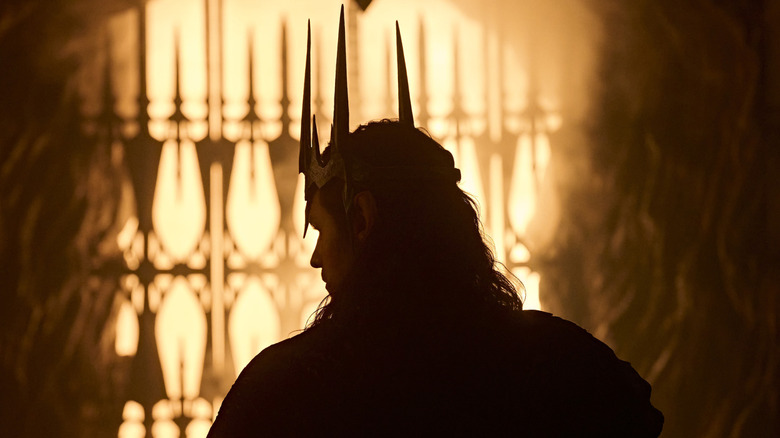
As Episode 8 opens, the One Ring is forged, and war has come to Middle-earth. Pharazôn lands in Umbar on the southern coast of the continent with a massive army at his back. Sauron marshals an even bigger army, thanks in part to reinforcements that the Dark Wizard has brought from Rhûn. Gandalf is there, too. Sauron and Khamûl try to break the captured Wizard's will. But he ends up turning Pallando's heart back to good, and the redeemed Wizard dies in a duel with Khamûl.
Freed from the Dark Wizard's spell, his forces return to Rhûn, leaving Sauron with a severely weakened army. When Pharazôn's forces meet the Dark Lord in battle, Sauron does the unthinkable. He takes off the One Ring and surrenders to the Númenórean army. As the season ends, we get a close-up of the Dark Lord's face as he bows before the laughing Human king. A flicker of a smile plays on his lips as everything cuts to black.
That's the (not so) quick recap of Season 3's final two episodes. So what do the dozens of lingering questions and loose ends mean as we begin the wait for Season 4?
What does the end of The Rings of Power Season 3 mean for the Elves?
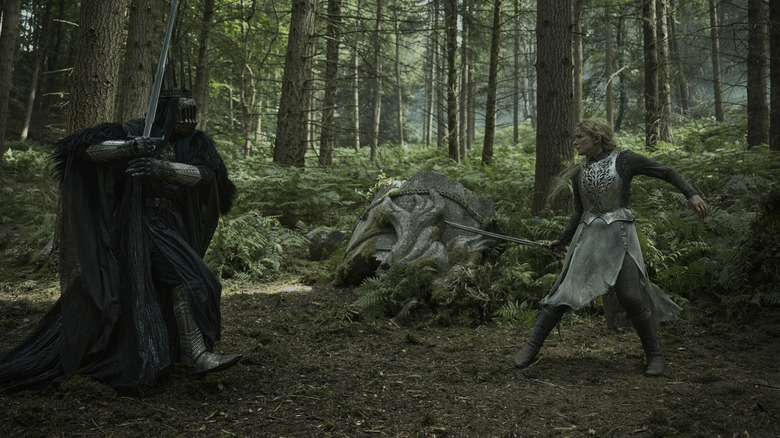
As the curtain falls on Season 3, the Elves are both in a better and worse place than they started. On the plus side, Sauron's armies are compromised, and their civilization doesn't face imminent extinction. That's always good news.
But Sauron has his One Ring now. As he puts it on at the end of Episode 7, the wearers of the Three Elven Rings are immediately cognizant of him. This mirrors the part in "The Silmarillion" book in which J.R.R. Tolkien writes, "As soon as Sauron set the One Ring upon his finger they were aware of him; and they knew him, and perceived that he would be master of them, and of all that they wrought. Then in anger and fear they took off their rings."
Expect the Elves to have a bit of a breather heading into Season 4. Galadriel and Celeborn can hopefully start to catch up and figure out who they are as a couple after a relationship hiatus of a millennium or two. (And maybe they'll finally have that kid that, you know, needs to grow up and become Elrond's wife.)
As for the rest of the Elven folk, they're okay right now. Sauron is a captive of the Númenóreans, and he isn't wearing his One Ring anymore. But at the same time, the Elves aren't wearing theirs either. And if the Dark Lord were to, say, create Atlantean havoc on Númenor and then come back to the mainland and take up his Ring again? You can bet they'll be right back in hot water. You might even say they'd need to forge a mighty alliance to stop him.
What does the end of The Rings of Power Season 3 mean for the Dwarves?
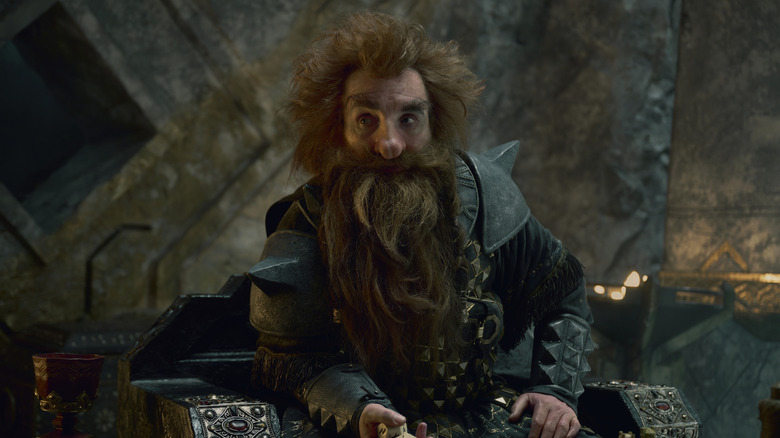
The ending of Season 3 was quiet but important for the Dwarves. Durin, Disa, and their teenage kiddos are kicked out of Khazad-dûm, where Thráin now rules unopposed. This leaves their entire race in Middle-earth in jeopardy on multiple fronts. Expect Thráin to give Sauron the Dwarven Rings of Power he's recovered, and for those to be distributed to different Dwarf-lords. While the Dwarves don't get enslaved by their Rings of Power in the same way as, say, Mortal Men, Rings of Power enflame their greed and will make them much less cooperative allies in the fight against evil.
As for Durin and company, they're looking for refuge with the Elves, but what then? Durin seems encouraged when he finds out that his daughter brought one of the Seven Rings with them into exile, but is that safe? Is he going to use it? Won't that make it easier for Sauron to control or at least influence him? Even if it doesn't, how can Durin use a Dwarven Ring to create an actionable plan either to regain his kingdom or help fight Sauron?
There are a lot of what-ifs and confusing questions surrounding the Dwarves as the season ends. Tolkien didn't write much about them during this era, either. Looks like J.D. Payne and Patrick McKay have their work cut out for them as they try to get it all to make sense heading into Season 4.
What does the end of The Rings of Power Season 3 mean for the Wizards (and Tom Bombadil)?
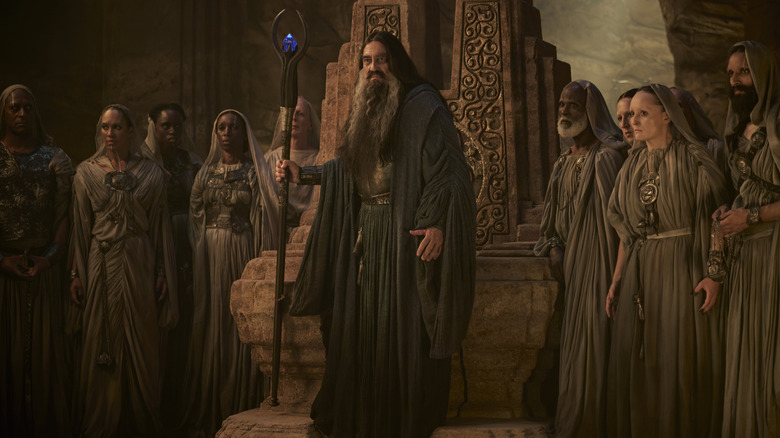
One of the strangest parts of "The Rings of Power" has been the events in Rhûn. Tolkien's legendarium says nothing about Gandalf in the Second Age. So everything we're seeing is made up for the show. That said, there's a strong sense of closure in the East as the season ends.
The main characters Tolkien talked about in that area were the Blue Wizards, and both of them are dead by the end of Season 3. The armies of Rhûn return home in the finale too. Gandalf goes back to the desert, where he links up with good ol' Tom Bombadil, and they head back West.
For all intents and purposes, it feels like the Rhûn part of the "Rings of Power" story may be over. The one wild card is Khamûl the Easterling. Zubin Varla's character is still lurking around, and he could easily continue the story in the East in future seasons. For now, though, the Blue Wizards are gone, Gandalf is headed back West, and Tom Bombadil is going back home to his wife, Goldberry, Daughter of the River.
What does the end of The Rings of Power Season 3 mean for Númenor?
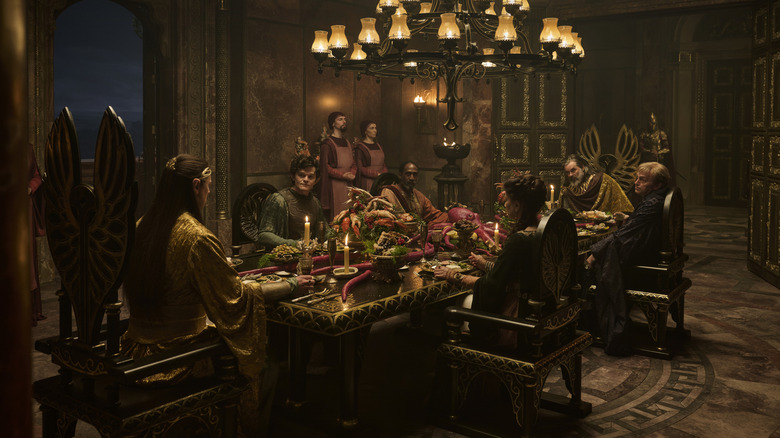
Númenor was busy in Season 3. A civil war almost broke out as Míriel, Elendil, and his sons led the pro-Elvish group known as the Faithful against Pharazôn and his faction of the King's Men. Right before fighting started, though, Pharazôn and Míriel sorted things out in an unorthodox style: they got married. The unwelcome nuptials are straight out of Tolkien's books, although in that case, Pharazôn forces Míriel to marry him against her will.
Agency or not, Míriel is now connected to Pharazôn — and the king rules a re-united Númenor as the season ends. Not only that, but he suddenly finds himself leading a powerful army, wielding a massive navy, and he's captured the Dark Lord himself.
Númenor has been simmering in the background for a lot of the show so far. Season 3 brought it to center stage, and the finale really showed how powerful the Númenóreans can be when they're at their best. With Sauron as its servant, Númenor is about to enter the most powerful, glorious, and dangerous period in its entire history.
What does the end of The Rings of Power Season 3 mean for Sauron and war in Middle-earth?
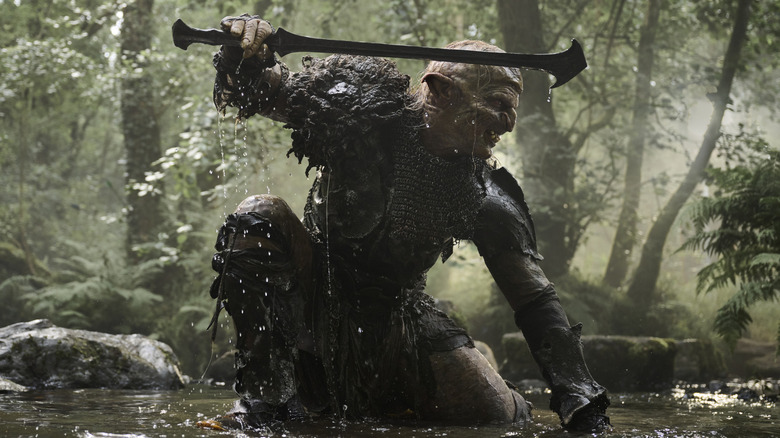
Sauron has been hell-bent on controlling everyone around him for the entire "The Rings of Power" story. When the finale starts, Sauron is at the top of his game. He has the biggest army on the block. He's got his Ruling Ring. He's got Wizards and kings serving him. Then, over the course of one episode, he's brought so low that he's bowing before his enemies in submission.
The sudden switch isn't made up. It comes right from Tolkien's canon. When Sauron sees the might of Númenor, he knows he can't beat it by force, so he submits to the Númenóreans (who are also called the Dúnedain). But as "The Silmarillion" adds, "he saw not his time yet to work his will with the Dúnedain. And he was crafty, well skilled to gain what he would by subtlety when force might not avail."
That smile on Sauron's face right before the credits start? That's not an accident. The Dark Lord is far from defeated. Rhûn might be done fighting. His Orcs might be outnumbered and shaking in their boots. His war with the Elves may be done for now. But make no mistake. Sauron didn't surrender in defeat. It was his best move in a high-stakes game that he's still playing for keeps.
What does the end of The Rings of Power Season 3 mean for The Rings of Power themselves?
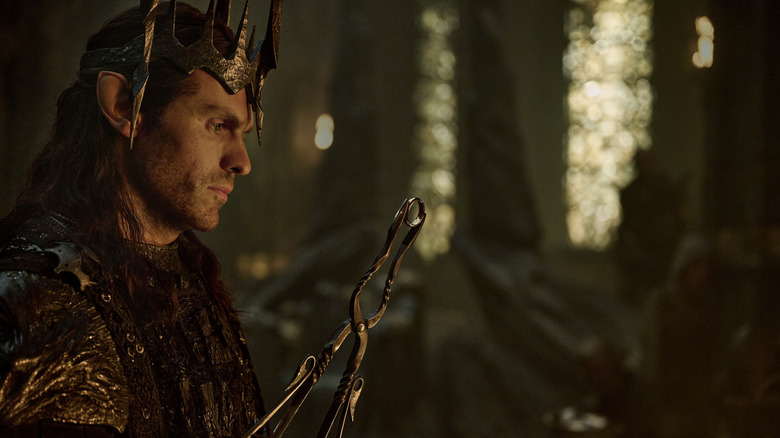
As for the Rings of Power themselves, all 20 Rings are in play by the Season 3 finale. We see all of them (or nearly all of them) in the last two episodes. Here's where they end up and why that matters.
The Three Rings for the Elven-kings are compromised by the end of Episode 7. Gil-galad, Galadriel, and Círdan (Ben Daniels) take theirs off to avoid being caught by the One Ring. The Elves still have them, but they're not wearing them.
Thráin has six of the Seven Dwarven Rings and has every intention to give them to Sauron. But Durin has one Ring still, and it clearly is going to factor into his future plans as he figures out his next move. As for the Nine Rings for Mortal Men, they're mostly with Sauron or on the hands of the Nazgnagôl, including Theo (Tyroe Muhafidin) — with one exception. In Episode 8, Pallando takes one of these. Then Gandalf gets it, and he gives it to Tom Bombadil, who makes it disappear. That's a non-canon part, so we really don't know what's going on there.
That leaves the One Ring to rule them all. Sauron finally gets the Ring in Episode 7, but one short episode later, he takes it off and surrenders to Ar-Pharazôn. Yet the location of Sauron's Ring isn't clear when the finale ends. In a letter to a fan in 1958, Tolkien did explicitly say that Sauron has the One Ring when he goes to Númenor. But the details surrounding where he keeps it and how he uses it are confusing. At this point, all we know is that he takes it off before he surrenders.
What the end of The Rings of Power Season 3 could mean for the franchise
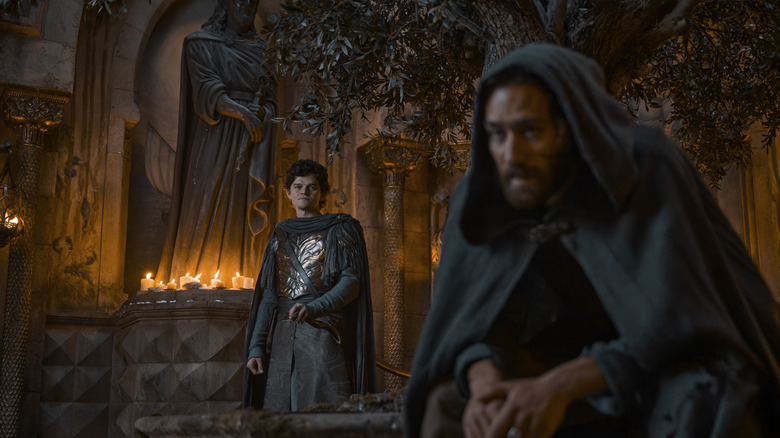
"The Rings of Power" Season 3 brings a lot of its disparate storylines together. We get closure in some areas, like Rhûn, the saga of the Dark Wizard, and the wars in Númenor and Middle-earth. All of the Rings of Power are finally forged, as well, and we know who everyone is. But there are a ton of open-ended questions that will need to be addressed in Season 4. The good news is that another season is definitely coming at this point.
In the lead-up to the Season 3 finale, Prime Video officially confirmed that the series is renewed for Season 4. Now, all that's left to do is wait for J.D. Payne and Patrick McKay's epic Second Age story to resume. When it does, don't expect the same thing as Season 3, though. While this season started with war and power, the next step in the story is one of a Dark Lord humbled, a King of Men at the top of his game, and an unscratched itch not just for glory and power, but for immortality away in the West. The show will likely feel different in Season 4, but the drama won't slow down for a second.