

The Ending Of Clayface Explained

Contains spoilers for "Clayface"
Typical comic book movies end with gigantic explosions, a CG laser beam shooting into the sky, and maybe the debut of a new superhero who will get explored in a potential sequel. "Clayface," though, isn't a typical comic book movie. It's a lot closer in tone and aesthetic to body horror films or "Darkman" than, say, "Black Adam." So one shouldn't be surprised that this feature charts its own path when it comes to its ending.
That conclusion comes after a story in which heartthrob actor Matt Hagen (Tom Rhys Harries) scrambles to figure out a cure for his suddenly disfigured face. Naturally, he opts in to a risky medical procedure that could restructure his face. While initially successful, this operation proves disastrous and eventually ensures that Hagen's body becomes both gooey and capable of drastic transformations. In other words, he turns into the Batman baddie known as Clayface.
This character arc transpiring within the grimy streets of Gotham City is the crux of "Clayface," a movie full of both grisly scares and tragedy. However, fans of the wider DC Universe in which "Clayface" is set are bound to be curious what happens in the film's ending. Does a comics-accurate Clayface finally appear in the finale? Are there teases for Clayface (or even Batman's) future? Let's break down the ending of "Clayface" — which is certainly a bit different from conventional comic book movie finales — to get to the bottom of all these questions.
What to remember about the plot of Clayface
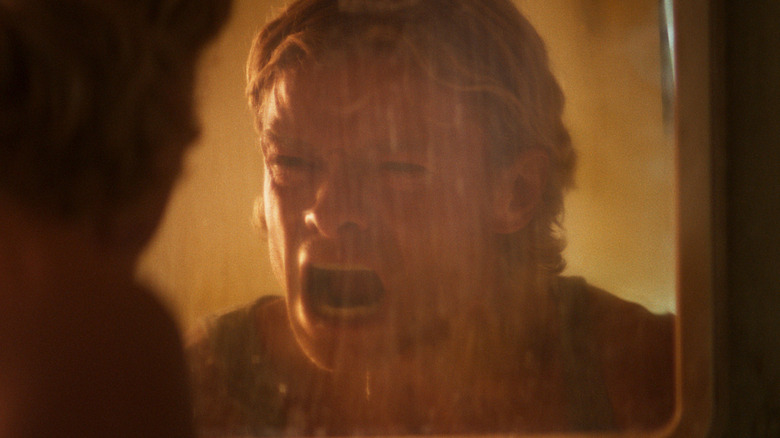
Before "Clayface" reaches its grisly conclusion, the film is a tragic exercise about actor Matt Hagen succumbing to his darkest and most vengeful impulses. As his shape-shifting and healing abilities become more apparent, Hagen begins taking down folks who have wronged him and aided the evil Gotham gangster Markos Szabo (David Dencik), who slashed up his face. This portion of the movie especially harkens back to other titles penned by Mike Flanagan, whose stories (like "Oculus" or "Midnight Mass") often feature bittersweet narratives where ordinary people can't resist or outwit supernatural forces.
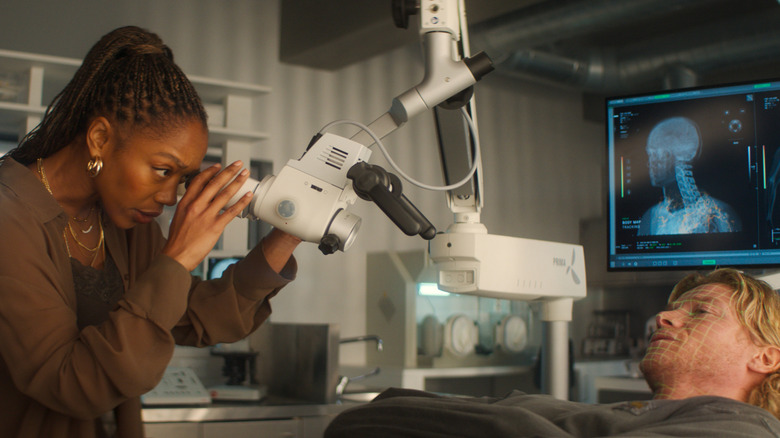
Whether it's evil mirrors, vampires, or cells transforming Hagen's body, Flanagan-penned sagas are often about vulnerable people failing to escape unthinkably horrific circumstances. "Clayface" director James Watkins and co-writer Hossein Amini carry on that spirit in depicting Matt Hagen as a violent character who uses his powers to rip out spines or suffocate people. By the end, Dr. Caitlyn Corr (Naomi Ackie), the woman responsible for the procedure that turns Hagen into Clayface, no longer even recognizes her former patient. She's terrified by Hagen and knows he must be stopped.
How does Clayface end?

The finale of "Clayface" hinges on Corr deploying a pre-established "kill switch" that's supposed to halt the cells that make Hagen's body super-powered. At Hagen's insistence, she executes this operation, seemingly killing Hagen and sending his remains bubbling to into a nearby storm drain.
While the ending of James Gunn's "Superman" was upbeat and poignant, "Clayface" concludes on a fittingly anguished note, with Corr walking the streets of Gotham only to have an unhoused man approach her and ask for some money. After she tosses a few dollars into his cup, he does a little bow reminding her of a similar gesture Hagen did while leaving one of their earliest sessions. The camera then follows this unhoused person through an encampment of similarly unhoused individuals in front of a tunnel. Inside this tunnel, the guy opens a dingy door. Inside is a mattress, a mirror, and a handful of other throwaway objects making up Matt Hagen's new room.
Yes, this man is Hagen in disguise. This is the only way Hagen can possibly approach Corr now that the world believes he's dead. Speaking of Corr, she suddenly appears clutching a newspaper, noting that inside are a deluge of "positive reviews" for Hagen. The two proceed to kiss as the camera pans out and reveals that Hagen is smooching a simulacrum of Corr he's created with his clay-like skin. After this, Hagen returns to his monstrous comic-accurate final form and shrieks over everything that's happened. Clayface is now a beast, isolated and permanently nursing romantic intentions that will never be fulfilled.
Clayface ends like classic body horror movies
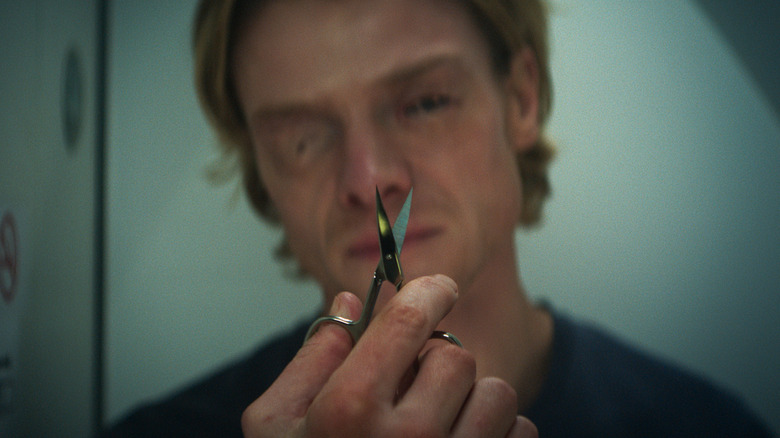
The best body horror movies often end on extremely gruesome and/or extreme notes. "Titane," for instance, goes out with a birthing scene like no other in the history of cinema. "Videodrome," meanwhile, concludes with its entire premise descending into chaos. "Clayface" harkens back to these gung-ho endings, especially the tragic ones. A key climactic sequence, in which Hagen transforms into his most monstrous version of Clayface in front of Corr and begs her to kill him, specifically echoes a similar ending from the 1986 version of "The Fly." The decades may change, but men transformed into unholy creations will always beg their ladies to end their suffering.
Certainly the scream-laden "Clayface" ending channels the grim vibes that body horror movies usually send audiences home with. Meanwhile, the scene where Corr looks around a bustling corner of Gotham and thinks she sees Hagen in random Gotham citizens harkens back to a similar ending scene in the Sam Raimi film "Darkman." Though not quite a body horror movie, "Darkman" still had its kooky approaches to the human body and certainly took more cues from Universal Monsters features than 1978's "Superman."
Right up until the final scenes before its end credits, "Clayface" maintains its dedication to referencing and making proud those classic horror features. Given what especially iconic endings body horror cinema has dished out, there's far worse places to draw artistic inspiration from.
Don't look out for any sequel teases here
Body horror cinema can really go anywhere, but "Clayface" does not include any signifiers for where (or even if) its story goes next. No Batman cameos, cutesy scenes teasing Clayface interacting with other Gotham-dwelling villains, or even a name-drop of Arkham Asylum.
Instead, "Clayface" stays steadfast in delivering an ending devoid of anything remotely resembling a setup for larger franchises. Even beyond strengthening the genre influences of "Clayface," this is also for the best given how many sequel teases in comic book movies have often gone nowhere. Various superhero movie post-credits scenes that were never paid off – even just every DC Extended Universe post-credit scene that hasn't paid off – have shown that setting up potential sequels isn't the same thing as actually realizing those projects.
Wasting time teeing up potential movies that may or may not happen often only dilutes the film you're trying to make in the here and now. "Clayface" keeps its eyes on the present by eschewing sequel teases in its ending.
Caitlin is back at the bottom

While its ending is standalone, "Clayface" still firmly exists in the DC Universe timeline that also houses "Superman," "Lanterns," "Creature Commandos," and several other projects. Its characters and plot details could eventually come back in future DC Universe properties. Where, then, does "Clayface" leave one of its few surviving prominent characters, Dr. Caitlan Corr? Wherever she goes in the DC Universe next (if she even appears again), she'll be starting at the bottom. "Clayface" ends with her lab getting raided by the Gotham police as they search for any evidence of what turned Hagen into a shape-shifting killer.
The cops at her lab are cordial towards Corr and she doesn't appear to do any prison time for experimenting on a human being. However, her connection with this new Gotham villain is clearly public knowledge and all her research is boxed up in an evidence cabinet at a Gotham police station. There's no way she can gather the same kind of funding or large-scale support she could before, now that she's intertwined with the grisly Clayface debacle. That could make her vulnerable to being recruited by other DC Universe foes who need a brilliant mind to help them.
Then again, after witnessing such grisly carnage (and bravely pulling the "kill switch" on Hagen), perhaps she'll become a scientific ally to some DC Universe superheroes. Now that she's starting from scratch, anything's possible.
Matt's human form is still around -- kind of

In the final "Clayface" scene, one crucial detail about Matt Hagen's final form is made clear. He can still turn into the original, handsome movie star he started the movie as. However, it's clear that the comics-accurate version of the character is his new default form, as seen by this being the last version of Hagen that moviegoers see before the credits begin rolling. At this point, the super-powered molecules Hagen has injected himself with have made this gelatinous form his dominant incarnation. Plus, constantly turning himself back into the original Matt Hagen would have the unpleasant effect of reminding Hagen of the life he can no longer have.
On a more practical meta-level, establishing that Matt Hagen can indeed turn into his old human form (at least temporarily) ensures that future live-action DC Universe projects have some flexibility for how they portray Clayface. If it's too costly to depict the most monstrous CG Clayface form, Tom Rhys Harries can still come in and play the character with minimal (if any) makeup work. Plus, if Harries takes off as a movie star after "Clayface," future DC Universe productions can still take advantage of his face rather than just burying him under either CG or other live-action alter-egos.
Could Batman and Clayface fight someday?
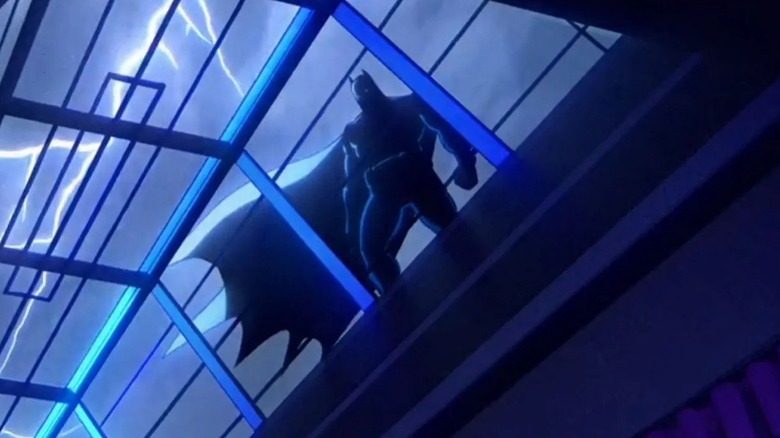
In the final days leading up to the release of "Clayface," DC Studios co-head Peter Safran confirmed a pivotal detail about this particular DC Universe project: Batman is officially active as a crime-fighter while "Clayface" transpires. There's so much ambiguity surrounding this saga's Batman plans that speculation and fan theories persist on whether, say, James Gunn's DC Universe needs Robert Pattinson's Batman. Still, following the brief appearance of Batman in the initial "Creature Commandos" season, this provides further glimpses into what's going on with Batman in this franchise.
While Safran has made it clear Batman does exist off-screen during the events of "Clayface," there's nary a reference to the Caped Crusader in the entire film. No Bat-signals light up the sky, nor are there jokes about people dressed like bats making nights in Gotham so eventful. However, the confirmation that Batman already exists in this DC Universe makes it clear that there's potential for a Batman and Clayface skirmish down the line. After all, Clayface was already an adversarial force in "Creature Commandos."
If he keeps up that behavior in Gotham, it's inevitable that Batman will eventually have to fight this guy — even if "Clayface" as a movie has zero teases of such a confrontation.
Where could Clayface show up next in the DC Universe?

"Clayface" features no end credits text reassuring audiences that "Clayface will return in [insert DC Universe project here]," nor are there awkward digressions hinting at forthcoming DC Universe productions. Still, it's worth asking what kind of DC Universe endeavors could make use of Clayface next. Something involving Batman would be a no-brainer, but the announced DC Universe feature centered on the Dark Knight, "The Brave and the Bold," is still stuck in development and years away from release. Potentially more imminent is another DC Universe production focused on Batman baddies, specifically Deathstroke and Bane, titled "Savage Hunters."
Perhaps that movie will make room for other Gotham-dwelling foes, including Clayface. Then there's the approaching sophomore season of "Creature Commandos." Given that the initial batch of "Commandos" episodes featured Clayface, it wouldn't be shocking if this program brought the character back for another appearance. A proposed movie about Swamp-Thing (another DC Comics monster, albeit a much friendlier character, with horror roots) and a brewing Teen Titans film could also make room for Matt Hagen.
While there are few obvious places in the next few years of DC Universe media for Clayface to reappear, Hagen proved quite durable during his solo origin story, so don't count him out in returning to this franchise very soon.