

5 Best Randolph Scott Western Movies, Ranked
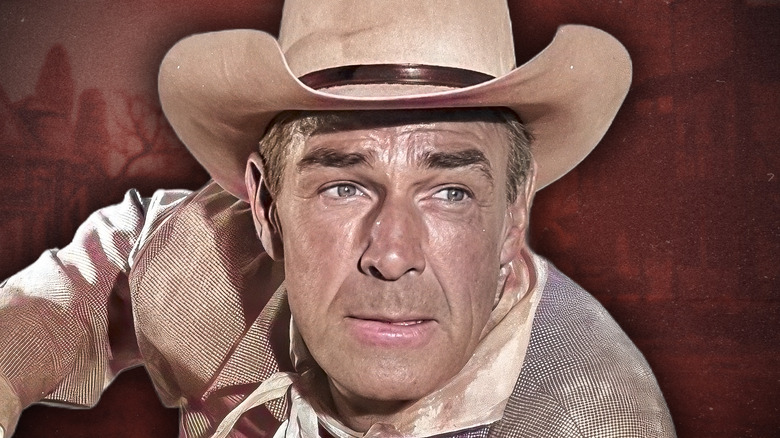
Talk to any average film fan and they'll undoubtedly know several movie stars that dominated the vintage American Western. Classic Hollywood and spaghetti Western folks like John Wayne, Jimmy Stewart, and Clint Eastwood remain pervasive in the public consciousness, while modern genre fixtures like Kevin Costner are also immensely popular. However, one of these prolific movie stars might no longer be a household name. That would be Randolph Scott, who worked in various genres, but primarily Westerns, for a little over three decades in the middle of the 20th century.
Randolph Scott was never nominated for Oscars, nor does his mug often grace collages of the greatest vintage movie stars. However, just because he isn't talked about as much as Wayne or Stewart shouldn't erase Scott's impressive Western career. The best Randolph Scott Westerns (ranked below from "lowest" to highest average Letterboxd user rating) are deeply acclaimed movies. Scott was a great centerpiece for films that subtly subverted Western cinema norms, while his work in ensemble casts was tremendous.
These five movies and their respective Letterboxd reputations reinforce all that Randolph Scott contributed to both Westerns and American cinema writ large. Nobody will ever forget Scott's name after absorbing what makes his five best Westerns so special.
5. Comanche Station
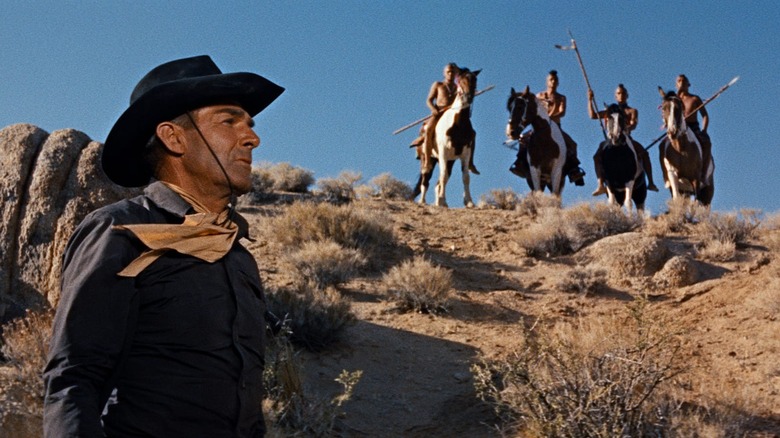
The aspect ratio format CinemaScope didn't last very long (its peak usage stretched only 14 years during the middle of the 20th century), but its certainly proved influential in the history of cinema. Modern movies like "La La Land" explicitly name-drop this cinematography technique, which opened untold doors for the visuals movies could deliver. One genre that thrived in CinemaScope was the Western. Their vast rural tableaus were perfect for expansive CinemaScope frames. Titles like "The Bravados" and one of Jimmy Stewart's best Western movies, "The Man from Laramie," were just some of the Westerns that made glorious use of CinemaScope.
Also existing in this cinematic canon is "Comanche Station," a 1960 Budd Boetticher directorial effort that chronicled Jefferson Cody (Randolph Scott), a man who extracts a white woman living among the Comanche people. Though running only 74 minutes, Letterboxd users have found plenty to praise in "Comanche Station," as evidenced by its 3.7 average rating. The upbeat reviews on the site salivate over the movie's sumptuous CinemaScope imagery.
Even with many people now discovering it at home, the precise, towering cinematography of "Comanche Station" still dazzles. This conclusion to the Ranown Cycle (a collection of Boetticher/Scott Western collaborations) still stands tall in this and other regards.
4. Ride Lonesome
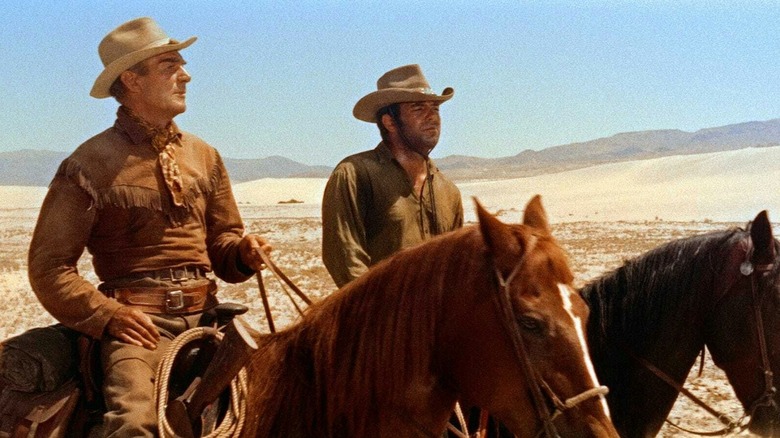
Riding around the open plains plagued by loneliness sure doesn't sound enticing. However, that doesn't mean that 1959's "Ride Lonesome" is hard to sit through. This particular Boetticher/Scott union saw that latter portray bounty hunter Ben Brigade, whose on a seemingly routine operation to bring incarcerated ne'er-do-well Billy John (James Best) to California. This is a '50s Western, though, so nothing simple actually goes off without a hitch. Turns out Brigade is doing this whole charade just to snag John's brother, Frank (Lee Van Cleef). This scheme soon collides with further obstacles like the unexpected arrival of two outlaws with plans of their own.
In some ways, "Ride Lonesome" would be an ideal classic Western to get a modern remake. Its stripped down aesthetic making it ripe for a deeply specific retelling, though, doesn't mean "Ride Lonesome" is a creative misfire. On the contrary, Letterboxd users are quite fond of this title, having bestowed upon it a 3.7 average rating. Many of the reviews hail that this feature crams so many idiosyncratic performances and visuals into a succinct runtime.
The film's climax is also repeatedly lauded, as is the assured creativity from the many Western veterans bringing it to life. Just because these folks know the genre inside and out doesn't mean they phoned it in for this Randolph Scott star vehicle.
3. Ride the High Country
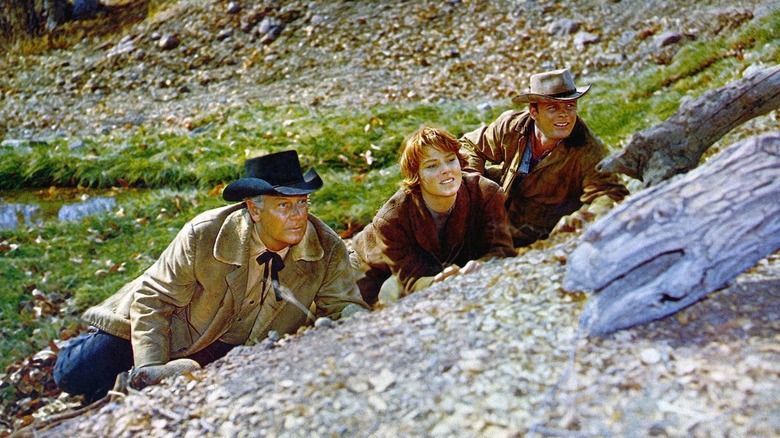
Director Sam Peckinpah's transgressive works are forever intertwined with the initial years of the post-Hays Code era. With newfound freedom to chronicle anything and everything on screen, Peckinpah delivered shocking works like "The Wild Bunch," "Straw Dogs," and "Bring Me the Head of Alfredo Garcia," among others. Given his close connection to a grimier corner of American film history, it's weird to remember that Peckinpah did deliver a handful of efforts when the Hays Code still loomed large.
Only his second movie, 1962's "Ride the High Country" reflects a version of Peckinpah who couldn't indulge in his wildest, most unhinged instincts. That doesn't mean this project was devoid of the artistry defining later Peckinpah movies. For evidence of this, look no further than "Ride the High Country" securing a 3.7 average rating on Letterboxd. Reviews laud its grim atmosphere and themes dealing with men coming to terms with mortality, while also praising Peckinpah's gift for conjuring up striking visuals.
Randolph Scott lending his assured veteran hand to a director adjusting to his craft certainly didn't hurt either. Despite being a Hays Code era Peckinpah effort, "Ride the High Country" has secured a well-deserved positive reputation.
2. Seven Men From Now
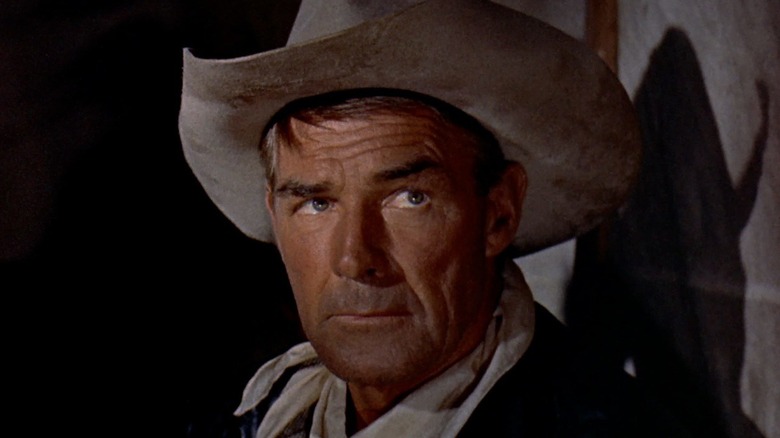
What does revenge look like? This persistent element in humanity has festered in art for centuries. Sometimes, it manifests in works like Herman Melville's "Moby Dick." Other times, it appears in everyone's favorite revenge movies. Even something like the 2011 CaptainSparklez "Minecraft" parody of Usher's "DJ Got Us Fallin' in Love Again," effectively titled "Revenge," grapples with this theme. It's no surprise, then, that countless classic Westerns deal with revenge as well. In fact, many of Letterboxd's favorite Western movies of all time center on revenge and its consequences.
"7 Men from Now" is another revenge-fixated Western, with Randolph Scott's Ben Stride as an ex-sheriff seeking out seven men. Their crime? Slaughtering his wife. The average Letterboxd rating for this Scott/Boetticher collaboration is a sturdy 3.8. Many reviews admire the intimate character-driven moments, as well as its deluge of remarkable imagery. Better yet, the terrific performances from Scott and supporting performer Lee Marvin also underscores many of these euphoric assessments.
Reading these Letterboxd reviews, few, if any, complains of "7 Men from Now" treading similar ground as other revenge-driven Westerns. When you deliver the goods, returning to the revenge well feels inevitable, not like a chore.
1. The Tall T
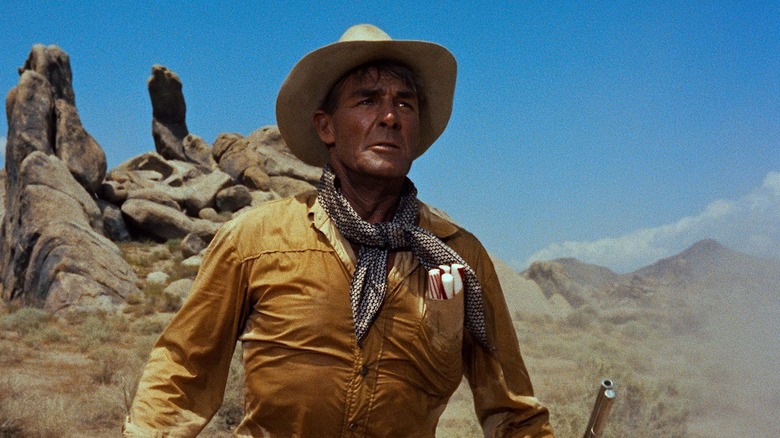
In some respects, the 1950s were an awkward transition for American cinema. The best movies of the 1950s make it abundantly clear that this decade was far from a total write-off for this country's movie exploits. Still, the constrictions of the suffocating Hays Code were growing apparent, especially when compared to the game-changing works emerging from countries like Russia and Japan at the time. Still, even with these problems, the '50s did indeed deliver several enduring American classics.
One of these was the 1957 Randolph Scott feature "The Tall T," which saw him, director Budd Boetticher, and screenwriter Burt Kennedy adapt the 1955 Elmore Leonard novelette "The Captives." Like many Scott and Boetticher features, "The Tall T" is a concise effort with a runtime under 80 minutes and a plot (here concerning a pair of characters who are held hostage by three crooks) easily summed up in a sentence. And like many of the duo's Westerns, "The Tall T" remains beloved.
The feature's lofty 3.8 average Letterboxd rating reflects a bevy of reviews praising Boetticher's bleak aesthetic and Scott's conviction to reinforcing that ambiance. Even in a weaker decade for American cinema, great actor/director pairings like Scott/Boetticher thrived.