

5 Box Office Bombs From The '80s That Changed Hollywood Forever
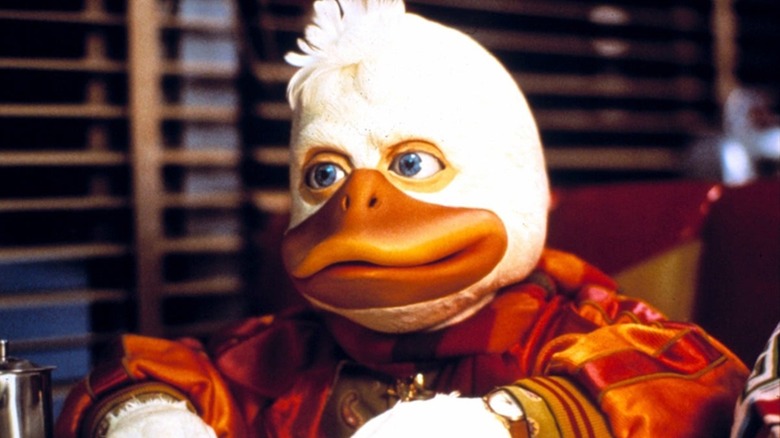
The 1980s don't have the greatest reputation among film fans. Quentin Tarantino called out the '80s as one of the worst modern decades for cinema, while several huge hits that haven't aged well (like "Top Gun" and "Porky's") dominated multiplexes at the time. Plus, 80s nostalgia has gripped American pop culture for so long that it's hard to stand back and appreciate any of the decade's films on their direct merits. Of course, the '80s also delivered some unforgettable masterpieces, including "Do the Right Thing," "Desert Hearts," "Working Girls," and "Matewan," not to mention mainstream gems like "Back to the Future."
As a counterpoint to those artistic and/or financial hits, though, are the motion pictures that tanked at the box office. With costs and corporate pressures steadily increasing for studios in the 1980s, theatrical duds were more impactful than ever. Thus, the 1980s delivered five box office bombs that changed Hollywood forever. These financial non-starters adversely impacted the larger industry on multiple fronts, including sales at the studios that financed them or ensuring once-influential filmmakers no longer enjoyed the same clout.
Whatever the long term ripple effects of these five productions, their box office failures left a long trail of wreckage that, in some cases, still impacts Hollywood today. The 1980s certainly had its high moments when it came to cinema. However, exploring the lasting consequences of these five '80s bombs may make anyone as skeptical about the decade as Tarantino himself.
The Black Cauldron
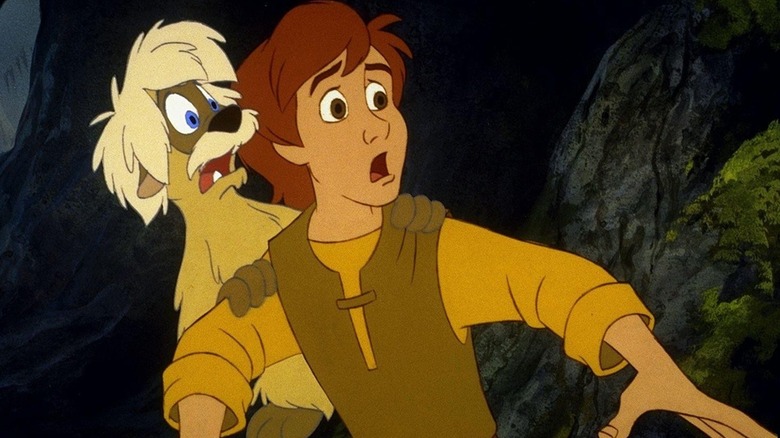
In recent years, Disney's had some challenging moments at theatres. For instance, Disney had a rough time at the 2025 box office before "Zootopia 2" and "Avatar: Fire and Ash" dropped. Meanwhile, several of the huge flops Disney wants you to forget about are 2020s Walt Disney Animation Studios duds like "Wish" and "Strange World." However, all of these modern struggles look like a cakewalk compared to the precarious state the Mouse House was in back in the mid '80s. Walt Disney Animation Studios was a shell of its once-prosperous self, and its problems would only get worse with 1985's "The Black Cauldron."
In its theatrical run, "Cauldron" only grossed $21.28 million, an abysmal sum given its $44 million budget. As documentaries like "Waking Sleeping Beauty" have pointed out, the fact that "Cauldron" got outgrossed that year by the significantly cheaper title "The Care Bears Movie" rubbed salt into Disney's wounds. In the wake of "Black Cauldron" flopping, Disney's in-house animation department almost went under. Meanwhile, this film collapsing signaled to the larger film industry that, for the first time in American cinema history, Disney didn't have a box office stranglehold on lucrative family animation.
This opened the door for Universal's "An American Tail" to become a major moneymaker the following year. "The Black Cauldron" also offered a vibrant blueprint for Disney Animation Studios on what not to do with its works, which later inspired tonally opposite hits like "Aladdin."
One from the Heart

An independent Francis Ford Coppola directorial effort that went haywire with its budget, cratered at the box office, and ended up alienating as many audience members as it entranced. At this point, it's better to ask what Coppola films don't meet that criteria. 1982's "One from the Heart" was arguably the start of a trend (at least the artistically tormented "Apocalypse Now" did well at the box office) that would continue on into "Megalopolis." This retro musical (told in a 1.37:1 aspect ratio) followed Frannie (Teri Garr) and Hank (Frederic Forrest), a romantic duo, searching through Las Vegas for fresh connections.
"One from the Heart" was an absolute trainwreck at the box office with a pitiful $697,872 haul on a $26 million budget. Coppola put all he could into this movie, but the project sent his career into a downward spiral. His endless deluge of monetary and legal challenges are highlighted by "One from the Heart," which drove Coppola to file for bankruptcy a third time in 1983. Coppola became a journeyman filmmaker after "Heart" went nowhere, while any hopes of his production company, American Zoetrope, becoming an oasis for independent filmmaking went up in smoke.
In hindsight, film historians also see "One from the Heart" as reinforcing the demise of the New Hollywood movement, after the previous year's "Heaven's Gate" plunged a dagger into its back. The upbeat endings that cap off many musicals evaded "One from the Heart," but at least Coppola keeps on going.
Ishtar
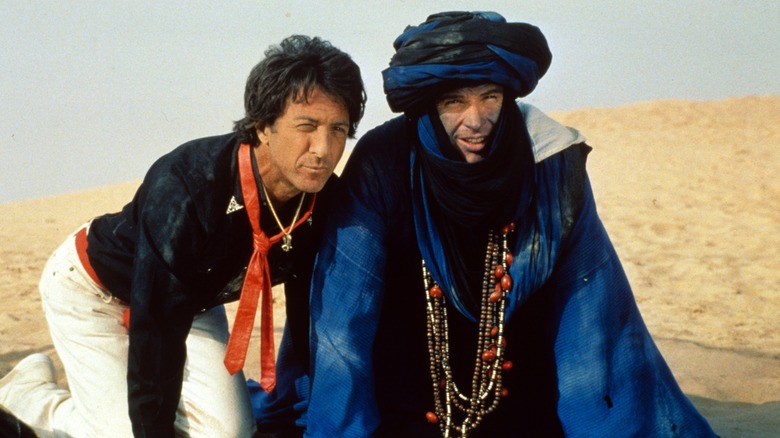
"Ishtar" is a prime example of a notorious box office bomb that's actually worth watching. Not all of the jokes work and some of the racial caricatures are cringe-inducing. By and large, though, writer/director Elaine May delivered an amusing endeavor that's also crisply shot (not to mention littered with remarkable practical costumes and location shooting). While those virtues are more well known today, back when it first hit theaters in 1987, this Dustin Hoffman/Warren Beatty buddy comedy was a universally lambasted punchline. "Ishtar" was a one-word term for "dismal filmmaking," rather than a motion picture in its own right.
Costing a massive $55 million to make (for comparison's sake, "Return of the Jedi" four years earlier had cost $32.5 million), "Ishtar" only grossed $14.37 million at the box office. "Ishtar" hailed from Columbia Pictures, which was, at the time, owned by Coca-Cola. The soda giant sold off the film studio two years after "Ishtar" capsized, with the feature's failure allegedly playing a key role in inspiring Coca-Cola to leave the film business. Much more tragic was that "Ishtar" is, to date, the last film May directed.
While male directors behind even costlier box office bombs (like Zack Snyder, McG, and Robert "Divergent" Schwentke) never worry about their careers getting derailed, "Ishtar" permanently banned the visionary behind "A New Leaf" and "Mikey and Nicky" from the directorial chair. The world of cinema has been considerably worsened since Elaine May's exile.
Howard the Duck
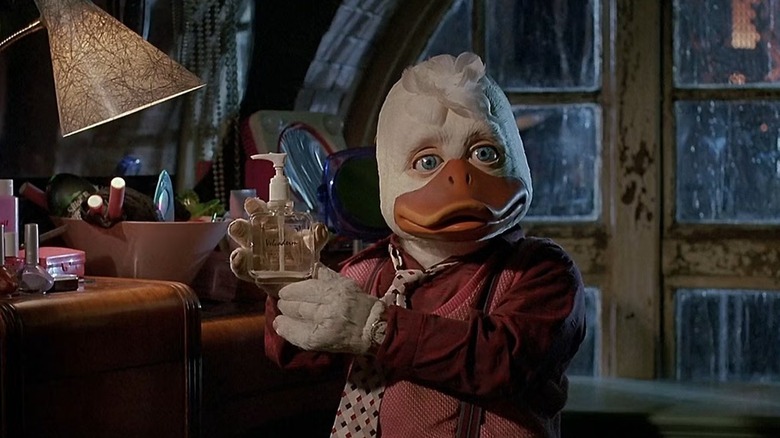
Say what you will about the movie, but "Howard the Duck" does have a pretty rocking title song (helped by the lively vocals of the fictional band Cherry Bomb). The rest of the movie is, well, "it is what it is," as Joe Pesci declared in "The Irishman." As is common knowledge now, "Howard the Duck" was a total flop in its 1986 theatrical release. Though it cost $37 million to make and was given a cushy late summer 1986 release date, this project from producer George Lucas only amassed $37.96 million worldwide on a $37 million budget. Its North American gross was an anemic $16.29 million, putting it below the domestic cumes of other 1986 movies like "A Room with a View" and "Friday the 13 Part VI: Jason Lives."
Like fellow summer 1986 box office misfire "Labyrinth," "Howard the Duck" signaled that the days of the Lucasfilm logo automatically guaranteeing box office success were over. Meanwhile, in the wake of this feature becoming such a disaster, a major executive at Universal Pictures (which financed and released this mess) was let go.
Beyond corporate shenanigans, "Howard the Duck" poisoned the well for live-action Marvel Comics movie adaptations for over a decade. While 1989's "The Punisher" and 1990's "Captain America" got some theatrical screenings overseas, the next Marvel movie to get a proper worldwide theatrical release would be 1998's "Blade." "Howard the Duck" may have cursed Marvel cinema for years, but hey, at least its titular tune's a keeper.
Heaven's Gate
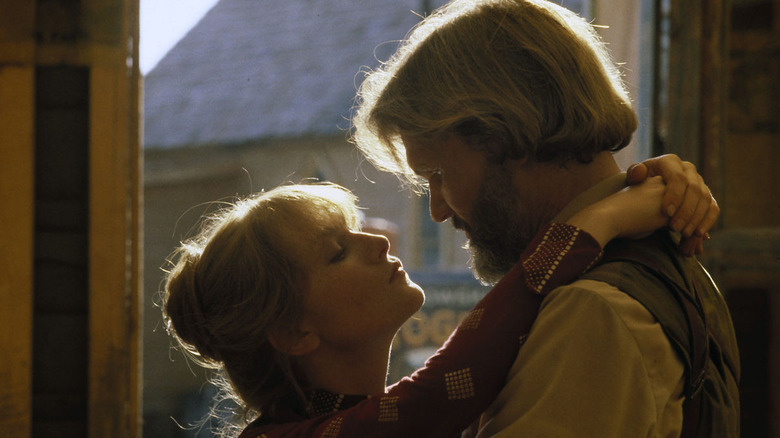
You could still write books about everything that went wrong with Michael Cimino's "Heaven's Gate" and the ways it forever changed the American film industry. Some people already have, like Steven Bach with his tome "Final Cut: Art, Money, and Ego in the Making of Heaven's Gate, the Film that Sank United Artists." The drama continues fascinating film geeks, even as "Heaven's Gate" has finally garnered enough positive reassessments to make it an '80s movie that critics were totally wrong about. Still, in terms of its initial box office haul, "Heaven's Gate" remains a Western movie flops that changed the genre forever.
"Heaven's Gate," a sprawling epic that critically examines American history and the Western genre, only made $3.48 million domestically on a $44 million budget. Cimino's previous movie, the best picture Oscar winner "The Deer Hunter," was also grueling and lengthy. However, it rode its dark material to a $50 million domestic haul. No such financial success awaited "Heaven's Gate," which closed the book on its financier, United Artists. Started in 1919 by cinema titans like Mary Pickford and Charlie Chaplin as a place for independent and unique movies, United Artists was sold off to MGM just a few months after "Heaven's Gate" saddled the studio with immense losses.
As a cherry on top, "Heaven's Gate" is now widely seen as annihilating any lingering interest major studios had in auteur-driven dramas. There remains much to say about how this Western upended American cinema.