

'80s Movies That Critics Were Totally Wrong About
The average film critic sees hundreds of movies a year, acting as a filtration system for serious moviegoers who want to be selective with what they watch. A review can make or break a movie's box office chances, as critics either encourage audiences to check it out or warn them to stay away. That was certainly the case in the 1980s, a glorious decade for moviegoing that had its fair share of high profile duds done in by a wave of bad notices. Yet even the most astute critics get it wrong every so often, and some of the worst-reviewed films of the '80s have since been rediscovered as classics.
Many things can influence a critics opinion, from bad press stories about its production to how much coffee they had before their screening. Whatever the case, some films deserve a second chance, even those that left behind nasty first impressions. The films on this list are notorious box office bombs that are actually worth watching, movies that got a bad wrap in their day only to be heralded decades later as unfairly maligned.
Heaven's Gate
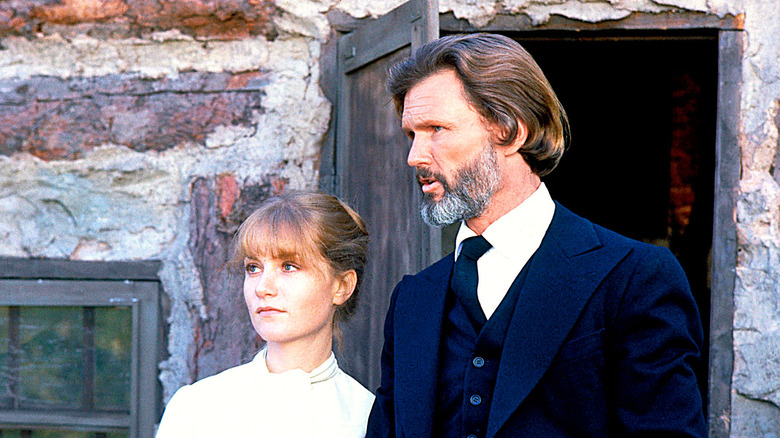
20 years after graduating from Harvard in 1870, James Averill (Kris Kristofferson) is now town marshal of Johnson County, Wyoming. The head of the Ranchers Association (Sam Waterston) wants the town's many European immigrants run off the land, and enlists a group of mercenaries led by Averill's friend, Nate Champion (Christopher Walken), to kill them. Both Averill and Champion are vying for the affections of Ellen Watson (Isabelle Huppert), a local bordello madame from Canada. As the mercenaries plan a massacre, Averill rallies the immigrants to fight for their survival.
A western movie flop that changed the genre forever, "Heaven's Gate" almost single-handedly ended the New Hollywood of the 1970s. A subject of tabloid controversy over its budget and schedule overruns, Michael Cimino's follow-up to his Oscar-winning hit "The Deer Hunter" was viewed as the ultimate example of Hollywood excess. By the time the over 3 hour saga opened in New York, its fate was sealed by a devastating Vincent Canby (New York Times) review that declared it "an unqualified disaster."
Other reviews weren't much better, and the film was quickly pulled from release and recut by over an hour. The dye was already cast, however, and "Heaven's Gate" became one of the biggest box office bombs in history. Yet thanks to a Criterion Collection release of Cimino's original cut, the film has been reappraised as a visually stunning, intimate epic of the Old West.
One from the Heart
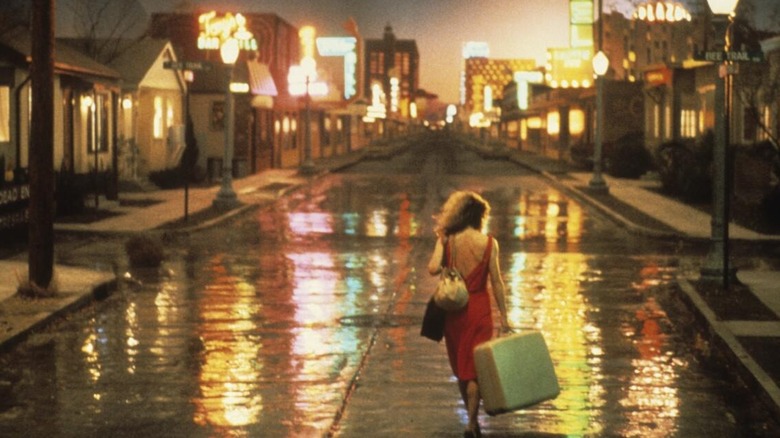
Hank (Frederic Forrest) and Frannie (Teri Garr) are celebrating their 5 year anniversary, but their romantic dinner turns into an argument that sends Frannie packing. As they roam the streets of Las Vegas separately, Frannie falls into the arms of dashing waiter Ray (Raúl Juliá), who woos her with his singing and dancing. Hank, meanwhile, becomes bewitched with the free-spirited circus performer Leila (Nastassja Kinski). Their friends, Moe (Harry Dean Stanton) and Maggie (Lainie Kazan), simultaneously try to get them back together and break them up for good, culminating in a last minute race to the airport.
With "The Godfather," "The Conversation," "The Godfather: Part II," and "Apocalypse Now," the 1970s belonged to Francis Ford Coppola. He started the 1980s with "One from the Heart," a candy-colored ode to classic movie musicals that nearly ended his career. Self-financed through his American Zoetrope studio, Coppola originally envisioned it as a "live cinema" event before it morphed into a hugely expensive endeavor shot entirely on sound-stages and utilizing nascent video technology to storyboard and edit in real time.
Word of a troubled production spread like wildfire, and critics were unkind to the finished product, which Roger Ebert called "an interesting production but not a good movie." Thanks to a 2024 directors cut (released with the subtitle "Reprise"), "One from the Heart" is widely considered to be one of Francis Ford Coppola's best movies, which is high praise indeed.
Dune
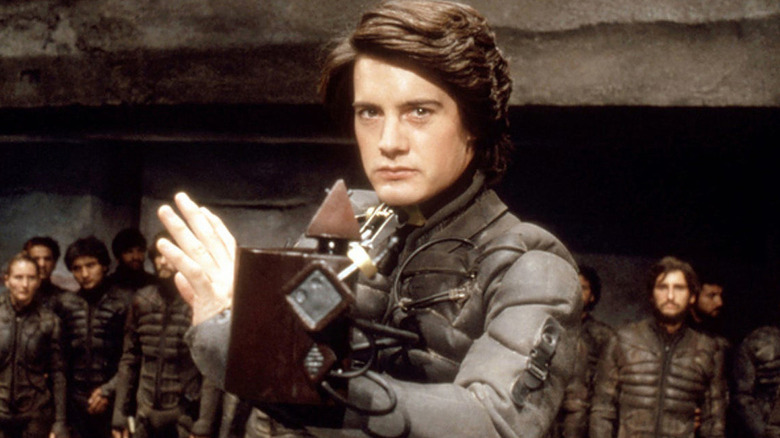
In the distant future, Duke Leo Atreides (Jürgen Prochnow) is put in charge of Arrakis, a desert planet that's home to a conscious-altering, life-extending spice. The Harkonnens, led by the floating Baron (Kenneth McMillan), want to regain control of Arrakis, and plot to assassinate the Duke and his son, Paul (Kyle MacLachlan), who has inherited some of the supernatural abilities of his mother, the Bene Gesserit witch Lady Jessica (Francesca Annis). Paul and Lady Jessica narrowly escape, and find refuge with the native Fremen. After marrying the Fremen warrior Chani (Sean Young), Paul accepts his destiny as the leader, and helps the Fremen gain their freedom in a duel to the death against the Baron's nephew, Feyd-Rautha (Sting).
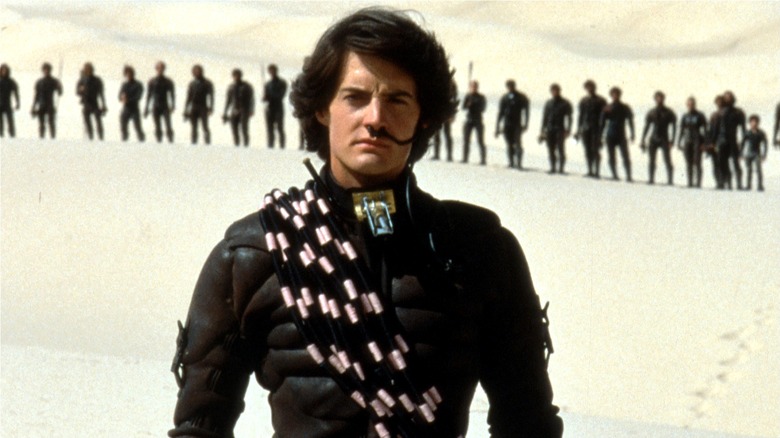
Before Denis Villeneuve's sprawling "Dune" saga, David Lynch attempted to cram all of Frank Herbert's epic sci-fi novel into one film. Released in 1984, "Dune" is generally ranked low amongst David Lynch's movies and TV shows, and is often listed among sci-fi movies that make absolutely no sense. Many critics felt that way, with Richard Croliss (Time) saying that rather than "a holiday from homework," the film was "as difficult as a final exam."
"Dune" failed at the box office, leading Lynch to forgo blockbuster filmmaking and focus on smaller-scaled movies like "Blue Velvet." Yet, now that Villeneuve has done Herbert's book justice, fans can appreciate Lynch's vision for the surreal journey it is.
Ishtar
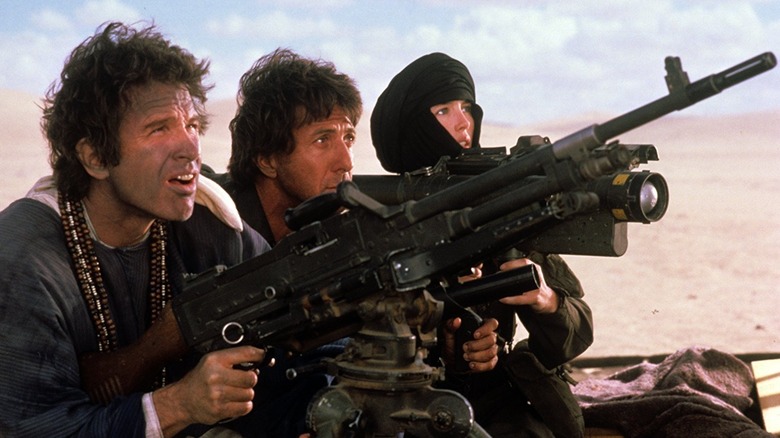
Struggling singer-songwriting duo Chuck Clarke (Dustin Hoffman) and Lyle Rogers (Warren Beatty) agent (Jack Weston) are booked to perform at a hotel in Morocco, where the political unrest has forced the last act to quit. Chuck and Lyle fly to Ishtar, where they encounter the mysterious freedom fighter Shirra Assel (Isabelle Adjani). After losing his passport, Chuck crosses paths with CIA agent Jim Harrison (Chuck Grodin), who wants to use him as a pawn in a plot to overthrow the country's Emir. Shirra enlists Chuck and Lyle to help her lead a group of left-wing radicals against the government, and before long, the two are caught in the middle of an international catastrophe.
Few box office bombs are as notorious as "Ishtar." Along with derailing Elaine May's directorial career, the film led to Coca-Cola selling Columbia to Sony. Long considered one of the worst movies ever made, the big-budget comedy was greeted with a resounding thud by audiences.
Critics scorned it, particularly Gene Siskel (Chicago Tribune), who proclaimed that it "fails at every level." Decades later, critic Colin Beckett and director Daniel Goldhaber included it on their list of the 10 greatest films of all time for the annual "Sight and Sound" poll, and even Martin Scorsese called it one of his favorite movies.
Walker
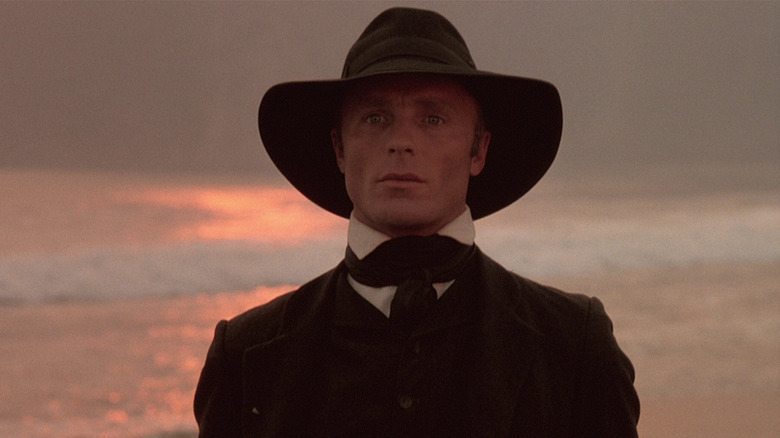
After attempting to incite an insurrection, ck in the U.S., soldier of fortune William Walker plans to start a newspaper, but things grind to a halt when his fiancée, Ellen Martin (Marlee Matlin), dies from cholera. Stricken with grief, he accepts a job offer from millionaire Cornelius Vanderbilt (Peter Boyle), who wants him to travel to Nicaragua and assist the Democrats in their civil war against the Legitimists. A staunch believer in Manifest Destiny, Walker enlists a team of mercenaries to join him in Nicaragua, later proclaiming himself to be president of the country.
Director Alex Cox was on the rise after "Repo Man" and "Sid and Nancy," leading Universal to hand him a $6 million budget to realize a film that drew parallels between Walker's takeover of Nicaragua and the Regan administrations meddling in the Contra War of the 1980s. Peppered with anachronisms like Coca-Cola bottles, military helicopters, and magazines, "Walker" was a bold swing that led many critics who had previously hailed Cox as a genius to declare him a hack.
Reviews were mixed, with Desson Howe (The Washington Post) calling it "a perplexing fusion of cartoon and docudrama." The abysmal box office ended Cox's career as a studio director, and his subsequent films found little distribution in the U.S. "Walker" has since entered the Criterion Collection, and is now considered to be an audacious indictment of American imperialism that's still relevant today.