

10 Star Trek Mysteries That Were Never Fully Explained
Looking from the outside, it's easy to view the "Star Trek" franchise as a cohesive unit of shows and movies where every single storyline is present and accounted for. Of course, if you're a Trekkie, you know better. Every "Star Trek" series tells its own stories, and while they're all a part of a vast interconnected narrative (the "Star Trek" Kelvin timeline arguably notwithstanding), they also have a tendency to leave the occasional thread hanging loose.
A franchise that's been running as long as "Star Trek" is almost guaranteed to drop a few balls down the line. While various shows have been in the habit of digging very deep into some characters' and races' backstories, the franchise has also been known to sidestep and forget pretty important things. From leaving key characters' and factions' fates completely open to dropping important plot lines and throwing potentially groundbreaking concepts to the side, there's no shortage of "Star Trek" secrets that may never be solved. Let's take a look at 10 of the most interesting ones.
(Note: While supplementary material has provided its own ideas about some of these mysteries, we're only focusing on the events as depicted in the various TV shows and movies from the "Star Trek" canon.)
How did the Enterprise-E meet its fate?
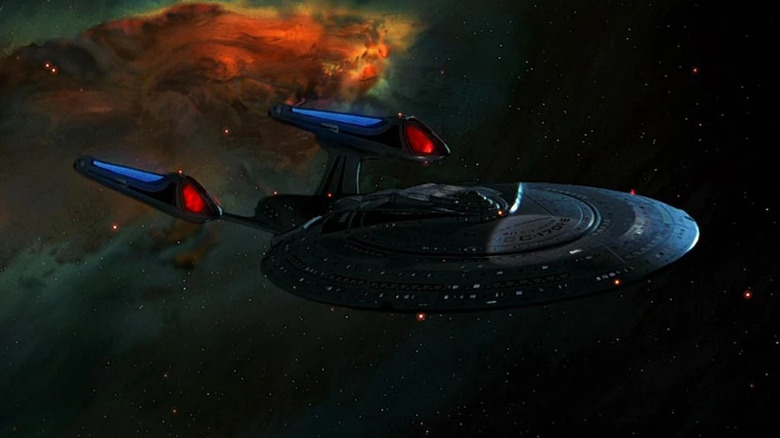
The USS Enterprise gets destroyed or decommissioned from time to time, only to be replaced by a new version. The event is often highly dramatic or otherwise plot-appropriate — unless we're talking about the USS Enterprise NCC-1701-E, which can apparently go hang. In "Star Trek: Picard" Season 3 episode "Võx," the gang takes the Enterprise-D to battle, and Geordi La Forge (LeVar Burton) makes a snide comment about the newer Enterprise-E being unavailable. Worf (Michael Dorn) awkwardly and somewhat suspiciously denies responsibility of the mystery incident that took Enterprise-E out, and the matter is never addressed again.
This was done for the sake of a joke. "We had ideas, but in the moment where they're asking, 'What about the Enterprise-E?' it would not have been good for someone to be like, 'Well, the Battle of duh, duh, duh,'" showrunner Terry Matalas told TrekMovie. "You are looking at the Enterprise-D! You couldn't do it and you wouldn't do it justice, whatever it is. You could say it is in storage or we are repainting it. You could, but I thought it was way funnier if they all turned to Worf and he's like, 'It wasn't my fault.'"
It's not a bad joke, but this is still Enterprise-E. In the ranking of Starship Enterprises, it's an important vessel that's crucial in the events of "Star Trek: First Contact," "Star Trek: Insurrection," and "Star Trek: Nemesis." Yet, despite the ship's prominence, the fate of Enterprise-E remains a mystery gag.
Who built the Planet Killer?
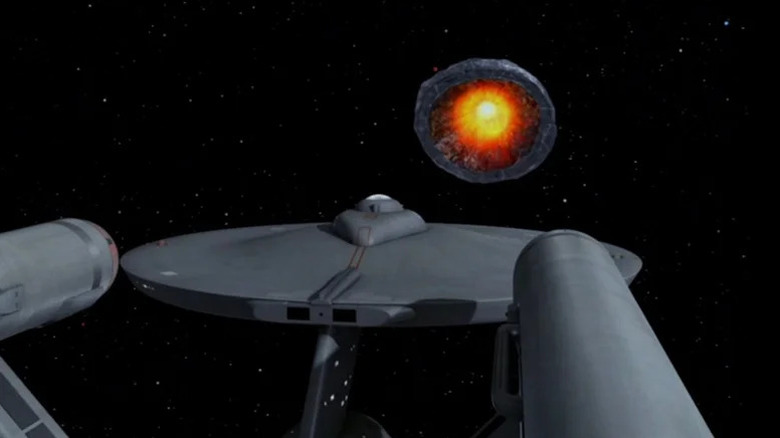
One of the most destructive machines on "Star Trek: The Original Series" — or perhaps the entirety of "Star Trek" — is never conclusively explained. The "Planet Killer" of "The Original Series" episode "The Doomsday Machine" is a brutal mega-weapon that's not dissimilar to the Death Star from "Star Wars:" A gigantic, mechanical portent of doom that can destroy entire planets. Only, the Planet Killer sustains itself with the planets it annihilates, and its origins are a complete mystery.
"The Original Series" likes to keep things intergalactic on occasion. For instance, the Season 2 episode "By Any Other Name" hoisted the Enterprise crew to the Andromeda galaxy. Still, the Planet Killer remains one of the rare physical threats in the franchise that don't come from one quadrant of our galaxy or another. It's speculated to be an ancient war machine that's been moving on its own long after its builders and their enemies were gone. Still, beyond this educated guess based on its trajectory, we get little concrete information about the Planet Killer. Such a massive threat from another galaxy would surely deserve a better and less debatable backstory — especially since its very existence implies that there could be more of these or perhaps even worse things out there, roaming the endless vastness of space.
What really happened to Benjamin Sisko?
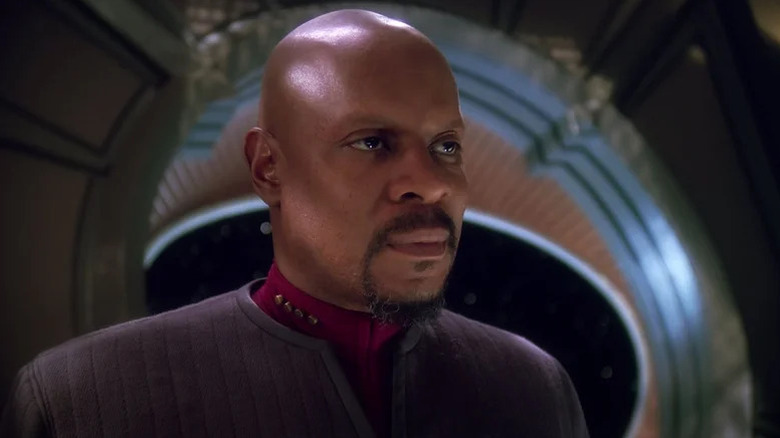
Perhaps no other "Star Trek" main character's ultimate fate is as strange as that of Benjamin Sisko (Avery Brooks) of "Star Trek: Deep Space Nine." Sisko is recognized as the Emissary of the Prophets — a major figure in Bajoran culture — which he eventually comes to embrace. In the series finale, "What You Leave Behind," he battles Gul Dukat (Marc Alaimo) in the Bajoran fire caves, and transcends into his Emissary role in the Celestial Temple. But what, exactly, is his deal now?
In "What You Leave Behind," Sisko appears to his wife Kasidy (Penny Johnson) and promises he will return soon, implying he's now untethered by time. However, "Star Trek: Starfleet Academy" episode "Series Acclimation Mil" indicates that Sisko was never seen again. Even hundreds of years after the events of "Deep Space Nine," the Bajorans continue to revere Sisko as an ascended Emissary. The Starfleet honors this and has removed all images of Sisko from their database. Both the Dax symbiont's current host Illa (Tawny Newsome) and Sisko's son Jake (Cirroc Lofton) — the two entities who knew Sisko best — don't indicate in any way that they've heard anything about Sisko, and prefer to focus on his legacy.
So, what's the score? Is Emissary work so busy that Sisko has completely eschewed the mortal coil? Or was his Celestial Temple situation just the last spiritual gasp of a man who died in extraordinary circumstances, and only his legend remains?
Where do the Borg come from?
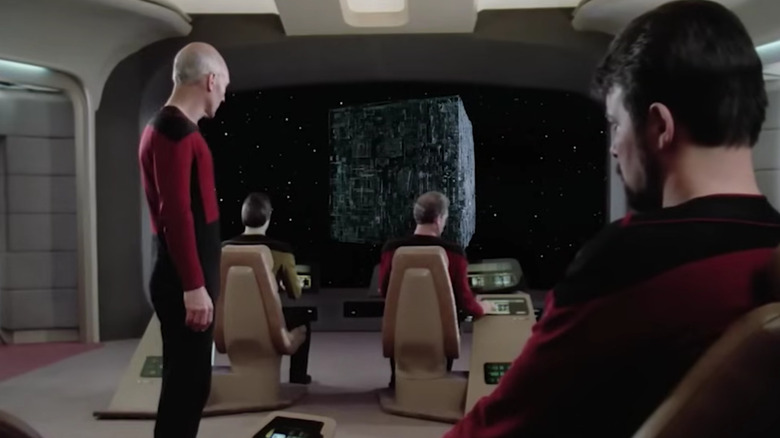
The Borg are among the most iconic "Star Trek" races — for a given value of the term, anyway. After all, the Borg are not a singular species as much as they are a horde of hive mind cyborg drones that have been forcefully connected into the Borg Collective's consciousness. It's one of the nastiest fates one can suffer in the "Star Trek" franchise, which is why the appearance of the Borg invariably spells bad news. This makes it all the more surprising that we really have no idea where the Borg originally come from.
Over the shows and movies, we've received bits and pieces of how the Borg came to be. They were effectively a long-gestating fusion between lifeforms and cybernetics which eventually became a collective and started terrorizing the Delta Quadrant. However, that's the bare minimum of information about a cybernetic species, and much of it comes across as Captain Obvious stuff. Who didn't gather that the Borg represent technology gone too far from their very first appearance?
The actual where, how, and why the Borg came to be remain a mystery, which is strange considering the sheer amount of threat the collective has posed over time. Perhaps one day, the shows and movies of the franchise will deliver a proper Borg origin story; but for now, "Trek" isn't telling.
What happened to the USS Prodigy?
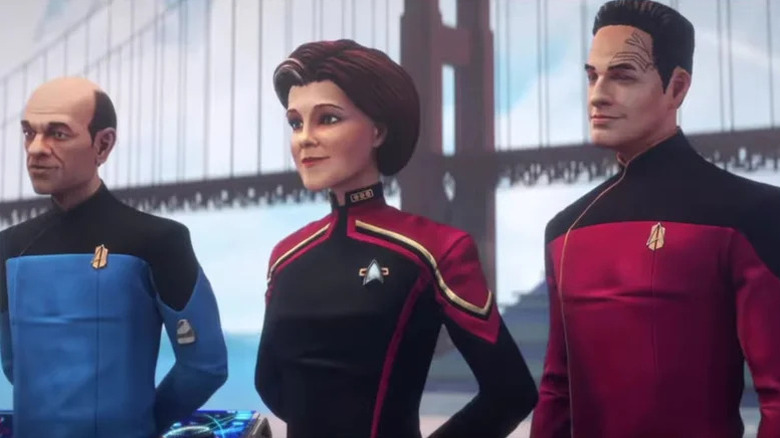
"Star Trek: Prodigy" Season 2 ends when Admiral Janeway (Kate Mulgrew), Captain Chakotay (Robert Beltran), and the Doctor (Robert Picardo) hand the central group of kids the keys to the brand new USS Prodigy, and promote them to ensigns. The familiar hologram version of Janeway rejoins them as they establish a chain of command, with Gwyn (Ella Purnell) as the captain and Dal (Brett Gray) as her Number One.
The Prodigy is then tasked with flying out there to do... well, something. The kids get an incredibly vague mission statement of being a "beacon of light" to those that the Starfleet can't currently reach. Let's face it, that sounds less like giving the kids an important mission, and more like Janeway's basically just handing them the space equivalent of a sports car and telling them to take it for a spin. It's probably fair to assume that the mission has far more nuance than the season finale goes into, and that the show would have explored said nuance if given the chance.
Unfortunately, that chance never arrived. Paramount+ canceled "Prodigy" and other original shows in 2023. Thus, "Prodigy" Season 3 never arrived, leaving the fate and mission of the USS Prodigy unaddressed.
What happened to the Borg after Agnes established herself as the Borg Queen?
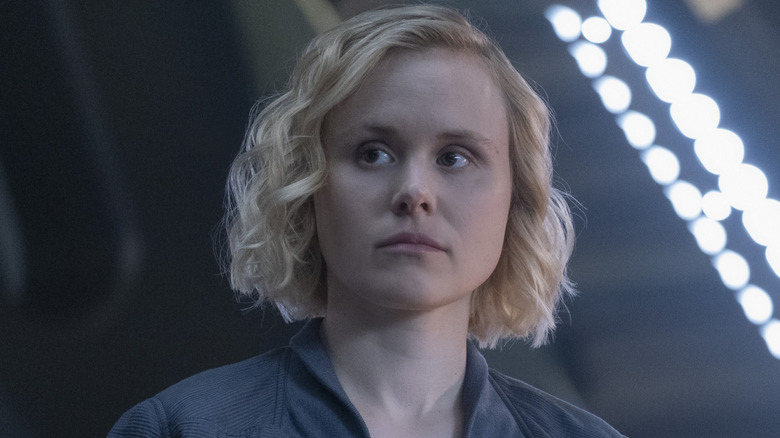
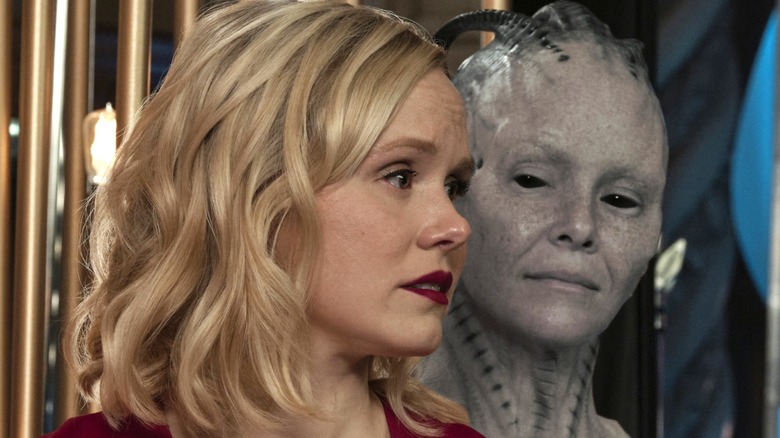
"Star Trek: Picard" Season 2 prominently features Agnes Jurati (Alison Pill), who becomes the new Borg Queen. Unlike her predecessor, Agnes is a force of good who fully intends to keep her Borg collective on the side of the angels. The last we see of them, Jurati basically forms the Borg equivalent of the "Game of Thrones" Night's Watch. In the end of "Picard" Season 2, she semi-joins the Federation and agrees to guard a dangerous transwarp conduit.
It's a great concept, so it's disappointing that we never see them again. These Borg make no appearance in "Picard" in Season 3, let alone in works set on far later dates like Season 3 of "Star Trek: Discovery" and "Star Trek: Starfleet Academy." The transwarp conduits are also a part of the "Discovery" narrative, but the Jurati Borg collective is never seen again.
This is a particularly frustrating mystery because there's reason to believe that they might still be out there during the events of "Discovery" and "Starfleet Academy." Borg Queens can live for a very long time; the Jurati Borg Queen is already over 400 years old during the season's endgame, so she should still be around in the post-Burn world in some shape, form, or way. So, what's up with her and her Borg collective? Is she biding her time somewhere out there? Did she die offscreen? Or has she simply been forgotten and thrown in the wind like so many others on this list?
What happened to the Dominion?
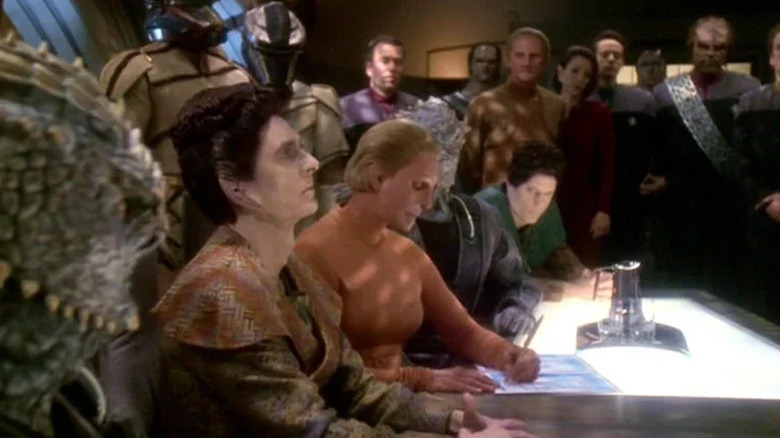
Remember the Dominion War? "Star Trek" doesn't always do so. The Dominion is one of the most frightening forces that the galaxy has ever seen, and the Dominion War is one of the biggest storylines of "Star Trek: Deep Space Nine." These facts make it strange when the folks who started it all seemingly got to waltz away scot-free, despite causing hundreds of millions of deaths.
The Dominion War pitted the titular Gamma Quadrant superpower — comprised of various races commanded and engineered by the shape-shifting Founders — and its allies against the Federation Alliance. After three years of conflict and eventually full-on war, the Dominion War eventually simply, well, ends. Odo (René Auberjonois) cures the Founder changelings' Great Link from a morphogenic virus while joining it, and the Dominion simply agree to drop out of the conflict. The status quo and original borders return, peace treaties are signed, and that's that.
While this is how wars do end, the nigh-complete radio silence from the Dominion side of things since then is somewhat strange. Yes, "Star Trek: Picard" eventually revisits a rogue Changeling faction that's still bitter against the Federation, but they're effectively just a powerful terrorist cell. The larger forces of the Dominion are still out there, and honestly? With or without Odo to mellow them down, it's hard to believe that a faction this destructive would be content to chill out and play the "Star Trek" equivalent of dominoes for long.
What was Kovich's final pre-timeskip mission on Star Trek: Discovery?
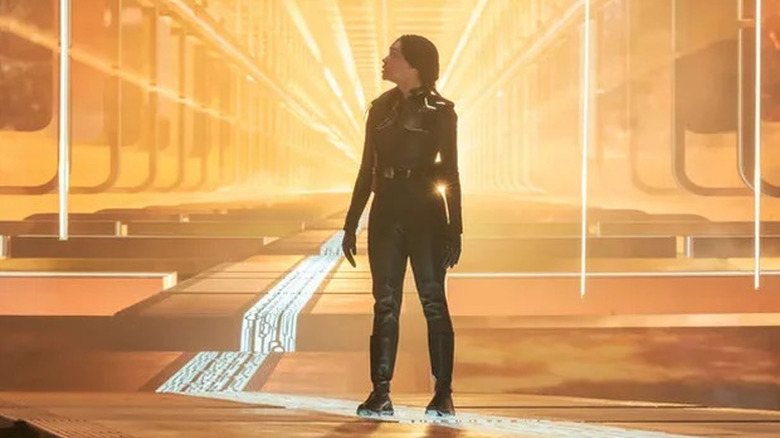
"Star Trek: Discovery" isn't known for having one of the best "Star Trek" finale episodes in history. In fact, "Life, Itself" includes a particularly strange mystery that it really should have addressed in some way.
After resolving the Progenitor storyline and the Red Directive mission it is attached to, the episode tells us that the man behind the mission — David Cronenberg's Dr. Kovich — is actually Daniels, the mysterious Starfleet temporal agent who was a prominent presence on "Star Trek: Enterprise." The revelation comes into play just as Michael Burnham (Sonequa Martin-Green) and Cleveland Booker (David Ajala) are finally making amends — and then, of the blue, they accept yet another one of Kovich's extremely important missions.
After this, time skips into an epilogue several decades later, with Burnham as a four-star admiral, sending the Discovery for another Red Directive mission that sets up the "Star Trek: Short Treks" episode "Calypso." Yet, that final pre-timeskip mission is never alluded to, despite the fact that whatever happened was clearly pretty successful: Burnham is now an influential admiral who's still getting Red Directive missions, she and Booker are together, and everything seems to be going almost uncharacteristically right. This is doubly strange when you consider just how much "Discovery" Season 5 stresses the importance of Kovich's missions, to the point of effectively making the entire season about one of them. It's frustrating that we'll probably never find out a thing about this one.
What's the deal with Guinan?
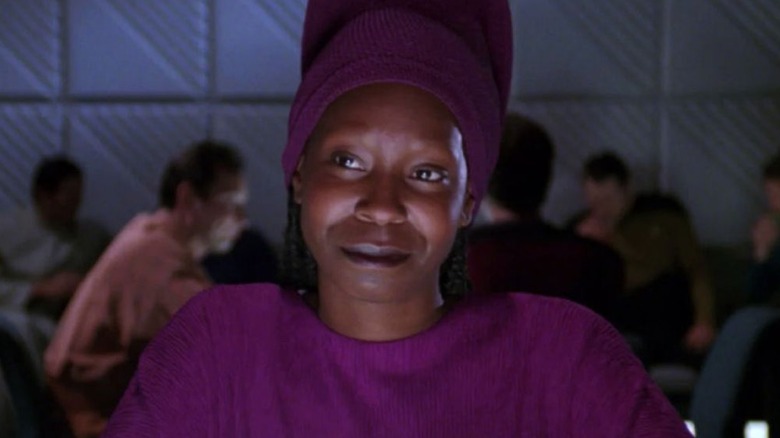
There are two ways to approach the Ten Forward bartender on "Star Trek: The Next Generation." One school of thought would simply note that the erstwhile and wise Guinan (Whoopi Goldberg) has been explained away quite conclusively. Technically, she's an El-Aurian, a member of a race of wise listeners who have been scattered across the galaxy after the Borg chose to pay them a visit. However, the flip side of the coin is that Guinan has been implied to be far more powerful than anything we've ever seen about other El-Aurians.
Guinan knows when something's wrong with time. She's been in the Nexus and survived. She has layers. Oh, and the nigh-omnipotent Q (John de Lancie) is scared of her, and has evidently clashed with Guinan often enough for it to qualify as a centuries-long feud. Q has not-so-subtly implied that Guinan is far more than meets the eye. Meanwhile, she's utterly unafraid of him and even behaves in a way that suggests she would be able to go toe to toe with him. Compare this to the fact that the other El-Aurians couldn't even handle the Borg, and there seems to be a distinct power gap between a baseline member of this race and Guinan.
The franchise has implied many times that Guinan is a power player — or could be, should she want to. Still, it's all deliberately vague, so we will probably never find out the full untold truth of Guinan.
What happened to the neural parasites of The Next Generation?
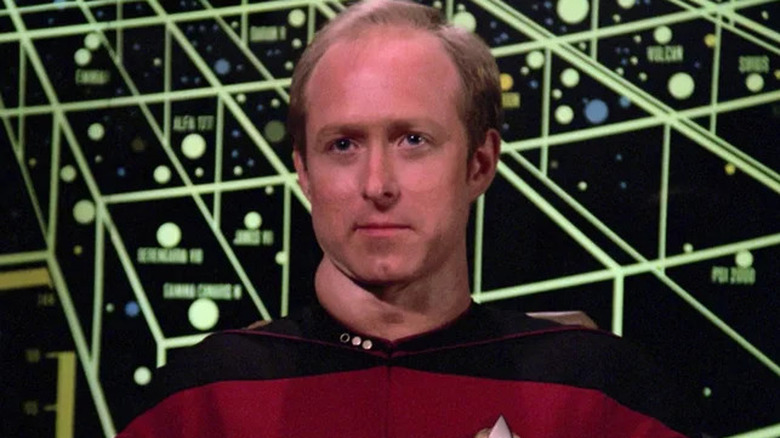
"Star Trek: The Next Generation" has its disgusting moments. Nowhere is this more evident than in "Conspiracy," the penultimate episode of "The Next Generation" Season 1. The episode is (in)famous for its absolutely gruesome climax where Jean-Luc Picard (Patrick Stewart) and William Riker (Jonathan Frakes) use their phasers to explode the episode villain Remmick's (Robert Schenkkan) head, leading his chest cavity to burst open — and a Mother Parasite and several smaller neural parasites come out.
The parasites in question have been controlling people left and right. They seem like a genuine threat to the Starfleet, as well as all humanoid life. Most chillingly, the end of "Conspiracy" sets up the concerning development that Remmick managed to send out a transmission that may guide the other parasites out there to Earth. Talk about a thrilling cliffhanger for the season finale and possibly beyond, right?
Wrong. "The Next Generation" Season 1 finale, "The Neutral Zone," drops the subject to focus on a wholly different plot line about Romulans. The parasites are never mentioned on the show again, making them one of the many "The Next Generation" storylines that never paid off.