

5 Legal Dramas Way Better Than Suits
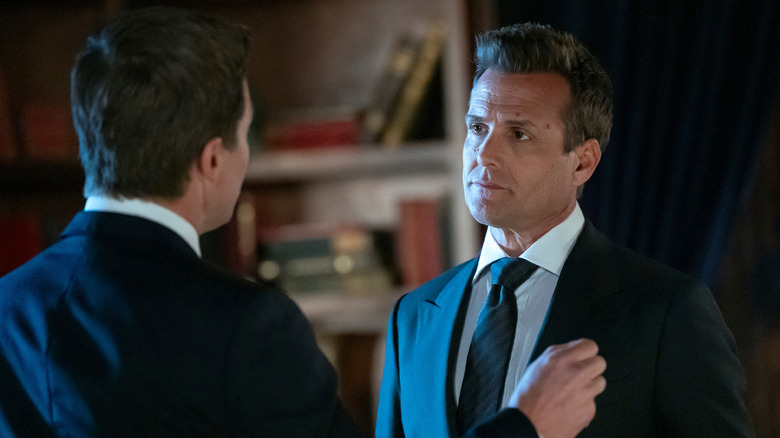
Although it wrapped up in 2019, "Suits" continues to be a popular staple in reruns and on streaming, and for good reason: it's really addictive. Set in the high-stakes world of New York City corporate law, the USA series revolves around Mike Ross (Patrick J. Adams), who joins a prestigious law firm despite having dropped out of college. That set-up only hints at the intrigue that unfolded over the course of nine seasons.
"Suits" was nothing if not a primetime soap opera, a sort of "Melrose Place" set in a law firm instead of an apartment complex. Its cast of attractive young lawyers — most notably Meghan Markle before she became the Duchess of Sussex — engage in Machiavellian machinations both inside the courtroom and outside of it. "Suits" kept audiences on their toes week after week with its heightened drama, built around a premise that came with ready-made suspense. Yet for all of its qualities, "Suits" was essentially the fast food equivalent of the legal drama: tasty in the moment, but lacking any real nutritional value.
Here are five legal dramas that are way better than "Suits." Like "Suits," these shows are highly re-watchable, filled with stirring courtroom orations, nail-biting suspense, and corporate back-stabbing. But there's also a high level of quality to these programs, some of which have been hailed as among the best TV shows of all time. So when you've finished your latest "Suits" binge, switch over to one of these titles to get your legal drama fix.
Better Call Saul
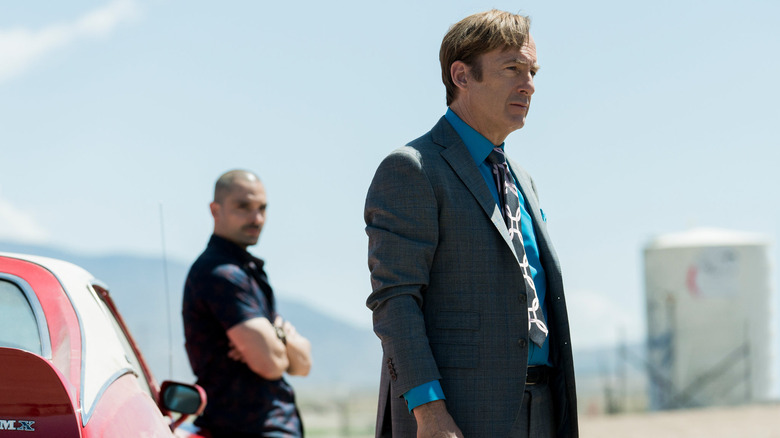
"Breaking Bad" is often cited as one of the best TV shows of all time, which puts a lot of pressure on its spin-off, "Better Call Saul." In many ways, the prequel series is just as good as its predecessor, making it not just one of the best spin-offs of all time, but one of the all-time great TV shows, period. In fact, it's often cited as the best legal TV drama of all time, so it's safe to say it firmly escaped "Breaking Bad's" dark shadow.
Taking place prior to the events of "Breaking Bad," "Better Call Saul" follows the transformation of fast-talking lawyer Jimmy McGill (Bob Odenkirk) into corrupt ambulance chaser Saul Goodman. Once hoping to live up to the reputation of his brilliant older brother, Charles (Michael McKean), Jimmy/Saul finds his way into New Mexico's illegal drug trade by way of courthouse parking lot attendant Mike Ehrmantraut (Jonathan Banks), and loses his soul along the way.
Initially conceived as a half-hour comedy, "Better Call Saul" eventually became an hour-long Greek tragedy that rivaled "Breaking Bad" in its power and scope. Although "Breaking Bad" favorites like Mike and Gus Fring (Giancarlo Esposito) popped up, the show developed a rich cast of characters all its own, including Rhea Seehorn as Goodman's love interest and legal partner, Kim Wexler. But it's the Bob Odenkirk show first and foremost, as the longtime sketch comedian reveals himself to be a dramatic actor of stunning nuance and complexity.
The Good Wife
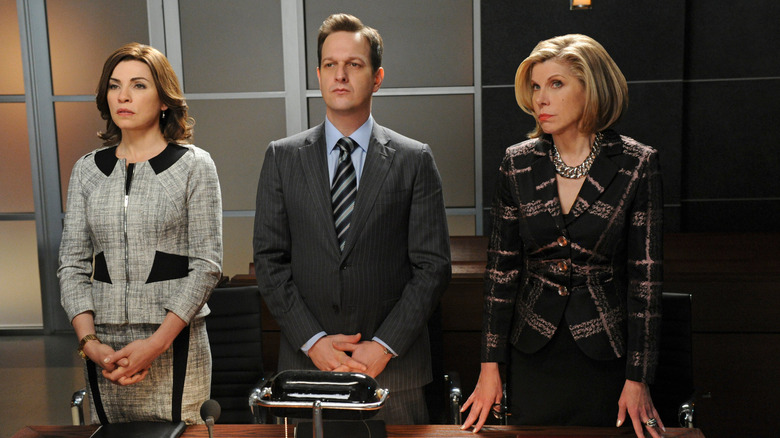
When creating "The Good Wife," husband and wife showrunners Robert and Michelle King looked to real-life scandals by prominent politicians like Bill Clinton and John Edwards. Which is to say, they looked past Clinton and Edwards and at the silent, loyal wife standing by their side and asked what was really going on in their minds? From that was born one of the last great examples of good old-fashioned network TV drama.
Airing on CBS for seven seasons, the show centered on Alicia Florrick (Julianna Margulies), the wife of a Chicago State's Attorney (Chris Noth) whose career ends in shame amid a corruption scandal. With her husband behind bars, Alicia is forced to return to work to support her children. A former junior litigator who gave up her career after getting married, Alicia dusts off her law degree and goes to work at a firm led by her former classmate, Will Gardner (Josh Charles), for whom she harbors old romantic feelings.
Like most network TV legal dramas, each episode of "The Good Wife" focuses on a case-of-the-week for Alicia and her team to resolve by the end of the hour. At the same time, it utilized serialized narratives and multi-episode story arcs that are more normally found in cable and streaming. The show was also surprisingly forward-thinking in its depiction of the influence social media and the internet have on the law. The show spawned a spin-off, "The Good Fight," centered on liberal firebrand attorney Diane Lockhart (Christine Baranski).
L.A. Law
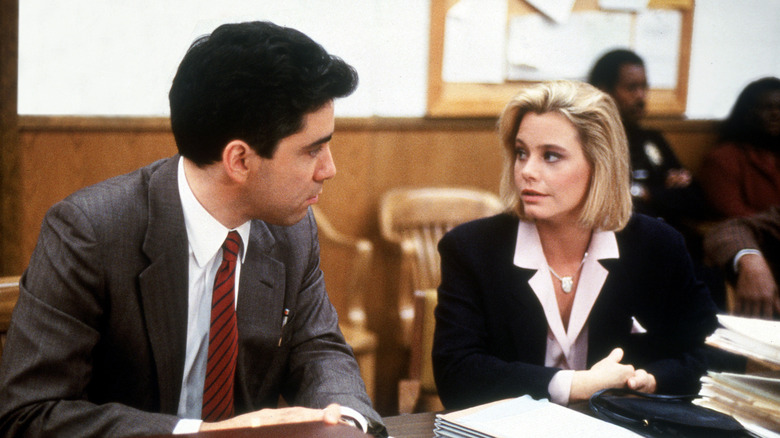
Having co-created one of the best cop shows of all time with "Hill Street Blues," Steven Bochco set his sights on redefining the legal drama with "L.A. Law." Much like "Hill Street Blues" did for the police, "L.A. Law" sought to dramatize the personal and professional lives of attorneys with an accuracy and naturalism never before seen. It certainly helped that Bochco brought on former lawyer-turned-screenwriter David E. Kelley as a writer and producer, thus kick-starting a prolific television career.
Whereas "Hill Street Blues" was often somber and gritty, "L.A. Law" took a zippier stylistic approach, centering on a group of young, hotshot attorneys working at a Los Angeles-based law firm. That's not to say that the show didn't take itself seriously. Indeed, many episodes focused on controversial topics like abortion, capital punishment, the AIDS crisis, and racial discrimination. The series even delved into current events, dealing head-on with the Rodney King riots that ripped the city apart in 1992. More than anything, "L.A. Law" effectively dramatized the stark economic disparities between senior attorneys and the underpaid junior lawyers working their way up the ladder.
At the same time, "L.A. Law" could be sprightly and fun, portraying the legal profession as nothing short of an adrenaline rush for brilliant minds. At its peak, the show was an Emmys juggernaut, winning four prizes for best drama series. It also helped redefine the legal drama, which for too long had been a stuffy and self-serious examination of important issues.
Law & Order
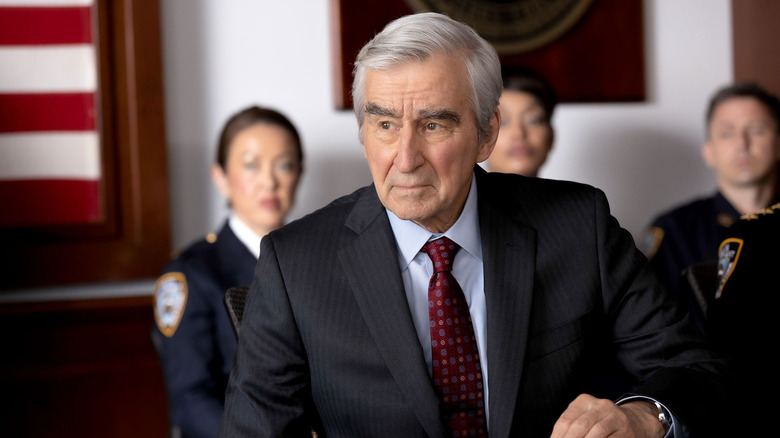
When most people think of "Law & Order," they tend to categorize it as a police procedural, forgetting what the opening narration reminds us each week: "In the criminal justice system, the people are represented by two separate yet equally important groups: the police who investigate crime, and the district attorneys who prosecute the offenders." You can't have one without the other, and "Law & Order" is just as good a legal drama as it is a cop show.
Each episode of "Law & Order" follows the same formula: The police investigate a crime, and the attorneys prosecute the suspect. One would think this would zap the series of any real suspense, but the genius of the Dick Wolf-created drama is that it shows the process by which the detectives and the lawyers go about accomplishing this, which is surprisingly nail-biting each week. Although Wolf puts most of the focus on the investigation, the personal lives of the detectives and attorneys do occasionally sneak their way in, affecting the cases as they would in real life.
Although the 25 seasons have featured a revolving door of cast members, a select few have been in enough seasons to qualify as regulars, especially Sam Waterston as District Attorney Jack McCoy. The longest-tenured character on the show, McCoy sat atop the legal food chain for much of his run, a self-described "junkyard dog" who won't rest until a defendant is behind bars. There's some level of comfort seeing Jack McCoy in the courtroom ... unless you're on the opposing side, that is.
The Practice
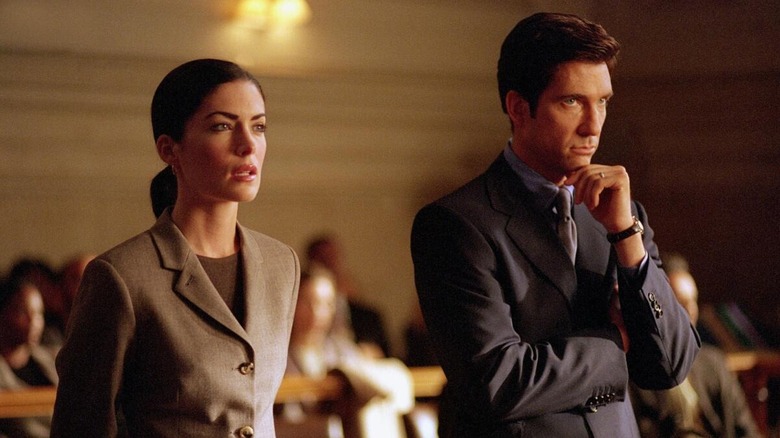
Few television producers have been as prolific as David E. Kelley, who used his background as an attorney to create some of the most authentic legal dramas of the modern era. In 1997, he created two long-running legal shows: the comedic "Ally McBeal" and its dramatic counterpart, "The Practice." Whereas "Ally McBeal" was quirky and whimsical, "The Practice" was more traditional in its approach, but that's not to say it was any less effective. In fact, "The Practice" won back-to-back Emmys for best drama series, including one the same year as "Ally McBeal" took home the comedy prize.
Whereas most legal dramas focus primarily on the outcome of weekly cases, "The Practice" sought to dramatize the ordinary ins and outs of the legal profession with wit and zeal. The team of lawyers is led by Bobby Donnell (Dylan McDermott), a brilliant attorney who started the firm with his receptionist-turned-partner, Rebecca Washington (LisaGay Hamilton). Although the cases were always important, the real conflict of "The Practice" was between someone's personal morality and the demands of legal ethics. As per usual with Kelley, there was a sprinkling of humor that kept the series from devolving into moralistic grandstanding.
Kelley would go on to create many other legal dramas throughout his career, including "Boston Legal" and "Goliath" (one of Billy Bob Thornton's five best TV shows). But "The Practice" remains special in his body of work, as it found him melding his appreciation and understanding of the law with his skills as a dramatic storyteller.