

5 Best Clint Eastwood Movies That Are Not Westerns
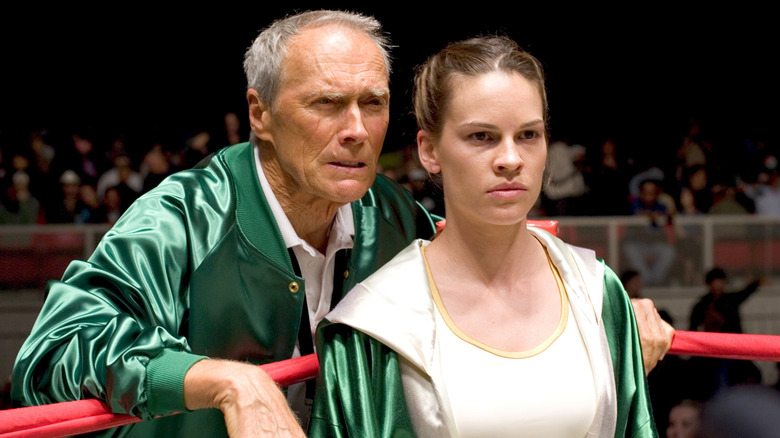
Few actors are as synonymous with Westerns as Clint Eastwood, who looks like he was born atop a horse. From his earliest TV days on "Maverick" and "Rawhide" to his leading man breakthrough in Sergio Leone's "Dollars" trilogy, Eastwood quickly became the heir apparent to John Wayne and Gary Cooper, bringing a surprising amount of wit, intelligence, and sensitivity to his macho characters. The best Clint Eastwood Westerns, from "Pale Rider" to "The Outlaw Josey Wales" to "Unforgiven," are both traditional and revisionist in equal measure, subverting masculine tropes and examining the violence, racism, and mythology of the genre.
Eastwood's screen persona is so tied to Westerns that even many of his films that aren't technically Westerns share similar DNA, including "Bronco Billy," "Honkytonk Man," and "Cry Macho." Yet he's made just as many films that share no iconography with cowboy flicks whatsoever. Throughout his decades-long career, Eastwood has stretched himself in drama, comedy, romance, thrillers, and war movies, showing a wide emotional range that most action stars could only aspire to. With his gravely voice and twinkling eye, he has remained a durable leading man by showing different sides to his tough guy image.
Here are the five best Clint Eastwood movies that are not Westerns. Whether as a director, star, or both, these films show the scope of Eastwood's talent outside of the genre that made him famous. Although there were many great options to choose from, these five titles represent the best of the best.
The Bridges of Madison County
When adult siblings Michael and Carolyn Johnson (Victor Slezak and Annie Corely) arrive at their late mother's Iowa farmhouse to settle her estate, they're shocked to discover she doesn't want to be buried next to their father. Instead, her will stipulates that her ashes be scattered over the Roseman Covered Bridge. Seeking answers, they find a collection of photographs, letters, and notebooks that reveal a secret their mother has kept for 30 years.
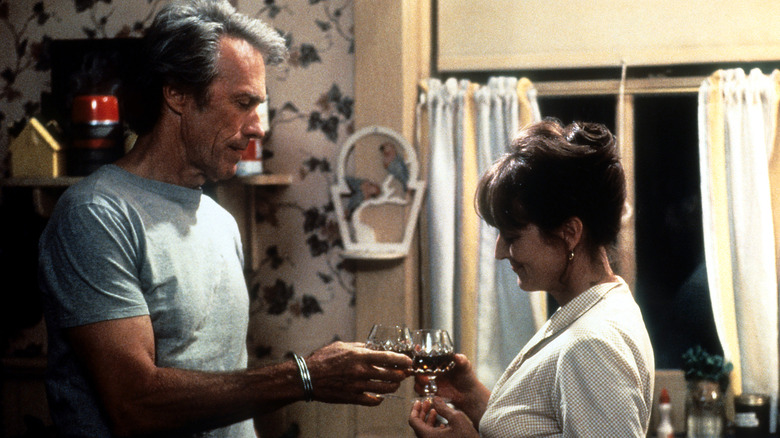
In 1965, Italian war bride Francesca Johnson (Meryl Streep in one of her 12 best movies) is staying at home alone while her husband, Richard (Haynie), takes the kids to the state fair. She meets Robert Kincaid (Clint Eastwood), a National Geographic photojournalist traveling the country to take snapshots of historic bridges. The two have an intense love affair over the course of four days, as Francesca briefly flirts with leaving her family. Instead, the two part ways. Many years later, Francesca learns that Robert has died, and she scatters his ashes from the bridge where they first met.
Because he's such a macho icon, Clint Eastwood isn't often given credit for his sensitivity — yet it's present throughout the majority of films he's starred in and directed. That's especially true of 1995's "The Bridges of Madison County," which finds him turning a weepy bestseller into a stunningly powerful story of middle-aged romance. Although Streep earned the lion's share of praise for her Oscar-nominated performance, Eastwood is her equal in every scene they share, displaying a softer, more vulnerable side to his screen persona.
Dirty Harry
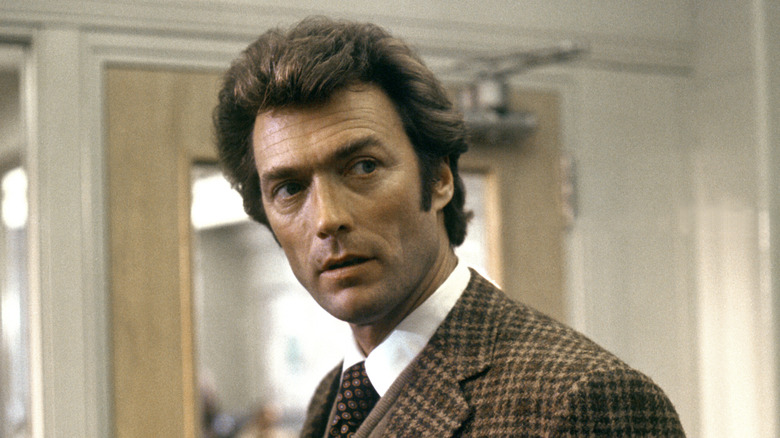
San Francisco Police Inspector Harry Callahan (Clint Eastwood) didn't come by the nickname "Dirty Harry" because of his personal hygiene. He earned it playing by his own rules, instead of the ones laid out by the police department. While on his lunch break, Harry halts a getaway by unloading his .44 Magnum on a crowded street. He approaches one of the wounded suspects, tells him he lost count of how many shots he fired, and instructs the criminal to ask himself one question before he reaches for his gun: "'Do I feel lucky?' Well, do you, punk?"
Harry is hot on the trail of a psychotic serial killer calling himself Scorpio (Andy Robinson). Hoping to save a kidnapped teenage girl before it's too late, Harry tracks the killer down and tortures him for information. After being told that he's violated the suspect's civil rights, Harry is enraged to learn Scorpio has been released, and he's forced to stop following him. But when Scorpio hijacks a school bus full of children, it's up to Harry to stop him once and for all.
Released in 1971, "Dirty Harry" played a major role in turning Eastwood into a superstar, and he returned to the character for four sequels of varying quality. Directed by Don Siegel, the original film drew inspiration from the real life Zodiac killer, and it raises serious questions about victims' rights, police brutality, and vigilantism vs. law enforcement. Debates about politics aside, there's no denying this is one of the best cop movies of all time, thanks in no small part to Eastwood's iconic performance.
Escape from Alcatraz
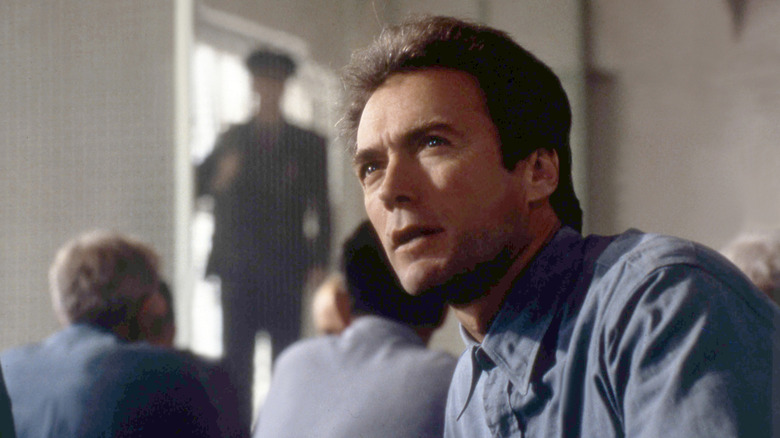
Career criminal Frank Lee Morris (Clint Eastwood) has been in and out of prison several times, and has successfully broken out every time. But on January 18, 1960, he's sent to Alcatraz Island, a maximum security facility right in the middle of the San Francisco Bay. Surrounded by miles of ice cold water, any escape attempt appears futile, especially given the high level of oversight.
As he tries to find a way out, Frank becomes friendly with his fellow inmates, who are punished by the cruel, sadistic warden (Patrick McGoohan) over the slightest infractions. One inmate, Doc (Roberts Blossom), cuts his own fingers off after getting stripped of his painting privileges over an unflattering drawing of the warden. Realizing that his life depends on getting out, Frank plots his escape with bank-robbing brothers Clarence (Jack Thibeau) and John Anglin (Fred Ward).
One of the best prison escape movies of all time, "Escape from Alcatraz" tells the true story of Morris's 1962 escape attempt, the efficacy of which is still up for debate since no bodies were found in the water. Released in 1979, it's a creative high point for Eastwood and one of his favorite directors, Don Siegel, who directs with muscularity and verve. Using Eastwood's star persona, Siegel manages to make us sympathize with a repeat offender, showing the dehumanizing effects of the prison system. Morris may be a criminal, but he's not a sadist. The same cannot be said of the warden.
In the Line of Fire
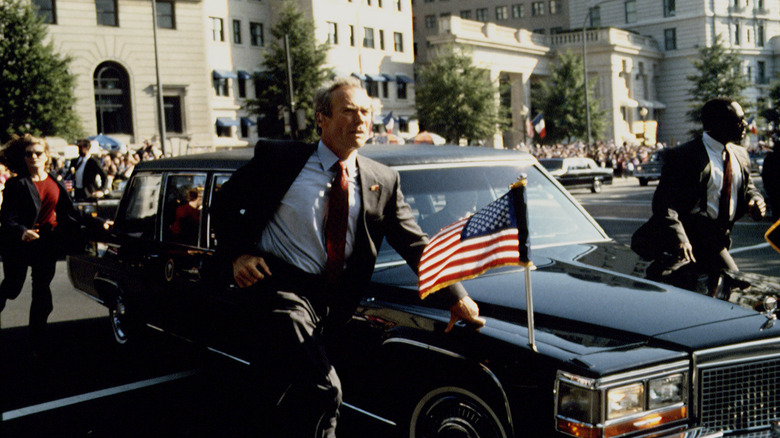
On November 22, 1963, Secret Service agent Frank Horrigan (Clint Eastwood) failed to prevent the assassination of President John F. Kennedy in Dallas, Texas. 30 years later, Frank has become an embittered drunk, haunted by the events of that day. One day he gets a phone call from Booth (John Malkovich in one of his best movies), a brilliant psychopath who knows about Frank's past, and is planning to assassinate the current president.
Hoping to prevent history from repeating itself, Frank asks to be re-assigned to the president's detail, despite the physical rigors the job has on the retiree. He finds an ally in Lilly Raines (Rene Russo), an effective agent who remains playful in the face of danger. As Frank continues to field calls from Booth, he quickly learns he's dealing with a highly-trained ex-CIA agent who is seeking revenge against the government after suffering a breakdown.
Released the year after Eastwood won Oscars for directing and producing "Unforgiven," 1993's "In the Line of Fire" showed the then-63-year-old still had what it took to be an action star, not just for his psychical strength, but his intelligence and wit as well. "Unforgiven" reckoned with the brutality inherent in the Western genre; "In the Line of Fire" similarly examines the psychic scars a lifetime of violence can have upon those who've made killing their profession and those who've sworn to protect others against them. Directed by Wolfgang Petersen, the film earned Oscar nominations for Best Supporting Actor (Malkovich), Best Original Screenplay, and Best Editing.
Million Dollar Baby
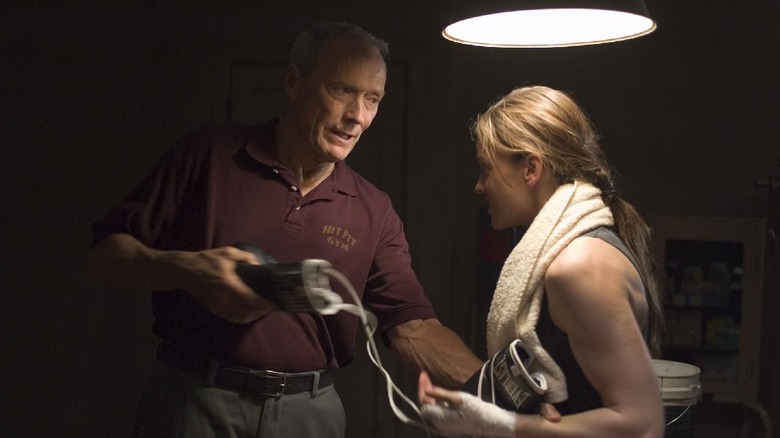
Cantankerous boxing trainer Frankie Dunn (Clint Eastwood) runs a Los Angeles gym. Long estranged from his daughter, Frankie isn't close to anyone save for the gym's janitor, former boxer Eddie "Scrap-Iron" Dupris (Morgan Freeman), and his priest, Father Horvak (Brían F. O'Bryne). When scrappy waitress Maggie Fitzgerald (Hilary Swank) shows up at the gym, Frankie refuses to train her, saying he doesn't work with girls. But Eddie allows her to work out in secret, and eventually, Frankie agrees to take her on.
Maggie quickly works her way up the amateur boxing circuit, but Frankie refuses to put her in the majors. He finally relents, and sets up a fight with Billie "The Blue Bear" Osterman (Lucia Rijker). A dirty fighter, Billie knocks Frankie out with an illegal sucker punch, causing her to hit a stool and paralyzing her from the neck down. Consumed with guilt over what happened, Frankie tries to help Maggie any way he can, but he's faced with a moral dilemma over what his surrogate daughter wishes for him to do.
One of the best movies Clint Eastwood ever made, "Million Dollar Baby" won Oscars in 2004 for Best Picture, Best Director (Eastwood), Best Actress (Swank), and Best Supporting Actor (Freeman). Eastwood was nominated in the Best Actor category, and should've won for his career-best performance as a man whose gruff exterior masks a heart of gold. Although on the surface a boxing movie, "Million Dollar Baby" is really a story of unconditional love, and the sacrifices one must make in service of that love.