

5 Best John Wayne Movies That Are Not Westerns
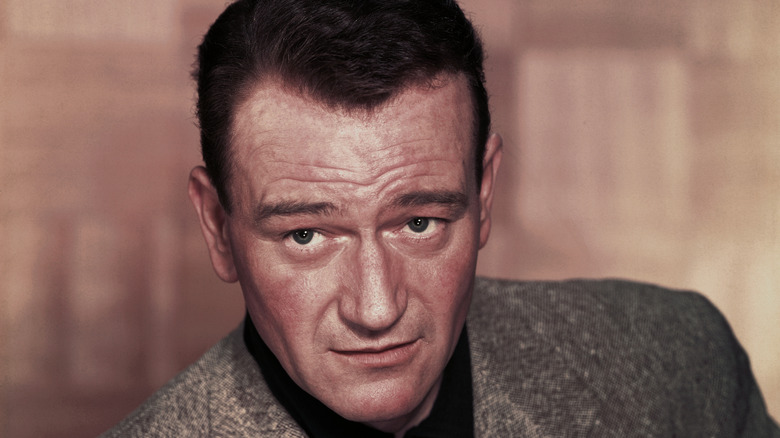
Although many actors are known for Westerns, few are as closely associated with them as John Wayne. Look at any list of the best Western movies of all time, and you're likely to find more than a few Wayne titles. After his first starring role in 1930's "The Big Trail" failed at the box office, Wayne spent nearly a decade churning out cheap Westerns on Hollywood's so-called "poverty row." But after starring in John Ford's 1939 classic "Stagecoach" (one of those westerns you need to see before you die), he was never relegated to a b-movie ever again.
Wayne starred in one classic Western after another, culminating in an Oscar win for his performance as drunken, one-eyed marshal Rooster Cogburn in "True Grit" (one of five movies that proved 1969 was the best year for Westerns). He gave his final performance in 1976's "The Shootist," one of the must-watch '70s Westerns that still hold up today. It was a fitting swan song for an actor who had redefined the genre in such classics as "Red River," "The Searchers," and "Rio Bravo." Simultaneously the masculine ideal and a sensitive soul, Wayne set the standard for every Western star who came after him. Yet to simply define him by that genre alone discounts the wide scope of the Duke's career.
Here are the five best John Wayne movies that are not Westerns. These titles are straight up some of the best movies Wayne ever made, and show off different elements of his on-screen persona.
Hatari!
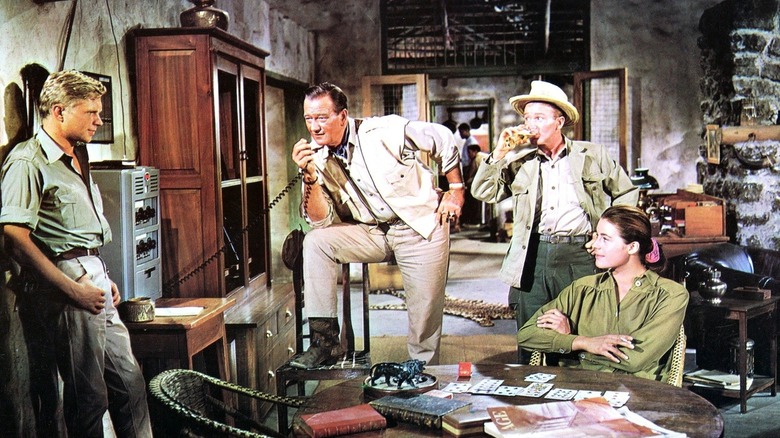
Although he's best known for his collaborations with John Ford, Wayne made some of his best westerns with one of Ford's few contemporary rivals, Howard Hawks. After collaborating on "Red River" and "Rio Bravo," Wayne and Hawks left the wild West for Africa with 1962's "Hatari!"
In the Tanganyika Territory of East Africa, Sean Mercer (John Wayne) leads a ragtag group of hunters who capture animals for zoos and circuses. When one of their team members is injured while trying to capture a rhinoceros, Sean agrees to bring on French marksman Chips Maurey (Gérard Blain). Chips fits right in with the hyper-masculine group, which includes former New York cabbie Pockets (Red Buttons) and retired race car driver Kurt Müller (Hardy Krüger).
The men are shocked by the arrival of Dallas D'Alessandro (Elsa Martinelli), an Italian photographer sent by the Basel Zoo to accompany Sean and his men on their hunts. Although he believes women have no place in the wild, Sean reluctantly agrees to bring her along to appease one of his top clients. Dallas quickly proves to be just as tough as any of the men, and the initial head-butting between her and Sean slowly turns to love.
Shot on location, the film is typically Hawks-ian in its emphasis on character over plot. "Hatari!" finds Wayne easing into an elder statesman role, playing into a gruffness that was becoming more refined with age. The stunning Technicolor cinematography, which captures the African wildlife with almost documentary realism, earned an Oscar nomination.
The Long Voyage Home
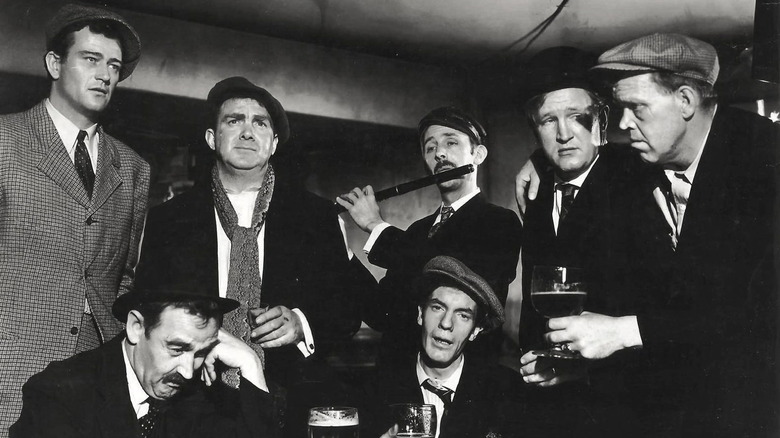
After redefining the Western with "Stagecoach," Wayne and John Ford collaborated on an adaptation of four Eugene O'Neill plays set aboard the high seas. Released in 1940, "The Long Voyage Home" is among the most personal films for Ford, who won an Oscar that same year for directing "The Grapes of Wrath" and got best picture nominations for both. It also shows off Wayne's gentler side, hinting at the range he would display in subsequent roles. The black-and-white cinematography by Gregg Toland is basked in shadows, adding a moodiness and sadness to the lighthearted antics.
In the early days of World War II, a British tramp steamer is sailing from the West Indies to Baltimore. Among the ragtag group is Ole Olsen (John Wayne), a Swedish ex-farmer affectionately referred to as "Swede." The crew of the SS Glencairn, including default leader Driscoll (Thomas Mitchell), vindictive Cocky (Barry Fitzgerald), and strapping Englishman Smitty (Ian Hunter), enjoy a good drink and a good song, and they frequently find themselves in trouble while looking for a good time.
After a night of drunken revelry, the men set sail with their cargo, and they're angered to learn they're transporting explosives to England. Part of their concern stems from suspicion that Smitty might be a German spy. After getting attacked in a war zone, the men decide not to go on another mission, and Swede goes home to visit his family. When Swede is drugged and kidnapped aboard another ship, the crew of the Glencairn stage a rescue mission.
The Quiet Man
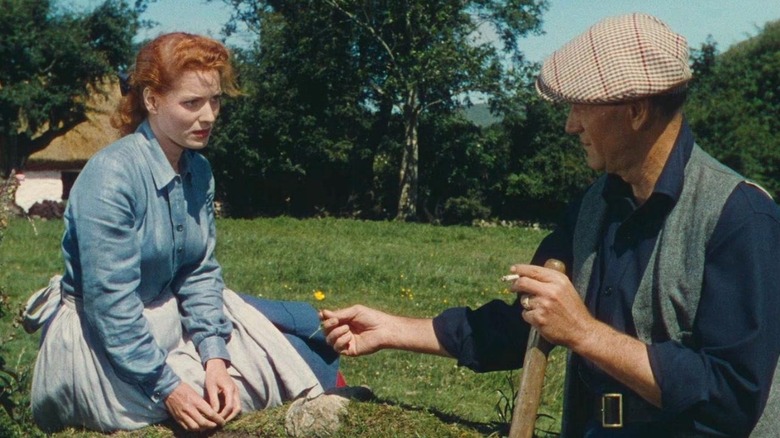
Among the 25 best movies John Wayne ever made, "The Quiet Man" finds the Duke suppressing his macho persona for much of the running time, playing instead a sensitive, romantic leading man. Directed by John Ford, it's a stunningly beautiful, quietly powerful film that makes good use of the lush Irish countryside. Released in 1952, the film won Oscars for best director and best color cinematography.
In the 1920s, retired boxer Sean Thornton (John Wayne) leaves America to return to his homeland in Ireland. Sean hung his gloves up for good after killing an opponent in the ring, and hopes to live a quiet life in the small village of Inisfree. Hoping to purchase his family farm, Sean runs afoul of Will Danaher (Victor McLaglen), who wants to buy the property himself. Tension continue to rise when the farms current owner accepts Sean's bid over Will's.
Sean falls madly in love with Will's fiery, red-headed sister, Mary Kate (Maureen O'Hara), and wishes to take her for his wife. Angered by the loss of the farm, Will refuses to hand over his sisters dowery, and Mary Kate is angered when her new husband refuses to fight her brother. Things come to a head when Mary Kate tries to leave town, forcing Sean to engage in a prolonged fistfight with his brother-in-law. A crowd of onlookers follow the two as they trade blows across the village, ending with a knockout punch by Will. Thanks to the power of drink, the two reconcile and Mary Kate returns home.
Sands of Iwo Jima
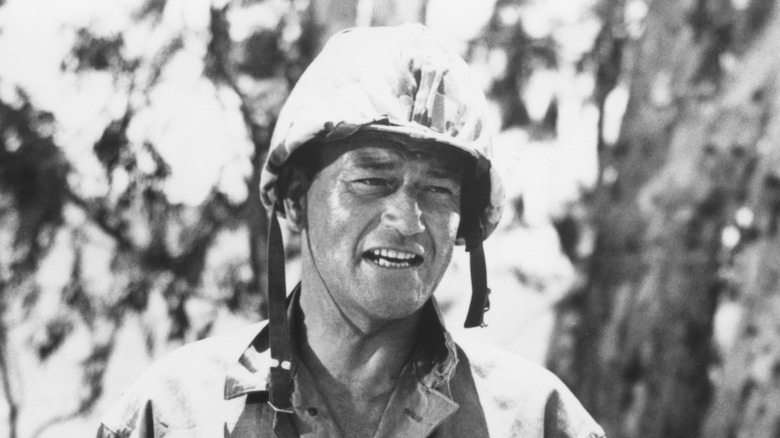
Directed by Allan Dwan, "Sands of Iwo Jima" employs actual documentary footage from the war, adding a heightened sense of authenticity. Like the best WWII movies, it succeeds not just from its recreation of battle scenes, but from its focus on the soldiers fighting them. The 1949 release earned Wayne his first Oscar nomination as best actor.
During WWII, Marine Sergeant John Stryker (John Wayne) puts his cadets through hell during basic training. Although the recruits despise him, they realize that his tough-as-nails approach is meant to prepare them for the battlefield, which spares no ones feelings. As Sgt. Stryker leads his men into one conflict after another, he slowly reveals his humanity, showing compassion for the soldiers under his command. It all leads up to one of the bloodiest conflicts in the war: the battle of Iwo Jima.
Aside from Westerns, the genre Wayne is most associated with is war movies, which is fascinating when you consider that, unlike many of his Hollywood contemporaries, the Duke didn't serve during WWII. While actors like James Stewart and directors like John Ford took time off from their movie careers to serve overseas, Wayne stayed home and starred in many films that dramatized the global conflict. In his own way, Wayne helped the war effort by inspiring the soldiers who were fighting it, and subsequently, he valorized the bravery they displayed on the battlefield in films like "Sands of Iwo Jima."
They Were Expendable
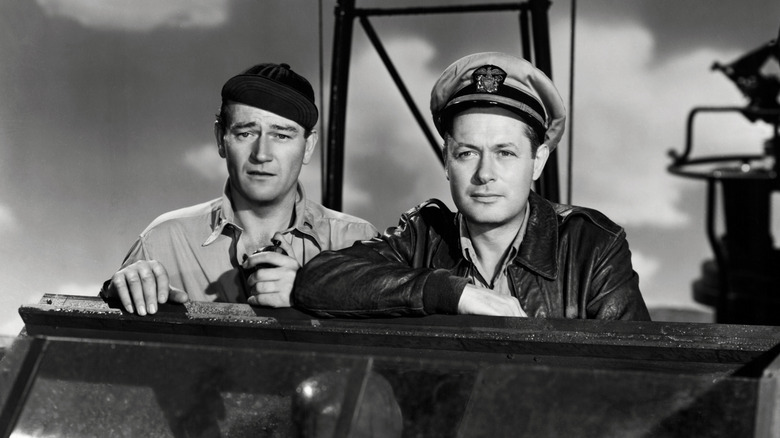
Released in 1945, "They Were Expendable" is one of the best collaborations between Wayne and John Ford, and one of many films that proved Ford was among the 15 best directors of all time. Drawing upon his own military service during WWII, Ford directs with almost documentary realism, eschewing any level of Hollywood artifice. He also provides Wayne with one of his best roles as a career soldier whose hunger for battle often gets in the way of his brilliance.
In the days leading up to the attack on Pearl Harbor, Naval Lieutenant John Brickley (Robert Montgomery) and his executive officer, Rusty Ryan (John Wayne), command a small squadron of cadets stationed in the Philippines. Brickley is trying to convince the higher-ups that PT boats can be viable assets in wartime, but his bosses remain unconvinced. Frustrated with the bureaucracy and eager for combat, Rusty puts in a request for a transfer, until the events of December 7, 1941, make that an impossibility.
Thrown headfirst into war with the Japanese, Brickley and Rusty suddenly have a chance to prove the PT's efficacy. Although they're able to shoot down multiple enemy planes and sink multiple ships, there's always another one on the way. It doesn't take long for them to realize that their unit is viewed as dispensable in the greater war effort. Yet in spite of this, Brickley and Rusty prove that the small, wooden PT boats — and the men who command them — are anything but expendable.