

5 Best Neo-Western Movies Of All Time, Ranked
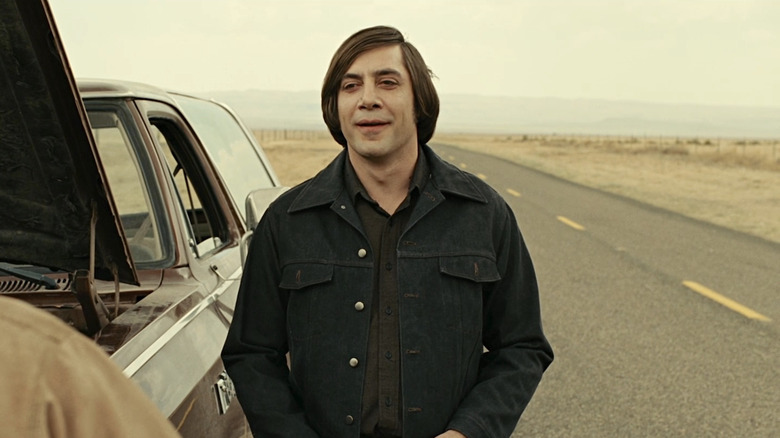
The Western movie has had an enormous impact on American cinema. Not only are the Western movies you need to see before you die mighty acclaimed, but they've also influenced countless artists making new movies. Just look at the endless number of motion pictures that have referenced the iconic doorway shot of "The Searchers," or the deluge of features that are rooted in iconography that originated in Westerns. This genre's legacy includes spawning the neo-Western, a contemporary genre successor.
The neo-Western is best described as a film often translating Western stories and environments to more modern worlds. Typically, they delve into grimmer atmospheres, complex senses of morality, and even offer insightful social commentary on the inner core of classical Westerns. In the process, filmmakers create something new from the bones of familiar genre movie tropes. They also weave stories that have interesting relationships between the past and present. The best way to recognize if a movie you're watching is a neo-Western, though, is just to watch it and see if it feels like it belongs to the genre. The five best neo-Western movies of all time (ranked below from "least best" to greatest) exemplify the fledgling genre.
Even for those who struggle putting their finger on what is and isn't a neo-Western, these productions will immediately register as belonging to this cinematic space. All five of these movies also exemplify the genre's artistic virtues, which keeps the Western genre alive in a fascinating new fashion.
5. Hell or High Water
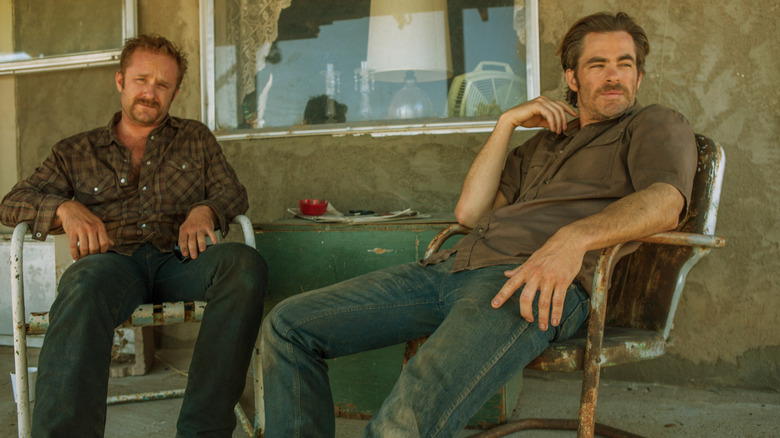
In the 2020s, writer/director Taylor Sheridan's creative milieu has become trite. Nearly every Taylor Sheridan TV show, including "Yellowstone," has succumbed to weird writing shortcomings like didactic, ranty dialogue and irritatingly retrograde writing of women. Before he was cranking out endless Western-tinged TV slop for Paramount+, though, Sheridan wrote respectable big screen dramas that required him to work with other filmmakers like Denis Villeneuve. His greatest screenplay remains the script for 2016's "Hell or High Water," a fantastic collision of Western narrative hallmarks and the modern world.
That fusion of the old and new is realized in a memorable "Hell or High Water" moment where a cattle rancher expresses frustrated befuddlement that he's still herding cattle like his ancestors while a glisteningly modern city lingers in the distance. The specificity underpinning this evocative visual reverberates throughout the rest of the story, which follows brothers Toby (Chris Pine) and Tanner Howard (Ben Foster) engaging in bank robberies as revenge against Texas Midlands Bank. Meanwhile, Texas Ranger Marcus Hamilton (Jeff Bridges) is set on hunting the duo down.
This compelling yarn gets great use out of the deeply lived-in performances of its various cast members, particularly Foster and Bridges. A memorable supporting turn from the always welcome Dale Dickey, lately of "Widow's Bay," doesn't hurt either. Strong camerawork and editing further also permeate the productions sterling craftsmanship. Delivering entertaining twists, a challenging moral landscape, and potently aching tragedy, "Hell or High Water" puts Sheridan's lackluster modern TV works to shame.
4. Little Woods
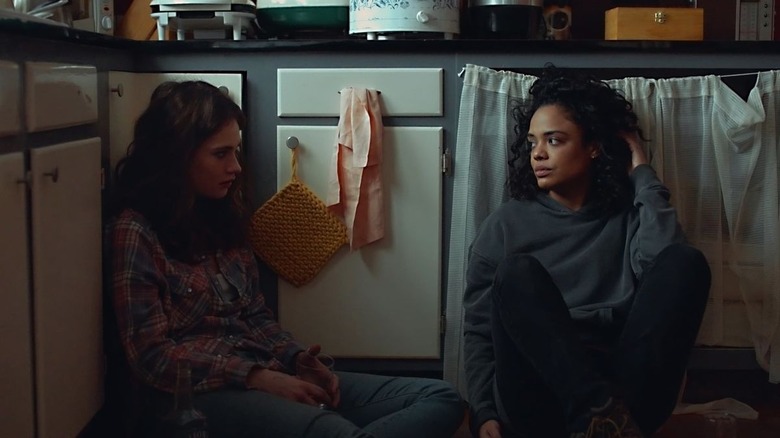
It's tremendous watching a directorial debut and realizing that the filmmaker is about to become a legend. That's what happened with anyone lucky enough to see Nia DaCosta's debut feature "Little Woods" in a theater in 2019. The future "Hedda" and "28 Years Later: The Bone Temple" director uses her camera to follow North Dakota resident Ollie (Tessa Thompson) as she struggles to navigate both her final days of probation and her relationship with her sister, Deb (Lily James). When new financial hurdles (like the loss of her home) appear, Ollie has no choice but to return to doling out medication, the same crime that previously put her behind bars.
Like the best neo-Western films, "Little Woods" takes an unflinching look at the modern world it was produced in. In this case, struggles for various kinds of autonomy in late-stage American capitalism reverberate throughout every inch of the plot. Ollie, for instance, grapples with carving out a new future while Deb deals with an unexpected pregnancy and the societal judgement attached to getting an abortion. Meanwhile, the tension of classic "high noon" Western showdowns is here translated to gripping suspense sequences like Ollie's parole officer doing a surprise inspection of her home. Even Brian McOmber's atmospheric score channels the distinctive harmonies crafted by classic Western movie composers like Ennio Morricone.
"Little Woods" often harkens back to Westerns while becoming modern and transfixing. Nia DaCosta set a high bar for her filmmaking career to come with this outstanding directorial debut.
3. Lone Star
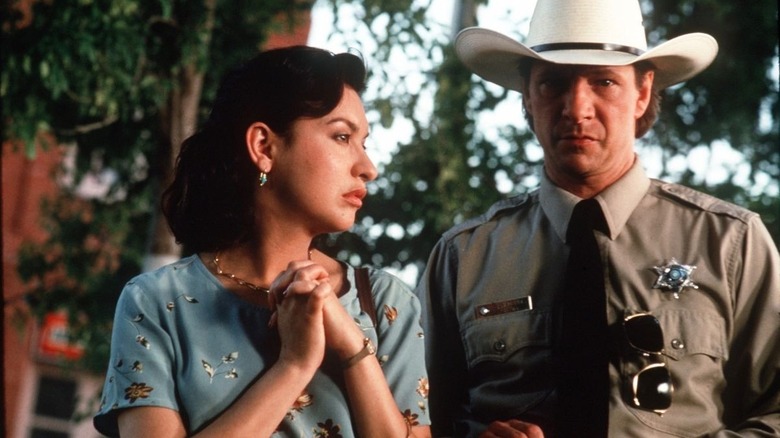
Many classic Westerns were about reinforcing the "power" of conventional American gender and racial roles. Even some of the 10 best Western movies of all time according to Letterboxd unfortunately underline this. At their worst, these titles featured actors like John Wayne romanticizing colonialism or traditional gender concepts. Leave it to a master like writer/director John Sayles, famous for thoughtful and class-conscious works like "Matewan," to provide a rebuke to that legacy in 1996's "Lone Star." Set in a Texas border town, the film follows Sheriff Sam Deeds (Chris Cooper) as he stumbles into a rabbit hole of conspiracies and covered up secrets after unearthing a buried skull.
Rather than either nonchalantly or actively reinforcing white supremacy, "Lone Star" instead takes an unflinching look at the horrors of racial prejudice. And rather than encasing its male characters into rigid archetypes devoid of emotions, folks like Sam Deeds are given vulnerability and nuanced complexities (which Cooper handles with his reliable mastery). While Westerns often provide visions of yesteryear that won't aggravate the still socially-privileged classes, "Lone Star" is about Deeds discovering the dark past that made his modern world possible. "Lone Star" is fascinating both as a subversion of Western cinema hallmarks and as a straightforward thriller.
Whether it's in the inspired scene transitions (which cleverly shift from one time period to another) or its aching final line, "Lone Star" is a haunting work that's as relevant as ever. Never underestimate the prowess of John Sayles.
2. Hud
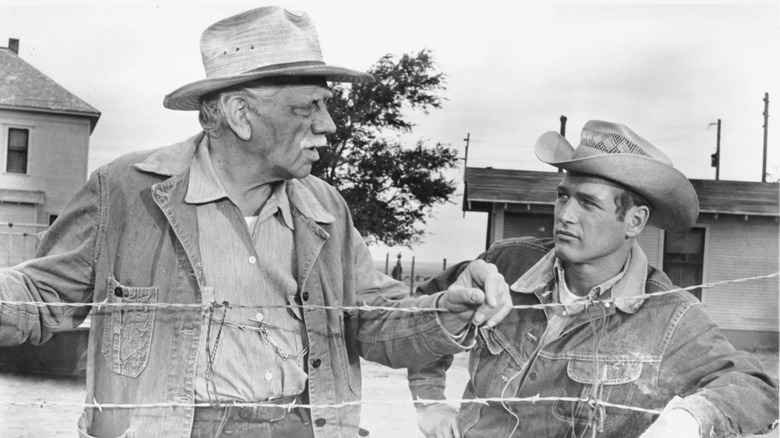
Early on in the Mark Harris text "Pictures at a Revolution: Five Movies and the Birth of the New Hollywood," the author recounts how the film industry was in the dumps over the films nominated at the 36th Academy Awards. In a sign of how American cinema was falling behind with audiences and the global film scene, international films (namely European titles) dominated the year's nominations. Harris also recounts how countless figures in the film industry were flabbergasted that "Hollywood studios had mustered up an embarrassing lineup of films in 1963 and then failed to nominate [for best picture] the best of them, 'Hud.'"
This Martin Ritt directorial effort is far more than just the major Oscar category it failed to crack. One of the greatest Paul Newman movies ever made, "Hud" saw Newman playing the film's titular lead, a conceited cattleman navigating family turmoil on a Texas panhandle ranch. The rousing score and classical heroics of Westerns are erased here in favor of endless aching pain. Often, Ritt will eschew Elmer Bernstein's score just to let silence and the anguish of these people fill the screen. Newman's great work as Hud vividly reaffirms why he's still one of the best actors of all time.
However, it's the weary performance from Melvyn Douglas as Hud's father that functions as the movies MVP. He encapsulates the transfixing sorrow fueling "Hud," a standout film from 1963 — or any year in American cinema history.
1. No Country For Old Men
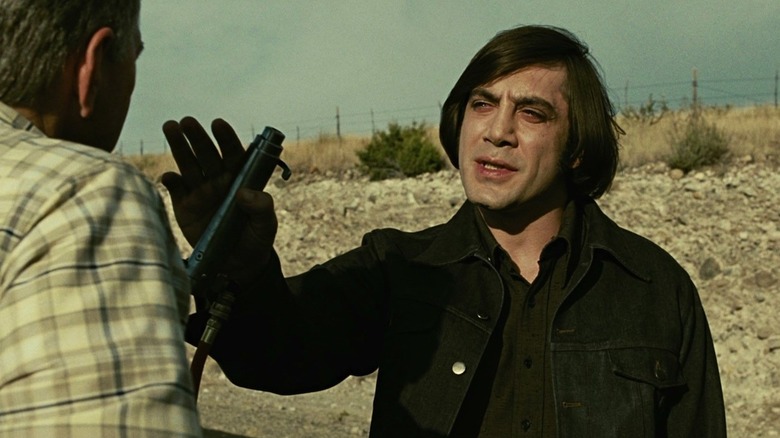
Author Cormac McCarthy is famous for his bleak works like "The Road." That track record endured with his 2005 novel "No Country for Old Men," which was adapted into a masterful 2007 movie of the same name. Joel and Ethan Coen's vision keeps the grim aesthetic of its source material in realizing the story of Llewelyn Moss (Josh Brolin) stumbling upon and grabbing a bag of money, which puts him in the crosshairs of the assassin Anton Chigurh (Javier Bardem). The very best among the best picture Oscar winners of the 2000s, "No Country for Old Men" infuses overwhelming vulnerability and smallness into this Texas-set yarn.
Often in vintage Westerns, the right man in a cowboy hat could solve any problem, especially if he carried a gun. In "No Country for Old Men," no saviors are coming to rescue its jeopardized people. Violence occurs randomly and anywhere, from sleek offices, to bustling streets, to one's own home. Even lawman Ed Tom Bell (Tommy Lee Jones) eventually admits he's outsized by the wickedness of the world's brutality — a thing which never really changed, just his perspective on it. These subversions of the standard depictions of masculinity in Westerns make "No Country for Old Men" a rivetingly unpredictable enterprise. The Coen Brothers also demonstrate towering finesse when realizing the film's various suspense sequences.
A haunting work that's impossible to shake, "No Country for Old Men" is a fascinating overhauling of Western genre norms. Within this recontextualization, the Coens deliver something unforgettable.