

5 Disturbing '70s Horror Movies That Still Shock Viewers
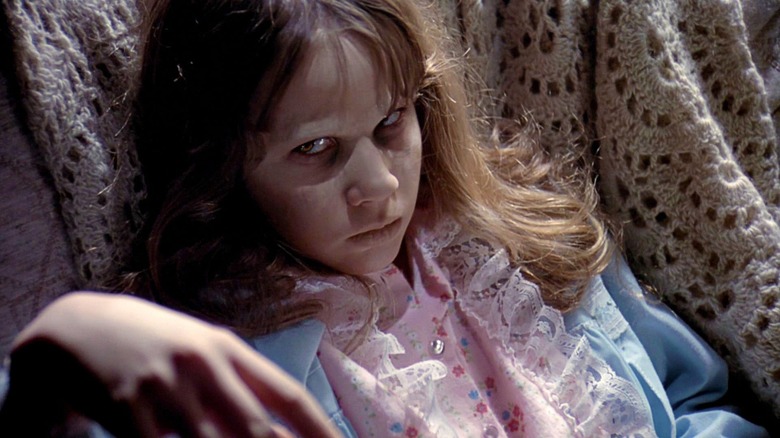
More so than any other movie genre, horror has proven to be extremely successful throughout time. While the western, the musical, or the superhero flick have experienced their ups and downs, horror has never failed to drive audiences to the multiplexes. From silent era chillers like "The Cabinet of Dr. Caligari" and "Nosferatu" to the Universal Monster movies, there's been no shortage of scary stories to spook theatergoers.
As cinema evolved and changed, so too did the horror genre; and thanks to advances in special effects, directors have been able to scare audiences with sights and sounds that were previously unthinkable. As the strict Production Code gave way to the MPAA ratings system in the late 1960s, filmmakers were free to fill the screen with blood and guts. With the New Hollywood revolution of the 1970s, movies became grittier, rougher, and truer to life, and that inevitably found its way into horror. As audiences watched the real-life atrocities of the Vietnam War unfold on the news, the movies grew to reflect that; and, as such, many of the horror films that were released in that decade were shocking and unsettling beyond belief.
Here are five disturbing '70s horror movies that still shock viewers today. In their own ways, each of these films laid the groundwork for modern scary movies, from slasher flicks to straight up torture to elevated horror. So check these titles out... if you dare.
The Last House on the Left
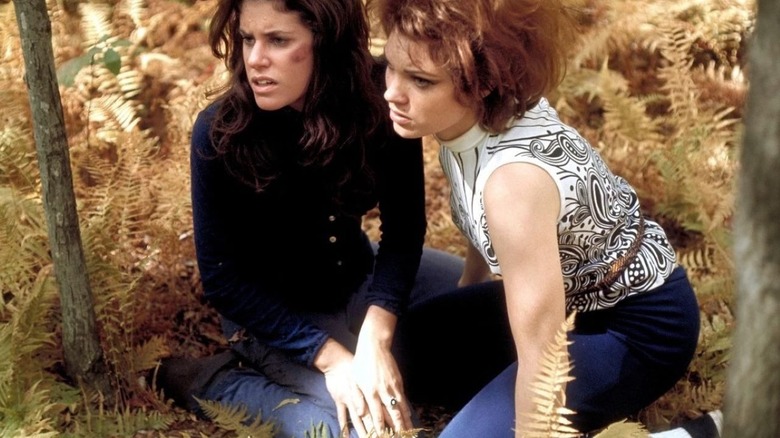
While in the city for a concert, teenagers Mari (Sandra Peabody) and Phyllis (Lucy Grantham) decide to score some drugs. The heroin-addicted Junior (Marc Sheffler) lures them back to his apartment with the promise of marijuana. What they find instead is crazed killer Krug Stillo (David Hess), his psychopathic girlfriend Sadie (Jeramie Rain), and their murderous accomplice Weasel (Fred Lincoln). The gang of escaped convicts take Mari and Phyllis to the woods, where they rape and kill them. They stumble upon the home of none other than Mari's parents, who offer them a place to stay for the night; but their hospitality turns to vengeance when Mari's dead body appears in the lake.
Although he would go on to direct such horror classics as "A Nightmare on Elm Street" and "Scream," no other Wes Craven movie is as unsettling and frightening as his first. Inspired by Ingmar Bergman's "The Virgin Spring" (which is itself based on a Swedish ballad), "The Last House on the Left" stirred significant controversy for its graphic violence and sexual content, which went well beyond 1972's standards. Craven made significant edits to get an R-rating in the U.S., but that didn't stop the U.K. from banning it for failing to pass certification (it was declared a "video nasty" and remained out of circulation until the 1990s). Despite this, the film is distinguished by Craven's depiction of revenge as a temporary salve, which creates more pain and heartache.
Don't Look Now
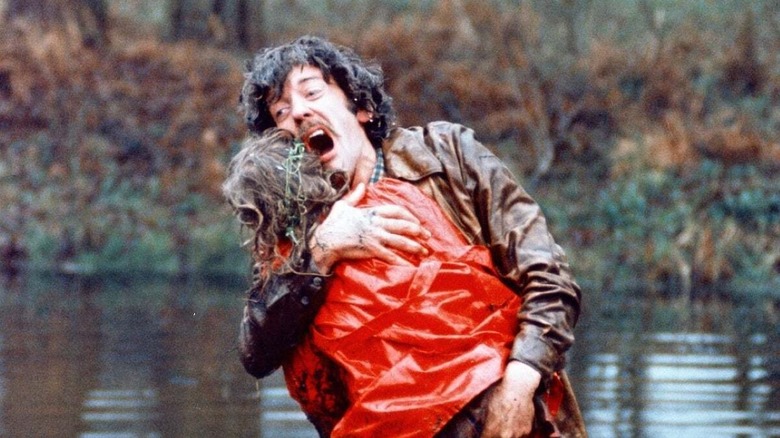
Art restorer John Baxter (Donald Sutherland) and his wife, Laura (Julie Christie), are devastated by the sudden death of their daughter, Christine (Sharon Williams), who drowns in a lake outside their English country home. Stricken with grief, the couple travel to Italy, when John is hired to restore a decaying church. While at lunch, Laura meets an elderly woman (Clelia Matania) and her psychic sister (Hilary Mason), who claims to be communicating with Christine from beyond the grave. Although John is understandably skeptical, Laura takes the sisters seriously, and holds a séance with them. She tells John that their daughter warned her that his life is in danger, which he begins to take seriously when a mysterious figure starts appearing wearing the same red raincoat she had on when she drowned.
Adapted from the short story by Daphne du Maurier — whose "Rebecca" was the basis for one of Alfred Hitchcock's best movies — "Don't Look Now" makes overt the feverish sexuality, violence, and gothic horror the Master of Suspense could only hint at. Directed by Nicolas Roeg, it's a dazzling feat of cinematography and editing, using a muted color palette and fractured timeline so confusing you need a second watch to fully understand it. The film stirred significant controversy for a sex scene that many assumed was real, but its true power comes from the ending, which is just as shocking and disturbing today as it was in 1973.
The Exorcist
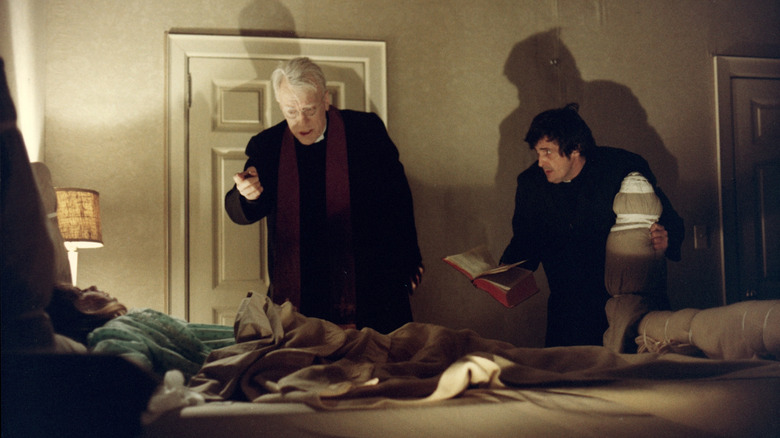
While shooting a movie in Washington, D.C., actress Chris MacNeil (Ellen Burstyn) begins to worry about her preteen daughter, Regan (Linda Blair), who's exhibiting strange behavior that goes beyond mere growing pains. When Regan's actions turn violent, Chris fears her child might be possessed by something demonic. Finding the various doctors she consults to be of no help, she seeks the guidance of a priest, Father Damien Karras (Jason Miller). A modern thinker, Father Karras is skeptical about Chris' claims of possession — until he gets some green puke sprayed in his face. Fearing that Regan is possessed by the devil himself, Karras enlists the help of aging priest Lankester Merrin (Max von Sydow) to face off against the antichrist in a harrowing exorcism.
When "The Exorcist" opened in 1973, it shocked audiences in a way few horror films had before or since. Using state-of-the-art special effects, director William Friedkin created terrifying sights that had never been seen before, leading some viewers to faint, vomit, and convulse in the theater. At least, that's according to rumors that drove up ticket sales from curious audiences members. One of the 10 most rewatchable movies of the 1970s, "The Exorcist" retains its power to shock and disturb us — even as modern horror has gone further than '70s audiences could ever possibly imagine. A massive box office success, the film earned 10 Oscar nominations including Best Picture, a rarity for the horror genre (it won the awards for Best Adapted Screenplay and Best Sound).
The Texas Chain Saw Massacre
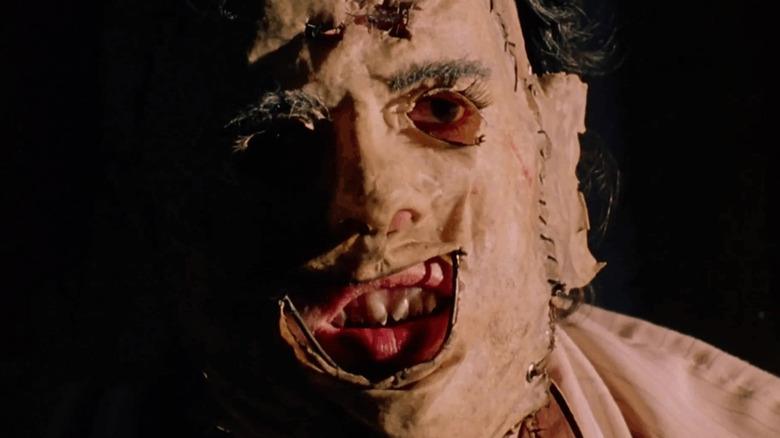
Sally (Marilyn Burns) and her paraplegic brother Franklin (Paul A. Partain) are driving through Texas to visit their grandfather's gravesite. Along for the ride are their friends Jerry (Allen Danziger), Pam (Terri McMinn), and Kirk (William Vail). While on the road, they pick up a hitchhiker (Edwin Neal), who terrifies them with tales of a family slaughterhouse. After ditching the scary stranger, the teens stumble upon a ramshackle house in the middle of an empty field, and realize his stories are true. The family of demented butchers, who have constructed furniture with human skin and bones, decide to turn the visitors into their new living room set. Most terrifying of all is the chainsaw-wielding maniac named Leatherface (Gunnar Hansen), who wears a mask made of flesh.
One of the most influential horror movies of all time, Tobe Hooper's "The Texas Chain Saw Massacre" is often credited with inventing such slasher movie tropes as the masked killer and the final girl. Taking its inspiration from the crimes of Ed Gein, the film upped the ante on violence and mayhem in modern horror, and its low-budget aesthetic made it feel more terrifying than slicker entertainments. A big box office success, film spawned a legion of imitators — and not to mention a slew of sequels, reboots, and remakes. There's no doubt, however, that this is a classic horror movie that holds up better than those remakes; and more than 50 years later, it retains its power to shock and disturb us.
Salò, or the 120 Days of Sodom
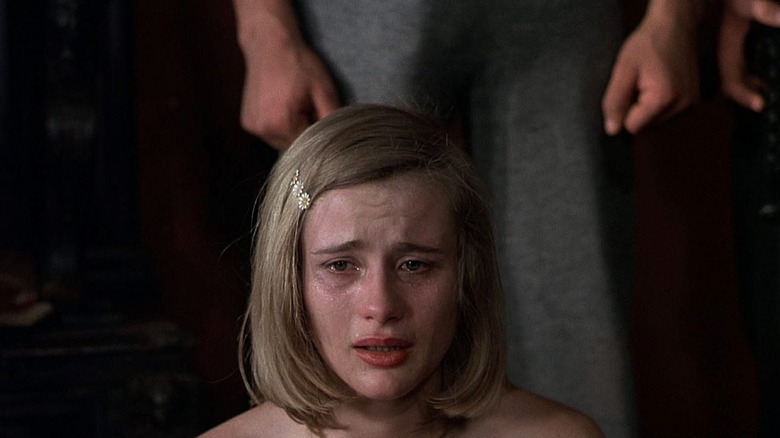
In 1940s Italy, four wealthy fascists in the Nazi-controlled Republic of Salò — The Duke (Paolo Bonacelli), The Bishop (Giorgio Cataldi), The Magistrate (Umberto Paolo Quintavalle), and The President (Aldo Valletti) — hatch a devious scheme to indulge in their wildest fantasies. After marrying each others daughters, they enlist a group of guards and studs to roam throughout the countryside and kidnap 18 teenage boys and girls. At their isolated villa, the four libertines subject their victims to various tortures and perversions, from rape to beatings to coprophilia. As their attempts to fight back prove futile, the prisoners try to find some small comforts within their situation, leading to infighting, affairs, and compromises. The fascists pit their victims against each other, subjecting those who don't comply to a painful, torturous death.
Before there was torture porn, there was "Salò, or the 120 Days of Sodom." The final film by controversial director Pier Paolo Pasolini (who was murdered three weeks before its release in 1975), "Salò" transplants Marquis de Sade's unfinished novel from 18th century France to Italy during WWII, using it as a means to explore the dehumanization that comes from fascism. The movie was shocking back then, and is certainly a '70s movie that would never be made today. Banned and censored throughout the globe, it has been called disgusting, pornographic, and obscene. Yet, for those who can stomach it, the film is a powerful indictment of the ruling class, and a warning against granting them unlimited power.