

The Ending Of Ryan Gosling's Project Hail Mary Explained
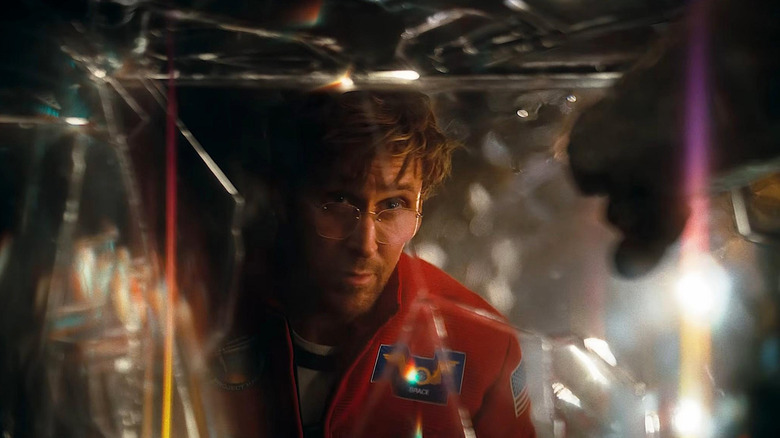
Back in 2020, news broke that Andy Weir's best-selling novel "Project Hail Mary" was getting the same treatment as his other best-selling novel, "The Martian" — in that it was being made into a huge, ambitious movie. With "21 Jump Street" and "The LEGO Movie" co-directors Phil Lord and Christopher Miller behind the camera and Drew Goddard ("Cloverfield," "The Good Place," "The Cabin in the Woods") writing the script, the project got Ryan Gosling on board, and it all started to take shape.
Now? "Project Hail Mary" is finally in theaters, and critics are raving about this modern sci-fi masterpiece (including Looper's Reuben Baron, who soundly praised the film in his review). So what happens in this ambitious, stunning, and thoroughly moving film that stars Ryan Gosling as Dr. Ryland Grace, a middle school science teacher who wakes up on a massive spacecraft with no memory of how he got there or who he even is? We're here to break down the ending of "Project Hail Mary," what it all means, whether or not it's the same as Weir's ending in the book, and more. Most importantly, though? Massive spoilers for all of "Project Hail Mary" ahead!
What you need to remember about the plot of Project Hail Mary
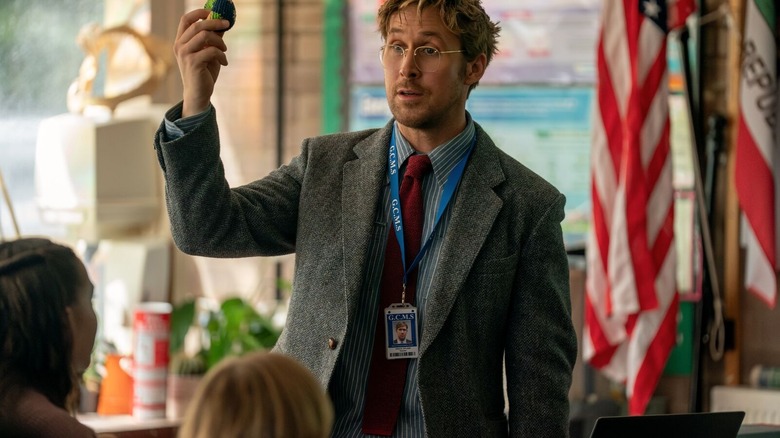
Like we said, "Project Hail Mary" opens on a heavily bearded, long-haired Dr. Ryland Grace waking up on board a ship called, appropriately, the Hail Mary — and his immediate and urgent mission to figure out what's going on in the first place. In flashbacks, we learn that, during a normal schoolday, Ryland was approached by government official Eva Stratt (Sandra Hüller) about his previous work as a scientist, as she believes he can help other experts from all over the world figure out more about mysterious black dots that are dimming the sun's light. These microorganisms, which they eventually dub "Astrophage," can be used as fuel, but they're also affecting stars and planets throughout solar systems ... and if they continue to dim the sun's light, Earth's crops will start dying and lead to a mass starvation event that would, essentially, wipe out all of humanity.
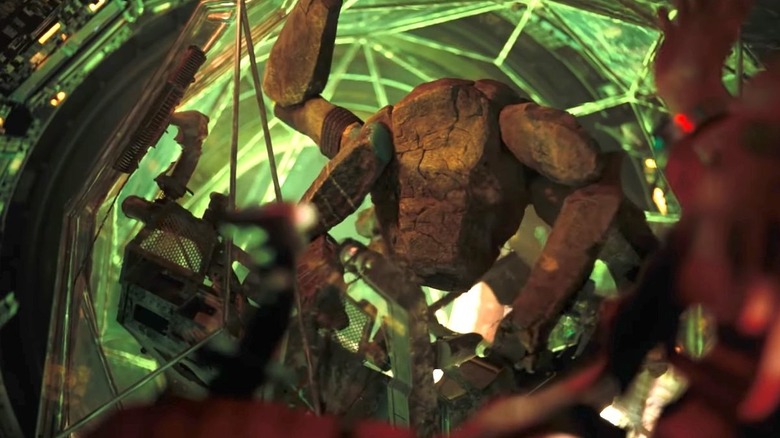
We'll explain exactly how Ryland ends up on the spacecraft later on, but we know, right from the beginning of the film, that he does — and as he finds the bodies of the pilot and engineer, Yáo Li-Jie and Olesya Ilyukhina (Ken Leung and Milana Vayntrub), he grapples with his own loneliness before spotting another ship nearby. That ship belongs to a seriously advanced alien shaped like a rock whom Ryland creatively names "Rocky" (voiced and puppeted by Broadway star James Ortiz), whose crew also died trying to stop the Astrophage in a line of affected stars and planets called the Petrova line. As Rocky builds a rolling cage to hang out in the Hail Mary with his new best friend Ryland (the atmosphere isn't safe for the alien, who hails from the planet Erid), they find something amazing.
What happens at the end of Project Hail Mary?
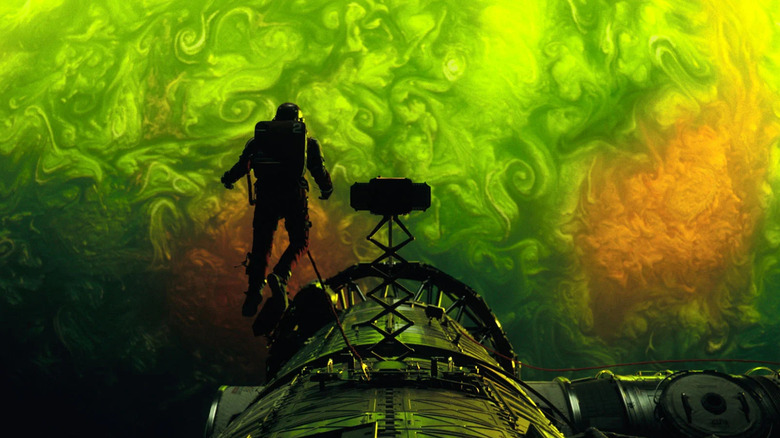
When Rocky and Ryland realize that there's a planet — which they name "Adrian" after Ryland shows his new alien pal the "Rocky" franchise of films — that holds some naturally occurring resources that can destroy Astrophage, they use a device built by Rocky to capture some of that resource (which is naturally predatory) but endure a ton of damage to the Hail Mary in the process. When Ryland is injured to the point of unconsciousness, Rocky sacrifices himself by restoring gravity to the ship ... but in order to do so, he leaves his rolling ball and exposes himself to Ryland's atmosphere. Thankfully, after a brief period of hibernation inside of a safe atmosphere, Rocky does return to his rock-like form, but the two still plan to split and bring the resource, which Ryland dubs "Taumoeba," to their respective planets to save them.
Here's the problem. After Ryland and Rocky tearfully say goodbye, Ryland makes a horrifying discovery: Rocky built containers for the Taumoeba made of his planet's proprietary material, which Ryland calls "xenonite," and the Taumoeba is able to destroy the xenonite and break containment. What that means is that it can eat Astrophage, destroying the fuel both Rocky and Ryland need to get back to Erid and Earth, respectively. Ryland is faced with a choice: he can save Rocky or return to Earth. Ryland loads enough Taumoeba for Eva and her crew to breed it into "beetle" probes that return to Earth, and he saves Rocky before returning to Erid with his best friend. Erideans build a dome and create an atmosphere that's safe for Ryland, and he builds a new life for himself alongside Rocky, even teaching a class of young Eridiean students science.
What the end of Project Hail Mary really means for Ryland Grace and Rocky
As Ryland, Eva, Yáo, and Olesya prepare for Project Hail Mary alongside a team of scientists and astronauts, there's an explosion that kills the original scientist and a whole host of others ... at which point Eva asks Ryland if he'll go on the ship as the scientist. When Ryland refuses, saying he's not brave and couldn't possibly replace the other scientist, Eva presses him, telling him that he has nothing on Earth keeping him tied there (as she points out, he doesn't even have a dog). Ryland also tells Rocky, as they chat — Ryland creates a computerized system that allows them to communicate — that he had a girlfriend but she left him because his head was always "in the clouds," and he has no family either.
Ryland's not a jerk; he wants to save Earth if he can, and he does, because we see Eva receive the Taumoeba at the end of the movie with instructions from Ryland on how to create more to destroy the Astrophage. He doesn't, however, feel the need to return, even though Rocky gives him enough Astrophage to do so before the alien needs rescuing. That's because he forms such a genuine and loving connection with Rocky that he gains purpose, and that purpose is centered around his new friend. Plus, it's so important that we see Ryland teaching again at the very end, because his purpose extends beyond Rocky to the rest of the Eridians; even though Rocky tells him that they can return him to Earth, Ryland says he'll think about that for "a while," indicating that he's in no hurry to leave behind the unconventional new life he's built for himself.
The ending of Project Hail Mary reveals a shocking betrayal
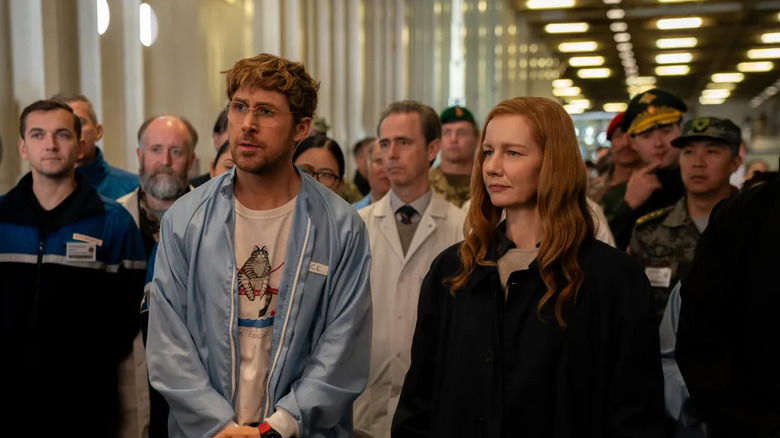
Okay, so how does Ryland end up on the Hail Mary in the first place, despite telling Eva that he's not willing to sacrifice his life on the spacecraft? After Ryland tells Eva that he simply can't do it, she apologizes to him briefly before several men enter the room and chase Ryland, eventually subduing him using force. As Eva tells him, he's the only person who can do it; with the mission start date just days away after the catastrophic explosion, Ryland, who's been given full security clearance on the entire matter, knows how to create Astrophage and how the organism functions, and is the only conceivable option for the role of scientist on the presumably doomed flight.
It's fascinating to see Eva in this moment (and, unsurprisingly, Oscar nominee Sandra Hüller delivers a dynamic and complicated performance to boot) because you can see things from both sides. Obviously, what she does to Ryland — and the way she betrays him — is truly abhorrent, as she sends a science teacher to what she assumes is his death without his clear and unequivocal consent. She's also doing this to save the rest of humanity, which Ryland clearly understands and which he communicates to her when he sends the probes stocked with Taumoeba. It's the final twist in "Project Hail Mary" that the cold but thoughtful Eva willingly sends Ryland to almost-certain death ... for a cause that they do both believe in.
Ryland Grace's decision at the end of Project Hail Mary shows how much he's grown
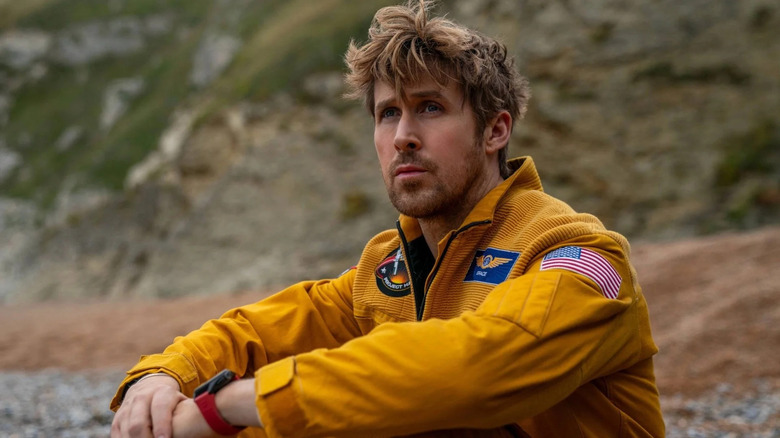
Remember that whole thing about how Ryland lives a solitary life on Earth and is totally unwilling to give his life to save the planet? Eva even goes as far as to tell Ryland not to use his young students as an excuse because they'll be a part of the mass extinction event sure to hit Earth without scientists attempting the story's titular project, and still, he refuses to go. Again, the way Eva literally gets him on board is not good, but the decision that Ryland ultimately makes — to save both Rocky and Earth and then not return to Earth at all — shows this character's growth.
Throughout much of "Project Hail Mary," Ryland isn't selfish — far from it — but he's meek, frightened, and not always the bravest guy around. Thanks to Rocky, Ryland becomes selfless and brave, something the alien even points out. He saves the world he's from and also finds a way to save Rocky from certain death, and in doing so, Ryland, who's been alone both on Earth and in the Hail Mary for so long, establishes such a pure connection with another living being that he's able to look outside of himself and his own needs. Ryland isn't just an honorary Eridean by the end of "Project Hail Mary," but a stronger and better person; if he does ever return to Earth, he'll do so as a completely different man.
Is the ending of Project Hail Mary different in Andy Weir's original book?
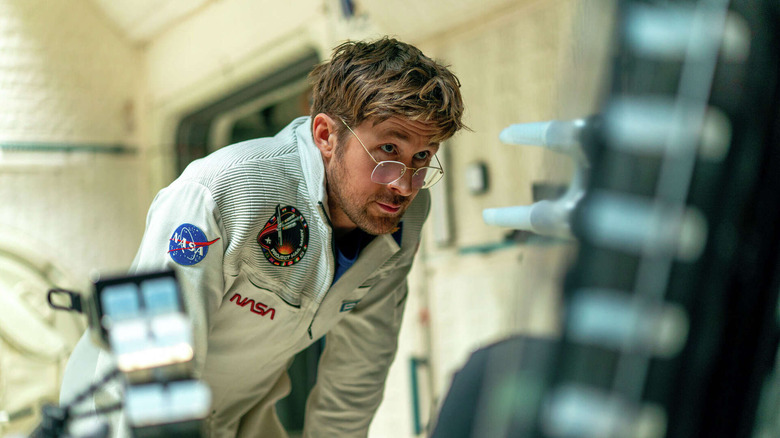
No! If you've read "Project Hail Mary" by Andy Weir, you'll be reassured to see, in the film version, that the ending is the same. There's only one difference: in the book, so much time passes that Rocky confirms to Ryland that the sun is shiningly brightly on Earth again, directly informing Ryland that he accomplished his mission.
In the film, we see an aged Eva one last time instead, giving us the exact same information in a way that the book couldn't feasibly do, because it takes place inside of Ryland's head. (Plus, because we see Eva receive the Taumoeba, it indicates that they haven't begun killing the Astrophage yet, so the book just ... fast-forwards the whole thing by quite a bit.) There are also some differences about Ryland's Eridean habitat — in that the movie version is, let's just say, a bit cushier and heavier on creature comforts than it is in Weir's book — but the beats are, by and large, the same.
What was it like for Phil Lord and Christopher Miller to adapt Project Hail Mary for the big screen?
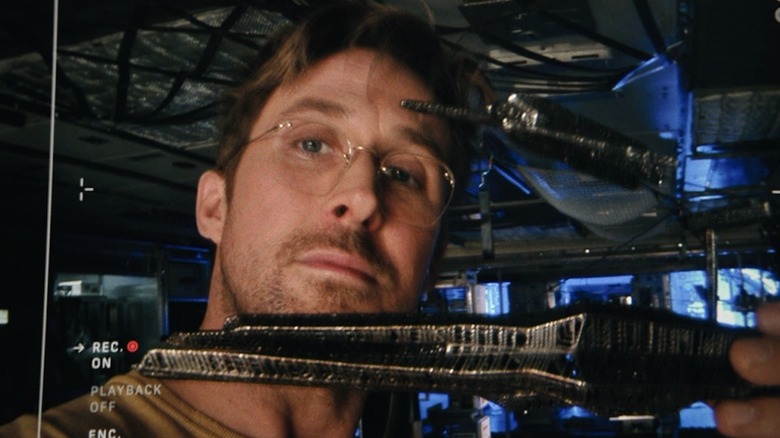
So what was it like for Phil Lord and Christopher Miller, as directors, to adapt one of the most popular novels in recent memory? Though Lord admitted, in a joint interview with IndieWire, that he "[plays] with a chip on [his] shoulder," the two of them just "fell in love" with Andy Weird's book and were excited to work on this with Ryan Gosling. "There was something about this book, the spectacle of it, the problem-solving, the relationship at the center," Lord shared. "They all felt like the kind of problems that would be fun to spend five years solving."
Miller, for his part, agreed. "It felt like the type of thing where we could get the awe, wonder and spectacle and bigness of why we go to the movies," he said. "And then the intimacy of these relationships that make you cry and laugh at the same time. Hopefully, we can get you feeling both in the exact same moment."
As Lord tells it, Gosling's character Dr. Ryland Grace is "unbelievably skillful and unbelievably scared," which put the duo at ease as they dealt with their own fears. "The last thing he wants to do is go to space. The last thing he wants to do is meet an alien, right? The last thing he wants to do is fly a spaceship," Lord said, comparing it to their directorial journey. "He's terrified. And yet, there's a weird confidence about this guy. He just starts to do the steps, he has belief in the process. In the method." That's what Lord and Miller did, and they pulled it off pretty perfectly. So what about screenwriter Drew Goddard?
The screenwriter of Project Hail Mary was 'nervous' about adapting the popular book
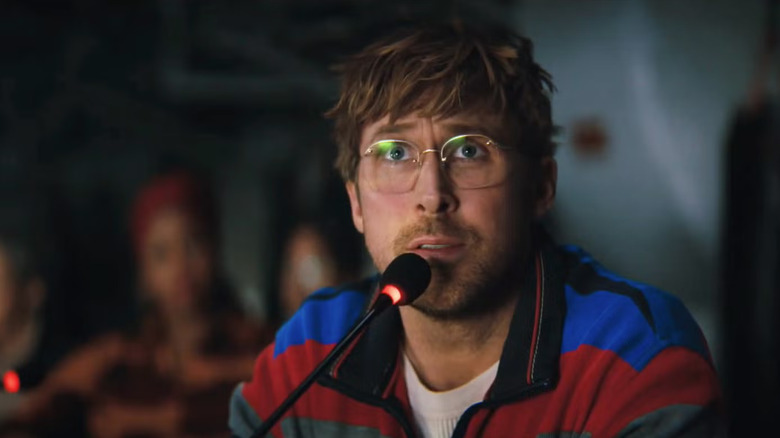
Even though screenwriter Drew Goddard worked with Andy Weir before — on the 2015 adaptation of Weir's novel "The Martian" — he was definitely intimidated by the scale of "Project Hail Mary," as Goddard told The Verge. "My first thought was, 'Oh god, I don't know how we're going to make this into a movie,'" Goddard revealed, saying he was afraid to let Weir down after the two reunited. "It's a much bigger canvas, it's a much more mature subject, the detailed emotional storyline that's at the core of this is so intimate against this celestial backdrop. I wasn't sure how we were going to do this justice."
Not only that, but if you've read the book, you know that it's all told from Ryland's point of view using first-person narration; Weir himself told the outlet that this structure is "the ultimate cheat for people who want to tell, not show" and that he "makes use of it every chance [he] gets." Still, this made Goddard's job all the more challenging, because he had to give viewers that same information without being directly inside of Ryland's head.
Not only did Goddard figure this out, but he also said that working on "The Martian" helped him trust his audience — especially when it came to the science. "I thought the audience was not going to go with it; there was dense science in 'The Martian.' And the lights came up and they loved the movie, and they loved it because it was smart," Goddard shared. "Going into this one we kind of had that wind at our backs, and we trusted that if we find it interesting, the audience is going to find it interesting."
Will there be a sequel to Project Hail Mary?
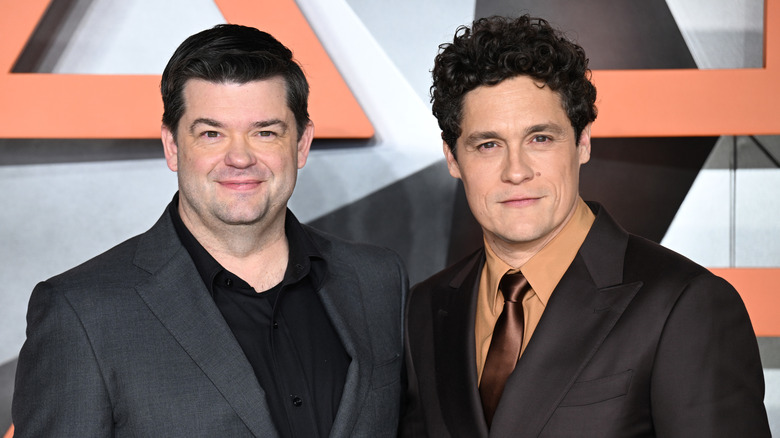
So will there be a sequel to "Project Hail Mary?" Probably not. Even if the movie proves to be an immense box office success, the story just isn't there, especially because Dr. Ryland Grace appears to be enjoying his new life on Erid. With that said, though? Phil Lord and Christopher Miller are attached to another Andy Weir adaptation and have been since 2017, when the book released. So is that still happening?
The answer is "maybe." Unlike "The Martian" and "Project Hail Mary," where most of the action takes place in a single setting, "Artemis" creates an entire world on the moon involving low gravity and other filmmaking feats. Still, it's possible that Lord and Miller may have that figured out.
In early March 2026, the pair spoke to The Hollywood Reporter and said they're still working on this project. "There is an Artemis script, it's delightful," Miller confirmed. "The thing that was holding that back for years was, how do we execute one-sixth gravity? The story takes place on the moon. We think we've figured it out. That's one of the ones that's possible."
Shortly before that interview, though, Lord told ScreenRant about this problem, but indicated that the low-gravity scenes in "Project Hail Mary" helped them crack the code on creating the world of "Artemis," if that movie comes to fruition. "One of the great things about this movie is that we were able to really shoot that type of stuff," he said. "We figured out a way that we think we would be able to shoot moon gravity in a way that wouldn't cost a billion dollars."
"Project Hail Mary" is in theaters now.