

All 13 Star Trek Pilot Episodes, Ranked From Worst To Best
"Star Trek" is a franchise that keeps on giving, even though its gifts tend to be of a wildly fluctuating nature. A ranking of every "Star Trek" series will show how the many shows in the franchise differ from each other, not just in their premises but also in terms of sheer quality. The same applies when all "Star Trek" movies are ranked from worst to best: The difference between the wheat and the chaff is nothing short of astounding.
Interestingly enough, it can be very difficult to tell early on what a particular "Star Trek" project's legacy is going to be. Just by looking at every "Star Trek" series' first season, you'd never guess that a show like "Star Trek: The Next Generation" belongs in the "best series in the franchise" conversation. However, that doesn't take away from the fact that first impressions are incredibly important. With that in mind, it's time that we dive into Looper's latest "Star Trek" ranking — a look at the franchise's many pilot episodes for the television series.
13. Runaway (Star Trek: Short Treks)
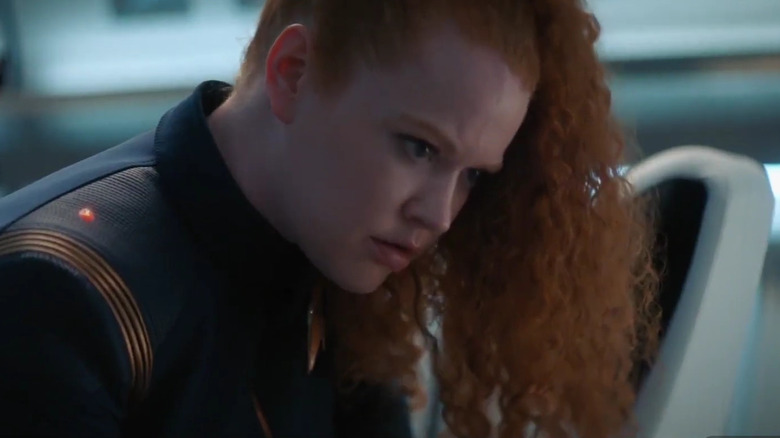
Bryan Fuller and Alex Kurtzman's "Star Trek: Short Treks" is technically a shortform anthology series, so the "pilot episode" doesn't really give an accurate idea of the things to come. "Runaway" is a slice-of-life story that takes place within the "Star Trek: Discovery" narrative. It focuses on "Discovery" character Sylvia Tilly (Mary Wiseman), who has to deal with her mother (Mimi Kuzyk) and decide what to do with a seemingly hostile Xahean called Me Hani Ika Hali Ka Po (Yadira Guevara-Prip). Po is hiding aboard the ship and turns out to be far more important than she initially appears.
The bond between Tilly and Po is a plot point in "Discovery" Season 2, so "Runaway" is technically an origin story of their friendship. It's a charming story of two women figuring out what to do with their lives ... but at the end of the day, this isn't a pilot episode of a new "Star Trek" show as much as it is a fun little addendum to an existing one.
12. Beyond the Farthest Star (Star Trek: The Animated Series)
Filmation's "Star Trek: The Animated Series" is a 1974 continuation of "Star Trek: The Original Series," complete with the core cast voicing their characters. While it's probably fair to say that few would name it as their all-time favorite "Star Trek" show, there's no denying that it has ambition of the Saturday morning cartoon variety.
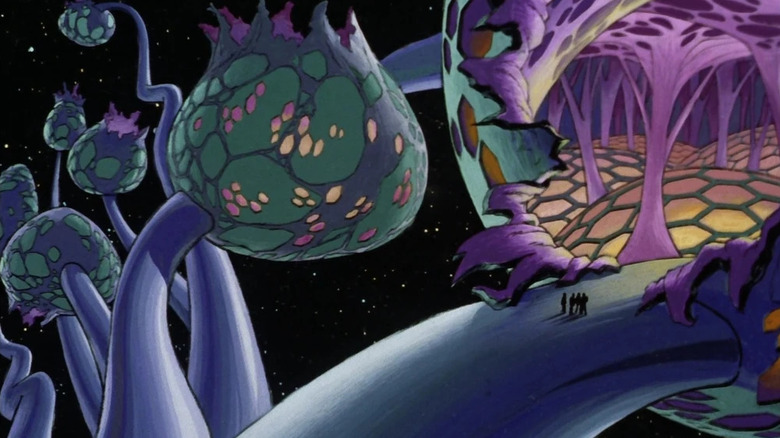
If you ask Looper, there are several essential "Star Trek: The Animated Series" episodes fans have to watch. However, the show's pilot episode, "Beyond the Farthest Star," certainly isn't one of them. The episode immediately puts the show's biggest flaws and boldest swings on full display. Despite the disembodied magnetic villain and the impressive insectoid spaceship being considerably higher concept fare than what could be accomplished with your average "The Original Series" effects and sets, the animation is guaranteed Filmation jank.
As for the episode's events, the plot about the magnetic organism attempting to take over the Enterprise and escape its predicament is reasonably captivating. That is, until the ending shakes things up by heavily implying that the entity is terribly lonely and acting out of extreme desperation. Too bad, then, that the oblivious Enterprise crew happily strands it on a dead star to cry alone forever.
11. Second Contact (Star Trek: Lower Decks)
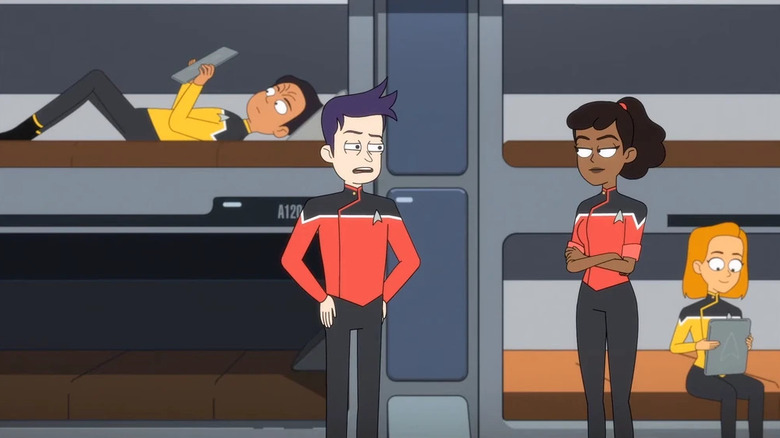
"Star Trek: Lower Decks" is a delightful show that enjoys near-universal critical acclaim ... from Season 2 onward. The comparatively rough Season 1 is still very much looking for its identity and leaning toward generic cartoon sitcom wackiness, and this lack of cohesion is present in the pilot episode.
"Second Contact" is tasked with introducing just about every major character on the show, as pilot episodes tend to. It does this by rushing through an introduction of the more prominent Lower Decks characters of the USS Cerritos while parodying several classic "Star Trek" character tropes. Some important characters — particularly the usually excellent Beckett Mariner (voiced by the equally excellent Tawny Newsome) – come across as far less likeable than they would eventually become, and the episode's fun rage virus plot has to exist alongside the worldbuilding and date-themed B-plots. It's not the worst episode of "Star Trek" out there by any means, but when you compare it to what "Lower Decks" would become, "Second Contact" is a rough watch.
10. Encounter at Farpoint (Star Trek: The Next Generation)
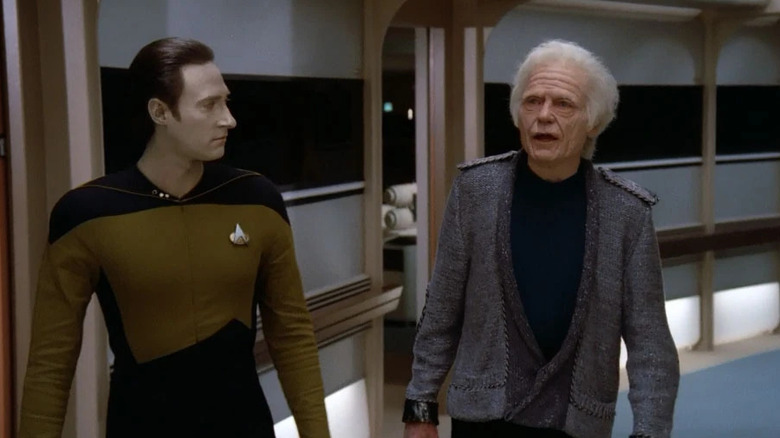
It's not an understatement to say that "Star Trek: The Next Generation" Season 1 is, well, not what the show would eventually grow into. A good half of the 10 worst episodes of "The Next Generation" are from its first season. While the double-length pilot episode "Encounter at Farpoint" isn't among them, it still carries many of the symptoms that made early-game "The Next Generation" less than.
In the grand scheme of things, there's much to like in "Encounter at Farpoint." It does a reasonably slick job of introducing the new gang, marks the first appearance of John de Lancie's nearly omnipotent Q, and even throws in a fun Leonard McCoy (DeForest Kelley) cameo. The central theme — figuring out the secret of the titular Farpoint Station — is also interesting.
Even so, "Encounter at Farpoint" has its problems. Its pacing is glacial at times, and there's very little in the way of levity, which makes its lengthy run time a problem. While it has its moments, the episode remains a sub-par starter, and its faults are all the more glaring when you remember how great "The Next Generation" would eventually become.
9. The Vulcan Hello/Battle at the Binary Stars (Star Trek: Discovery)
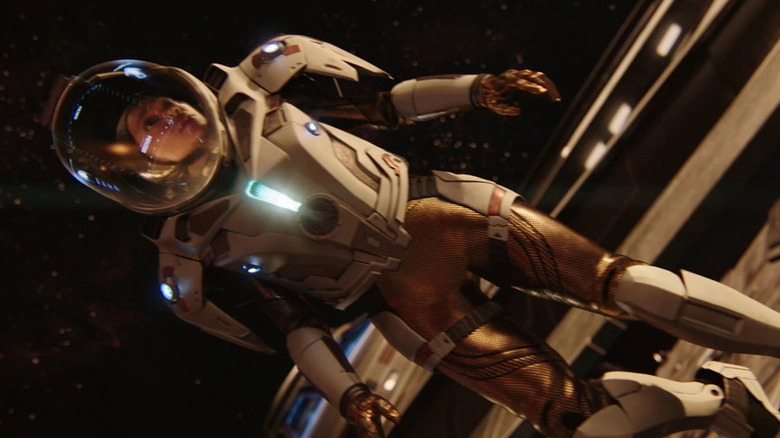
Do you want slick space fights? "Star Trek: Discovery" provides. The show's dual opening salvo of "The Vulcan Hello" and "Battle at the Binary Stars" is an effective showing of science fiction prestige. Precisely because of this, the episodes are also some of "Star Trek: Discovery's" most glaring offenses.
One major problem about the dual episodes is that they're effectively self-contained — never a great look for a pilot story. While their events would go on to have ramifications later down the line, fans didn't know it when they watched "The Vulcan Hello" and "Battle at the Binary Stars." They simply saw a fast-paced story arc that pulled the rug out from under its own feet.
Sure, it was a bold move to cast the esteemed Michelle Yeoh as Captain Philippa Georgiou, only to kill her off. But the episodes deploy this same scorched earth tactic to just about everything, to the point that the end of "Battle at the Binary Stars" effectively destroys everything the episodes have built toward. While trying new things is an admirable endeavor, the fandom was of two minds about the end result.
8. Broken Bow (Star Trek: Enterprise)
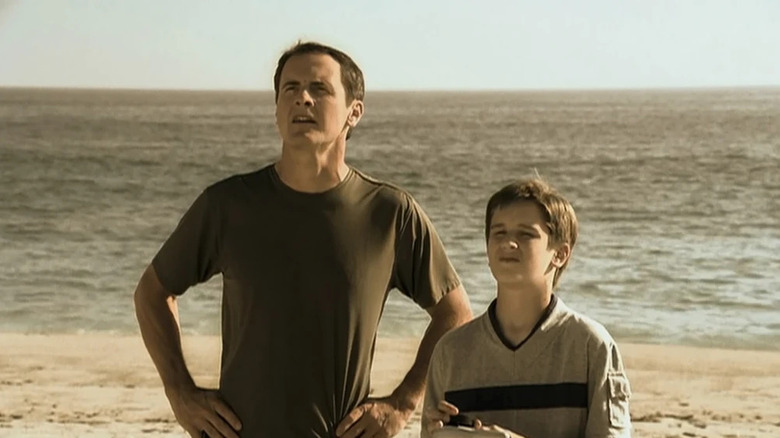
The double-length "Star Trek: Enterprise" opener "Broken Bow" kicks off more than just the show. It's the opening of the Temporal Cold War, a major time-themed storyline that was a recurring fixture within the series.
"Star Trek" is rife with time travel episodes, but despite introducing the Temporal Cold War, "Broken Bow" isn't quite that. It's a classic "putting the band together" story that revolves around the Enterprise NX-01 prototype's mission to bring an injured Klingon called Klaang (Tommy Lister Jr.) to the Klingon homeworld Qo'noS. Klaang's importance and the rise of the mysterious Suliban species as a notable threat play a major role in the story, as does Captain Jonathan Archer's (Scott Bakula) deep-seated suspicion of Vulcans.
The end result doesn't exactly make it on the list of best "Star Trek: Enterprise" episodes, but it's still a serviceable starter that deserves its place near the midpoint of the list. "Broken Bow" is not the best "Star Trek" pilot by any stretch of imagination, but it's also far from the worst.
7. Lost and Found (Star Trek: Prodigy)
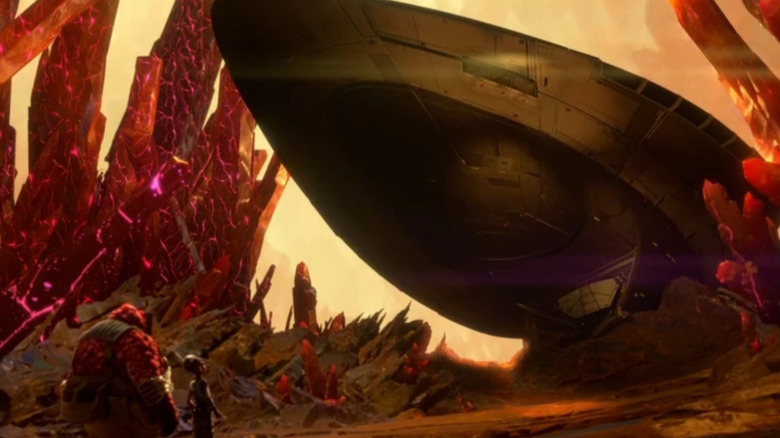
The animated "Star Trek: Prodigy" starts its impressive Delta Quadrant journey with the episode "Lost and Found." The pilot quickly shows that despite its younger target audience, "Prodigy" pulls few punches. The central group of kids are slave prisoners, the colony they live in is overseen by surprisingly creepy villains, and only a chance discovery of a stranded Federation ship named the USS Protostar provides Dal R'El (Brett Gray) and his gang a chance to escape.
It's compelling, well-paced material that doesn't seek to break any major narrative conventions. "Prodigy" will become more interesting once the Protostar actually gets going, but "Lost and Found" sets the stage well enough. It also boasts a truly fantastic last-minute twist that basically forces fans to watch the next episode — after all, who could resist seeing a show that ends its pilot with the casual introduction of a hologram version of "Star Trek: Voyager" character Captain Janeway (Kate Mulgrew)?
6. Caretaker (Star Trek: Voyager)
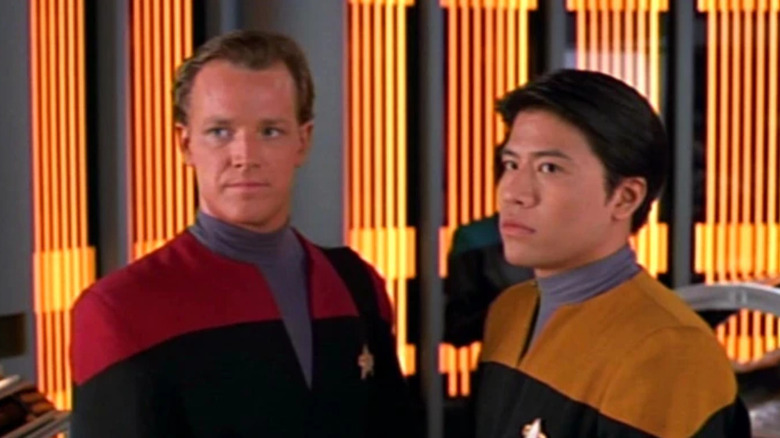
Speaking of Captain Janeway, The "Star Trek: Voyager" pilot episode is an interesting spin on classic "Star Trek" themes — much like the show itself. "Caretaker" introduces viewers to the interesting conflict between the Cardassians and the Maquis, led by Chakotay (Robert Beltran). Then, as the USS Voyager arrives on the scene for what seems like your average "Star Trek" mission, a dramatic space mishap flings the ship some 70,000 light years away from safe Federation territory, kills a number of key personnel, and forces a ragtag group of Janeway's Starfleet officers and Chakotay's Maquis members to work together in order to survive.
Since the events of the episode leave them little chance of returning home the easy way, "Caretaker" ends with the USS Voyager facing a lengthy voyage back home, staffed with a pressure cooker of an integrated crew that's teeming with potential issues, and facing new enemies in the unexplored Delta Quadrant. As space exploration shows go, that's a pretty decent start.
5. Kids These Days (Star Trek: Starfleet Academy)
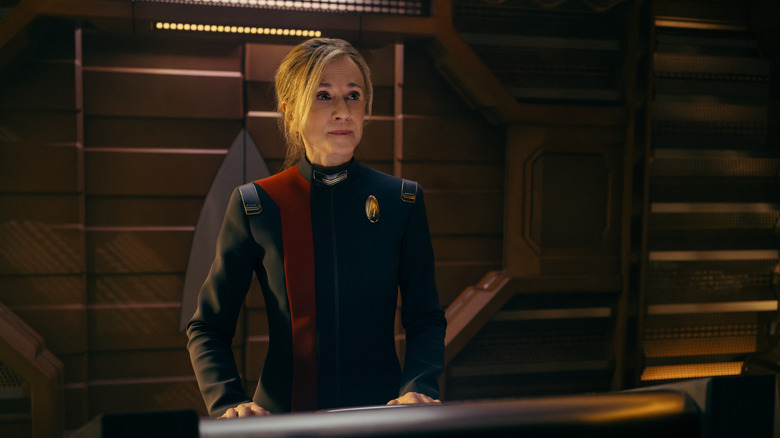
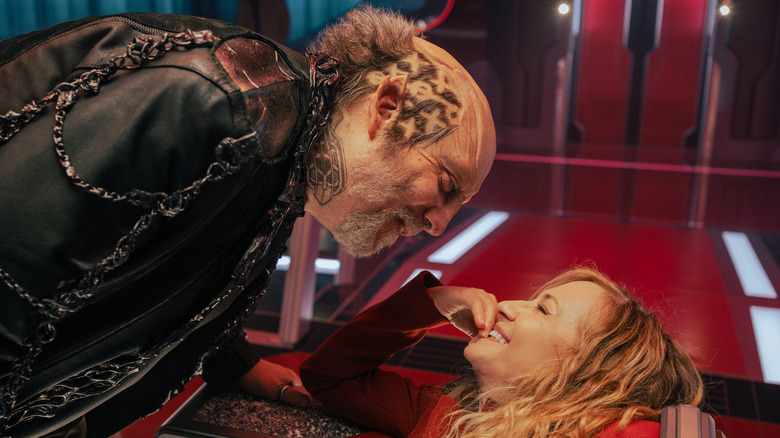
The newest kid on the "Star Trek" block is "Star Trek: Starfleet Academy," which combines YA themes with the post-Burn era introduced on "Star Trek: Discovery." As the series premiere "Kids These Days" establishes, the series is about grand returns and new beginnings. As the Federation starts to claw back territory after a long period of turmoil, the legendary Starfleet Academy reactivates. The same applies to half-Lanthanite Captain-slash-Chancellor Nahla Ake (Holly Hunter), who agrees to head the Academy after a period of absence caused by dramatic events that involve Caleb Mir (Sandro Rosta) and his mother (Tatiana Maslany).
"Kids These Days" is a big, bold, and fun episode. It offers hope and whimsy, and introduces a brand new cast of characters that might be one of the most eclectic to ever grace a "Star Trek" project — as well as a few returning old favorites. Academy Award-winner Hunter is as magnetic as the hippie-tinted Ake as you could possibly imagine, and Paul Giamatti offers ample fire power as the scenery-chewing space pirate Nus Braka. It's still too early to tell where in the grand scheme of "Star Trek" things this 2026 episode will ultimately find itself, but it's certainly a solid top five contender.
4. Emissary (Star Trek: Deep Space Nine)
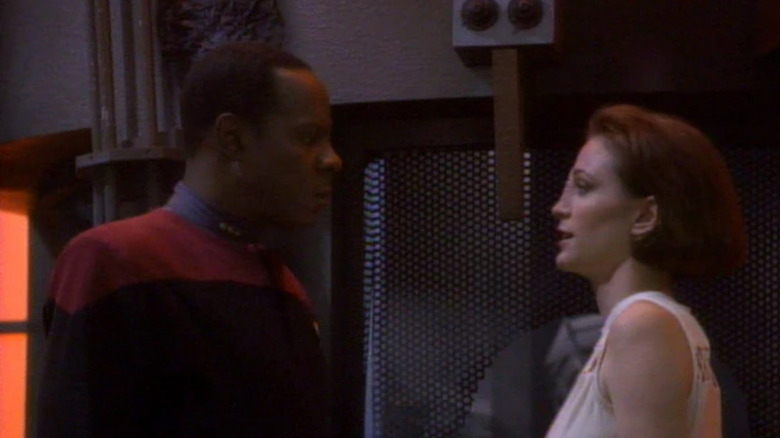
The space station-themed "Star Trek: Deep Space Nine" was a comparative departure from the tried-and-tested "Star Trek" lore when it premiered in 1993, since it focused on a static location instead of an exploration vessel. This set the stage for wide-ranging diplomatic and sociopolitical arcs, and the double-episode series premiere "Emissary" establishes several important aspects of the show's character.
Along with the usual worldbuilding and character introduction, "Emissary" focuses heavily on the single most important thoroughline of the show: Benjamin Sisko's (Avery Brooks) status as the Bajoran Emissary of the Prophets. Almost immediately after taking command of the run-down Deep Space Nine, Sisko stumbles into a worm hole and discovers the planet Bajor's connection to the powerful residents of the faraway Gamma Quadrant. Because of this unexpected little detour, Sisko promptly (and somewhat begrudgingly) becomes an incredibly important Bajoran religious figure.
It's a frankly amazing setup for a series, and knowing that "Deep Space Nine" doesn't fumble the ball only makes it better. Sisko's emissary status is more than just a consistent theme that the show mines and expands on until its very last episode. It's such an important lore aspect that "Star Trek: Starfleet Academy" — which is set hundreds of years after the events of "Deep Space Nine" — devotes an entire episode to show what a massive deal Sisko has become.
3. The Cage, Where No Man Has Gone Before (Star Trek: The Original Series)
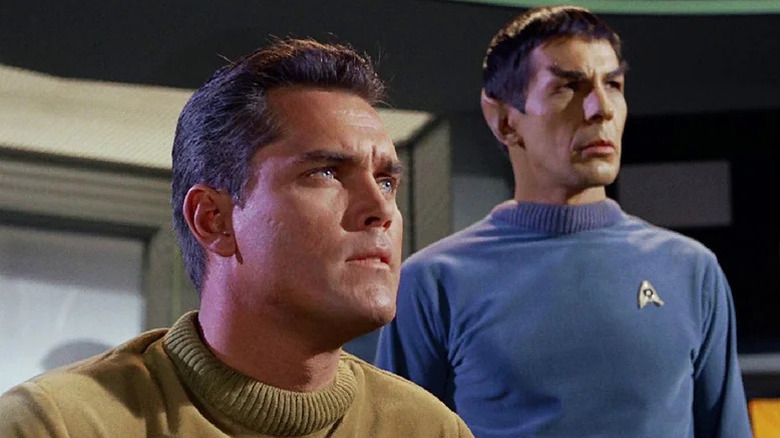
The original "Star Trek" famously has more than one pilot episode. NBC killed original "Star Trek" pilot "The Cage," which featured some very different faces than the show eventually would — most notably, Jeffrey Hunter's Captain Christopher Pike in lieu of William Shatner's Captain James T. Kirk. The largely recast and extremely Shatnered-up pilot that eventually did land, "Where No Man Has Gone Before," ultimately became the one that stuck ... but it also ended up becoming the show's Season 1, Episode 3, with "The Man Trap" actually airing as the very first "Star Trek" episode. Space travel can be confusing like that.
Fortunately for the iconic show, there are no point deductions here, because all three episodes are memorable. De facto series premiere "The Man Trap" is a memorable creature-of-the-week scenario with one of the show's most impressive alien monster designs. The two pilots are no slouches, either.
"Where No Man Has Gone Before" is a memorable tale of Kirk's friend Gary Mitchell (Gary Lockwood) turning into a powerful and antagonistic entity. As for "The Cage," its ripple effects have been tremendous. A contemplative, philosophical story about a dying civilization's attempts to stay alive through morally dubious tactics, the episode unfolds through the difficult and doomed dynamic between Pike and spaceship crash survivor Vina (Susan Oliver). "Star Trek" has returned to "The Cage" well numerous times, from "The Original Series" Season 1 standout story "The Menagerie" to the "Star Trek: Discovery" episode "If Memory Serves."
2. Remembrance (Star Trek: Picard)
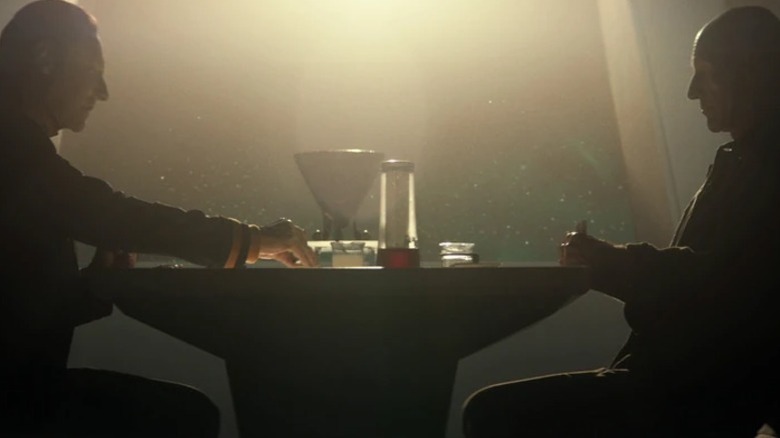
"Star Trek: Picard" is no mere nostalgia act, despite its name. Sure, its key allure is the many, many returning characters from "Star Trek: The Next Generation" and other franchise projects, but "Picard" is far more than just a laundry list of "Remember that character?" moments.
The show sets its pace with the excellent opener "Remembrance," which finds the erstwhile Jean-Luc Picard (Patrick Stewart) torn from his comfortable vineyard retirement and into a new adventure that revolves around synthetics like Data (Brent Spiner) — and more specifically, Data's possible daughter Dahj (Isa Briones).
"Remembrance" is a moody, gorgeous, and very Jean-Luc Picard episode that sets the show's pace and sensibilities perfectly. Patient and rewarding, "Remembrance" already knows what the show wants to be, and is happy to let the viewer know as well. Stewart's commanding presence pairs well with the episode's skillful stage-setting antics, and the endgame revelations create a neat mystery that make fans eager for more.
1. Strange New Worlds (Star Trek: Strange New Worlds)
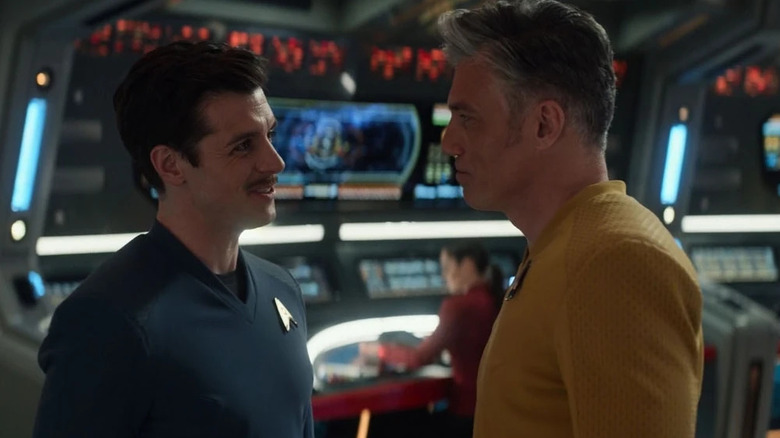
"Star Trek: Strange New Worlds" is live-action "Star Trek" at its most whimsical and fun. The early adventures of USS Enterprise under Captain Pike (Anson Mount) are slick, gorgeous, colorful things that feature characters from and embrace the spirit of "Star Trek: The Original Series."
The first episode of the show is the appropriately titled "Strange New Worlds," and it immediately lets the viewer know what's in store. A self-contained story that nevertheless features copious amounts of truly old-school "Star Trek" lore, the episode brings back folks like Majel Barrett's Number One (now played by Rebecca Romijn) and "The Original Series" concepts such as Pike's grim fate from "The Menagerie." We even get to see how the Federation's hard rule on interference, the Prime Directive, came to be.
Fans will no doubt debate exactly how "Strange New Worlds" ranks in the grand scheme of "Star Trek" episodes. However, in terms of series starters, there's no other episode that has defined the series' spirit and tone as well as it did.