

10 Most Rewatchable Star Trek Episodes Of All Time
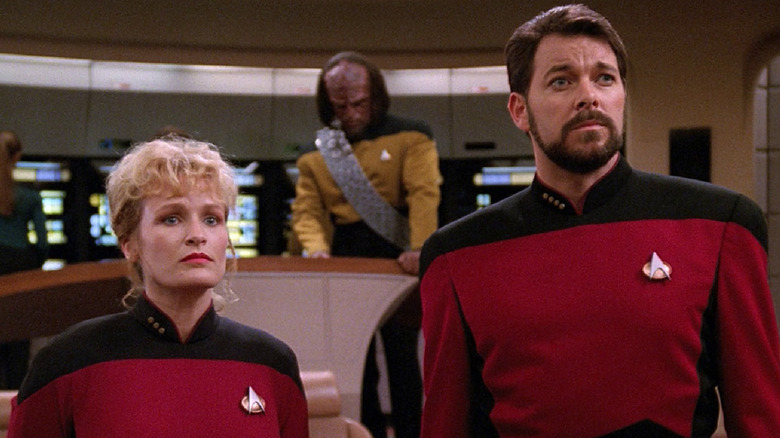
"Star Trek" has been on the air, off and on, since 1966, and it's one of the largest science fiction franchises out there. Since the original series, there have been a dozen live-action and animated shows that explore the galaxy, with new series like "Starfleet Academy" keeping it going 60 years after it began. While there have been 14 "Star Trek" feature films, as well as fan-made movies and shorts, the franchise has primarily been on television, and there are more episodes than most fans realize.
As of this writing, there are over 980 individual episodes of "Star Trek," which is more than most franchises ever come close to. While each episode's quality varies across nearly 1,000 options, and while some are undoubtedly excellent examples of science fiction television, not every great episode from every "Star Trek" series is necessarily rewatchable. Some are filled with melodrama, or explore sensitive topics that make them entertaining, but seeing them on repeat isn't ideal.
The most rewatchable episodes of "Star Trek" are the ones that fans keep coming back to, year after year. They're often funny, deeply thought-provoking, or filled with intense drama and action that makes them more cinematic than most hours of scripted television. While rewatchability is mostly subjective, some episodes stand out as perfect for multiple viewings. These episodes are some of the most rewatchable from across the various series, in no particular order.
Subspace Rhapsody (Star Trek: Strange New Worlds)
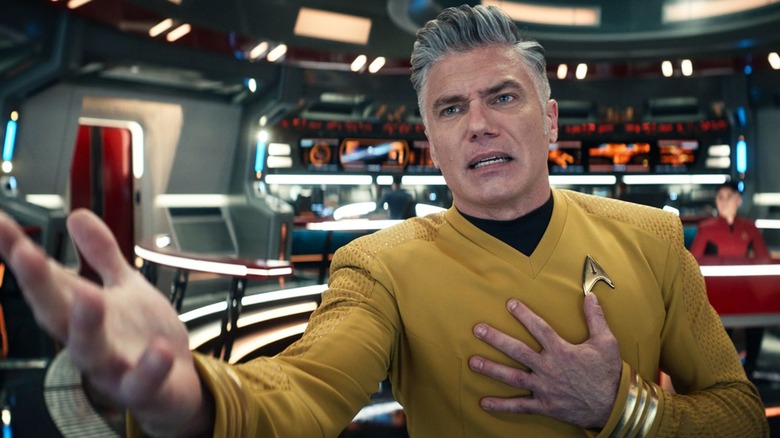
"Star Trek" has always been experimental, and that notion was put to the test in "Star Trek: Strange New Worlds" when, of all things, the show delivered a musical episode. While previous episodes of "Voyager," "Enterprise," and "Deep Space Nine" featured characters singing, a proper musical wasn't attempted until "Subspace Rhapsody." While it was out of place, the episode was nonetheless a blast to watch, as the crew of the Enterprise breaks out into song and dance to express their emotions and complex feelings.
"Strange New Worlds" didn't put together a musical episode just for the fun of it: the reason was explained as being the result of a spatial anomaly bleeding an alternate reality into the galaxy, affecting numerous vessels. This includes a Klingon starship, which appears on screen as a Klingon K-pop band singing and dancing. The juxtaposition of the warrior race, which admittedly loves opera, gleefully singing and dancing, is hilarious.
It's fun and rewatchable for that scene alone. The cast actually sang their songs, thanks to the widespread talent that includes Ethan Peck, Christina Chong, and Celia Rose Gooding, the latter two having proven their musical chops both outside and now in "Star Trek." Everything about the episode leans toward the silly, but in a good way, and while some likely didn't appreciate the musical numbers, plenty of fans had a blast watching "Star Trek" do something entirely different.
Year of Hell (Star Trek: Voyager)
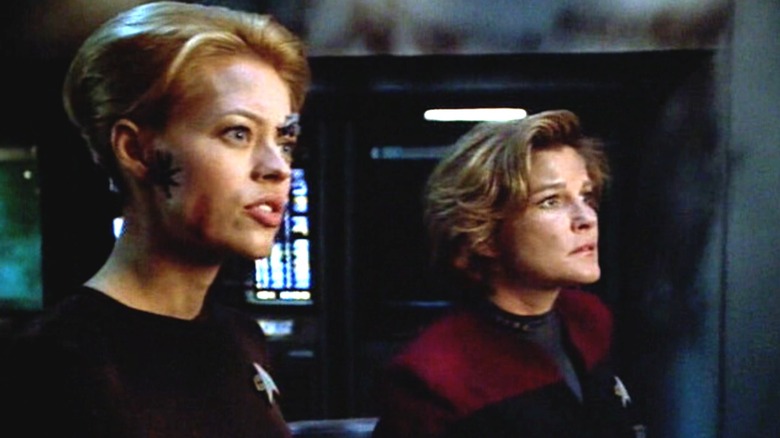
"Voyager" challenged its characters by placing them far outside of Starfleet's reach. This introduced complex new problems that no captain or crew had previously contended with, and one of the best explorations of this lack of support is the two-part episode "Year of Hell." The episode focuses on Voyager becoming mired in the temporal machinations of Annorax (Kurtwood Smith), a scientist intent on reviving his lost family through manipulation of the timestream.
Each time he makes a change, Voyager finds itself within the domain of an ever-growing, hostile empire, the Krenim Imperium. Throughout the two episodes, Voyager is subjected to a year of absolute hellish conditions, as the ship is beaten back and damaged, while crew members are lost. It's utter chaos that's only relieved after Captain Janeway (Kate Mulgrew) allies with local races subjected to the Krenim Imperium's horrific rule, while Chakotay (Robert Beltran) and Paris (Robert Duncan McNeill) work from within the time ship to undermine it, resetting the timeline.
This is an episode where everything returns to normal moments before the credits roll, with only the audience aware of what transpired. One of the most highly rated "Voyager" episodes, its complexity, along with the brilliant acting by Smith and the rest of the cast, make it one of the series' most rewatchable. There's plenty to miss on a first viewing, which all but demands another watch, where the deconstruction of the timeline absent paradoxes is ingeniously delivered.
Wej Duj (Star Trek: Lower Decks)
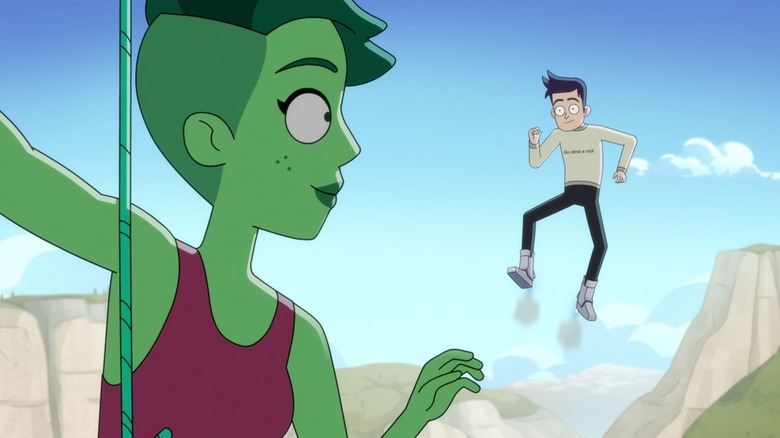
While there was an episode of "Star Trek: The Next Generation" called "Lower Decks," the franchise didn't properly explore its junior officers until "Lower Decks" premiered in 2020. While firmly entrenched in more franchise lore than any other series, "Lower Decks" is a comedy, and one of its funniest and most rewatchable episodes is "Wej Duj." The episode focuses on the lower deck officers finding things to do while the USS Cerritos has 12 hours of downtime during a long trip.
On the Cerritos, the main cast of junior officers discuss what they'll do with their time off. Boimler (Jack Quaid) worries that he doesn't have a senior officer bridge buddy and suggests that Klingons probably have it better. The story then shifts to the IKS Che'Ta', where Klingon lower deck officers are doing essentially the same thing, with one lamenting that Vulcans have it easier than the Klingons do. Once more, the story shifts, this time to the VCF Sh'vhal, where Vulcan lower deck officers work at their stations.
It's a fun episode that explores the whole "grass is greener" notion, and the reveal of Vulcan and Klingon junior officers' lives, and how they somewhat mirror those of the Federation, is fun to watch, with more than a few details you'd miss on a single viewing. Multiple B-stories happen in the background to round out the episode, which is incredibly well-written and absolutely hilarious.
Balance of Terror (Star Trek: The Original Series)
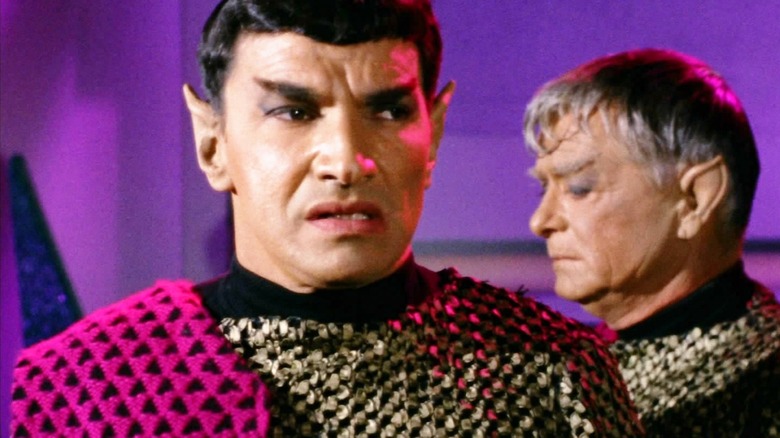
One of the best, most rewatchable episodes of "Star Trek: The Original Series" is "Balance of Terror." The episode is important to the wider franchise, as it introduces both the Romulan species and cloaking technology. The unnamed Romulan commander is played by Mark Lenard, who would go on to play Spock's father, Sarek. The episode begins with the Enterprise investigating the loss of communications along the Romulan Neutral Zone, which has been in place for a century.
As a result, no current Starfleet officers have experience with the Romulan Star Empire. The Enterprise detects a cloaked vessel and reveals it to be a Romulan ship, significantly raising tensions. What follows is a game of cat and mouse, where both vessels fight one another, mostly unseen, similar to submarine warfare.
They only communicate directly once the Romulan vessel is damaged beyond repair, with the Romulan commander telling Captain Kirk (William Shatner), "You and I are of a kind. In a different reality, I could have called you friend." The commander refuses Kirk's offer to offload his crew and destroys his own ship. The episode is exceptionally written and acted by all the players, and it establishes a nefarious enemy that would continue to endanger the Federation for centuries. Easily one of the best episodes from the original show, "Balance of Terror" would go on to influence the combat depicted in "Star Trek II: The Wrath of Khan."
Yesterday's Enterprise (Star Trek: The Next Generation)
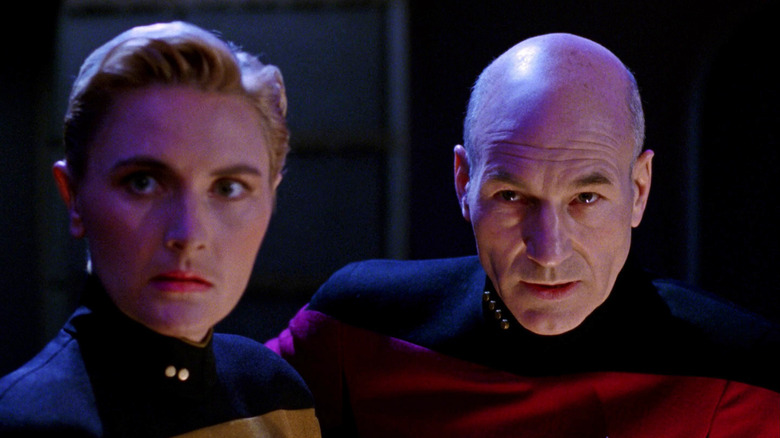
Of the many things the "Star Trek" franchise has done well over the years, there have been many exceptional time travel episodes, and the best in "The Next Generation" is "Yesterday's Enterprise." Unlike traditional time-travel stories, the episode doesn't see the Enterprise-D travel to another point on the timeline; instead, it finds a temporal anomaly, from which the long-lost Enterprise-C emerges.
When this happens, reality changes, as the ship's removal from its proper place and time completely alters the previous two decades of history. Only Guinan (Whoopi Goldberg) is aware of the change and advises Captain Picard (Patrick Stewart) to help the Enterprise-C to return and restore the timeline. This will undoubtedly result in the vessel's destruction, which gives him pause at a time when more starships are desperately needed thanks to an ongoing conflict with the Klingon Empire.
Inevitably, Picard acquiesces, helping to return the Enterprise-C to its proper time, though Tasha Yar (Denise Crosby), who died in an earlier episode, joins them to restore the timeline. Yar's presence in the past has unforeseen impacts years later, and seeing her return to the deck of the Enterprise was a treat for fans. . The episode's exploration of cause and effect is brilliantly scripted, and it's an incredibly detailed episode that's well worth rewatching.
The City on the Edge of Forever (Star Trek: The Original Series)
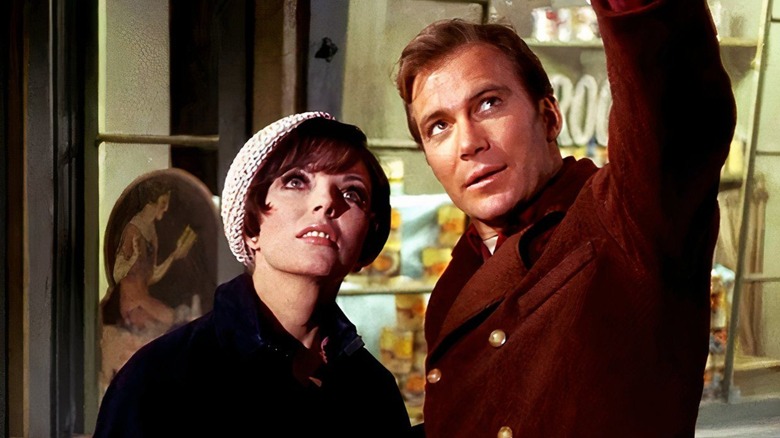
"Star Trek" did time travel as far back as the original series, with the award-winning episode "The City on the Edge of Forever." The episode begins with the Enterprise orbiting a strange planet that's causing time distortions, leading to a mishap in which Dr. McCoy (DeForest Kelley) is accidentally injected with a drug that drives him insane. While Kirk and an away team look for him on the surface, McCoy (DeForest Kelley) jumps through an ancient time portal, which calls itself the Guardian of Forever, changing the timeline and erasing the Enterprise from existence.
The Guardian offers a path to repair the damage, so Spock (Leonard Nimoy) and Kirk step through. They arrive in New York City in 1930 and meet a soup kitchen operator, Edith Keeler (Joan Collins), with whom Kirk begins a romantic relationship. Unbeknownst to them, Edith is also caring for a recovering McCoy, while Spock learns that she is destined to die in a traffic accident. McCoy's disruption of the timeline saved her life, rewriting history for the worse.
Begrudgingly, Kirk must allow Edith to die, saving the timeline and returning them to the present. Edith's death is one of the most devastating in the "Star Trek" franchise. The episode is fascinating, with a well-crafted depiction of 1930s America and a despondent tone, and is generally regarded as the very best of the original series.
The Best of Both Worlds (Star Trek: The Next Generation)
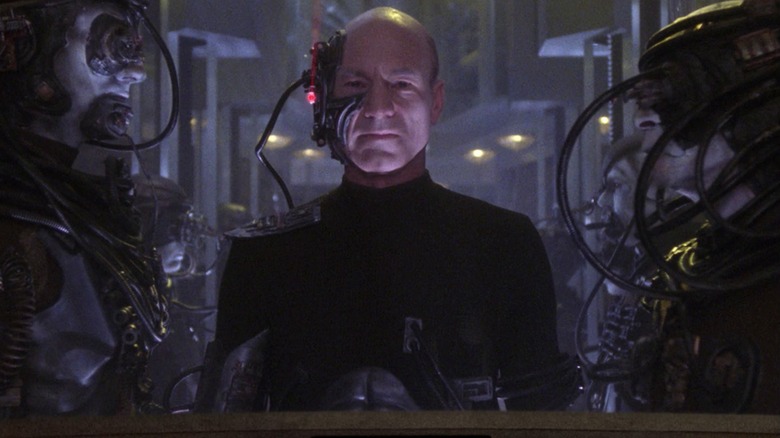
"The Next Generation" introduced the Borg, a cybernetically enhanced species that became one of the most feared of the franchise, as the Borg is a relentless force that devastates every new civilization it encounters. Previous to the two-part episode "The Best of Both Worlds," the Borg were far from Earth, but as they infiltrate the Alpha Quadrant, the Enterprise engages in battle with them. Picard is eventually taken and assimilated, becoming Locutus of Borg.
The Borg then immediately set their sights on Earth, with Locutus' knowledge of Starfleet directing their actions. The Battle of Wolf 359 is the most devastating conflict seen in "Star Trek" to date, as 39 starships are destroyed and 11,000 lives lost as the Borg fight under the strategic command of Locutus. The crew eventually saves Picard by capturing Locutus and removing his implants.
Picard's ordeal would have a continuing influence on the remainder of his life. The episode is one of the darkest of the entire franchise, showing just how insidious and powerful the Borg can be, as they use only a single vessel to devastate Starfleet. The episode is highly rewatchable for its brilliant depiction of strategic space warfare, as well as for how deeply it delves into the nature of assimilation and its impact on the individual.
Trials and Tribble-ations (Star Trek: Deep Space Nine)
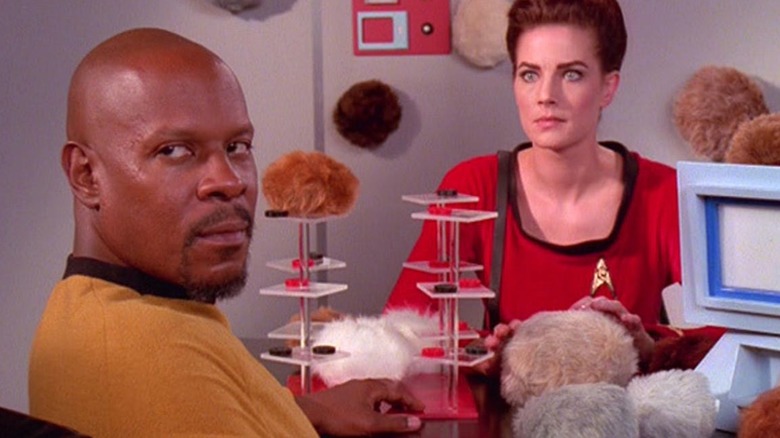
Some of the best "Star Trek" stories involve revisiting old episodes, which is precisely what happens in "Trials and Tribble-ations." The "Deep Space Nine" entry begins with agents from the Department of Temporal Investigations (DTI) asking Captain Sisko (Avery Brooks) about a recent incident involving the USS Defiant. The incident, shown in flashback, occurs when the Defiant travels to Bajor with the Orb of Time. It's suddenly sent more than a century into the past and over 200 light-years away to Deep Space Station K-7, where the crew finds the original Enterprise and a Klingon warship from the events of "The Trouble with Tribbles."
What follows is the crew of the Defiant working within the framework of the original episode, in which they must find a bomb planted to kill Captain Kirk. This involves following several of the characters from "Star Trek" throughout the space station, where they interact with them and the events of the original episode in different ways.
Ultimately, they find and dispose of the bomb, saving Kirk without his knowledge of the events that transpired. The Defiant crew leaves, but only after Sisko takes a moment to meet Kirk in person. The DTI investigation ends, concluding that history wasn't altered, and Sisko receives a warning as Deep Space Nine's promenade is littered with tribbles. A fun episode that's almost entirely fan service, it pays tribute to the original series in humorous and fascinating ways.
In the Pale Moonlight (Star Trek: Deep Space Nine)
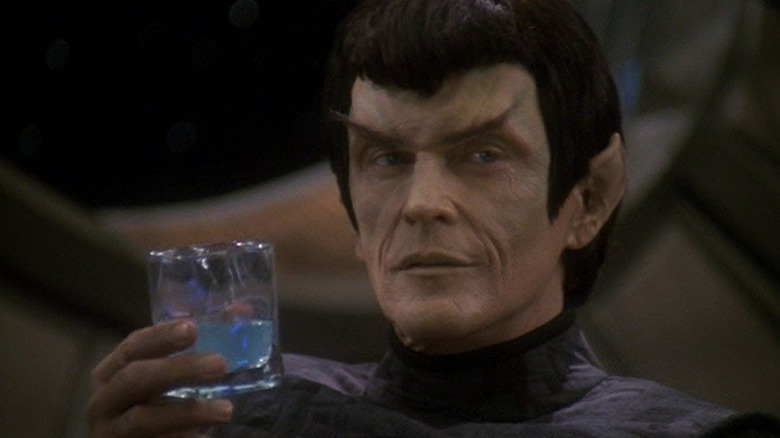
The primary antagonist of "Deep Space Nine" is the Dominion, an empire of shapeshifters known as Changelings from the Gamma Quadrant that launches a massive war with the Federation. Because DS9 is front and center at the stable wormhole that leads to and from the Gamma Quadrant, it's where the conflict begins. "In the Pale Moonlight" delves deeply into the series' espionage roots, thanks to its ever-amiable tailor, Garak (Andrew Robinson), who just so happens to be a former member of the Cardassian Obsidian Order.
When Captain Sisko decides to trick the Romulans into joining the Federation against the Dominion, he enlists Garak's help in fabricating evidence that the Dominion plans to attack the Romulans and agrees to Garak's plan to plant "evidence" in an authentic Cardassian data storage device. Unfortunately, the plot is uncovered by Senator Vreenak (Stephen McHattie), exposing the deception and potentially turning the Romulans toward the Dominion. This problem vanishes when Vreenak's ship is destroyed en route to Romulus.
Garak reveals that the damaged data device is enough to convince the Romulans, but the whole operation leaves Sisko feeling uneasy and questioning his actions. In the end, he decides that he did the right thing and would do so again. "In the Pale Moonlight" is arguably the best espionage episode in all of "Deep Space Nine." It explores doing the wrong thing when it's necessary for the greater good, which flies in the face of Federation values, making for an incredibly entertaining hour of television.
The Inner Light (Star Trek: The Next Generation)
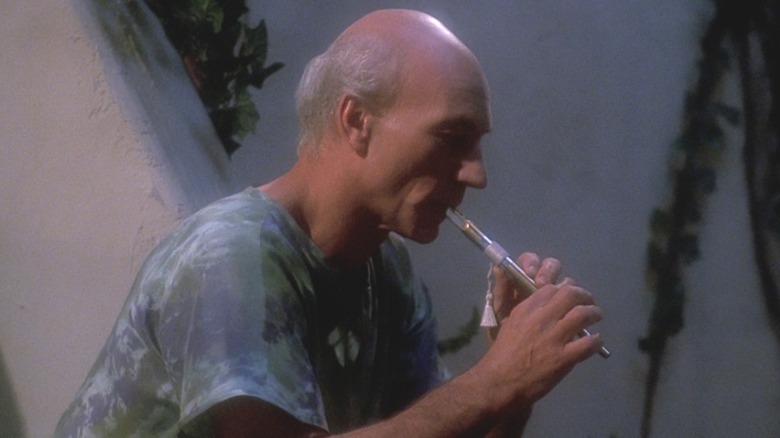
At the top of most people's lists of most rewatchable "The Next Generation" episodes is "The Inner Light." In the episode, the Enterprise encounters an unidentified probe that fires an energy beam directly at Captain Picard. He passes out and awakens a new man — literally. He is told by his wife, Eline (Margot Rose), that he is Kamin, an iron weaver recovering from a fever. Picard disputes this immediately and is confused by his surroundings, but eventually, he accepts his new reality.
Years pass as he has children with his wife while learning to master the flute. Still, Kamin looks to the sky and eventually uncovers the dangers posed to the planet by its star, which will soon go supernova. Finally, as an old man, Kamin is told the truth: The people of the planet sent the probe to tell their story, offering a single life to anyone who finds it, so they will know of their culture, as they had no means of saving themselves.
Picard awakens aboard the Enterprise after only 25 minutes have passed, but the memories of a lifetime remain with him. Greatly impacted by the probe and the life he lived as Kamin, he continues to play the flute throughout his life. The episode is one of the series' all-time greatest, and it's also Patrick Stewart's favorite episode from "The Next Generation" — with many fans sharing his opinion.