

10 Most Rewatchable Movies Of The 1970s
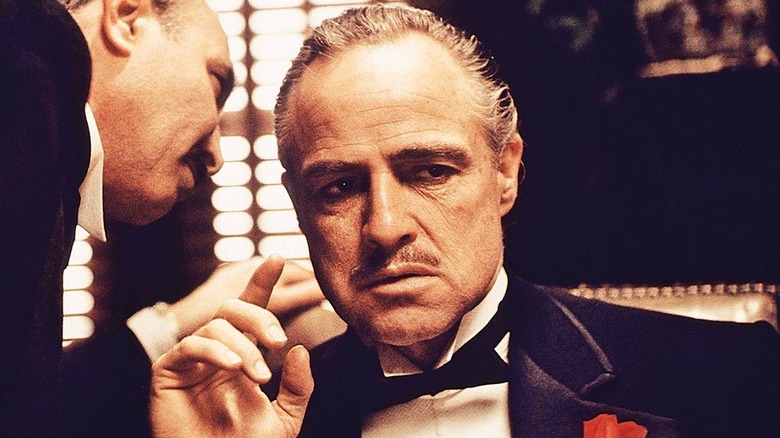
The 1970s was an incredible decade for cinema. With the collapse of the Hollywood studio system in the mid-1960s, the keys to the kingdom were handed over to a new generation of directors who dusted the cobwebs off American cinema. The films of New Hollywood were grittier, rawer, and truer to life, featuring depictions of sex, violence, and drug use that would've been unfathomable during the puritanical Hays Code era. The loosening of these restrictions freed directors to create bold, original films about outsiders, loners, and the counterculture. Many of these films have not only stood the test of time, but have become timeless viewing options for audiences from all walks of life.
Some films released during the 1970s became instant classics, winning the Best Picture Oscar and raking in massive box office receipts. Others took more time to gain notoriety, becoming more acclaimed with each passing year. Yet the true test of a film's lasting impact comes not from your first impression, but from how much pleasure you gain from watching it multiple times. The best movies welcome us back again and again, revealing new things to enjoy each time and offering the comfort of sliding into a warm bath that relaxes and comforts you. Of all the decades of cinema's first century, few have created as many rewatchables as the 1970s. Here are the 10, arranged in reverse order by the year they were released.
Alien
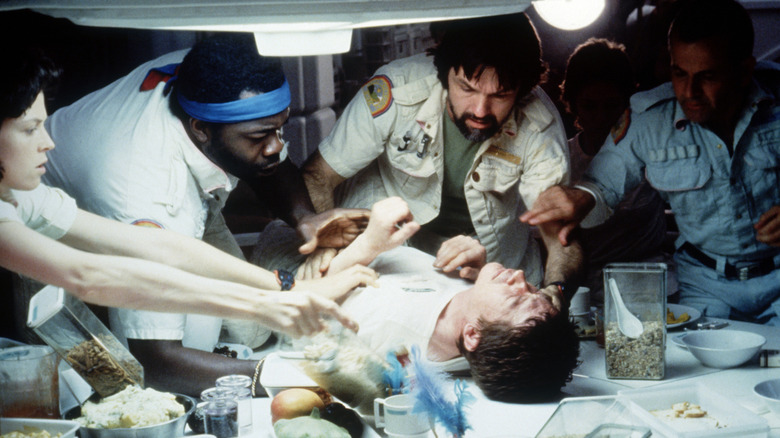
While en route back to Earth, the crew of the space ship Nostromo intercepts a distress signal from a damaged vessel. They investigate and find a hull filled with alien eggs. When one of the eggs hatches, a parasite attaches itself to the face of executive officer Kane (John Hurt). All seems well when the face-hugger detaches itself from Kane, but much to the crew's horror, something sinister has been growing inside his chest. Armed with a mouthful of sharp teeth and superhuman strength, the alien Xenomorph preys upon the crew, picking them off one by one until only warrant officer Ripley (Sigourney Weaver) is left.
Released in 1979, Ridley Scott's "Alien" played like the R-rated, punk rock alternative to "Star Wars," which released just two years prior. Although movies about alien invaders were nothing new, there had never been one as terrifying as this one. Nor had there been one mounted with as much skill and attention to detail, as Scott used the expertise he had honed from years of commercial directing to bring a sense of visual style to what might otherwise have been just another B-movie. What really distinguishes "Alien" from other creature features — and makes it so rewatchable — is how much emphasis is placed on the human characters, who feel more like blue collar workers than astronauts. People watching at home can see themselves in the Nostromo crew, making their fates all the more harrowing. It's what makes this the best of all the "Alien" movies.
Halloween
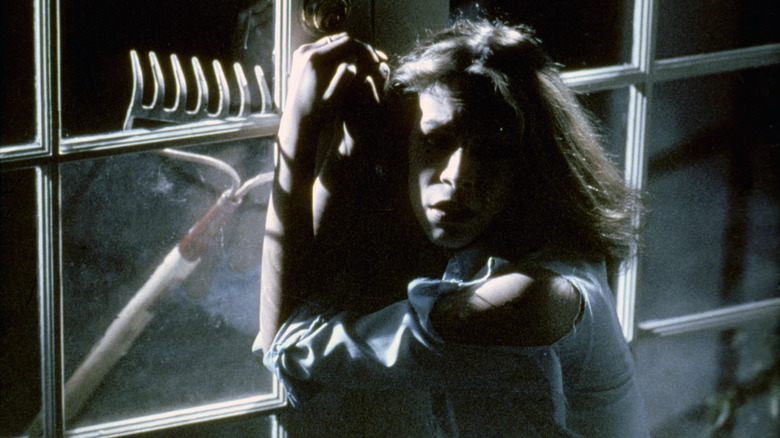
After murdering his older sister on Halloween night, 1963, six-year-old Michael Myers is confined to a mental institution. For 15 years he's been treated by Dr. Samuel Loomis (Donald Pleasence), who believes this little boy is the living representation of pure evil. Now grown big and strong, Michael escapes from the institution and terrorizes his hometown of Haddonfield, Illinois, on Halloween night. Wearing a white mask and brandishing a butcher knife, Michael preys upon the unsuspecting trick-or-treaters, slicing up teenagers and stalking babysitter Laurie Strode (Jamie Lee Curtis), who must use her wits to survive.
When it was released in 1978, John Carpenter's "Halloween" was like a lightening bolt for horror fans, who had grown accustomed to increasingly gruesome exploitation cinema. This wasn't made strictly for grindhouses. Like 1974's "The Texas Chain Saw Massacre," it made the most of its limited budget to deliver unrelenting scares. It also popularized the teenage slasher flick, which became the dominant horror sub-genre for the next two decades.
Even with the numerous sequels and reboots, there's no matching the terrifying power of the original (which is certainly a classic horror movie that holds up better than its remakes). Its power comes partly from its simplicity: Rather than offer some rationalization for Michael's killing spree, Carpenter introduces him as the embodiment of malevolence, and then hammers that home over the course of 90 minutes. This is terror distilled to its purest elements, and required viewing during spooky season.
Star Wars
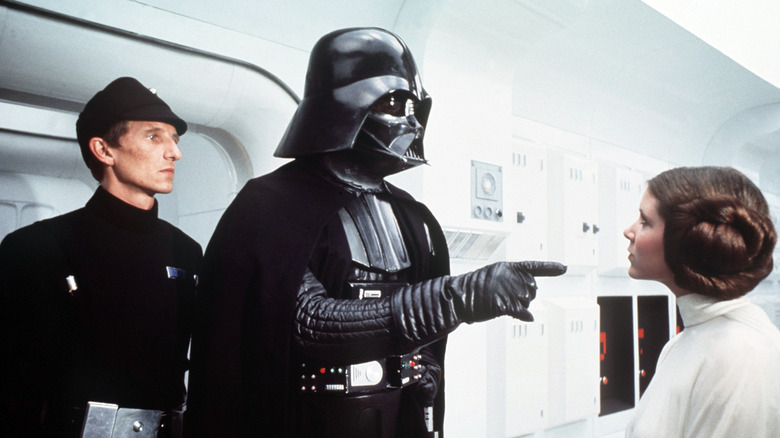
Desperate to squash rebellion against the Galactic Empire, Imperial Forces commander Darth Vader (David Prowse / James Earl Jones) takes Princess Leia Organa (Carrie Fisher) hostage. Before being taken prisoner, Leia implants important information into the droid R2-D2 (Kenny Baker), who escapes with fellow robot C-3PO (Anthony Daniels) in search of Jedi Master Obi-Wan Kenobi (Alec Guinness), the only one who can help her. Their search brings them to Luke Skywalker (Mark Hamill), a young Jedi who, along with dashing smuggler Han Solo (Harrison Ford) and the Wookie Chewbacca (Peter Mayhew) helps free Leia and score a victory for the resistance.
It's hard to overstate the seismic impact George Lucas's "Star Wars" had when it opened in 1977. The New Hollywood was forever changed by its success, shifting the focus away from small idiosyncratic stories toward spectacle-driven blockbusters. Yet even in the IP-obsessed media landscape it helped to spawn, it still stands out as a startlingly original film, drawing upon ancient myths and serialized adventures to create a roller coaster ride of a film. With all of the "Star Wars" sequels, prequels, and spinoffs, it's sometimes easy to forget just how great the first movie is if you haven't watched it in a while. Yet from the second the opening scrawl rolls — set to John Williams's Oscar-winning score — you're immediately excited for what Lucas has in store for you. It's what made the film a multi-viewing moviegoing event back in 1977, and just as rewatchable almost 50 years later.
Saturday Night Fever
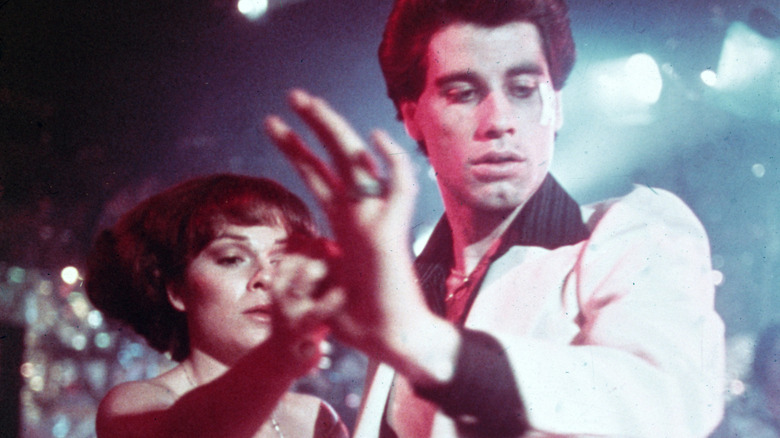
Italian American teenager Tony Manero (John Travolta) spends all week working at his family's hardware store in Brooklyn and all weekend on the dance floor at the local discotheque. Although he's relentlessly pursued by his dance partner, Annette (Donna Pescow), Tony dumps her to team up with the more talented Stephanie (Karen Lynn Gorney) for an upcoming competition. As they rehearse their moves, Stephanie finds herself falling for Tony, uncovering the sensitive underbelly to his tough guy exterior. Yet the grimness of Tony's life outside of the club constantly disrupts his dreams for something better.
Releasing in 1977, John Badham's "Saturday Night Fever" perfectly captured the zeitgeist of the burgeoning disco culture and popularized it for mainstream audiences, making a movie star (and Oscar nominee) of John Travolta in the process. And despite having music, clothing, and dance moves that are now extremely dated, it's stuck around through the sheer power of its story, which is profound in its simplicity.
At its core, this is a coming of age drama about a young man who yearns to break free from his humdrum existence, only to keep getting pulled back into the gutter. In spite of its darkness, it captures the adolescent bliss of living for the weekend. Gene Siskel loved the film so much that he declared it his favorite of all time, watching it 17 times and purchasing Travolta's iconic white suit at a charity auction. If that's not rewatchable, we don't know what is.
Rocky
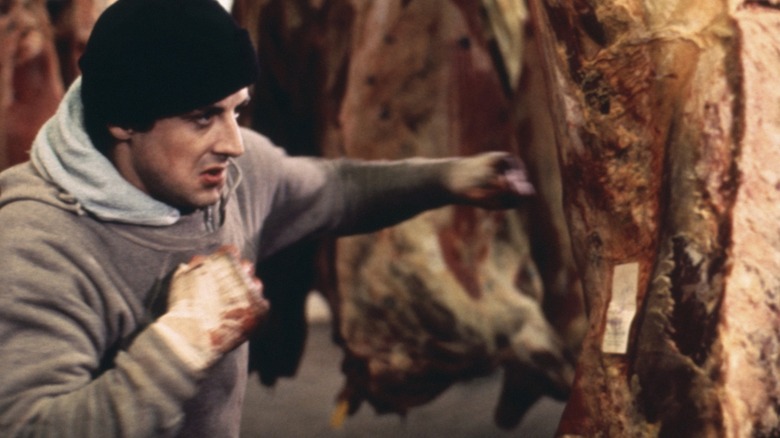
Small-time boxer Rocky Balboa (Sylvester Stallone) has been underestimated his entire life, but he gets a chance to prove himself when heavyweight champ Apollo Creed (Carl Weathers) comes to Philadelphia for a bicentennial celebration and needs a replacement to fight him in the ring. Rocky gets in shape with crotchety trainer Mickey Goldmill (Burgess Meredith), who puts him through the ringer physically and psychologically, and falls in love with Adrian (Talia Shire), a shy pet store owner who looks out for her loutish brother, Paulie (Burt Young). By the day of the big fight, it doesn't matter whether Rocky wins or loses, because just getting in the ring with the champ was the real battle.
Arriving after a near-decade of films about how the American dream had failed, 1976's "Rocky" gave audiences reason to hope again. Written by Stallone and directed by John G. Avildsen, it played like a New Hollywood rendition of old Hollywood entertainment, capturing the spirit and optimism that made Frank Capra so popular throughout the Great Depression. It's little wonder audiences flocked to theaters in droves, making the low budget sports drama the year's highest grossing film. "Rocky" continued its Cinderella story all the way up to the Oscars, where it won best picture in a lineup that included "All the President's Men," "Bound for Glory," "Network," and "Taxi Driver." Spawning more sequels than you can count on one hand, the film still retains the power to make us cheer every time you watch it.
All the President's Men
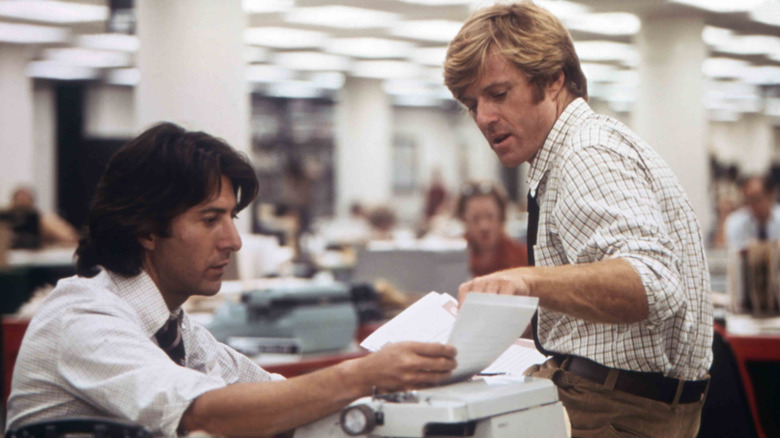
In 1972, a group of burglars are arrested attempting to break into the Democratic National Committee headquarters housed inside the Watergate complex. When he's assigned to cover the story of The Washington Post, reporter Bob Woodward (Robert Redford) suspects this is more than just a minor break-in. He teams up with fellow Post reporter Carl Bernstein (Dustin Hoffman), and together they uncover a vast conspiracy reaching the highest echelons of power. Working with a source close to the White House known only as Deep Throat (Hal Holbrook), Woodward and Bernstein break the story that ends Richard Nixon's presidency.
Although its plot description makes it sound like a cinematic homework assignment, 1976's "All the President's Men" is as exciting as any suspense thriller. The third in Alan J. Pakula's paranoia trilogy (after 1971's "Klute" and 1974's "The Parallax View"), it arrived in theaters only a little while after the events it portrayed, giving it a ripped-from-the-headlines immediacy. Yet even if you're completely unfamiliar with the Watergate scandal, you can't help but feel as riveted as audiences were back then watching Woodward and Bernstein untangle a complicated web of corruption. Among the best movies about journalism that all aspiring writers should see, it makes the act of sitting behind a typewriter akin to sitting behind the wheel of a race car, with stakes that feel just as high. Even though the outcome is literally written in history books, you rewatch it again and again to see what happens.
Jaws
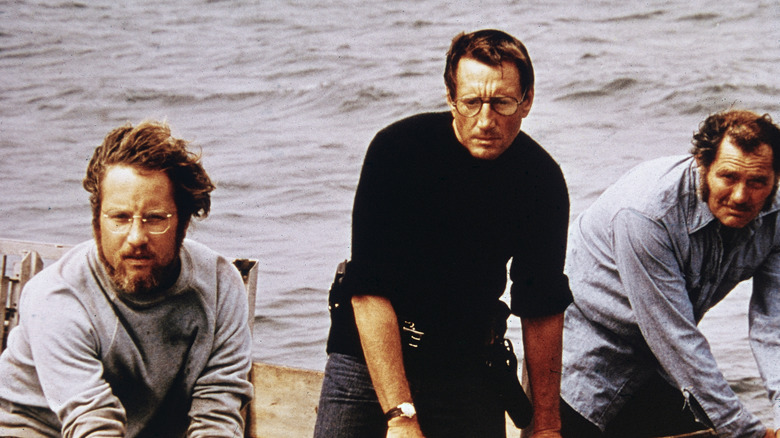
When the mutilated body of a young woman washes ashore one morning, Amity Island Police Chief Martin Brody (Roy Scheider) suspects the cause of death was a shark attack. His fears are confirmed by marine biologist Matt Hooper (Richard Dreyfuss). Brody wants to shut the beaches down, but Mayor Larry Vaughn (Murray Hamilton) fears that will destroy the summer economy. As the bodies pile up, Vaughn has no choice but to allow Brody to hire local fisherman Quint (Robert Shaw) and go out to sea with he and Hooper to kill the massive, toothy beast.
In many ways, American cinema can be split into two halves: everything before "Jaws," and everything after. Released in 1975, "Jaws" completely changed the game for Hollywood filmmaking, creating the modern blockbuster and shifting studio attention toward making as much money as possible. What made Steven Spielberg's film such a huge hit more than 50 years ago is what makes it so rewatchable today: it gets better each time you watch it. From the moment John Williams's simple yet iconic score kicks in, you know you're in for a good time, and Spielberg doesn't let up for the next two hours. While the shark attacks are thrilling and frightening for what they don't show (due to a notoriously troubled production), what keeps us coming back is the trio — Brody, Hooper, and Quint — whose fight for survival rivals "Moby Dick."
Chinatown
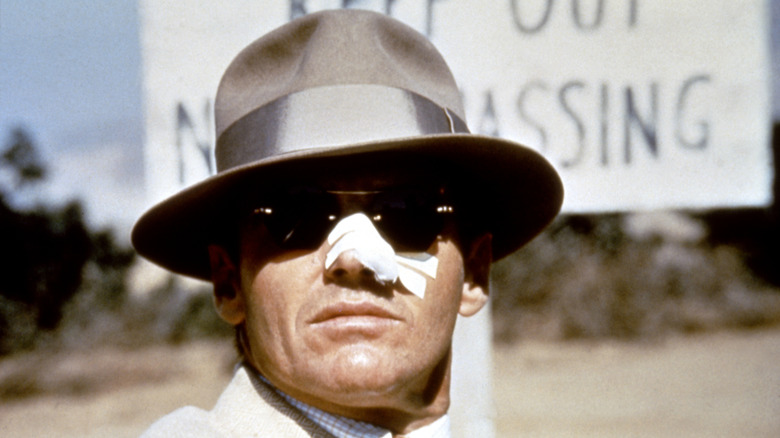
In pre-WWII Los Angeles, private detective J. J. "Jake" Gittes (Jack Nicholson) is hired by Evelyn Mulwray (Diane Ladd) to spy on her husband, Hollis (Darrell Zwerling), chief engineer at the Department of Water and Power. Believing this to be a routine infidelity investigation, Jake soon discovers something is amiss when the real Evelyn Mulwray (Faye Dunaway) shows up and Hollis turns up dead. Jake's investigation exposes corruption at the highest levels of local government, all at the hands of Evelyn's powerful father, Noah Cross (John Huston). Yet Jake can hardly imagine the depths of Cross's evil, especially when it comes to his own daughter.
One of the greatest detective movies ever made, 1974's "Chinatown" is a masterpiece of the New Hollywood studio system, a sterling example of what could result from a producer (Robert Evans) bringing together the right director (Roman Polanski), screenwriter (Robert Towne), and actor (Nicholson) to create movie magic. Drawing upon classic noirs of Hollywood's golden era, the film used the theft of California's water supply as a metaphor for the theft of innocence, tying the two together in disturbing ways. Towne's twisty, Oscar-winning screenplay has often been declared one of the greatest ever written, and part of what makes the film so rewatchable is the joy of discovering new layers of complexity and nuance. The film has many other pleasures, from the meticulous period detail to Jerry Goldsmith's evocative score, to Nicholson's performance as a sensitive man turned cynical by the tragedies of his job.
The Exorcist
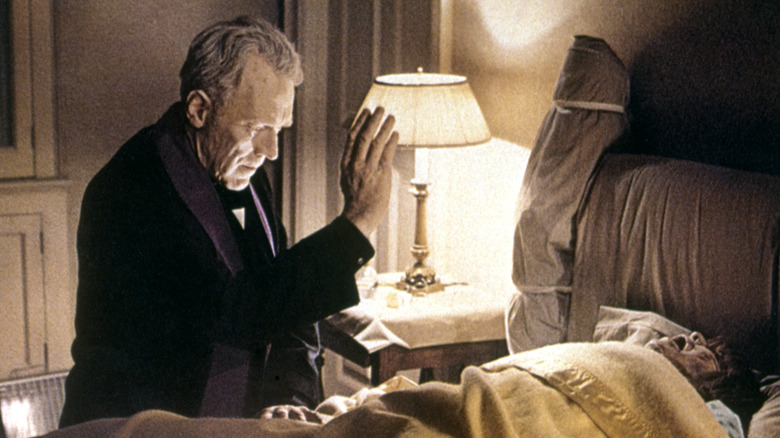
While shooting a movie in Georgetown, Washington, D.C., actress Chris MacNeil (Ellen Burstyn) starts noticing strange behavior from her preteen daughter, Regan (Linda Blair). What starts off as peeing on the carpet quickly turns violent and bizarre, leading Chris to fear Regan might be controlled by something supernatural. After consulting various doctors, she finally turns to a priest, Father Damien Karras (Jason Miller), convinced her daughter is demonically possessed. Although initially skeptical, Father Karras soon realizes Regan is possessed by the devil himself, and enlists aging priest Lankester Merrin (Max von Sydow) to assist in an exorcism.
William Friedkin's "The Exorcist" opened in 1973, riding a wave of controversy to the top of the yearly box office, and it has frightened audiences ever since. Using state-of-the-art special effects, Friedkin created terrifying sights that had never been seen before: levitation, spewing green vomit, a head rotating completely around. Rumors of audience members fainting, vomiting, and convulsing in the aisles drove up ticket sales as curious viewers sought to test their own courage. Even in an age when modern horror has stretched the limits to their extremes, "The Exorcist" retains its power to shock and disturb us, not just for how effective its scares are, but for how skillfully it deploys them in what is ultimately a very human story of a mother trying to save her child. It's that aspect that makes this film a rollercoaster ride you'll gladly get back on again.
The Godfather (and The Godfather Part II)
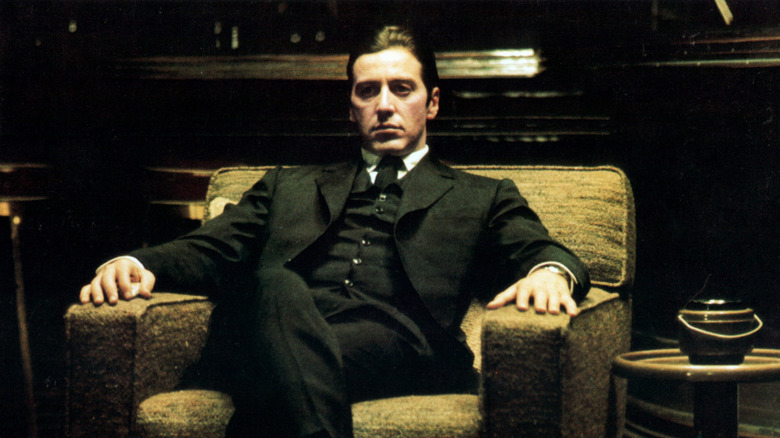
In the 1940s, aging Italian-American crime boss Don Vito Corleone (Marlon Brando) hopes to keep his son, Michael (Al Pacino), out of the family business. But when Vito is hospitalized after an assassination attempt, Michael takes it upon himself to step in, despite the protestations of his girlfriend, Kay (Diane Keaton). After his father dies, Michael assumes control of the Mafia empire, killing everyone who stands in his way. In the 1950s, Michael rises to power in a way that mimics his father's rags-to-riches immigrant experience in the 1920s. Yet while young Vito Corleone (Robert De Niro) justifies committing crimes to take care of his family, his son destroys his through his actions.
Technically, we're breaking the rules a little bit by including both 1972's "The Godfather" and its 1974 sequel, "The Godfather Part II," but when it comes to the first two "Godfather" films, you can't have one without the other. There are perhaps no two more rewatchable movies than Francis Ford Coppola's mob epic, which infuses the gangster genre with Shakespearean themes of power and greed corrupting the human soul. Yet despite their weighty subjects, the power of Coppola's films come from their specificity about Italian American life and family values, separating them from other stories about mobsters wielding machine guns. Their lasting appeal is best encapsulated by a throwaway line that became iconic: "Leave the gun, take the cannoli."