

Why Chris Pratt's Mercy Bombed At The Box Office
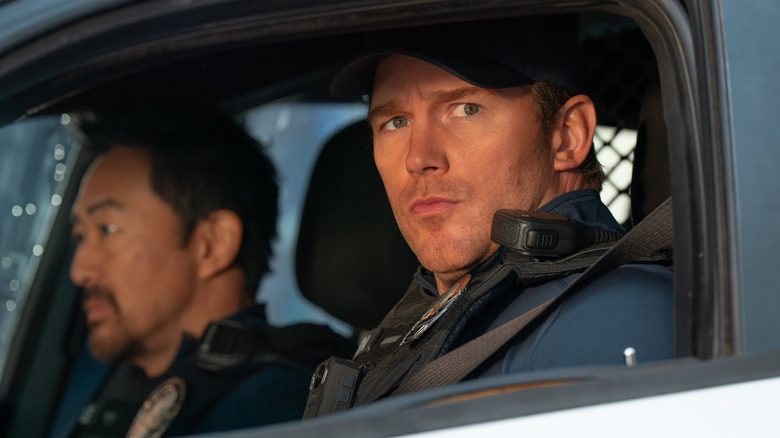
One of the year's first major box office bombs arrived with Chris Pratt's hollow and soulless sci-fi thriller "Mercy." This feature, about a detective in near future Los Angeles who has just 90 minutes to prove to an AI judge that he's innocent in the murder of his wife, opened to only $10.8 million domestically on a $60 million budget. To date, it's grossed a mere $40.84 million worldwide and is heading for a final global cume beneath $65 million.
The significantly cheaper indie sci-fi film "Iron Lung" opening a week after "Mercy" and then blowing away its box office numbers only reinforced how badly this Chris Pratt star vehicle had done financially. "Mercy's" disastrous sum inevitably leaves people asking "what happened?"
So how did a production go this wrong financially? Turns out there were several problems plaguing this tentpole project from the get-go. Some of it has to do with the subgenre "Mercy" heavily cribbed from. Also in play is the lack of excitement over IMAX "Mercy" screenings as well as Chris Pratt's struggles to establish himself as a reliable leading man beyond the horizons of Marvel and "Jurassic World."
There isn't just one reason why "Mercy" came up short at the box office. For a costly movie to go this haywire financially, a lot has to be rotten to the core. "Mercy" is a warning sign of what future would-be blockbusters shouldn't do if they want to achieve profitability.
Computer screen films have limited box office appeal
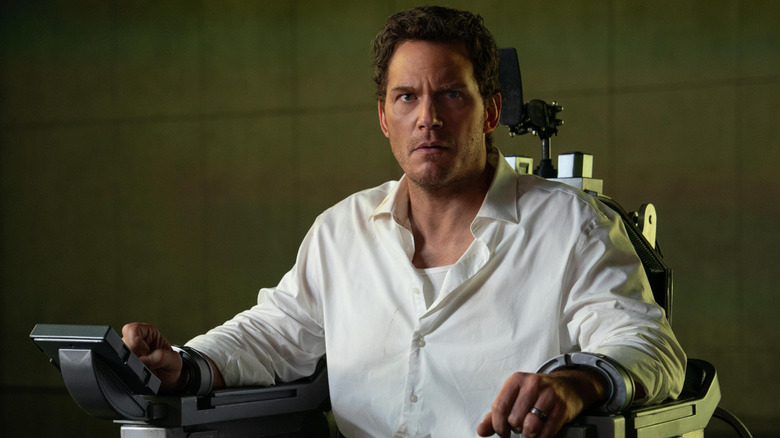
"Mercy" director Timur Bekmambetov has fallen in love with the screenlife subgenre in the last decade. Screenlife is a motion picture that entirely transpires over a computer screen, like "Searching" or "Unfriended" (both of which he produced). His newest directorial effort, "Mercy," isn't strictly a screenlife film, but it's totally indebted to the genre thanks to multiple scenes taking place through Ring cameras or computer screens. "Mercy's" trapped protagonist goes on a journey that's familiar to anyone who has seen prior screenlife films like "Profile."
In the past, some of these films have made a pretty penny at the global box office. However, none of them have surpassed $80 million worldwide, which suggests that there's a firm ceiling for how lucrative such titles can be. While "Searching" and "Unfriended" were basically made for pennies, "Mercy" cost $60 million to make. That immediately ensured it had to make way more money than so many of the features it visually evoked.
"Mercy" wasn't able to overcome that challenge. To boot, the final film featured lots of point-of-view camerawork (evocative of screenlife features) that likely alienated audiences. In the end, "Mercy" was a film trapped between two worlds. It was too expensive to be as profitable as more traditional screenlife films. And it was far too obsessed with computer and phone screens to become a must-see title for standard action cinema fans.
Dismal reception from critics and audiences
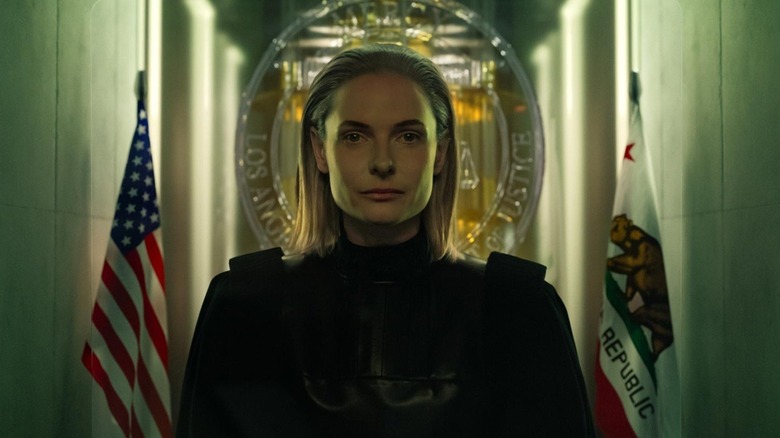
These 10 notable movies that were box office hits despite terrible reviews encapsulate how you don't always need glowing critical marks to secure theatrical profitability. Still, many of these movies were projects rooted in beloved brand names (like "The Grinch" or "Transformers") that didn't necessarily need critical acclaim to get on people's radar. A totally original January action film like "Mercy," meanwhile, was a much more vulnerable creation. With so many obstacles to overcome in its theatrical run, an extra boost from positive pre-release reviews wouldn't have hurt.
In the end, though, dreadful reviews from critics ran rampant for "Mercy." Criticism abounded over factors like Chris Pratt's leaden performance, weak cinematography and clumsy storytelling beats, among many other faults. That was already a problem, since it ensured audiences on the fence about "Mercy" would immediately see a deluge of brutal reviews if they Googled the movie's title. However, audiences were also resoundingly unmoved by the feature, with "Mercy" only earning a B- CinemaScore grade from its opening night crowd.
For a PG-13 action motion picture, that's a dreadful score on par with the CinemaScore grade audiences gave "Dark Phoenix." A sharp 58% second weekend plummet really drove home how little momentum or buzz was surrounding this project. On all fronts, "Mercy" was besieged with bleak hype that proved fatal for a non-sequel. Some movies, like "Transformers: Revenge of the Fallen," effortlessly glide above toxic reviews. "Mercy" was not such a blockbuster.
A derivative plot
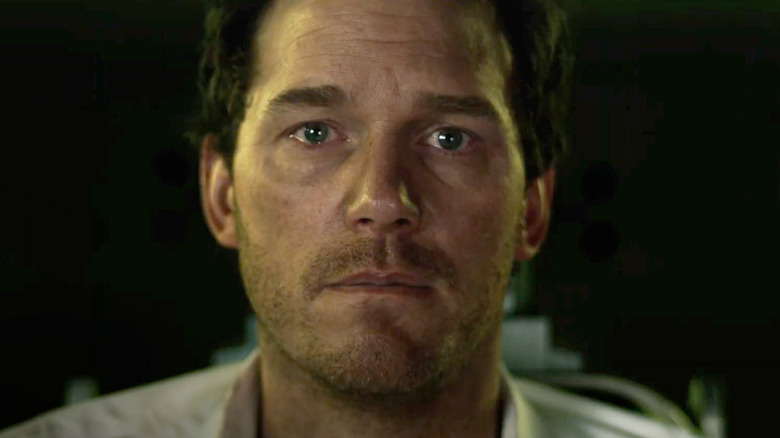
Somewhere out there must be some soul who desperately yearned to see "The Fugitive" and "Minority Report" smushed together into one feature. Who knows what drove this passion? Was it a lifelong affinity for both titles, or just falling asleep on the couch one night while both of them played back-to-back on TNT? For that lone person, "Mercy" was the realization of a dream. Finally, a man framed for murdering his wife could use future tech to try and unravel what really happened during a crime scene. It truly works as a "Fugitive"/"Minority Report" crossover.
For everyone besides that one hypothetical human being, though, "Mercy" being so beholden to older movies is a drawback, not a positive. Everything about its story and visual aesthetic screamed "been there, done that." That just didn't help lend a sense of urgency to seeing it in a theater. To boot, there's so many options now for modern-day people looking for entertainment. Even just in the film realm, there's tons of cinema one can enjoy instead.
Throw in all the material online and on streaming platforms and it becomes clear that you need a really distinctive vision and storyline to stand out amongst the noise. Something like "Sinners" did that with ease. "Mercy," meanwhile, showed the dangers of leaning too hard on what's worked before. Save for those who'd spent their whole lives craving this exact, improbable fusion, "Mercy" had no box office appeal. In no small part thanks to that tropey tiredness.
Struggling to catch on in IMAX
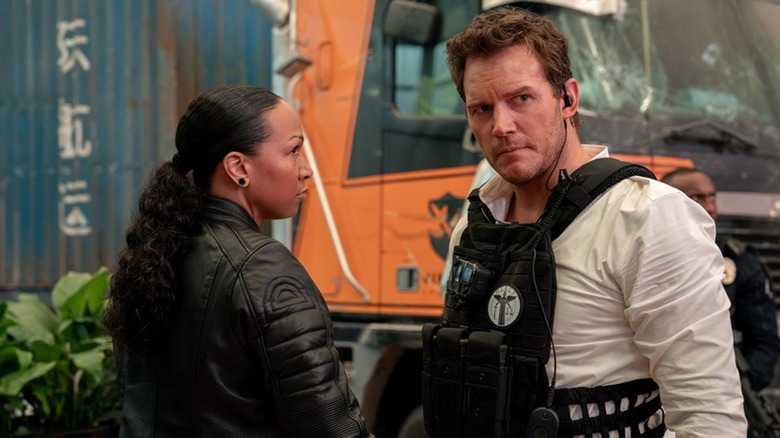
In the last decade, IMAX has absolutely exploded in popularity, becoming a must-see format for so many features. There's been a deluge of major cinematic developments that have ensured IMAX has garnered a positive reputation, such as when Christopher Nolan and IMAX made film history with "Oppenheimer's" black-and-white footage. Audiences have become quite comfortable with IMAX and how it changes your movie watching experience. Inevitably, this has made the format a must-have for any new feature hoping to obtain blockbuster box office status.
"Mercy" was one such production, with the title making use of IMAX digital cameras to capture various intense set pieces. IMAX was so important for "Mercy" that its unusual late January release date was likely chosen (after it was delayed from its initial August 2025 perch) because IMAX screens were still available in that corridor. Strangely, though, the movie didn't get much of a boost from those IMAX showings. Only 12% of "Mercy's" domestic bow came from them.
For comparisons' sake, "Civil War" (which didn't shoot with IMAX cameras) secured $4.25 million from opening weekend IMAX showings. That film did open bigger than "Mercy," but its overall domestic bow was only 2.4 times larger than "Mercy's" debut while its IMAX bow was nearly four times stronger than "Mercy" managed. There clearly wasn't much interest in checking out "Mercy" on the biggest screen possible, which shot down another way it could goose its numbers.
Chris Pratt isn't a movie star outside of big franchises
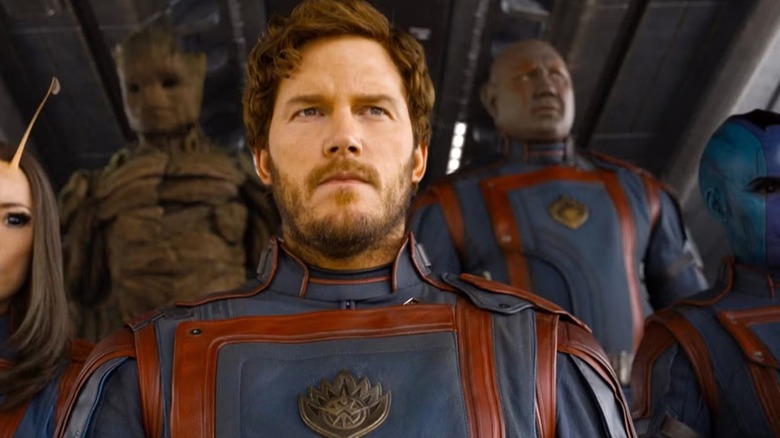
Believe it or not, "Mercy" is the first time Chris Pratt has headlined a live-action, non-sequel theatrical release since "Passengers" in December 2016. That's a little over nine years of exclusively showing up on the big screen via "Jurassic World" and Marvel Studios movies, along with his voice-over work in "Mario" and "Garfield" titles. When exploring Pratt's 10 best and 10 worst movies, so many of them are based on pre-established intellectual property. Those ensured that he's hit some astonishing box office highs in his career.
However, that also means the draw for many of his films isn't Pratt's face. As several Chris Hemsworth movies that bombed at the box office can attest, headlining lucrative Marvel features isn't enough to transform you into a traditional movie star. That problem came home to roost with "Mercy," a feature devoid of any long-standing pop culture icons. It also lacked the family-friendly elements driving Pratt's biggest features, like "The Super Mario Bros. Movie."
If "Passengers" struggled to reach $100 million in North America despite opening just 18 months after the record-shattering run of "Jurassic World," then Pratt's presence wasn't going to salvage a random early 2026 action film like "Mercy." If Pratt wants to keep headlining original films, they're going to have to be cheaper and more creative endeavors. "Mercy" certainly proved his face isn't enough to turn a potential flop into a smash.