

5 Stephen King Adaptations That Were Saved By One Performance
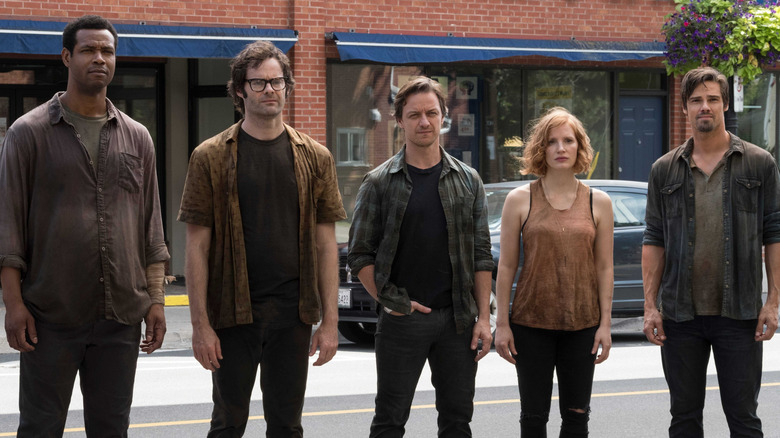
Stephen King's skill as a worldbuilder has played a crucial role in his now decades-long unrivaled title as the Master of Horror. But the breadth and scope of that vision doesn't always translate in an on-screen adaptation. Even Stephen King has his own opinions about some of the worst movie adaptations of his work — the fact that they don't always line up with critics and audiences serves as a reminder that sometimes, there's just no way to fully and faithfully translate what the author had in mind when he wrote it.
King's vision aside, there are a few Stephen King multiverse adaptations that just about everyone agrees could have been better. Still, even among the weakest links in the world of Stephen King adaptations, sometimes one actor's performance is enough to make it worth the watch. From captivating portrayals to bizarre acting choices that shouldn't have worked but somehow did, here are five Stephen King adaptations that were saved by one actor's performance.
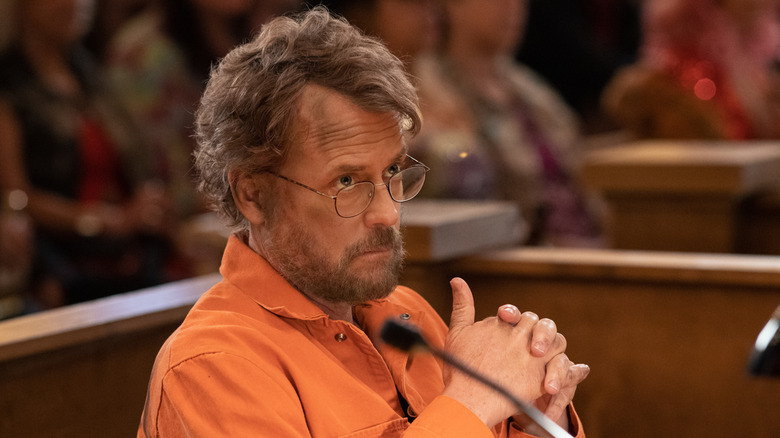
Greg Kinnear as Glen Bateman in The Stand (2020)
Stephen King's most epic novel, "The Stand," is a post-apocalyptic fantasy novel about good versus evil with a continent-spanning storyline set in the United States that remains after a virus wipes out most of the population. First published in 1978, the novel expanded to more than 1100 pages long with its unabridged 1990 edition — which is why it's pretty easy to understand how this could be a tough book to adapt, especially given the book's extensive "Lost"-like central cast of characters.
The first adaptation, a 1994 made-for-TV mini-series, is still considered by many to be one of King's best adaptations. For fans of the drama, that made it all the more disappointing when the star-studded 2020 Paramount mini-series adaptation absolutely bombed, coming in at a dismal 57% Tomatometer on Rotten Tomatoes with an audience score of 25%. Among viewers' litany of complaints about this series, top concerns included frustration with the story's narrative structure and pacing, along with a general sense that many of the novel's characters and themes were mishandled.
Exactly none of that is the fault of the actors, many of whom did a fine job despite not having the best material to work with. But one performance that stands out enough to make the series worth watching despite its many failings was Greg Kinnear as Glen Bateman. "He felt like the perfect in between of novel Glen and the legendary Ray Walston from 1994," opined one Reddit user, adding that although Walston would always be the voice they hear when reading the book, "Kinnear stole every scene he was in."
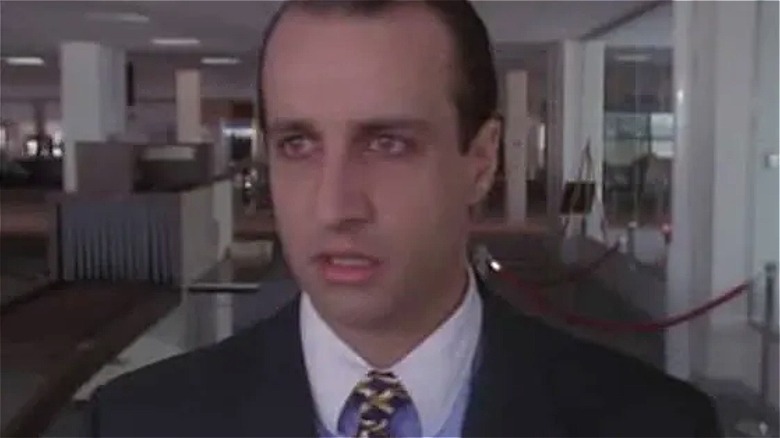
Bronson Pinchot as Craig Toomy in The Langoliers
If you don't remember the fever dream that was the 1995 adaptation of Stephen King's existentialist horror novella "The Langoliers," you're certainly not alone. Many fans say it's one of King's spookiest tales, with some comparing it to an early introduction to the Backrooms mythos that would later inspire "Severance." But it's also an undeniably difficult story to adapt, since so much of the tale is purely psychological as it deals with a group of airline passengers who find themselves trapped outside of reality.
The pacing of the mini-series, which feels a bit like an onscreen adaptation of a stage play as its characters argue in the airplane and airport, accounts for most of this adaptation's failings. But the series is also full of disappointing performances, weakly written characters, and, toward the end, one of the most egregious abuses of CGI ever to hit the small screen — and veteran actor Dean Stockwell can't do a darned thing to salvage it.
But even if good acting can't make this film more watchable, the absolute over-the-top scenery-chewing performance of Bronson Pinchot as mentally unhinged finance bro Craig Toomy makes it a can't miss addition to the King multiverse canon. As one Reddit user put it, "Bronson Pinchot is in a different movie than the rest of them." And yet somehow, that absurdist performance ends up being the most watchable thing in the movie.
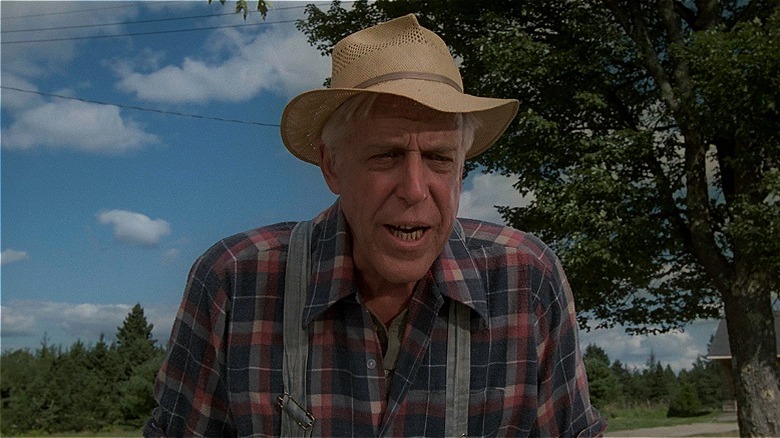
Fred Gwynne as Jud Randall in Pet Sematary
The 1989 adaptation of Stephen King's "Pet Sematary," a film about a cemetery that reanimates the dearly departed, is far from a perfect film, with critics lauding the 2023 remake as a significant improvement over the original "Pet Sematary." It certainly has its scary moments, especially if you were a 1980s kid who found the prospect of living roadkill to be fertile ground for nightmare fuel. But many of the film's biggest scares felt overplayed or even cartoonish to some viewers, and the zombie toddler toward the end of the film didn't help.
As is too often the case with adaptations of King's work, the film's main characters sorely failed to capture the complexity of their print counterparts — a crying shame since so much of what makes his books great is those characterizations. Still, one actor brought a level of depth and dimension to his role that still stands out as one of the finer performances in the King adaptation pantheon. In his performance as the Creed family's kindly neighbor Jud Crandall, Fred Gwynne, who is best known for his role as Herman Munster, went above and beyond the call of duty portraying a nuanced, complicated man. Many Stephen King fans consider his performance to be their favorite of any King adaptation. As one Redditor put it, "Fred Gwynne was highly underrated, everyone just saw Herman Munster, but he's so great in Pet Sematary and My Cousin Vinnie."
Steven Weber as Jack Torrance in The Shining (1997)
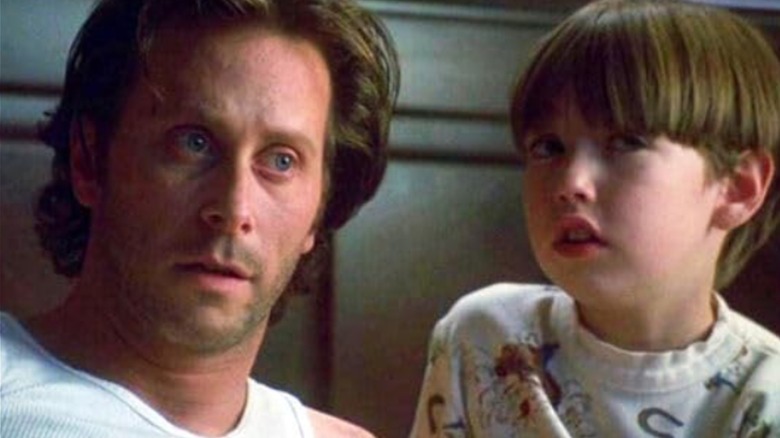
The 1997 mini-series adaptation of "The Shining" is one of those movies many fans had no idea were remade. Although the original 1980 Stanley Kubrick version starring Jack Nicholson gets all the love, King had always wished for a more faithful adaptation of his novel, a problem the 1997 adaptation set out to correct.
And despite the earlier version overshadowing this adaptation, the 1997 version isn't a bad one, with the mini-series drawing critical acclaim and racking up a handful of awards, including two Primetime Emmy Awards for makeup and sound editing. Even so, when compared to the surrealist, atmospheric Kubrickian vision of its predecessor, the later "Shining" still struggled to stand out. And that's sad, if only because Steven Weber's Jack Torrance in this film is really outstanding. Far from a mere rehash of Nicholson's Torrance, Weber's portrayal presented a more multi-dimensional vision of a man who cares about his family even when his failures as a father and husband cause him to give in to madness. Sure, he's not the villain that Nicholson's Torrance was, but this does align with the book much better than the Kubrick adaptation, and the series is worth watching if for that reason alone.
Bill Hader in IT: Chapter II
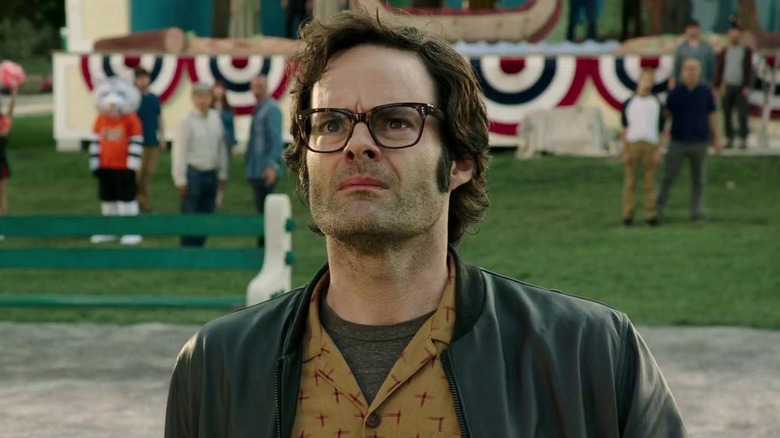
When "IT: Chapter II" concluded the second adaptation of King's book in 2019, critics had mixed feelings about the film, with many finding the nearly three-hour film heartfelt but ultimately underwhelming. Fans' takes were even less magnanimous as they took to the internet to express outright disappointment with what should have been a grand finale to a killer two-part saga. The visions had begun to feel overplayed and even monotonous to many viewers. To boot, some fans felt the casting could have been better and found the chemistry of the film's main stars lacking altogether.
Nonetheless, despite all of this film's shortcomings, both critics and general audiences found Bill Hader's performance as Richie Tozier to be a bright spot in the film. After seeing his portrayal, many fans were surprised by Hader's range as both a dramatic and comedic actor. Posting her brief review of the film on X, Collider's then-Horror editor Hayleigh Foutch wrote, "Bill Hader is every-bit the scene-stealing standout we all hoped he'd be."