

10 Hit Shows From The '70s That Nobody Talks About Today
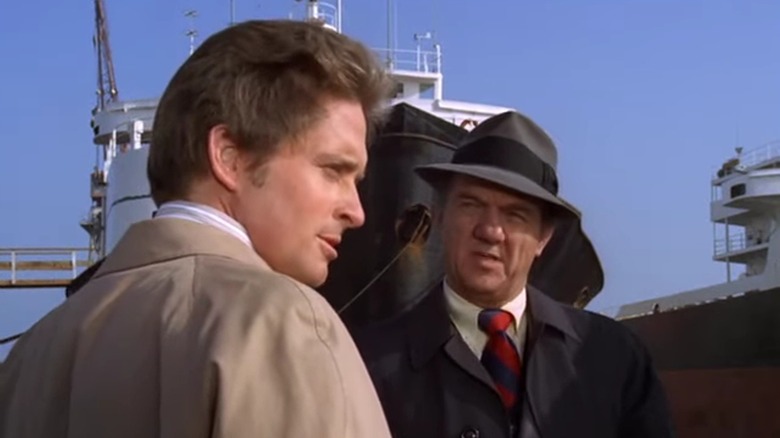
The 1970s were a golden age of television. Many of the biggest shows of the decade are still discussed regularly today, including smash hits like "Happy Days," "Good Times," "All in the Family," "M*A*S*H," "The Brady Bunch," and plenty more. They all left an indelible mark on the decade, cementing our popular imagination of the seventies.
There were also plenty of hit television shows, however, that barely get talked about anymore. While shows like "The Rockford Files" were incredibly popular, they have since fallen out of favor, with much less of a lasting impact as contemporaries like "Columbo" and "Kojak." In January 2026, however, NBC announced that they would be rebooting "The Rockford Files," a show that initially followed James Garner as a private investigator named James Rockford. The new pilot, written by "Sons of Anarchy" writer Mike Daniels, was described by TVLine as "a contemporary update on the classic series of the same name." That's the media landscape we live in now. Any old IP can be mined for new dollars, networks trying to milk whatever they can out of the name recognition these shows have left instead of developing new properties.
The shows on this list, however, have made less of an impression than "The Rockford Files." Many of them have never been on streaming, and if they were released on home video, it was years ago. These shows were all hits in the 1970s, but they've been sadly forgotten in the years since.
Marcus Welby, M.D. (1969 - 1976)
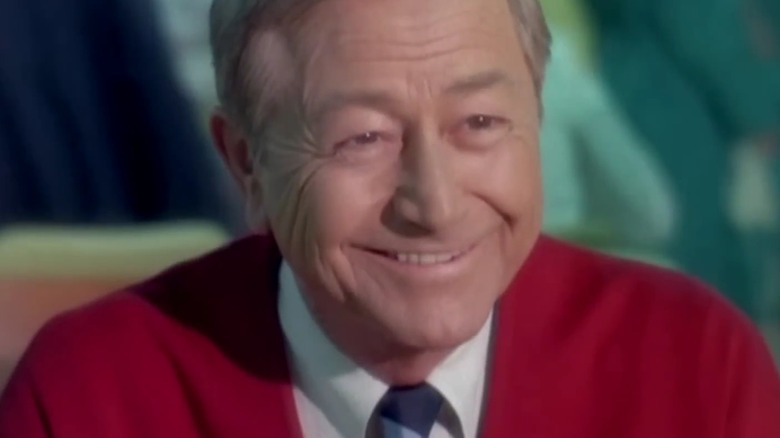
The 1970s were a great decade for procedurals. People loved detective shows, but there were also a lot of hit medical shows, too, including "Quincy, M.E.," "Emergency!," and "Medical Center." "Marcus Welby, M.D." was one of the biggest of them all — according to the Television Academy, it made history as the first ABC show to top the Nielsen ratings all year — it isn't remembered much these days.
"Marcus Welby, M.D." starred Robert Young as the titular doctor. If people do talk about the show now, it's mostly because it's remembered as regressive, even for its time; there were several hugely controversial episodes of the show that dealt with the queer community, and in the wake of the 1969 Stonewall Riots and the gay rights movement that flourished in the 1970s, viewers were not happy with the way the show talked about queer issues.
For example, in a 1973 episode called "The Other Martin Loring," Dr. Welby diagnosed a man with "homosexual tendencies," and his solution appalled some viewers. "[He] tidily wrapped up another week's show by assuring his patient that he could win his battle against such aberrant urges and someday be 'normal,'" Dr. Howard Merkel wrote in an op-ed for The New York Times. The episode sparked a sit-in at the ABC offices in New York. The following year, an episode equated homosexuality with pedophilia, sparking a backlash when Young was announced as the commencement speaker at the University of Michigan Medical School.
Police Woman (1974 - 1978)
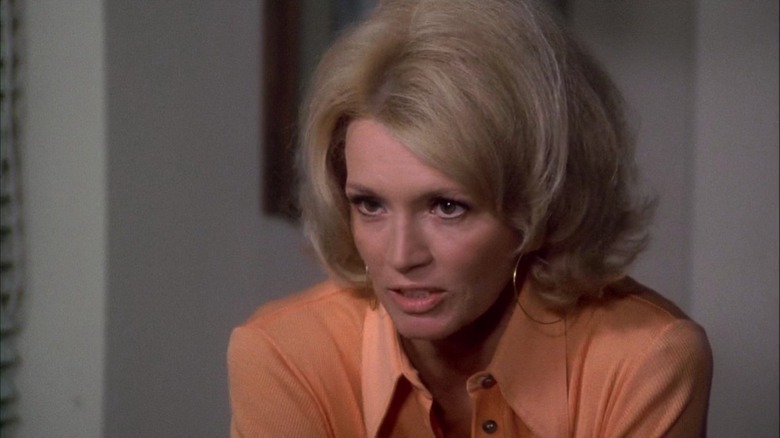
"Police Woman" was one of many cop shows that flooded the airwaves in the 1970s. It was a spin-off of "Police Story," the well-received NBC anthology show that told different cop-related stories each week from 1973 to 1977. One such episode of "Police Story" centered around a female police sergeant played by Angie Dickinson, and she got her own show when the character was a hit with viewers. Sergeant "Pepper" Anderson was a cop who frequently went undercover, which allowed Dickinson to flex her acting muscles each week, as her character had to take on different personas.
Essentially the "Law & Order" of its day, "Police Woman" featured a number of guest stars who would later go on to greater fame. There were episodes guest-starring everyone from Danny DeVito and Kyle Richards to Sam Elliott and future "N.C.I.S." star, Gibbs himself, Mark Harmon.
These days, people don't talk about "Police Woman" all that much. Dickinson herself now says she regrets doing the show, noting that it was a "horrendous undertaking" to star on multiple seasons of a show that produced 21 hour-long episodes each year. Furthermore, she worried that it was a waste of four prime years of her acting career. "I didn't make much money on them," she later told "CBS Sunday Morning." She noted, "I really regret it. It wasn't worth it."
The Streets of San Francisco (1972 - 1977)
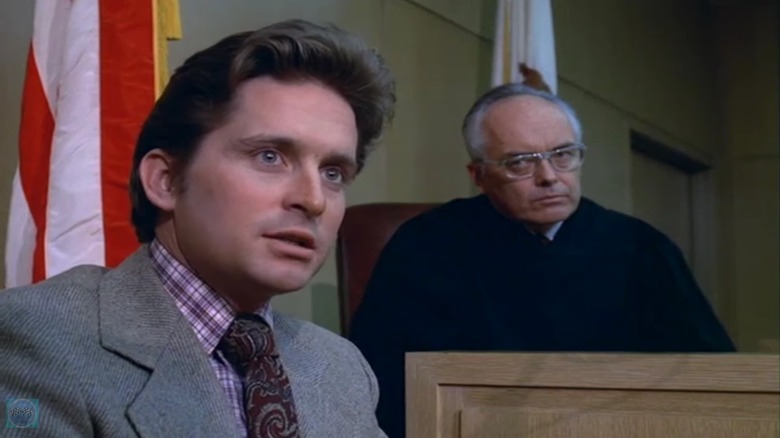
Some of the shows on this list featured actors who later went on to be more famous elsewhere, but none were as famous as Michael Douglas. Sure, he was a nepo baby, the son of Hollywood heavyweight Kirk Douglas, but the future star of films like "Fatal Attraction" and "Wall Street" had to prove himself on a cop show first. That show was "The Streets of San Francisco," a buddy cop procedural that paired him with legendary character actor Karl Malden.
If "The Streets of San Francisco" is talked about much still, it's because of the stir that Michael caused when he left the series in its heyday. Seeking something more respectable, the star of "The Game" signed on to produce "One Flew Over The Cuckoo's Nest," which won Best Picture, netting the star of this cop procedural an Academy Award. "It was a hit and I had Emmy nominations and a five-year contract," he later explained to The Wall Street Journal, "but I asked to leave early to produce this picture."
In his later career, he went on to be a Marvel star, and Douglas would prove that he was still quite comfortable leaving projects he'd grown bored of, when he requested that Marvel kill his "Ant-Man" character in a spectacular way. His "Streets of San Francisco" character, on the other hand, was merely written out, and the show was canceled after one more season without him.
Bridget Loves Bernie (1972 - 1973)
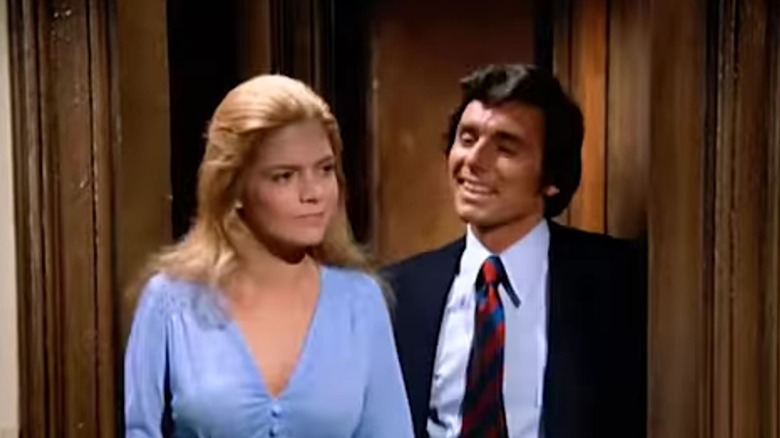
On the smash-hit sitcom "Bridget Loves Bernie," stars Meredith Baxter and David Birney played an interfaith couple who find themselves entangled in hilarious hijinks that resulted from the fact that he was Jewish and she was not. His family owned a deli; hers was WASP-y.
Though the show was hugely popular, it came under serious criticism from certain Jewish groups, who objected to its portrayal of interfaith marriages. The New York Times reported in 1973 that there was a campaign to get the show cancelled. Rabbi Balfour Brickner from the Commission on Interfaith Activities told the newspaper, "The program treats intermarriage in a cavalier, cute, condoning fashion, and deals with its inevitable problems as though they're instantly, easily solvable." Though he claimed to be against all forms of censorship, the rabbi added, "In the end, faced with CBS's shocking insensitivity to the religious beliefs of six million Americans, we've had to draw the line here."
Speaking with The Hollywood Reporter decades later, Baxter — who really did love Birney in real life, marrying him for many years — recalled being surprised when the show was cancelled. "I was terribly upset and confused, as we had been doing so well!" she said. The outlet notes that the sitcom was the highest-rated show ever to get cut, and Baxter said she assumed the controversy was to blame. Though the idea of interfaith marriage is still occasionally controversial, shows like "Nobody Wants This" prove that attitudes have shifted significantly in the years since.
Baretta (1975 - 1978)
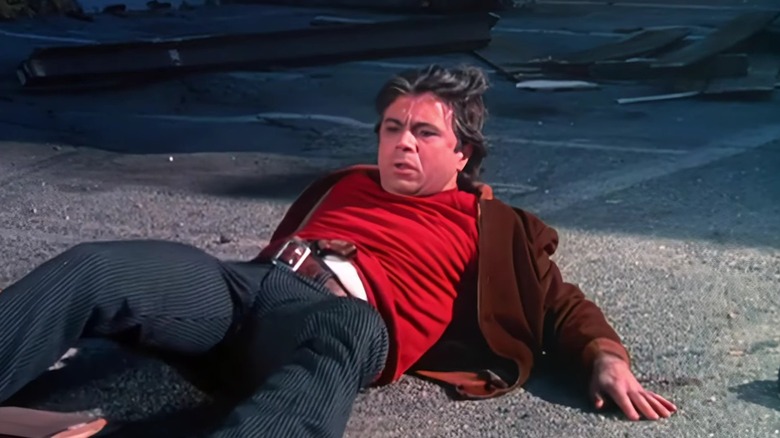
You know the names of plenty of police detectives from the 1970s. In addition to icons like "Columbo," "Kojak," "Starsky & Hutch," and the girls of "Charlie's Angels," that decade also gave us Baretta. As played by Robert Blake, Baretta — like Angie Dickinson's character on "Police Woman" – was a detective who frequently went undercover. The show featured different disguises, accents, and even skin tones for Blake each week (yes, really). You can see lots of them in the series intro credits on YouTube, and seeing those costumes, it's pretty clear why we don't talk about "Baretta" all that much today.
Still, the show was more influential than most people recognize. Sammy Davis Jr. sang "Baretta's Theme," and the theme song's lyrics included some of the character's catchphrases that have since entered the cultural lexicon. When a show like "SpongeBob SquarePants" references the slogan "Don't do the crime if you can't do the time," they're referencing "Baretta."
Blake hated being on the show, and he was happy to put it in the rearview mirror when it was cancelled in 1978. He later told Tom Snyder on "The Late Late Show With Tom Snyder" that he went for a walk after the show went off the air. "If I live to be a jillion," he said, "I will sweep floors, I will shine your shoes, before I do [another] series."
Project U.F.O. (1978 - 1979)
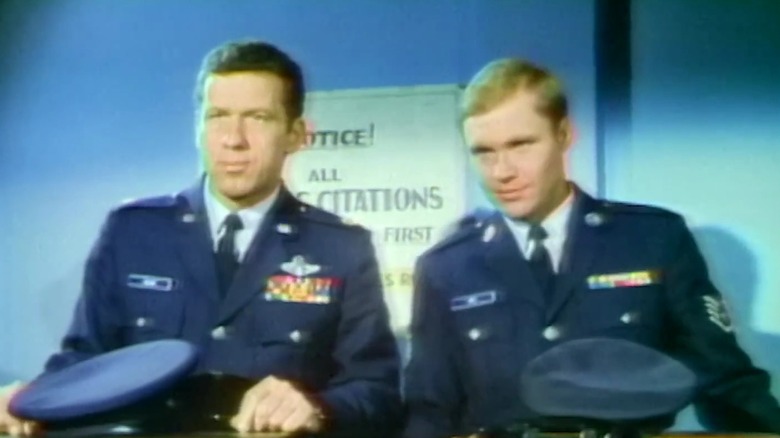
Two decades before Mulder and Scully wanted to believe on "The X-Files," there was a show called "Project U.F.O." Each episode of the NBC series opened with a title card telling viewers, "This program is a dramatization inspired by official reports of governmental investigations of claims of reported sightings of 'Unidentified Flying Objects' on file in the National Archives of the United States." The show centered on William Jordan as Maj. Jake Gatlin and Caskey Swaim as Staff Sgt. Harry Fitz, two Air Force officers tasked with investigating "Project Blue Book," the military's attempt to understand the rash of inexplicable signs in the sky that had taken the country by storm. In the second season, Jordan was replaced by Edward Winter, who played Captain Ben Ryan. As a duo, they would travel around to reported U.F.O. sightings in each episode, trying to discredit them instead of believing that aliens were really visiting Earth.
"Project U.F.O." was a hit for its time, but it didn't make nearly as much of an impact as the other procedural created by Jack Webb — "Dragnet." Instead, "Project U.F.O." came and went with little fanfare. On Comic Watch, writer Rob Price noted that "Project U.F.O." had developed most of its U.F.O. sequences with obvious miniatures, which probably made the show less serious than they intended. "There is a reason that this show is mainly forgotten," Price wrote, "because it was mainly boring."
Good Heavens (1976)
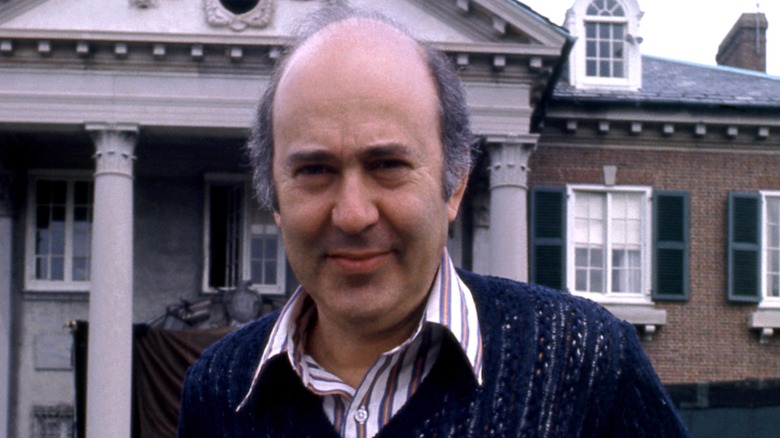
Legendary multi-hyphenate Carl Reiner's final film performance might make you cry, but in the 1970s, he was devoted to making people laugh. He starred on the single-season show "Good Heavens" in 1976, a mid-season replacement that found him playing an angel sent to earth to grant people wishes. Reiner initially only directed the pilot, which originally starred José Ferrer. The network didn't like it. He later told The Television Academy, "Somebody at the network said, you know, 'José Ferrer has a diabolical look to him. You can play him more charming.'"
The show was a hit, especially for a mid-season replacement, but it wasn't picked up beyond that first season. Reiner recalled, "After that, I think I started looking toward film."
Even though "Good Heavens" didn't last, the show did have an impact on Reiner's son, Rob. He went on to an illustrious acting and directing career himself, but when he was younger, he got to work on the sitcom with his dad. "It was kind of fun, because I always wanted to be a major league baseball player," Rob told The Television Academy. He got to play one on his dad's show, as if his father had really granted him his wish. Rob heaped compliments on his father's talent, noting, "The guy's got amazing timing, you know?"
Cannon (1971 - 1976)
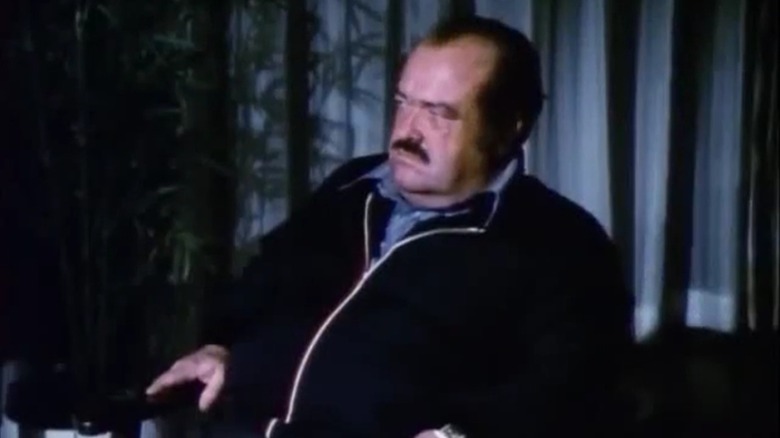
In addition to all those other 1970s television detectives, there was William Conrad's Frank Cannon, the titular star of a five-season series called "Cannon." Unlike most of those other guys, who looked like they lived on diner coffee and cigarettes, Cannon was notable for being bigger. Unfortunately, many of the show's episodes revolved around Cannon's weight, turning him into a punchline just as often as it let him show off his detective skills.
At first, Conrad didn't mind providing an alternative to the typical TV cop. Eventually, though, he grew tired of how one-note his character was. He later told Booth News Service (via MeTV) that he was not mad when the show was cancelled, recalling, "I was sick of it. It was an ice-breaker of a character, a person playing a lead who wasn't six-foot-seven. But it just got to be too much." In fact, Conrad didn't even mind that his public career essentially ended when "Cannon" did. Instead, he went to work in the theater, and that was fine by him. "I don't want to accomplish anything," he said.
Years later, he would once again star on television as a character whose weight was central to the role, on the 1980s show "Jake and the Fatman." Conrad slimmed down over the course of that series, and he told Deseret News that it led to even better stories. "I look forward to going to work, not only because I have more to do," he said, "but because the scripts have been absolutely great."
Angie (1979 - 1980)
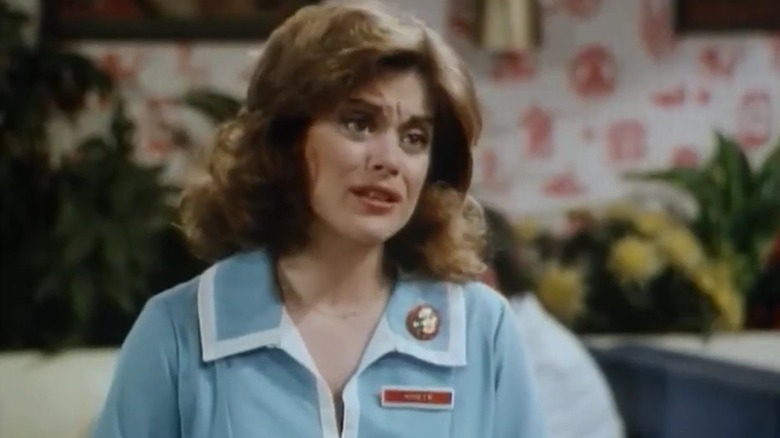
In addition to all of the procedurals mentioned above, the 1970s were also great years for sitcoms. "The Brady Bunch," "Sanford and Son," "One Day At A Time," "Three's Company," and more brought average Americans into each other's living rooms each week, teaching each other about class even as they developed into characters that you simply wanted to spend time with.
"Angie" premiered in 1979, and though the show was successful in its first two seasons, it didn't last beyond 1980. The series starred "Saturday Night Fever" breakout Donna Pescow as Angie, a Philadelphia waitress working to support her family. Doris Roberts, who would later play a legendary sitcom mom on "Everybody Loves Raymond," starred as Angie's mom on the series. She told The Television Academy that her role on "Angie" was meaningful to at least one viewer, who wrote to her to say that she'd been diagnosed with M.S. and had been depressed. "I was watching 'Angie' and you made me laugh," Roberts recalled the woman writing. "'I laughed out loud and I heard my own voice ... and I thought, what am I doing in this darkened room?'"
The Ropers (1979 - 1980)
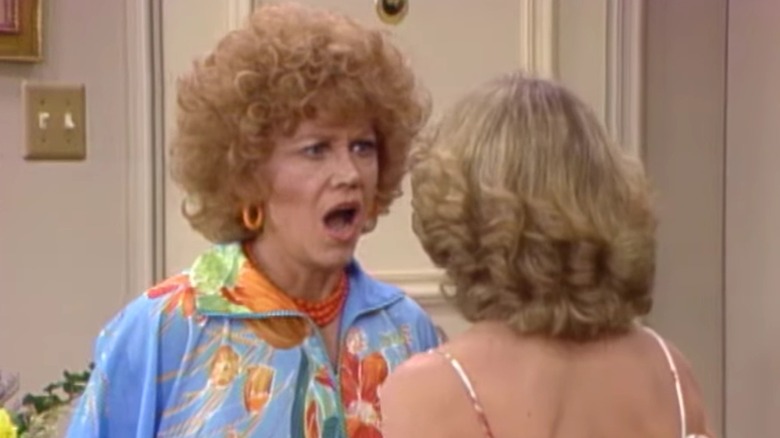
The cast of "Three's Company" became hugely famous after the sitcom helped define the decade; stars like John Ritter and Suzanne Somers were legendary figures from pop culture at the time, and people still discuss their contribution to the television landscape. Less-remembered, however, are the characters who owned the apartment where two women scandalously lived with a male roommate.
At the time, however, Helen and Stanley Roper (Audra Lindley and Norman Fell) were so well-loved that they got their own spin-off show. "The Ropers" followed the "Three's Company" landlords as they sold off that building and bought a different one, leading to silly shenanigans with their new tenants. Though people initially tuned in to see what they'd get up to without Jack, Janet, and Chrissy, "Three's Company" outlived "The Ropers."
Producer George Sunga later told The Television Academy that Fell had only agreed to appear on the spinoff if he could return to "Three's Company" if it failed, but by the time "The Ropers" was cancelled, Stanley had already been replaced on the flagship show. Sunga mused, "It's unfortunate that that's the way it happened."