

5 Best Q Episodes In Star Trek, Ranked
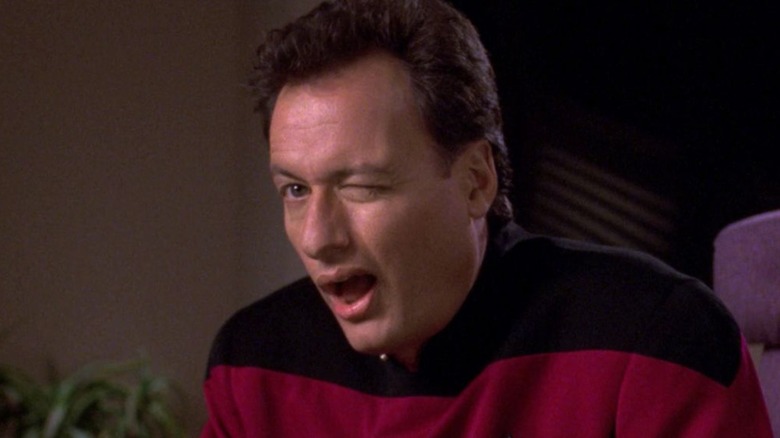
When "Star Trek: The Next Generation" debuted in 1987, it introduced one of the franchise's best recurring villains in Q (John de Lancie). Unlike most series baddies, Q isn't out to destroy all of humanity, and in fact steps in multiple times to do the exact opposite. In most cases, Q is essentially a trickster god, but he's also the harbinger of doom in interesting ways. As the one who introduces humanity to the Borg, Q effectively helps them prepare for a threat they didn't know was coming.
De Lancie appeared in over a dozen episodes across four "Star Trek" series, including every episode of "Star Trek: Picard" Season 2, making him the most frequent guest star to play a single character. Because he's been in so many episodes across a multitude of decades and "Star Trek" series, Q is regarded as one of the best characters in the canon. His return typically results in fun episodes, and when he gets serious about something, they can turn dark on a dime.
Every fan has their favorite Q episodes, and there are many to choose from. Selecting the top five required looking through each of them and determining which was received the best by critics and fans, resulting in selections from two series in particular. These five episodes are widely regarded as some of the best in the franchise, and they're certainly among the best to feature Q as a villain, trickster, and from a certain point of view, quiet hero.
5. Death Wish (Star Trek: Voyager)
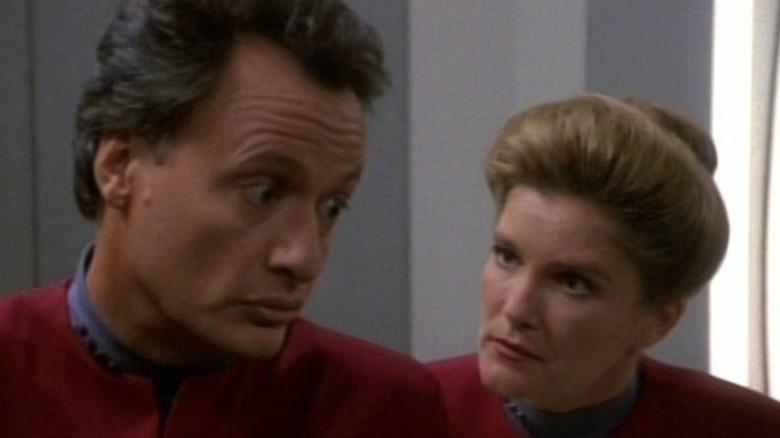
Q appears in several episodes of "Star Trek: Voyager," though his best, "Death Wish," was a "Star Trek" episode that was ahead of its time. In the episode, a previously unknown member of the Q Continuum (Gerrit Graham) is found trapped inside what appears to be a comet. The anomalous object is scanned, and Q (all members are called "Q") is transported onto the USS Voyager, freeing him from eons of confinement by the Q Continuum, as he intends to end his existence.
Q (John de Lancie) appears, demanding to enforce the Continuum's ruling that the freed Q, who later adopts the name Quinn, not be allowed to proceed and return to confinement. Captain Janeway (Kate Mulgrew) stands in his way and offers asylum aboard Voyager, resulting in a sort of trial to determine if Quinn is allowed to end his existence. Commander William Riker (Jonathan Frakes) makes a guest appearance to give testimony that Riker forgets as soon as he is sent back to the Enterprise.
Quinn shows everyone a visual manifestation of the Q Continuum, which appears as a dull, lonely road with a single rest stop. Ultimately, Q agrees to allow Quinn to become human, so he can experience something new: mortality. Unfortunately, Quinn does take his own life, which ultimately teaches Q a lesson he would have otherwise not learned, making a significant impact on the Q Continuum as a whole.
If you or someone you know is struggling or in crisis, help is available. Call or text 988 or chat 988lifeline.org
4. Deja Q (Star Trek: The Next Generation)
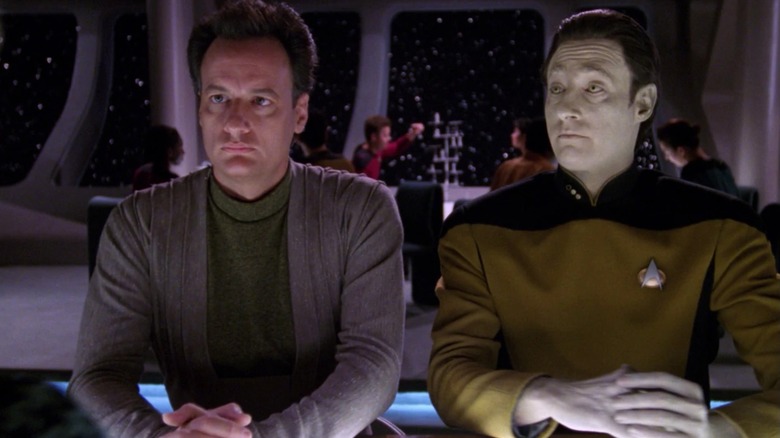
When Q arrives on the Enterprise in "Deja Q," he does so in the buff, powerless, and asking for asylum from a variety of threats. This happens as the crew works to save a planet from its own moon, which is in a decaying orbit and will obliterate the surface without the Enterprise's help. Q's punishment is the result of his many nefarious acts against a variety of species, including humanity, and he pleads for help from Captain Picard (Patrick Stewart) and his crew.
This is the first episode where Q and Guinan (Whoopi Goldberg) come face to face, revealing that they've got some serious beef. Unfortunately, this is never fully explored, and their storyline never pays off in the franchise. Regardless, Q finds himself mortal and incapable of doing anything useful, as he annoys the crew. Only Data (Brent Spiner) assists him, and as Q tries to come to grips with his situation, they form a bond of sorts, with Q coming to respect the android.
Eventually, Q sacrifices himself to save the Enterprise from some vindictive aliens intent on revenge. This results in the Q Continuum returning his immortality and powers. He appears on the Enterprise bridge and gives Data a gift: a few moments of uproarious laughter. He then saves the planet by fixing the moon's orbit, showing that Q learned from his experience aboard the ship as a mortal, and he has the capacity to evolve beyond his trickster personality.
3. Tapestry (Star Trek: The Next Generation)
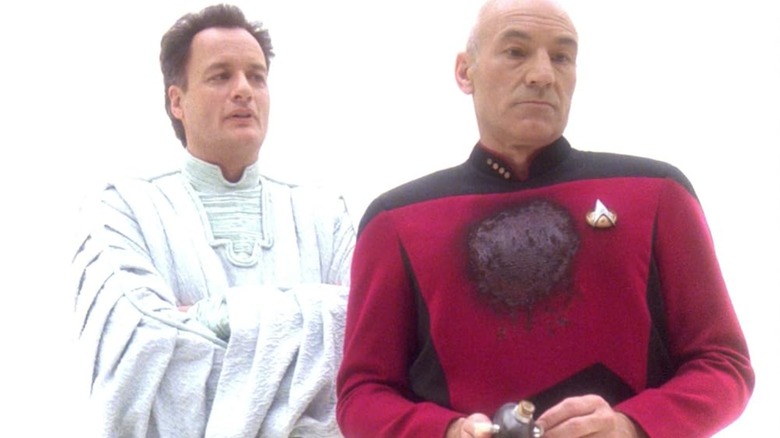
"Tapestry" is one of the best "Star Trek" episodes involving time travel. It begins with Captain Picard being mortally wounded, thanks to the destruction of his artificial heart. He awakens in a white void, confronted by Q, who informs Picard that he's dead. Picard reflects on his youth, saying he would have done things differently if he could relive the moment he injured his natural heart in a bar fight, so Q snaps his fingers and sends Picard into the past.
Picard works to relive his life, but he desires to avoid the fight with the Nausicaan who nearly killed him. He does so, but when he returns to the present, alive, he's a junior science officer who's lived an unremarkable life and career. Speaking with Riker, he learns that his aversion to risk never afforded Picard any opportunities to stand out and make a difference, leading him to confront Q. The godlike alien agrees to send Picard back into his youth, but this time, he lets history repeat itself.
After he's stabbed by the Nausicaan, Picard laughs as he originally did. He then awakens in sickbay as himself and is once more captain of the Enterprise. It's never made clear if what he experienced truly happened or was instead a fabrication of his mind. Still, considering Q's interest in Picard, it appears he stepped in to offer his favorite human some perspective.
2. Q Who (Star Trek: The Next Generation)
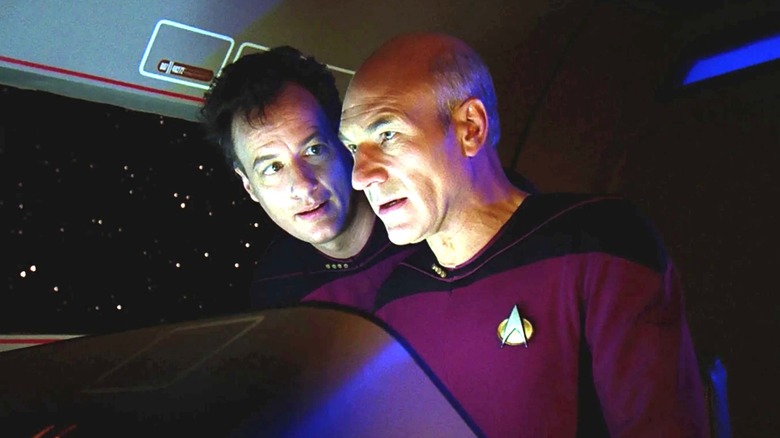
In "Q Who," from Season 2 of "The Next Generation," Q decides that Captain Picard is too arrogant about humanity's capabilities in the galaxy. To prove this to him, Q sends the Enterprise thousands of light-years away, where they'd have to travel at maximum warp for two years to get to the closest starbase. The Enterprise encounters a vessel in the shape of a cube, and has its first confrontation with the Borg. Guinan warns Picard about the Borg, explaining that her people scattered after the Borg destroyed their homeworld.
This is the episode that introduced the Borg to the franchise, and they'd continue to play a dominant role through successive "Star Trek" series and films. Initially, Picard attempts to make contact and tries to understand the Borg. In every instance, he finds that he and the Enterprise crew are woefully unprepared for the threat. They reach maximum warp to flee, and the cube overtakes them. Their weapons prove mostly useless once the Borg adapt to them, and the situation appears hopeless.
In the end, Picard sees no other option than to admit to Q that he needs his help. Q obliges, snapping his fingers and returning the Enterprise to its previous position. Picard then blames Q for the deaths of his crew members killed in the encounter, but comes to appreciate the lesson. "Q Who" demonstrates Q's willingness to help Picard, albeit through death and destruction, by informing humanity of the threat posed by the Borg.
1. All Good Things... (Star Trek: The Next Generation)
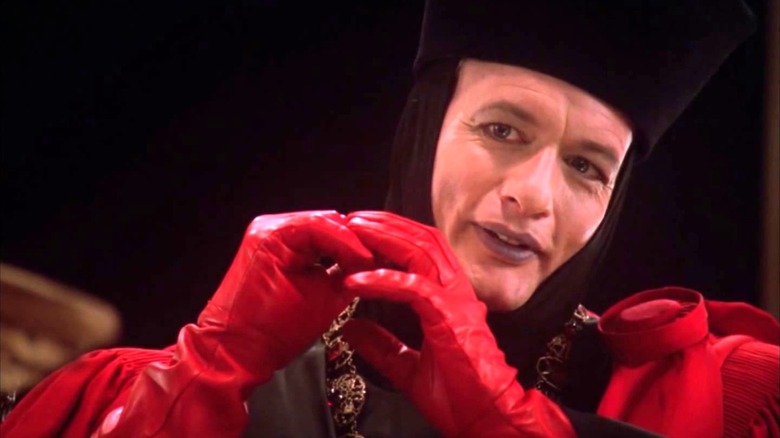
In the "Star Trek: The Next Generation" series finale "All Good Things...," Q returns for the last time. The episode plays out in three time periods: the past, when Captain Picard took command of the Enterprise, the present, and the future, where Picard is suffering from the earliest stages of Irumodic Syndrome. He confronts Q after determining that he's the cause of his jumping around in time, and Q explains that the trial he began in the series opener never ended.
This is one of those "Star Trek" episodes that revisits old ones, showing characters long dead like Tasha Yar (Denise Crosby). Picard struggles to orient his "new" crew in the past, direct his crew in the present, and convince his friends he's not losing his mind in the future. It all coalesces into a single point in the Devron System, in the Romulan Neutral Zone. Eventually, Q arrives to reveal that Picard's actions in each of the three timelines result in humanity's destruction.
What happens in the future has an exponentially detrimental impact on Earth in the past, as it has an inverse growth in relation to linear time. Once Picard figures this out, everything comes to a head, leading to one final conversation with Q. Picard thanks him for all his help, and the series ends with the captain joining his senior officers for poker for the first time.