

15 Best Directors Of All Time, Ranked
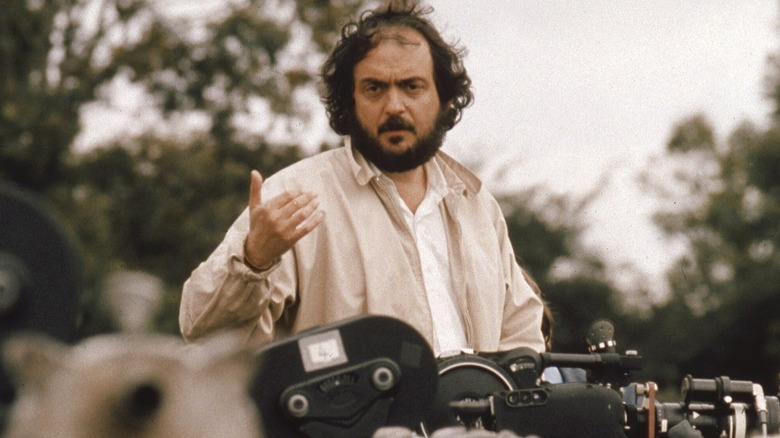
What makes a great movie director? In the days of the studio system, all it took was an ability to yell "action" and "cut" before sending the footage off to an editor and beginning work on the next assignment. Yet even in that workmanlike system, a handful of directors managed to sneak their personal visions into whatever film they were making. This, in turn, influenced the next generation of filmmakers who viewed movies as more than just a commodity. To them, they were a means of artistic expression as powerful as a play, a painting, or a symphony.
Thanks to the likes of Andrew Sarris and Cahiers du Cinéma, understanding of what a director does became not only more defined, but more debated. The auteur theory sought to find unifying themes and styles to argue that the director was the singular author of a film. Although the merits of that theory have been hotly contested, it nevertheless encapsulates the various arguments about what separates a good director from a great one. In that spirit, here are the 15 best directors of all time, ranked.
15. Guillermo del Toro
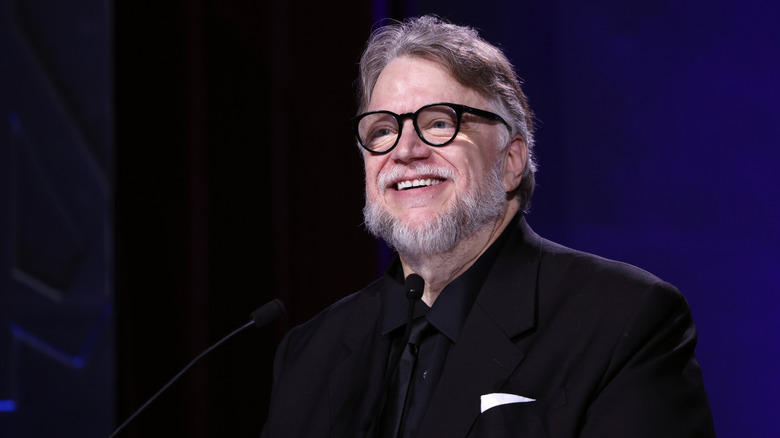
With every movie Guillermo del Toro has made, he's proven that fantasy and fairy tales aren't strictly for children. Beginning with his 1993 debut, "Cronos," del Toro has been telling stories of monsters, ghosts, and goblins aimed squarely at adult audiences. His artistry reached an apex with "The Devil's Backbone" and "Pan's Labyrinth," which create wholly original worlds and creatures straight from his imagination, which is frightening and wondrous in equal measure.
With his fantasy romance "The Shape of Water," del Toro defied Academy Awards history and won Oscars for best picture and director, a rarity for genre movies. He collected another statuette for "Pinocchio," which transferred his unique sensibilities to animation. With "Hellboy," "Pacific Rim," and "Frankenstein," he's brought artistry and maturity to superhero movies, science fiction, and horror. He's also branched off into gothic romance with "Crimson Peak" and noir with "Nightmare Alley," proving there's little he can't do.
14. Kathryn Bigelow
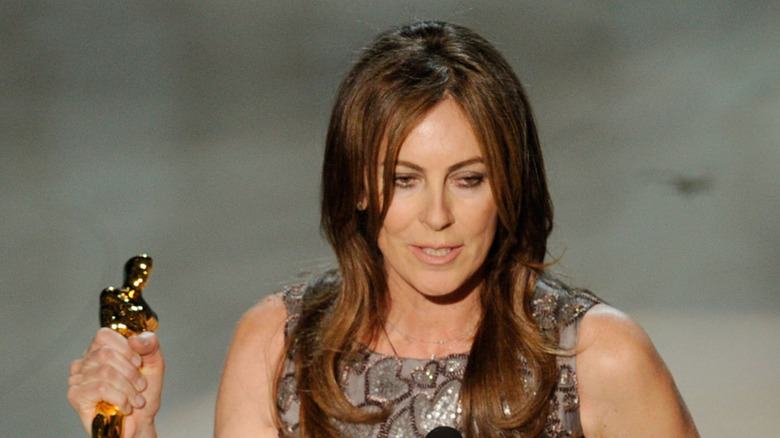
When she won the best director Oscar for "The Hurt Locker," Kathryn Bigelow became the first woman to claim that prize in its 82-year history. That she did so for an action movie set during the Iraq War was an even more impressive feat, considering that it defied expectations of the types of films women were expected to make. Yet that's precisely what Bigelow has been doing for her entire career.
Beginning with her 1987 vampire thriller "Near Dark," Bigelow proved she could direct action scenes as well as any man. From "Blue Steel" to "Point Break" to "Strange Days," she brought a painterly artistry to stories of masculinity and obsession. With "The Hurt Locker," she adopted a documentary approach that carried over to her CIA thriller "Zero Dark Thirty." Utilizing hand-held cameras, kinetic editing, and propulsive scores, Bigelow places audiences inside the minds of her passionate, fanatic protagonists, who are singularly focused on their missions.
13. John Ford
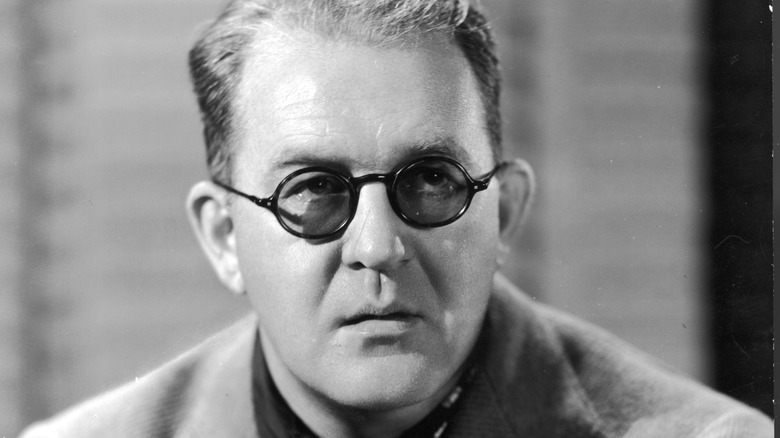
Of the many directors from Hollywood's Golden Era, few were as influential as John Ford. Starting in the days of silent cinema, Ford helmed over 120 films, won four Oscars (more than any other director), and brought poetry and a keen eye to stories of masculinity. He became primarily known for his Westerns, capturing the spirit of the Old West in his beloved Monument Valley. He singlehandedly made a star out of John Wayne, exploring the many facets of his complicated star persona in films like "Stagecoach," "The Quiet Man," and "The Searchers," the latter of which is often cited as one of the greatest movies ever made.
In films like "The Grapes of Wrath" and "How Green Was My Valley," Ford explored the importance of family and the failures of institutions. With "My Darling Clementine" and "The Man Who Shot Liberty Valance," he challenged the perpetuation of myths that built this country. Considering he came up in a time when directors were treated as employees, he proved that personality and artistry had their place in American movies.
12. Billy Wilder
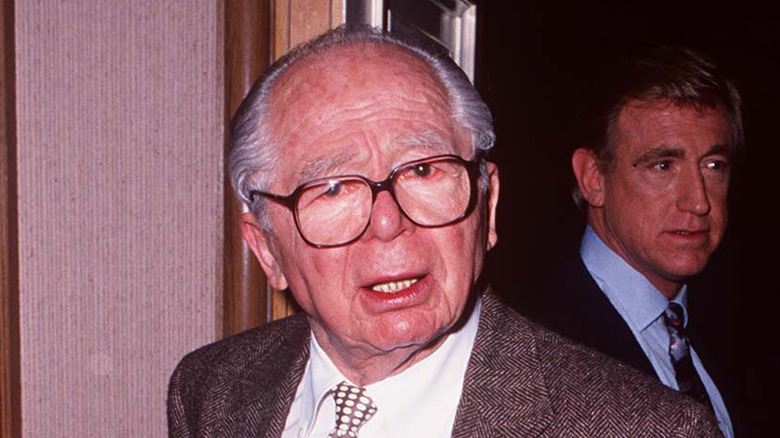
Coming up at a time when directors were assigned to movies, Billy Wilder developed his films from the ground up as a writer-director. Having lost many family members during the Holocaust, Wilder's films were often marked by cynicism. Be it the noir thriller "Double Indemnity," the alcoholism drama "The Lost Weekend," the Hollywood satire "Sunset Blvd.," or the media critique "Ace in the Hole," Wilder saw little faith in humanity, which is perhaps why his movies hold up better than many others from Hollywood's golden age.
Yet there was a softer side to Wilder, witnessed in his sparkling comedies "Sabrina," "The Seven-Year-Itch," and "Some Like It Hot." Both sides of his filmmaking personality were artfully blended in "The Apartment," for which he won Oscars for best picture, director, and original screenplay (he won further Oscars for "Sunset Blvd." and "The Lost Weekend"). Perhaps no other director can claim as many great final lines as Wilder, speaking to his wit and talent for dialogue.
11. Jane Campion
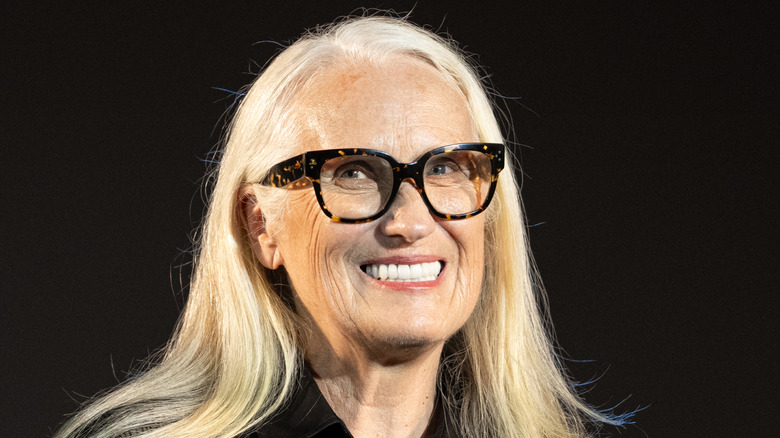
At a time when women were seldom given opportunities behind the camera, Jane Campion firmly established herself as one of the most important directors of her era. A native New Zealander, Campion broke out of the art house with her odd, poetic, and devastating drama "The Piano," for which she won an Oscar for screenwriting and competed for directing (making her at that time only the second woman to ever do so). Rather than jump into the mainstream, she remained fiercely independent, crafting a series of visually stunning, emotionally challenging dramas characterized by their eccentricity and idiosyncrasy.
After "Bright Star," Campion took 12 years off from filmmaking, during which she created the TV series "Top of the Lake." She came roaring back in 2021 with "The Power of the Dog," for which she became the third woman in history to win the Oscar for best director. It was a reminder of just how much her singular voice was missed in world cinema.
10. Paul Thomas Anderson
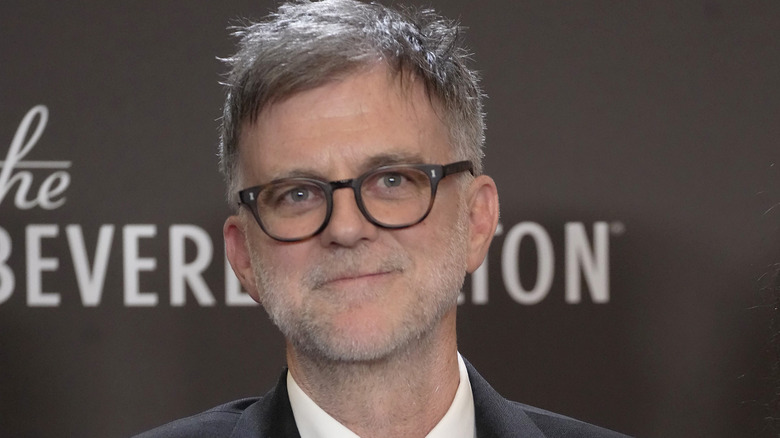
With the one-two punch of 1997's "Boogie Nights" and 1999's "Magnolia," Paul Thomas Anderson quickly established himself as the favorite young director amongst cineastes. Wearing his influences proudly on his sleeve, PTA mounted multi-character epics with gleeful abandon, showing off with elaborate camera moves and underscoring with pop soundtracks. Despite being fiercely independent, he was a populist at heart, making his thorny films appealing to audiences outside of the art house.
In the 21st century, PTA continued refining his style, stretching himself in a variety of difficult stories. He moved into Great American Movie territory with "There Will Be Blood," tackled Scientology with "The Master," and adapted Thomas Pynchon with "Inherent Vice" and "One Battle After Another." While his early films focused on themes of alienation and dysfunctional families, he broadened his horizons to explore capitalism, greed, and obsession. Yet with "Punch-Drunk Love," "Phantom Thread," and "Licorice Pizza," (and pretty much every movie Paul Thomas Anderson has made), he proved that even as his stories grew more ambitious, he remained a romantic at heart.
9. Joel and Ethan Coen
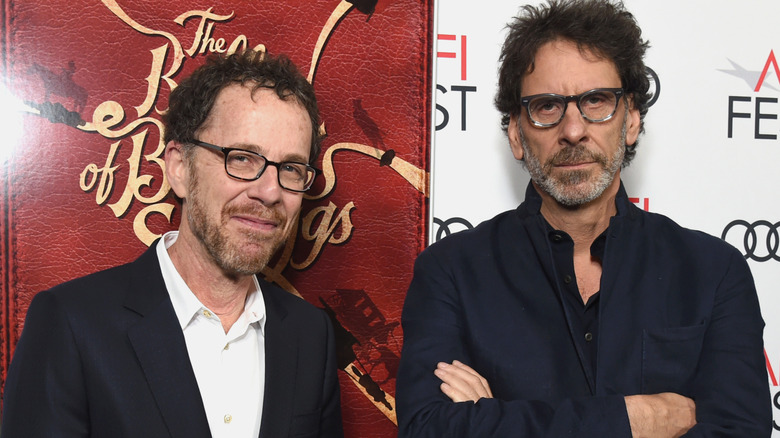
With 1984's "Blood Simple," Joel and Ethan Coen proved that independent cinema could be just as stylish and exciting as any blockbuster. Following up that austere noir with the screwball comedy "Raising Arizona," the Coens established themselves as masters of whatever genre they worked in, be it period gangster drama ("Millers Crossing"), Hollywood satire ("Barton Fink"), or stoner comedy ("The Big Lebowski"). They gained Academy recognition with "Fargo" and "No Country for Old Men," for which they each won four Oscars. Because they often deal with idiots and criminals, they've been accused of looking down on their characters. Yet in every Coen Brothers movie, there's an overriding humanity and empathy.
In recent years, the Coens have gone their separate ways. Yet their individual films only highlight what made them such a great pair. In their best movies, the Coens managed to blend severity with absurdity, showing the tightrope we walk between life and death on a daily basis. In the world of the Coen Brothers, one wrong decision can spiral out in ways that are equally horrifying and hilarious.
8. Spike Lee
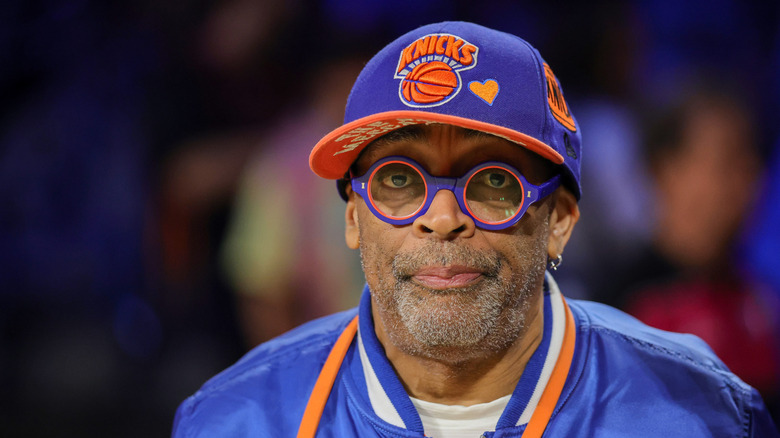
Among the most influential filmmakers who ever lived, Spike Lee helped propel Black cinema into the mainstream with his art house success "She's Gotta Have It." It was with his 1989 film "Do the Right Thing" that Lee established himself as a major voice in American cinema, so much so that its failure to receive Oscar nominations for best picture and director was seen as a scandal. Lee finally got his Oscar due with 2018's "BlacKkKlansman," following a career that included such criminally Academy-ignored masterworks as "Malcolm X," "25th Hour," and "Inside Man."
A prolific director of fiction, documentaries, and commercials, Lee's films often deal with race relations, politics, and the media in ways that are blistering, confrontational, and satirical, characterized by bold stylistic choices that constantly call attention to the man behind the camera. His studies of contemporary Black life within a variety of genres paved the way for directors like John Singleton, Barry Jenkins, and Jordan Peele (who produced "BlacKkKlansman"), to name a few. Although he's never shied away from controversy, Lee's films are surprisingly funny and empathetic, unfolding like improvisational jazz jams.
7. Robert Altman
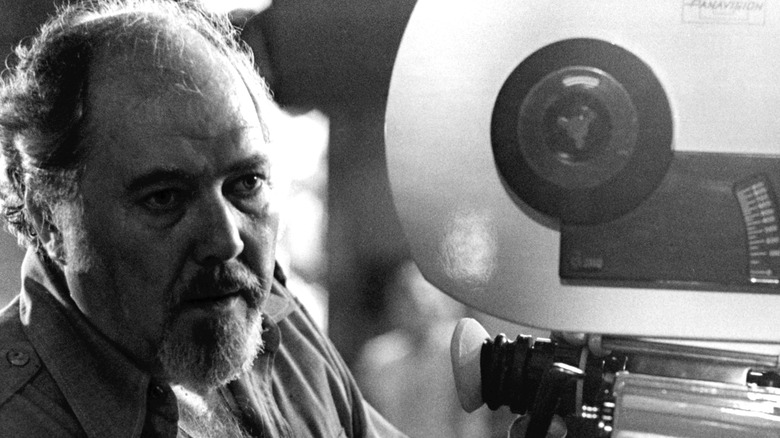
No other director had a better run throughout the 1970s than Robert Altman. Beginning with "M*A*S*H," Altman churned out 13 films before the decade's end, playfully satirizing whatever genre he was working in. Populating his films with large ensembles, Altman eschewed traditional storytelling for studies of human behavior, and his use of overlapping dialogue, zoom lenses, and long takes both called attention to the filmmaking and made the audience feel as if they were voyeurs. His distrust of authority and embrace of hippie culture made him the quintessential New Hollywood director, despite being a decade older than his contemporaries.
After the miracle run of "McCabe & Mrs. Miller," "The Long Goodbye," "Nashville," and "3 Women," Altman found himself in exile throughout the 1980s, as his singular vision clashed with the era of big blockbusters. He came roaring back in the '90s with "The Player" and "Short Cuts," both of which highlighted his playfulness and humanity. Altman kept working until the end, completing 2006's "A Prairie Home Companion" before his death at 81 the next year. There's hardly a director working today who wasn't influenced by his daring, maverick style.
6. Akira Kurosawa
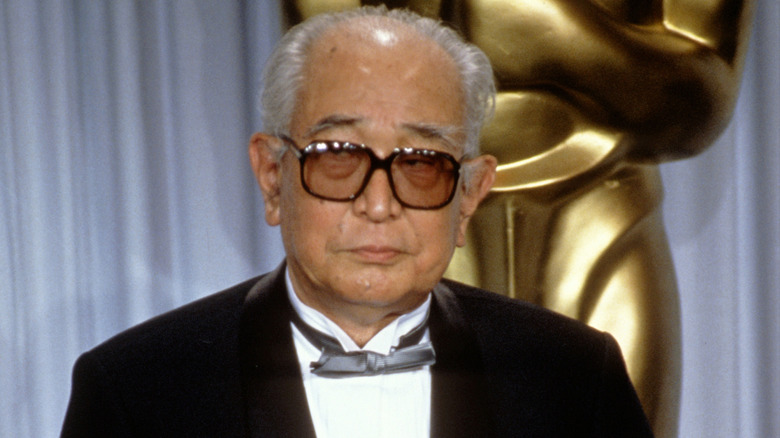
Few directors did more to establish the fundamentals of action filmmaking than Akira Kurosawa. Working primarily in Japan throughout his career, Kurosawa played a major role in bringing international cinema to America, beginning with his 1950 breakthrough "Rashomon." One can credit his success to the types of stories he told, which were universal in their appeal. Whether they were samurai epics, Shakespeare adaptations, or contemporary dramas, Kurosawa's films were characterized by a bold visual style, filled with wit, intelligence, and pathos. Although he had many talents, he's best remembered for his action sequences, which are marvels of blocking, camera placement, and editing.
Kurosawa's films were so influential that many of them were remade, including "Seven Samurai" ("The Magnificent Seven"), "Ikiru" ("Living"), or "High and Low" ("Highest 2 Lowest"). Many more have their DNA in other movies, as the "The Hidden Fortress" does with "Star Wars" and "Yojimbo" does with "A Fistful of Dollars." So great was the respect for Kurosawa that many younger directors lent their support to him in his later years, with George Lucas and Francis Ford Coppola serving as executive producers on "Kagemusha" and Martin Scorsese appearing in "Dreams."
5. Steven Spielberg
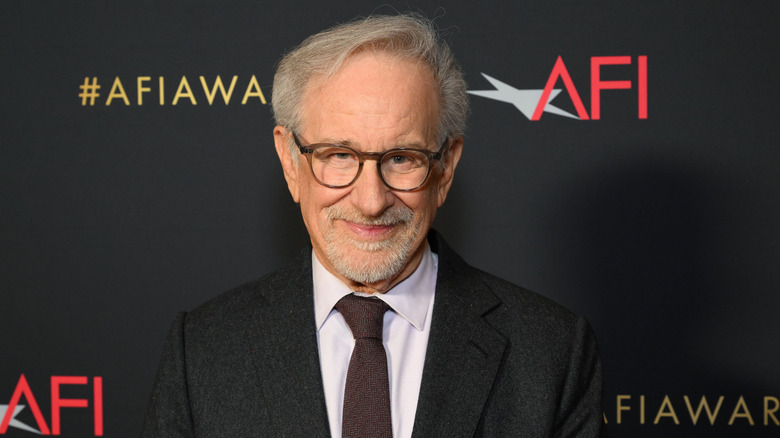
Perhaps no other director in history can match the amount of popular movies Steven Spielberg has made throughout his career. From "Jaws" and "Raiders of the Lost Ark" to "E.T.: The Extra-Terrestrial" and "Jurassic Park," Spielberg's ability to tap into the zeitgeist has been almost unparalleled (and that's not even mentioning hits he's produced like "Gremlins," "Back to the Future," and "Men in Black"). Spielberg almost singlehandedly changed the landscape of American cinema, pioneering the modern blockbuster and shifting studio focus towards big budget extravaganzas.
Because of his talent for crafting mass entertainment, many of Spielberg's critics have often accused him of infantilizing audiences. Yet with his Holocaust drama "Schindler's List" and his WWII epic "Saving Private Ryan" (both of which won him Oscars for best director), Spielberg proved he was capable of using that talent to tackle difficult subjects and making them palatable for broader audiences. With "A.I.: Artificial Intelligence," "Munich," "Lincoln," and "The Fabelmans," he's dug deeper and deeper with dramatically challenging material, and he's even applied that new maturity to blockbusters like "Minority Report," "Catch Me If You Can," and "War of the Worlds."
4. David Lynch
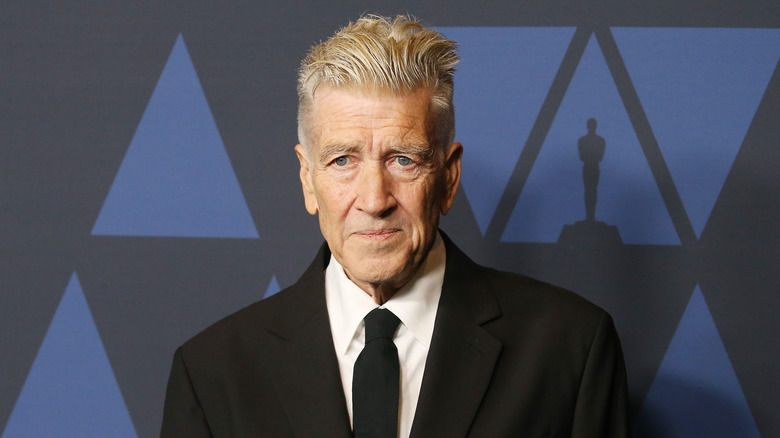
In both his films and his TV shows, David Lynch brought surrealism into the mainstream, and it can be said there will never be another like him. Starting with his 1977 debut "Eraserhead," Lynch tapped into his subconscious in ways that were terrifying, hilarious, and deeply moving. Growing up in small town 1950s America, he explored the darkness lurking beneath the red roses and white picket fences of suburbia. After moving to Los Angeles, he turned his microscope upon the artifice of glitz and glamour, finding the ugliness inherent in stardom.
Lynch's films are like his paintings: raw, vibrant, and unsettling. They're mixtures of his various influences, from noir to soap opera to slapstick comedy. Whether it was "Blue Velvet," "Mulholland Dr.," or "Lost Highway," Lynch didn't shy away from provocation, and his work was often filled with graphic violence and explicit sexual content. Yet there was a softer, gentler side, witnessed in "The Straight Story" and "The Elephant Man." One could almost say that Lynch pined for the cherry pie and sweet simplicity of "Twin Peaks," and was dismayed that even in that paradise, a beautiful girl like Laura Palmer could be found murdered, wrapped in plastic.
3. Stanley Kubrick
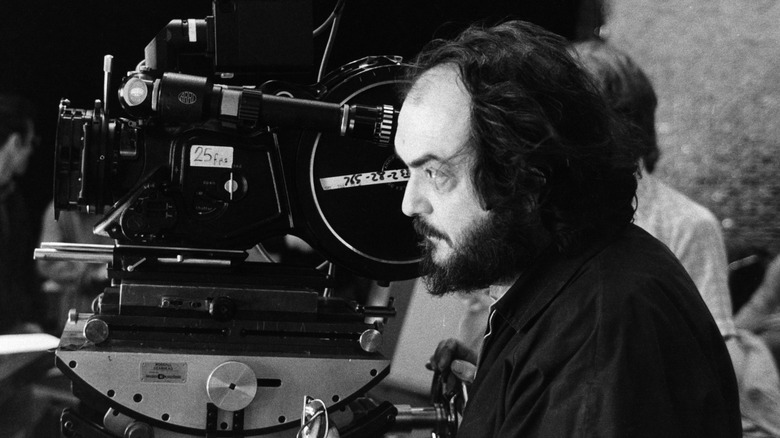
When most people think about movie directors, they probably have a picture in their head that closely resembles Stanley Kubrick. Famously reclusive and controlling, Kubrick was a perfectionist who went to great lengths to ensure his vision would be fulfilled. Although he only made a handful of films, almost all of his movies are seen as totemic masterworks of whatever genre he was tackling, whether dark comedy ("Dr. Strangelove"), sci-fi ("2001: A Space Odyssey"), period piece ("Barry Lyndon"), horror ("The Shining"), war drama ("Full Metal Jacket"), or erotic thriller ("Eyes Wide Shut"). His attention to detail was so precise that he often took on jobs most directors wouldn't, including supervising the special effects for "2001" (for which he won an Oscar). Even his unrealized projects — including the eventually Steven Spielberg-directed "A.I." – were famous.
Because of the subjects he tackled, Kubrick was often accused of being cold and pessimistic. Yet even his darkest films betray a sly wit and humanity in the face of despair. There's also a distrust of authority, a fear of technology, and an admiration for individualism, all captured with superb technical precision.
2. Martin Scorsese
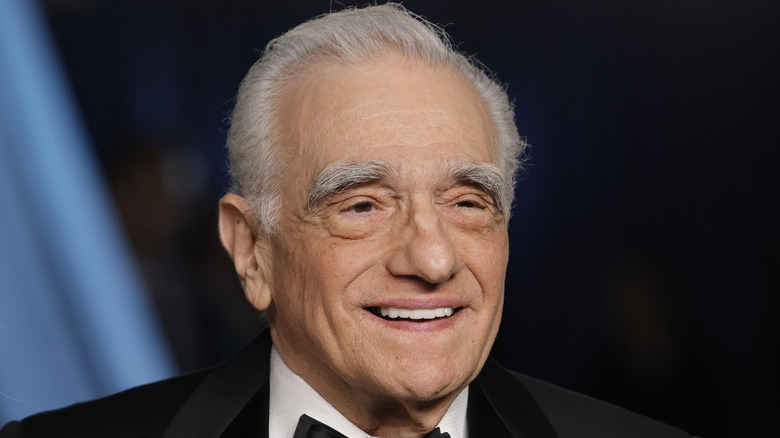
By the time Martin Scorsese finally won his Oscar for directing "The Departed," it felt as if a tremendous wrong had finally been righted by the Academy. And that's for good reason: Among the pioneering filmmakers of the New Hollywood, few have maintained as consistent a level of quality as Scorsese. Beginning with his 1973 breakthrough "Mean Street," Scorsese channelled his upbringing in New York's Little Italy neighborhood into personal stories of good and evil. He's explored the fractured psyches of lonely men with "Taxi Driver," "Raging Bull," and "The King of Comedy," while his gangster movies "GoodFellas," "Casino," and "The Irishman" have portrayed the mob with startling insight and bracing humor.
Having briefly considered becoming a priest, Scorsese's films are often characterized by a deep religiosity and sense of Catholic guilt, contrasted by sudden, brutal violence. His constantly roving camera, kinetic editing, and rock music soundtracks give his best films a propulsive energy, while his use of freeze frames and slow motion call attention to the craft behind the action. Yet to see "The Last Temptation of Christ," "The Age of Innocence," and "Silence" is to appreciate not just his range, but his ability to turn movie theaters into temples. There exists within all of us sinners and saints, and that contradiction is the great thematic exploration of Scorsese's career.
1. Alfred Hitchcock
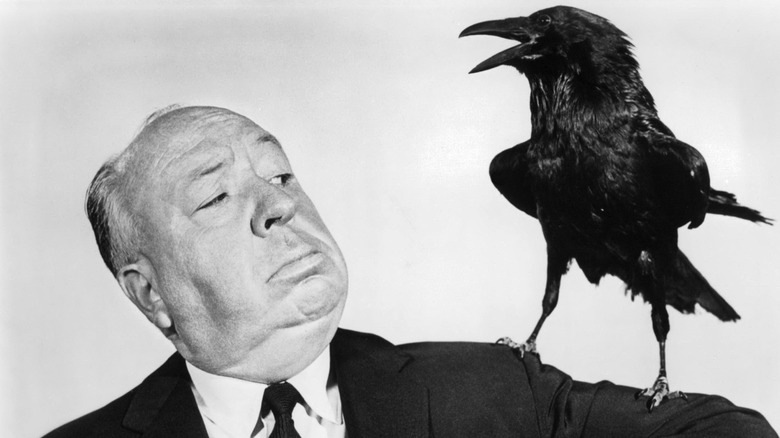
Has any other director influenced more filmmakers than Alfred Hitchcock? Whether it's Brian De Palma, David Fincher, or Park Chan-wook, there's hardly a director working today who doesn't cite the Master of Suspense as a major inspiration. It's understandable why, as few auteurs have so deftly blended art and commerce as Hitchcock did throughout his career, which spanned the silent era through New Hollywood. Whether it's his early British masterworks "The Man Who Knew Too Much," "The 39 Steps," and "The Lady Vanishes," his Hollywood hits "Rebecca," "Shadow of a Doubt," and "Notorious," or his late-career masterworks "Rear Window," "Vertigo," "North by Northwest," and "Psycho," there's hardly a Hitchcock film that isn't a must-watch.
Due to his box office success and his TV series "Alfred Hitchcock Presents," Hitchcock was one of the few movie directors to penetrate the popular culture, so much so that even his silhouette became famous. His visual and thematic style — characterized by deliberate camera movements, ice-cold platinum blondes, and wrongfully accused men — was so distinctive that it became known as "Hitchcockian." Although he went 0 for 5 at the Oscars (for "Rebecca," "Lifeboat," "Spellbound," "Rear Window," and "Psycho"), Alfred Hitchcock's best movies have stood the test of time, and "Vertigo" is often hailed as the greatest film ever made.