
10 Best Sci-Fi Shows Streaming On Netflix
You have a galaxy of options at your disposal when scrolling through Netflix. It might feel overwhelming, but when you're trying to find the next great science-fiction series to binge-watch, it's well worth the effort. From Netflix originals to shows that have found new life on the platform, there's bound to be something that sparks your interest.
You've undoubtedly heard of series like "Stranger Things" and "Black Mirror," but maybe you just haven't gotten around to checking them out yet. There are numerous major titles that'll give you a lot to chat about around the water cooler, but you don't want to overlook hidden gems. These are the shows that could make you recommendation royalty amongst your friends if you can turn them onto the next great sci-fi show that they can't stop thinking about.
As a genre, sci-fi is designed to inspire wonder. It's supposed to get you thinking about the future with stories that still have a lot to say about the past. Paramount+ has "Star Trek" while Disney+ has "Star Wars," but you won't feel left out when you watch some of the best sci-fi shows currently streaming on Netflix.
Stranger Things
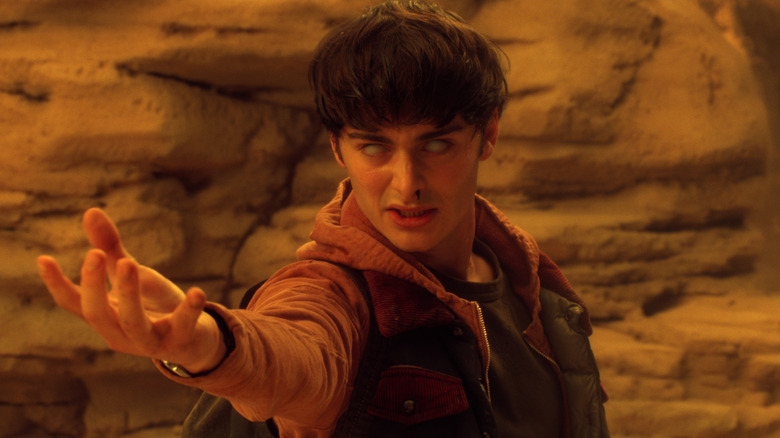
"Stranger Things" recently ended, and the finale has been a bit divisive to say the least. We're not going to lie; there are some truly awful moments in the "Stranger Things" series finale that put a damper on the once great show. And its documentary, "One Last Adventure," didn't exactly help smooth things over. But here's the thing: This was a flagship Netflix series for nearly a decade for a good reason. It was simultaneously an epic yet intimate look at a small town dealing with one crisis after the next, which begins with a young boy going missing.
Will (Noah Schnapp) disappears in the 1980s after a monster, known as a Demogorgon, abducts him. Will's friends are distraught, but they soon encounter a young girl, Eleven (Millie Bobby Brown), with incredible psychic abilities. During that first season, the show did an outstanding job of blending genres like mystery, sci-fi, and coming-of-age to create something wholly its own. Yes, the show wears its influences proudly. You can see shades of Stephen King, "The Goonies," and "E.T. the Extra-Terrestrial," but you mash all those things together to get something that's difficult to stop watching.
The quality stayed high for several seasons, too. Our ranking of every "Stranger Things" season has nice things to say about all of them, and once you start binge-watching and remember how good this show is, you might be willing to overlook some of Season 5's shortcomings.
Dark
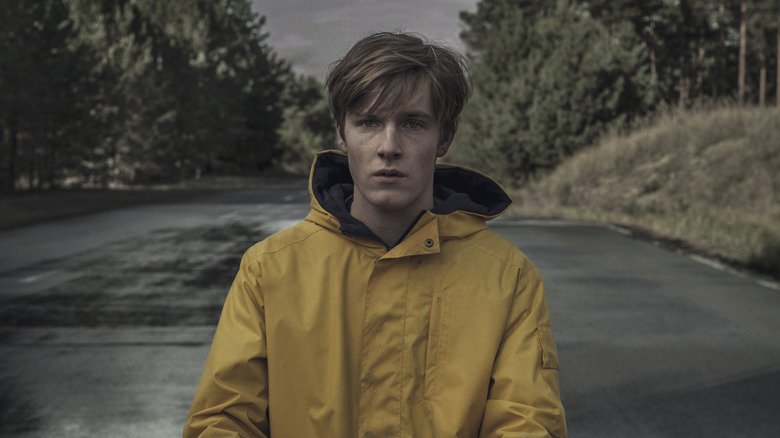
For anyone who has already watched all of "Stranger Things," they should definitely check out "Dark." It never quite reached the same level of cultural dominance, but it's worth your time and attention. Like "Stranger Things," "Dark" kicks off with a child's disappearance and a town trying to figure out what happened. The series boasts a massive ensemble cast filled with characters you're likely to feel conflicted about. No one is fully good or bad; people are just different shades of gray, and you're frequently presented with scenarios where you're forced to confront your own preconceived notions of someone.
This is one of those shows where you're best going in knowing as little as possible, but if you need a little sci-fi taste beforehand, just know that time travel is front and center. The storyline begins maneuvering through previous decades where all of the families learn things about their lineages that they may not want to know. And for fans of hard science-fiction, the time travel components are handled exceptionally well. You'll be too engrossed in how people confront dark secrets to worry about making sure every little thing makes sense.
That's not even getting into the cinematography, which is some of the most splendid you'll find in a Netflix original series bar none. "Dark" ended after three seasons, so it never overstayed its welcome. In just 26 episodes, you can have your mind blown time and time again.
Orphan Black
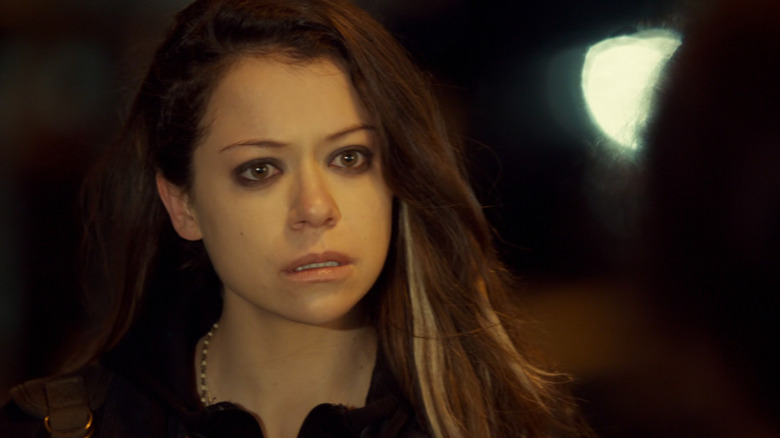
Any TV show lives or dies by its lead performance, but "Orphan Black" gives Tatiana Maslany the task of portraying not just one character, but a ton. She's introduced as Sarah Manning, a con artist who one day realizes she has a doppelgänger. But there isn't just one out there, as she discovers there are a ton of women who look just like her, and she realizes that she was part of a massive cloning experiment with someone out there trying to kill them all.
It's a brilliant showcase for Maslany, as each clone has their own distinct personality, making it a lot of fun to see how the actress embodies each character. But this also gets into an integral theme of the show, namely the concept of nature versus nurture. They're all identical genetically to one another, but being raised in different environments means each one has gone through a different life path.
The clones all have lives of their own prior to the revelation, as well, and their loved ones also have to contend with the fact this person they've known for years is part of a scientific experiment. The clones all try to retain what makes them special while on the run from shadowy organizations and religious groups trying to control them, which makes "Orphan Black" a great show for anyone who has ever felt on the outskirts of society.
Resident Alien
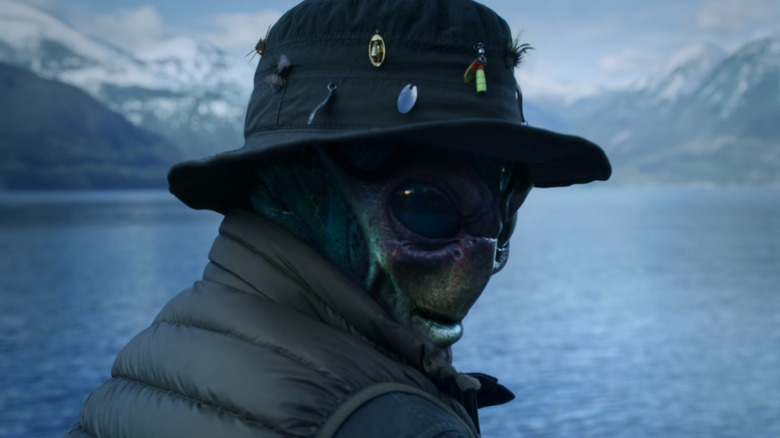
A lot of science-fiction shows tend to play their premises straight. They're mostly dramas, so it's nice to see a series like "Resident Alien" revel in the absurdity of its premise. The show follows an alien who takes on the moniker of Harry Vanderspeigle (played by Alan Tudyk) and assumes a human disguise so that he can blend in as a small town's doctor. Despite the fact that he was originally sent to Earth to kill off humanity, he soon develops an affection for the human race.
"Resident Alien" is the ultimate fish-out-of-water story. Much of the show's humor comes from Harry trying to fit in as a human and trying to throw the townsfolk off the scent that he's actually an alien. It actually becomes somewhat sweet how much the supporting characters accept Harry. He's definitely an oddball, but the beauty of humanity is how we're all a little weird and that's what makes friendships so powerful. The relationships Harry forges definitely play a role in his decision to help, rather than annihilate, the planet.
"Resident Alien" is a great sci-fi show to watch on Netflix, especially if you're not particularly a fan of the genre. Sci-fi can be tough to get into because you typically need to get accustomed to wonky terminology and heady concepts. "Resident Alien" is a fun, extra-terrestrial story that's more concerned with cracking jokes than offering a treatise on the nature of time or something.
Scavengers Reign
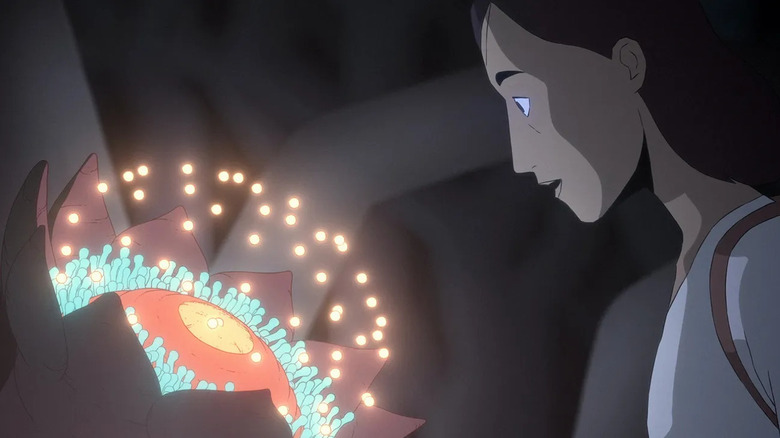
"Scavengers Reign" was a gorgeously animated sci-fi series that came out on Max (now HBO Max) in 2023. Sadly, a great storyline wasn't enough to save it from a swift cancellation, and any hope of continuing its story was dashed. Fortunately, those 12 episodes are now available to watch on Netflix, where hopefully it can garner a new audience to appreciate the impeccable storytelling on display.
"Scavengers Reign" follows three groups of survivors who are stranded on an alien planet. As they aim to reunite with one another, they'll have to contend with a strange world filled with dangerous (and occasionally helpful) animal and plant life. You, as the viewer, uncover how this world operates alongside the characters, and even though something looks beautiful on the surface, it could harbor dark secrets. The series doesn't pull any punches when it comes to violence, so "Scavengers Reign" definitely exists among cartoons you should never watch in front of your kids.
It's a simple story of survival, but it manages to create one of the most intricate worlds seen in any recent sci-fi show. It shouldn't function as a second-screen show because you'll miss all of the wonderful details of how everything in this planet's ecosystem functions as a whole.
Black Mirror
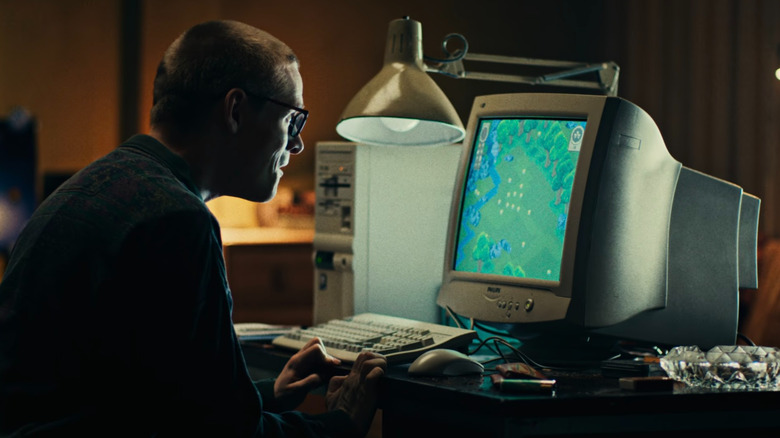
Some sci-fi shows are fun to watch because they present psychedelic alien worlds or dive into advanced scientific concepts like time travel. What makes "Black Mirror" so compelling is how it often only slightly exaggerates the technology we presently have to show how things can get so much worse in a short span of time.
"Black Mirror" is an anthology series, so every episode offers a different story. Typically, an episode centers around a piece of tech or social construct that goes horrifically awry. For example, "Nosedive" involves an app where people rate one another after every interaction. "The Entire History of You" shows the consequences of being able to access any memory you've ever experienced. On several occasions, "Black Mirror" has freakishly predicted technology's future, like "Be Right Back" having a widow bring back her deceased husband using artificial intelligence; this is something real AI apps have started doing, where people can "talk to" dead relatives.
Some episodes are certainly better than others, but when "Black Mirror" is firing on all cylinders, it's a chilling vision of what could come. Honestly, it's a chilling vision of what we already have, as people today are still obsessed with their phones and utilizing technology in a way it shouldn't be used. The truth is that we're already living in the world of "Black Mirror," and the best way to escape is to simply log off once in a while (after you finish reading this article, of course).
Sense8
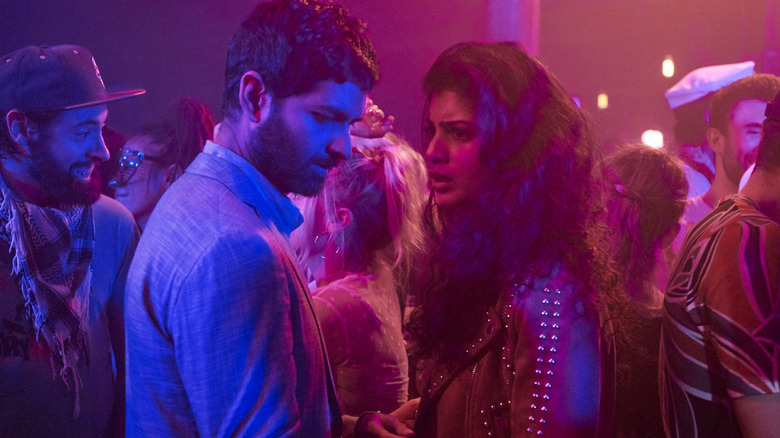
After making "The Matrix," Lana and Lilly Wachowski basically earned a series of blank checks to make whatever they want to make. The results haven't always been accepted by the public at large, but there's no denying their commitment to making maximalist works of art that stretch the boundaries of what's possible within the medium of film and television. "Cloud Atlas" is a sprawling epic across time, while "Speed Racer" offers hyper-stylized visuals to tell its story more efficiently. Neither were received particularly well (although "Speed Racer" has been reappraised in recent years as being ahead of its time), but that just means the Wachowskis' "Sense8" is also worth another look.
The series follows a group of eight people who discover they are "sensates," meaning they share emotions and skillsets, but that also makes them the target of hunters. "Sense8" explores a multitude of personalities and identities. The main cast of characters come from all over the world, and there are various LGBTQ+ characters, like Nomi (Jamie Clayton), who's a trans woman, and Lito (Miguel Ángel Silvestre), who's a closeted gay man.
It becomes clear the Wachowskis are interested in exploring themes of empathy and the idea that as different as we might all seem, we have far more in common than what separates us. Sadly, "Sense8" was cancelled after two seasons due to a high budget and difficulty marketing such a complex series. There was still more story to tell, but you can still appreciate what the Wachowskis were trying to do here.
Love, Death & Robots
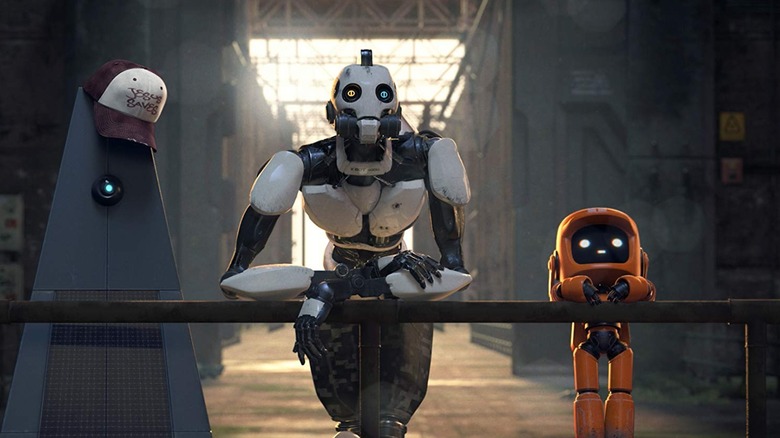
Like "Black Mirror," "Love, Death & Robots" is an anthology series, so you never quite know what you're going to get from one episode to the next. At least with "Black Mirror," you can be reasonably certain there will be commentary on modern technology. "Love, Death & Robots" runs the gamut of themes and philosophies as long as the storyline involves one or several of the three things within its title.
Some episodes are designed to be purely comedic, like "The Other Large Thing," which involves a cat recruiting a cleaning robot to assist it in its quest for world domination. Then you have the beautifully haunting "Zima Blue," which is about a pool tile cleaner gaining sentience and becoming a world-renowned artist, forcing questions of what it means to be human. Of course, every episode is animated in its own unique style with cel-shaded 2D, 3D motion capture, and even stop motion being on the table.
"Love, Death & Robots" represents something truly unique amongst Netflix's offerings. You can watch one episode of other sci-fi shows and decide right then and there if you're into it. But here, something that completely changes your worldview could just be a couple of clicks away.
Solar Opposites
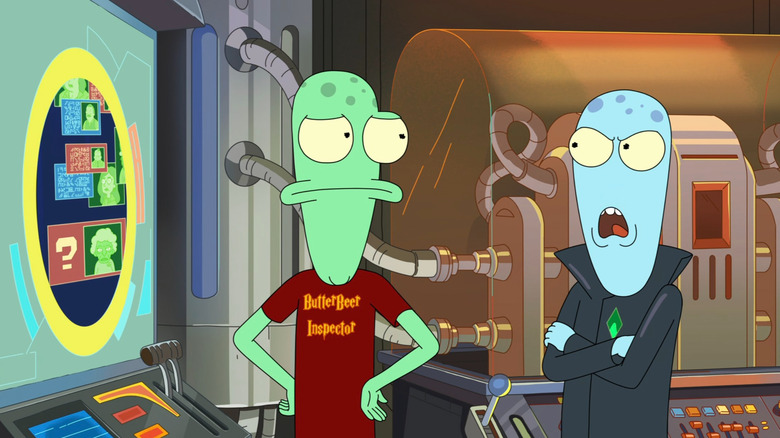
"Solar Opposites" has many similarities to "Rick and Morty," but whereas the latter is more interested in exploring outlandish sci-fi concepts, "Solar Opposites" is more interested in telling Earth-based stories with sci-fi gadgets and tropes thrown in. So you have plotlines like Terry (Thomas Middleditch) and Korvo (Justin Roiland, later Dan Stevens) using nanobots to spy on their neighbors to win an HOA election.
There are numerous zany storylines filled with dark humor and copious pop culture references, but the main thing that separates "Solar Opposites" from other animated sci-fi comedies is its surprisingly epic B-story. Korvo's replicant, Yumyulack (Sean Giambrone), shrinks down humans who mildly annoy him and put them into a giant ant farm where they engage in politics, religion, and war. The Wall storyline is interspersed within the rest of the action, and every season has at least one episode dedicated fully to fleshing out this conflict. It's a bizarre departure, but one that works as The Wall parodies post-apocalyptic media.
"Solar Opposites" ended on Hulu after six seasons, but you can now watch it on Netflix. It never quite reached the pop cultural zenith of "Rick and Morty," but that's almost a blessing, in a way. There was less pressure on the show to be revolutionary, so if you want some dumb, fun sci-fi misadventures, "Solar Opposites" is the way to go.
Archive 81
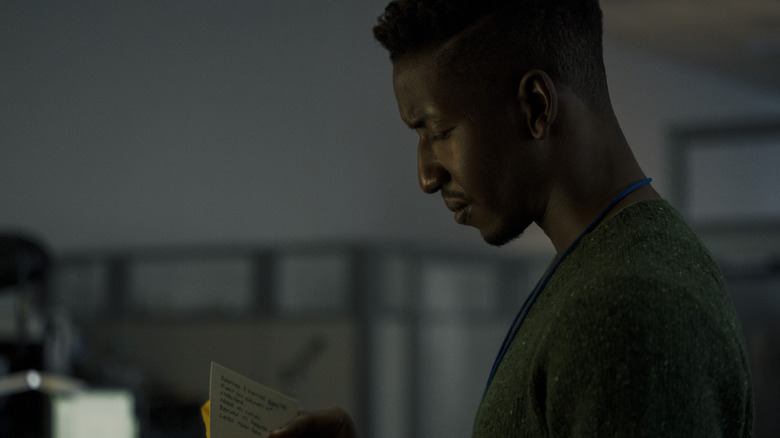
"Archive 81" is tragically one of many Netflix series that was cancelled after only one season. It's a shame because that first season shows a lot of potential for where future episodes could go, but it's still worth a look. The show follows Dan Turner (Mamoudou Athie), who's hired to restore old video footage of a documentary about a burned down building. However, this isn't a simple restoration project, and Dan soon becomes the target of a mysterious group. Sci-fi doesn't immediately present itself, but then the show presents an otherworldly dimension that Dan finds himself trapped in.
"Archive 81" also plays with mystery and horror tropes, and anyone who's a fan of lo-fi tech is sure to get a kick out of this. There's that classic VHS aesthetic within the tapes Dan sorts through. Plus, the sound design is second-to-none, with old-school clicks and hisses within the tapes that add to the foreboding vibe while still being very nostalgic for anyone who grew up with that media.
The show is definitely a slow burn, which sadly appears to be a detriment in the streaming era. Many people may only watch one episode of something, and if there's not an immediate hook, they'll give up. "Archive 81" is a show that rewards patience, and even though it ended far too soon, it may just lead you down a path of checking out more Netflix sci-fi gems.