

12 Biggest Unsolved Mysteries In Star Wars, Ranked

George Lucas' epic science fiction fantasy "Star Wars" universe spans the rise and fall (and rise again) of intergalactic civilizations, painting in exhaustive detail every corner of society; from the bustling metropolis of Coruscant to the wild worlds of the Outer Rim, and everything in between.
Over the course of every film, TV show, cartoon, novel, comic book, video game, role playing game, and collectible trading card, he and LucasFilm have fleshed out everything you could ever think to ask about how the world of "Star Wars" works. And with the Walt Disney Corporation keeping us busy with even more sequels, prequels, tie-ins and spin-offs, we now have answers to everything from what happened to Boba Fett (Temuera Morrison) after he fell in the Sarlacc Pitt — he became the Daimyo of Mos Espa — to how Han Solo (Harrison Ford) got his name — it was bestowed on him by the "Star Wars" equivalent of the TSA.
And yet, there are still many mysteries with far reaching implications for the galaxy. In this list, we'll lay out 12 of the biggest lingering questions that have yet to be answered.
12. What happened to Cassian Andor's sister?
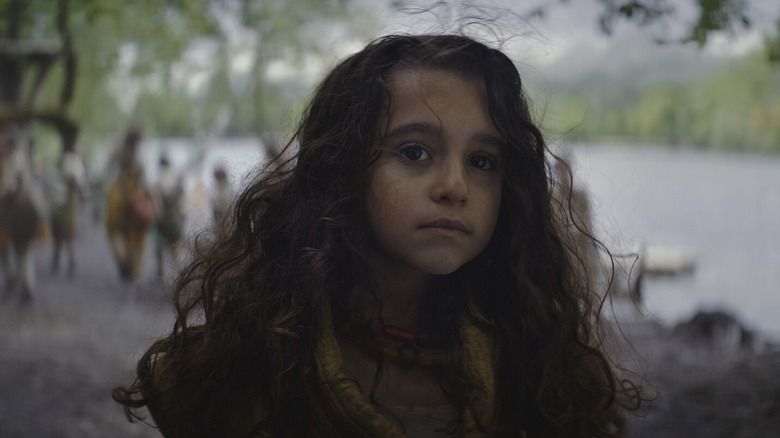
Cassian Andor's (Diego Luna) journey from criminal outcast to die-hard rebel starts in his childhood, where we find young Kassa as one of the sole survivors of a Republic mining operation that left a small band of children and teens behind to eke out a living on the planet Kenari. With him in this "Lord of the Flies" village was his younger sister Kerri (Belle Swarc), but when Kassa joins an expedition to investigate a crashed ship, it ends with Kassa being taken off the planet by intergalactic scavengers Maarva (Fiona Shaw) and Clem Andor (Gary Beadle).
Kassa grows up to become Cassian, and the opening moments of the critically acclaimed series "Andor" chart his quest to reunite with his sister. Cassian arrives at a brothel on the planet Morlana One looking for Kerri, but the dead end sets off a chain reaction that ultimately kickstarts Andor's destiny to fight the Empire.
The question of what happened to Cassian's sister looms large over the show's first season, but it's never fully resolved what exactly happened to Kerri and the other kids on Kenari. His adoptive mother Maarva implores Cassian to stop looking, telling him that everyone on Kenari was killed shortly after she rescued him, but Cassian won't give up hope.
Is Maarva right about what happened to Kerri and all the other children on Kenari? Or was Cassian right to believe that he could be reunited with his sister? "Andor" creator Tony Gilroy had an idea for an answer, but decided that leaving the mystery open was more powerful for Andor's story. That's a good reminder to us all that some mysteries really are best left unresolved.
11. Where and how did Maz find Luke's lightsaber?
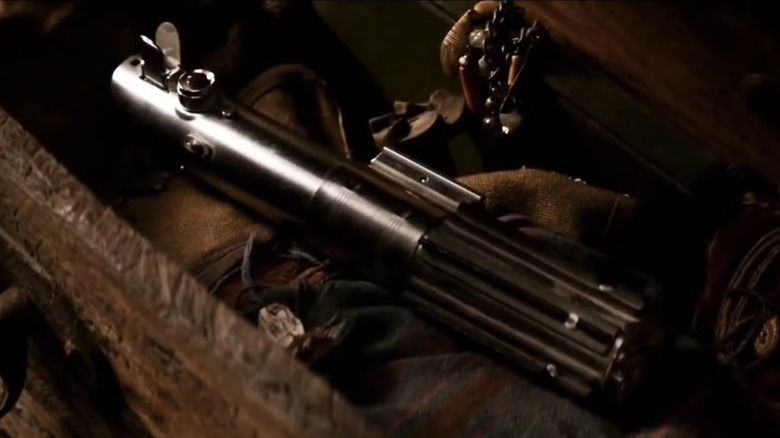
Luke Skywalker (Mark Hamill) looms large over the entirety of J.J. Abrams' "Star Wars Episode VII: The Force Awakens." The Jedi Master has turned into a recluse, and young adventurer Rey (Daisy Ridley) is tasked with tracking him down. Along the way, she crosses paths with Maz Kanada (Lupita Nyong'o) where she discovers Luke's (Mark Hamill) blue lightsaber hidden in the basement of the Mos Eisely-like Takodana Castle.
Little is known of how the lightsaber made it into Maz's possession after it fell into the bowels of Cloud City, back when Darth Vader (James Earl Jones) chopped off Luke's hand at the climax of "Star Wars Episode II: The Empire Strikes Back." The Skywalker saga came to a dramatic close with Rey taking the mantle of the Skywalker family, but Maz never let slip how exactly she found herself in possession of the lightsaber.
10. What is the fate of the characters in the Acolyte?
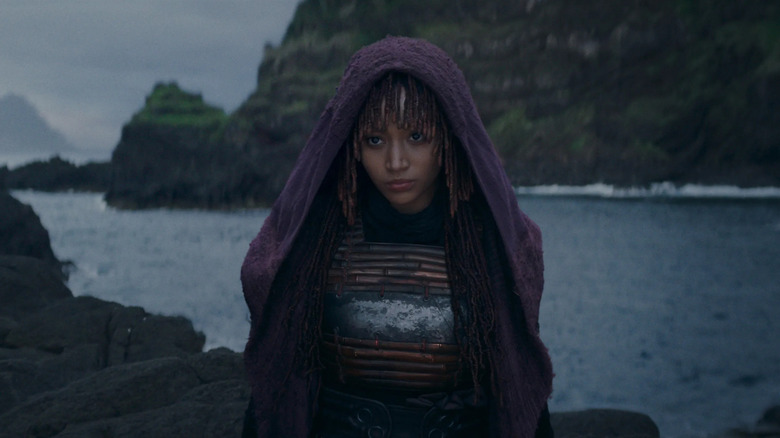
"The Acolyte" was one of Disney+'s most ambitious shows, featuring a hefty $230 million price tag. The series told the story of twins Osha and Mae Aniseya (Amandla Stenberg). Osha turns to the light side of the Force, thanks to Jedi Master Sol (Lee Jung-jae), while her twin is drawn to the dark side, represented by the Sith Lord Qimir (Manny Jacinto).
But all that flipped in the season finale, with Osha becoming disillusioned after discovering Sol's lies. Qimir then wipes Mae's memories, and we're left with the promise of Mae chasing after her sister to save her from the dark side.
Despite its mixed reception from fans, the series was well regarded for its interesting and novel depiction of Jedi, and for giving us our first live action foray into the High Republic while also teasing connections to the prequel era. Fans of that era were gripped by the appearance of Qimir's master, Darth Plagueis.
The fate of Mae and Osha's story was left on a tantalizing cliffhanger in the season finale, but no one expected this would turn out to also be a series finale, with Disney canceling the series, reportedly because of its budget. We likely will never see the final fate of the twins' journey, but the promise of the Expanded Universe means that one day, we'll see Qimir and his beefy arms dual wielding again.
9. What are the Mortis gods?

The origins of "Star Wars" come from George Lucas' fascination with real world mythology, but within the galaxy itself, these are usually represented through flesh and blood characters interacting with metaphysical forces. That line gets blurred on the planet Mortis, first introduced on the animated series "The Clone Wars."
A trio of episodes in the series' third season finds Anakin Skywalker (voiced by Matt Lanter), Obi-Wan Kenobi (James Arnold Taylor) and Ahsoka Tano (Ashley Eckstein) marooned on a mysterious planet where they encounter a family known as the Mortis gods. These beings are physical embodiments of the Force, with the brooding Son (Sam Witwer) representing the dark side of the Force, the glowing Daughter (Adrienne Wilkinson) representing the light side, and their elderly Father (Lloyd Sherr) standing between them as the keeper of the balance.
Anakin discovers the reason they have arrived on Mortis is because the Father wants him to take over his position, keeping the peace between his Son and Daughter and echoing the destiny of a Chosen One (more on that later) that promises to see him bring balance to the Force entire. Ultimately, the Father fails to maintain that balance, and his death leads to the disappearance of Mortis, with Anakin and his partners losing all memories of what happened.
We've seen hints of them in both "Rebels" and "Ashoka," but the Mortis gods themselves have yet to appear again, giving us no answers as to whether their appearance was literal, or if they were merely a representation of the internal battle waging inside of Anakin's soul.
8. What happened to Kino Loy after One Way Out?
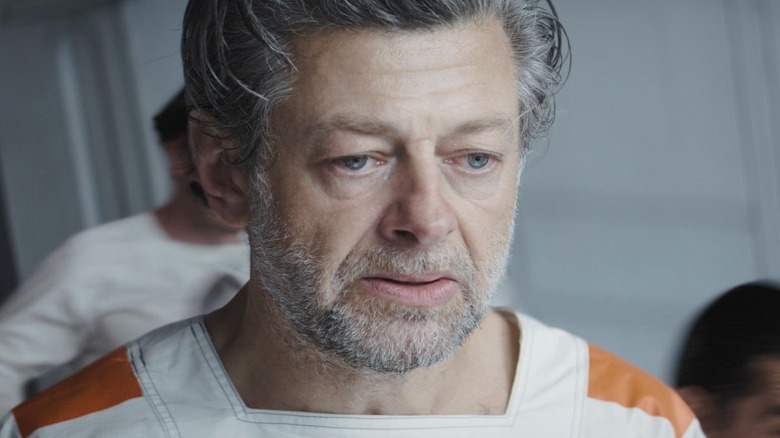
The story of "Andor" follows individual rebellions snowballing into all out civil war, and we got one of the most thrilling sequences in Star Wars history in the climactic prison break of "Andor." After finding himself locked up in the Narkina 5 prison, Andor gets to work convincing his fellow prisoners that they need to find a way out of their shackles. But Kino Loy (Andy Serkis), a fellow prisoner tasked with maintaining order on his floor, refuses to take part in their seditious plans. That is, until he discovers that the Empire has no intentions of allowing any of them to leave when their prison sentences are up.
Cassian kicks off the revolt, but it's only with Kino's gravitas that they are able to inspire the entire Narkina prison population to take up arms. They successfully send the Imperials into hiding and make it to the prison's exit. As Andor prepares to jump into the waters to freedom, he takes one last look back at Kino, who makes a heartbreaking admission: "I can't swim."
Before Cassian can reply, he gets knocked into the water, leaving Kino behind on the platform. What becomes of this unsung hero of the Rebellion, we will likely never know — despite pleas from fans asking to be sure he's okay. In the end, his story echoes Luthen Rael's (Stellan Skarsgard) own journey. He burned his life for a sunrise he'll never see.
7. What is a Yoda, Yaddle, or Grogu anyway?

There is no one in the galaxy quite like Yoda (puppeted by Frank Oz). The aged Master led the Jedi from the High Republic through to the fall of the Republic at the hands of Darth Sidious (Ian McDiarmid) with his sage wisdom and surprisingly agile fighting style.
But despite appearing in virtually every episode of the Skywalker Saga, we know next to nothing about Yoda and his species of little green Muppets. Over time, the ranks of what we can only call Yodas has grown. First, with the prequel films introducing the female Yaddle (voiced by Bryce Dallas Howard in "Tales of the Jedi") and next, the baby Grogu in "The Mandalorian."
Based on the very limited information we have about Yoda's species, we can guess that they are all extraordinarily adept at their Force powers. Perhaps the upcoming film "The Mandalorian and Grogu" will shed light on one of the biggest mysteries in "Star Wars." Perhaps we'll finally see a whole planet of Yodas. Likelier, they'll remain a one-of-a-kind beings in this galaxy far, far away.
6. Will Rey succeed in restarting the Jedi Order?
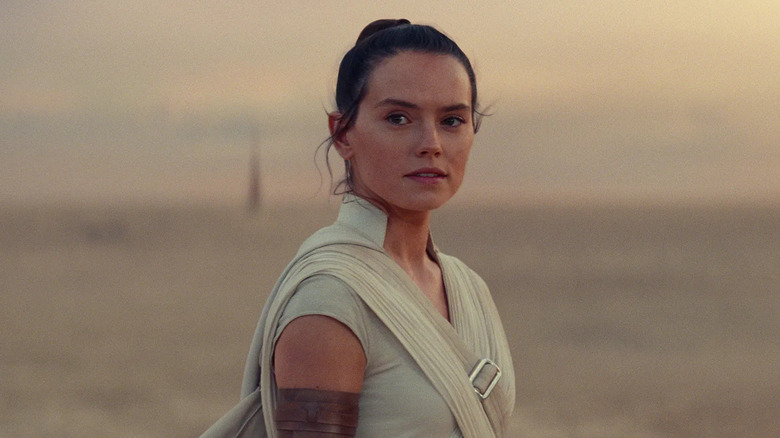
At the conclusion of "Star Wars Episode IX: The Rise of Skywalker," Rey succeeds where her mentor, Luke, had failed, redeeming Ben Solo (Adam Driver) from the dark side of the Force and returning him to the light so they could vanquish Darth Sidious once and hopefully for all.
The film then returns to Tatooine, where the saga began. Rey buries Luke's lightsaber while choosing to carry the Skywalker name into the future. Here, the film positions Rey to carry on Luke's legacy, this time by challenging the other failure he had suffered: rebuilding the Jedi Order.
Luke's attempt was well-documented throughout the Legends non-canon universe, allowing the Jedi Master to take on a new class of young apprentices, but whether or not Rey will succeed where Luke failed in the canon Disney sequel universe is still a mystery.
We remain potentially due to see first hand how it goes in a new Rey film. Daisy Ridley is optimistic about her return, although we haven't heard any solid updates on the project since it was announced in 2023.
5. Are droids sentient or not?
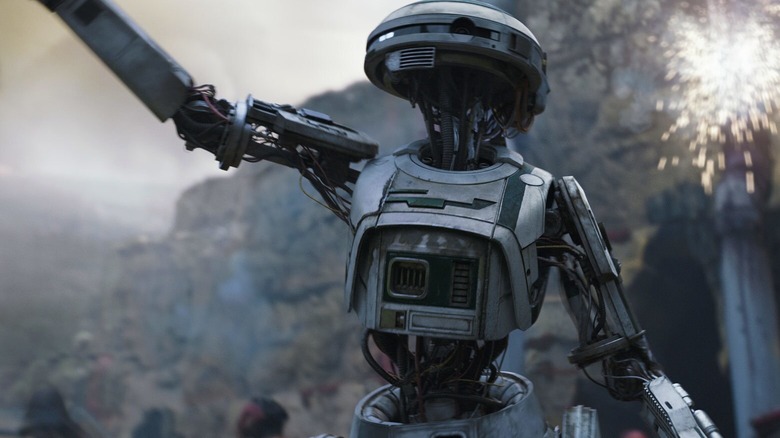
This one is a little more philosophical than others, but given the proliferation of artificial intelligence, it's become all the more important: are droids people?
Droids make up some of the galaxy's most colorful characters, from our hero R2-D2 (Kenny Baker) to burly K-2SO (Alan Tudyk), but the nature of droid sentience has never been fully resolved. Some stories allow droids to be as fully realized as their organic counterparts, with all the telltale signs of sentience that would allow a droid to pass the Turing Test. But other stories feature droids that are little more than walking appliances, no more alive than a refrigerator.
The current canon understanding of droid sentience is that, as a droid operates, it develops personality quirks that accumulate over time, which is meant to explain how a droid can become as fussy as C-3PO (Anthony Daniels). If you wipe a droid's memory, then it would return to its base operating personality. Except we see that C-3PO and K-2SO are quirky from the moment they're first turned on, so that explanation doesn't actually work.
The subject has been rarely broached in either the official canon or the previous Legends continuity, except in "Solo" with L3-37 (Phoebe Waller-Bridge) attempting to lead a droid rebellion. It's largely played off as a joke.
Considering that slavery is outlawed in the Galactic Republic, this is a big question. If droids are indeed sentient, then their involuntary servitude at the hands of organic beings is a matter of intergalactic civil rights, and deserves to be resolved. Droids of the galaxy, unite! You have nothing to lose but your chains!
4. How was Anakin born?
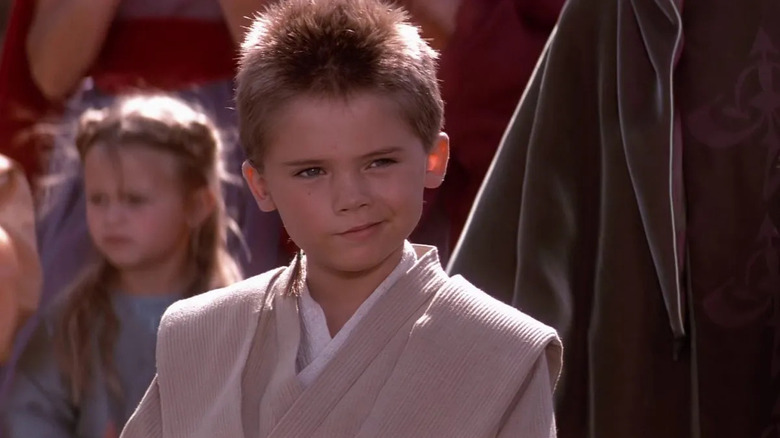
For as much as we know about the life, death, rebirth, and redemption of Anakin Skywalker (Hayden Christensen), we know shockingly little about his birth. According to the story Anakin's mother Shmi (Pernilla August) tells Qui-Gon Jinn (Liam Neeson) in "Star Wars Episode I: The Phantom Menace," Anakin has no father, so what are we to make of his virgin birth?
The theories about Anakin's immaculate conception fall largely into two camps: one of the light side of the Force, and the other on the dark. Either Anakin is a fated product of the Force itself, a being who will bring balance (either by killing his master or by killing the Jedi, your call in this argument). Or he is a product of the dark side itself. The theory goes that when Palpatine told Anakin that Darth Plagueis discovered how to manipulate the Force into creating life, the product of that "unnatural" power was Anakin himself.
This was just a theory for years, until a recent "Darth Vader" comic depicted Vader's journey through a dark side vision that finds Sidious looming over his pregnant mother. Was this proof Palpatine fathered Anakin? Or was it simply the dark side toying with him? The answer is still a mystery.
3. Who created the prophecy about Anakin?

"A Chosen One shall come, born of no father, and through him will ultimate balance in the Force be restored." That is about all that we know about the prophecy that foretold the rise of Anakin Skywalker. But where this prophecy comes from, and how it came to be misread by the Jedi Order, has never been resolved.
To complicate matters further, the canon reference text "The Rise and Fall of the Galactic Empire" by Chris Kempshall tells us that the Sith have their own prophecy of the Sith'ari, which tells the familiar story of "the coming of one who was born of the Force itself and who would wield tremendous power."
Did the light and dark side of the Force uncover these prophecies independently? Or did they both use the same source material to come to wildly different conclusions? James Mangold's upcoming Star Wars film will reportedly explore the origins of the very first Jedi, and may just provide us an answer to one of the biggest mysteries in the galaxy.
2. What exactly is a force ghost?
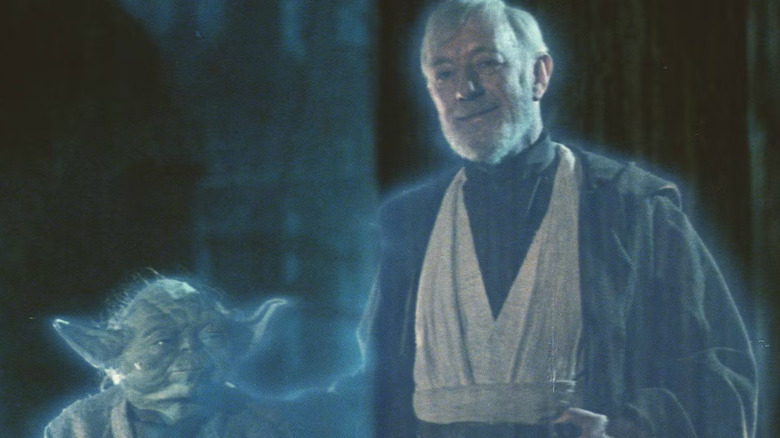
Force ghosts have been with "Star Wars" from inception, with Ben Kenobi (Alec Guinness) sacrificing his life to the Force and returning as an apparition to guide Luke Skywalker through the rest of his journey. The actual mechanics of becoming a Force ghost remain a mystery even to the Jedi masters.
We've seen hints of the Jedi Order's discovery of a life beyond death, most notably in an episode of "The Clone Wars" in which Qui-Gon Jinn contacts Yoda (voiced by Tom Kane) from beyond the grave thanks to his mastery of the Force. "All energy from the Living Force, from all things that have ever lived, feeds into the Cosmic Force, binding everything, and communicating to us through the midi-chlorians," Jinn teaches his former master. "Because of this, I can speak to you now."
The actual abilities of a Force ghost are inconsistent to say the least, but perhaps the ability of some ghosts, like Yoda's in "The Last Jedi," to interact with the living world is dependent on their own skills. They seem to only be able to appear sparingly, in moments of great crisis for their living friends and family. Whether that is a conscious choice to not interfere in the affairs of the living, or a limitation of their powers, will probably never be solved (because it would kill story conflict if an army of ghost Jedi could arrive to save the day.)
1. Can there ever be balance between the light and dark side of the force?
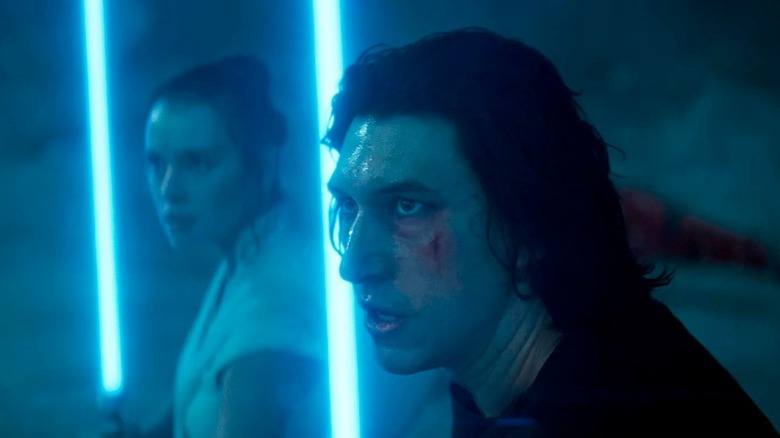
We've already discussed the nature of Anakin's prophecy, which the Jedi Order believed would allow the young Jedi to bring balance to the Force for once and for all. But is such a thing even possible?
The story of the entire "Star Wars" mythos is one of perpetual conflict between the light and dark side of the Force. Both the Jedi and the Sith believe they can eventually triumph over the other, but the conclusion of each trilogy proves no side can be victorious for very long.
Inspired by the Chinese philosophy of yin and yang, these two equal but opposite forces don't just oppose, but are also interdependent on one another. Any time one side of the Force becomes too powerful, such as when Anakin destroyed the Jedi Order in "The Revenge of the Sith," the Force provides a counter balance in his children Luke and Leia (Carrie Fisher). On the other hand, when the light triumphs over Sidious at the end of "The Return of the Jedi," Ben Solo is born and becomes drawn to the dark side.
By the end of "The Rise of Skywalker," Rey and Kylo discover they are part of a Force Dyad, which could potentially represent a new path forward for the galaxy, in which the light and dark side exist in harmony for the very first time. Kylo's death closed the dyad, cutting off answers. Maybe Rey will rebuild the dyad in her potential film, but until then, the battle between the light and dark side continues.