

8 Sci-Fi TV Shows That Fell Apart After Their First Season

For audiences who love to explore new realities with new rules, science fiction is the perfect escape. It's become a more mainstream genre on television in recent years, thanks to these preferences and a rise in high-budget television productions. With "Game of Thrones," HBO showed creators in the industry that seemingly niche genres can be lucrative and appeal to a wide range of viewers. Franchises like "Star Trek," "Star Wars," and "The Lord of the Rings" have always enjoyed robust fanbases, but were still largely seen as niche interests. Now, more people are willing to give speculative and highly imaginative fiction a shot.
Since "Game of Thrones," many interesting, successful genre shows have cropped up. Netflix had a veritable hit on their hands with "Stranger Things," and Apple TV+ has built a solid slate of sci-fi hits with shows like "Severance," "Silo," and even recent breakouts like "Murderbot" and "Pluribus." Unfortunately for audiences and creators, not every sci-fi series has been able to maintain its quality in the long term. Sometimes, people seemingly have a great idea for one season of television without seeing how it might successfully continue beyond that. We made a list of sci-fi shows with the most promising opening seasons and subpar follow-ups. If you haven't watched these series yet, beware of spoilers below.
Westworld
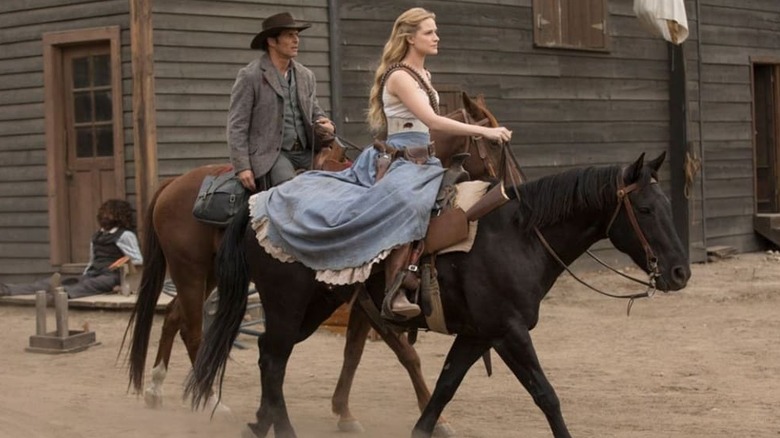
When "Westworld" premiered in 2016, it seemed like the next big thing for HBO. Not only was it released well before the end of HBO's tentpole epic, "Game of Thrones," but it also attracted the kind of critical buzz and widespread audience appeal that every TV network and streamer in Hollywood had been clamoring for since the smashing success of "Game of Thrones." With a notable budget and a stellar ensemble cast— including Anthony Hopkins, Evan Rachel Wood, Ed Harris, Jeffrey Wright, and Thandie Newton, among others — the first season of "Westworld" brought an exciting new landscape to the small screen and provided a boatload of juicy mysteries for viewers to sink their teeth into. "Westworld's" Western-inspired sci-fi aesthetic helped it remain a visually arresting epic for its entire four-season run, but the plot failed to maintain the same level of quality.
From the start of Season 2, "Westworld" became much more complex and much less artful. As audiences reckoned with the constant question, "Is that character a host?" the characters themselves ventured in and out of a mysterious universe, attempting to gain or retain agency. While Season 2 still has well-earned moments and well-shot scenes, it simply lacked the magical cohesion of the first season. The fall of "Westworld" is one of the most disappointing instances of failed TV in recent history due to the promise of its premiere season, but the rest of its seasons simply couldn't revive that elegance.
Wayward Pines
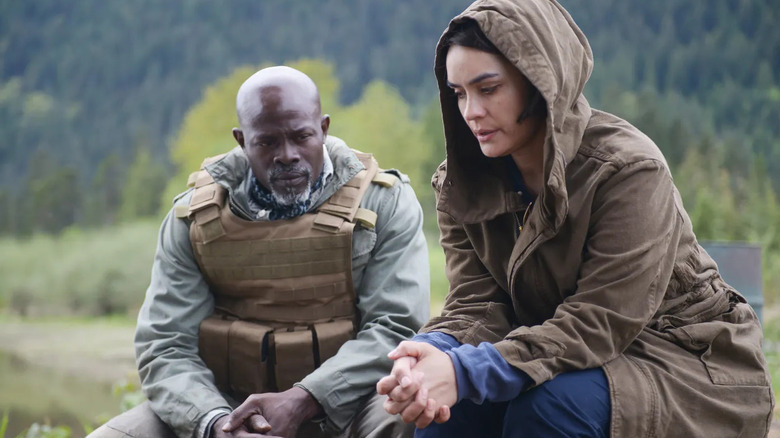
"Wayward Pines" was lauded by critics and savvy TV viewers as the next great TV mystery series after premiering in 2015. M. Night Shyamalan directed the show's incredible pilot, which follows a secret service agent named Ethan Burke (Matt Dillon) who comes to a small town called Wayward Pines to investigate the disappearance of several colleagues. The premise was original and engaging from the start, with a well-curated cast and many different clues and puzzles for viewers who look for such things. For some reason, the people of "Wayward Pines" are trapped there, kept in by an electric fence and an intimidating town sheriff. When people try to escape, they face lethal consequences, and the reason for all of this was the central mystery of the first season.
"Wayward Pines" was canceled after just two seasons, despite its strong start. The show fell prey to the same issues that many other shows have suffered, with the addition of far too many new characters and variables in Season 2. With the death of Ethan Burke in Season 1, viewers lost their central point-of-view character, and instead of moving the focus to another character from Season 1, the whole show refocused and became something different. Instead of a quiet, simmering pot of tension, the town and climate of Wayward Pines became an all-out war zone. The story traded nuance for violence and action, and as a result, it lost the spark of intrigue that made it so exciting in the first place.
Dollhouse
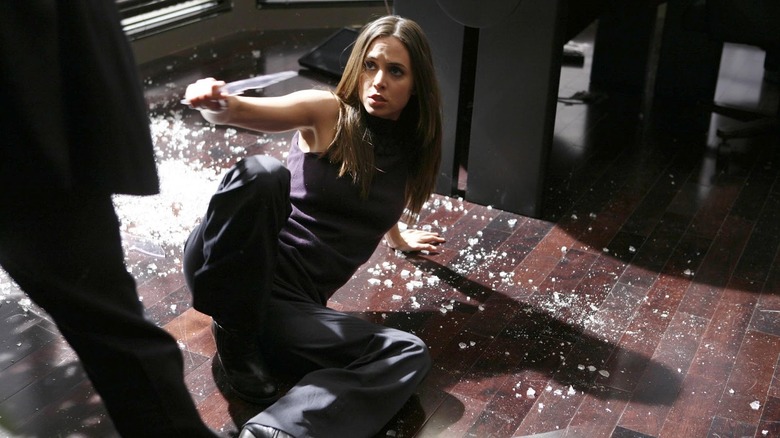
Before director and creator Joss Whedon's abuse controversy and subsequent career tank, and even before he directed the first "Avengers" film, he was known best for creating imaginative, genre-heavy TV series like "Buffy the Vampire Slayer." Not all of Whedon's projects lasted as long as "Buffy," but they've all made an impression, including "Dollhouse," a series led by "Buffy" alum Eliza Dushku. Dushku plays Echo, a "doll," whose job is to remain a "blank slate" until she's hired out to fulfill various roles for the Los Angeles Dollhouse. It's an arm of a larger organization that rents out humans to high-paying clients, and Echo is an Active: someone who has their mind totally rewritten with a new personality and memories for every mission. The premise is high-concept but fascinating, and the first season unravelled Echo's experience beautifully.
Season 1 brought to viewers a well-paced mystery and several fascinating characters, and then Season 2 dropped any pretense of nuanced storytelling and became a philosophical allegory for the dangers of unethical technological advancement. It was always an allegory, but the first season used its "freak-of-the-week" format — each week finding Echo embroiled in a new identity and mission — to give viewers breathing room. It's not surprising that "Dollhouse" didn't make it past two seasons when the show shifted so comprehensively between Seasons 1 and 2. The ending of "Dollhouse" Season 2 felt like it ought to be the culmination of seven seasons of television, not like a successful sophomore season for a burgeoning hit.
Altered Carbon
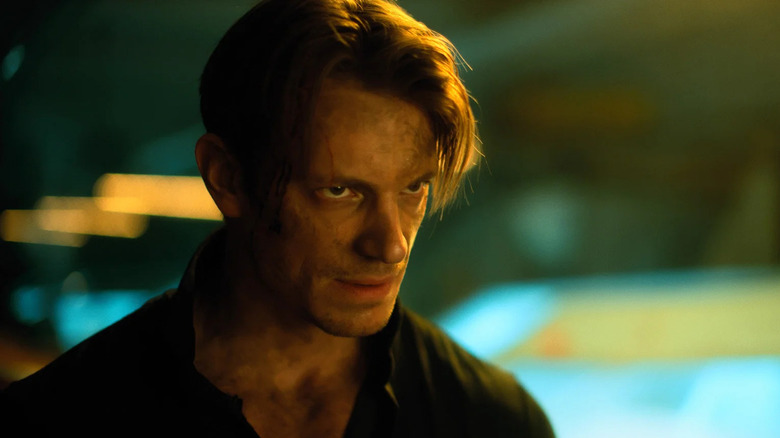
"Altered Carbon" gave viewers an incredibly strong first season, something that's not easy to do when working with a plot that relies on so many futuristic technological concepts. The show, based on a 2002 novel of the same name, follows an investigator named Takeshi Kovacs (Joel Kinnaman) whose consciousness is uploaded into the body of another person by a wealthy man who needs help solving his own murder. Kovacs takes the opportunity to leave prison, where he has been held for hundreds of years, due to his participation in a galactic rebellion of a group called the envoys. This may sound like a lot of exposition and complexity, but the show delivered everything through a saturated, noir lens with a compelling main character and plenty of tension-filled scenes.
Because Kovacs is able to be uploaded into different "sleeves" (bodies), Season 2 found him occupying a new body, this one played by Anthony Mackie. Despite Mackie's natural talent, the show suffered from the loss of its former lead's sweltering intensity; Anthony Mackie has a natural warmth that lends itself to many successful roles, but Kovacs wasn't one of them. When a Netflix series fails to attract the same or greater level of audience and/or critical hype in its sophomore season, it's highly likely to be axed by the cancellation-happy streamer. But ultimately, fans think "Altered Carbon" got canceled because of its thin writing and Mackie's miscasting. Folks have also cited the show's large budget as a problem, given that Netflix is less likely to continue investing in a series that costs them much more than they're making.
Stargate Universe
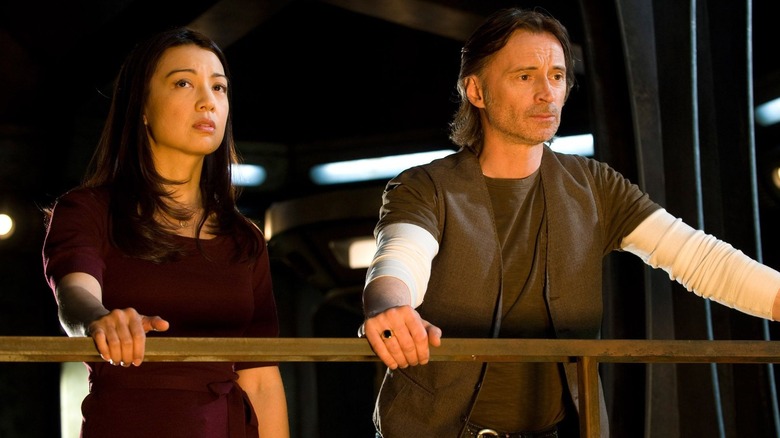
With the recent mainstream popularity of sci-fi, it makes sense that existing intellectual property in the genre has been revisited. Alongside new shows in both the "Star Wars" and the "Star Trek" universes came another installment in the world of "Stargate." "Stargate" was a fairly serious 1994 film starring Kurt Russell and James Spader about visiting an alien planet via a galactic portal called a Stargate. A few years later, a television show was developed from the lore of the film, and new actors (Richard Dean Anderson and Michael Shanks) were cast to replace Doctor Daniel Jackson and Colonel Jack O'Neill. The show was called "Stargate: SG-1," and ran for 10 seasons with a dedicated fanbase. It even spawned a fairly successful spin-off called "Stargate: Atlantis."
The most recent installment in the "Stargate" series is called "Stargate Universe," and it premiered in 2009. The show followed a new, makeshift team of scientists, cultural specialists, and military personnel as they explored new galaxies with a special kind of long-distance Stargate dialing method. Despite a positive reception from critics during its first season, "Stargate Universe" was canceled after its second, with its home network, SyFy, explaining to disgruntled fans that ratings had fallen quite a bit over the course of Season 1. Lou Diamond Philips, a regular "Stargate Universe" guest star, told Looper that he believed the show's drop in ratings occurred due to its dark slant (one darker than "SG-1" and "Atlantis"). The show struggled to balance its edge with the parts of the "Stargate" universe that make it special to fans.
Heroes
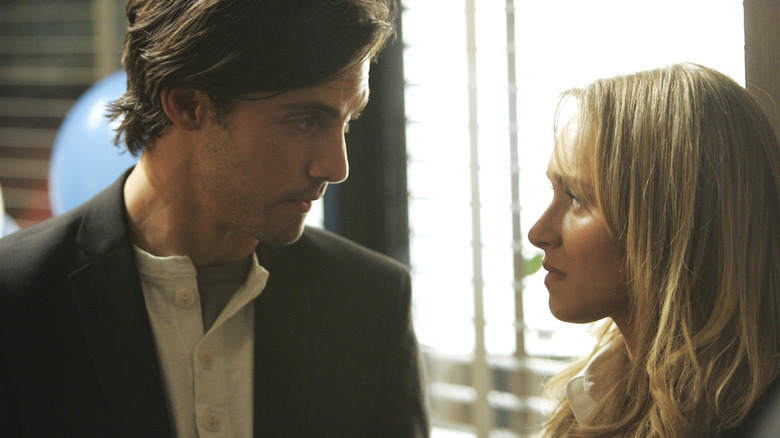
NBC seemingly had the perfect response to ABC's sensational success "Lost" when "Heroes" premiered to fantastic reviews and audience ratings. The series was immediately gripping, depicting various people who woke up one day to find themselves in possession of inexplicable powers. From cheerleading teen Claire (Hayden Panettiere) and her invulnerability to Matt Parkman (Greg Grunberg), a police officer with the ability to read minds, "Heroes" was immediately teeming with compelling, exciting characters for viewers to root for. The show also found a perfect first villain in Zachary Quinto's Sylar, an unsettling serial killer with the ability to steal everyone else's powers.
Unfortunately, fans largely agree on when "Heroes" started to stray: early in Season 2. With the show's attempt to introduce complex answers to overarching questions and new villains, as well as its effort to bring its characters together from several very different locations, it simply could not sustain the same quality of Season 1. Season 2 of "Heroes" was also truncated thanks to the writer's strike of 2007, which likely contributed to the reasons for its eventual cancellation, but the show remained on air for two more seasons afterward. It was never as good as in Season 1, though, and "Heroes" has often been considered one of the biggest television disappointments of the last decade.
The OA
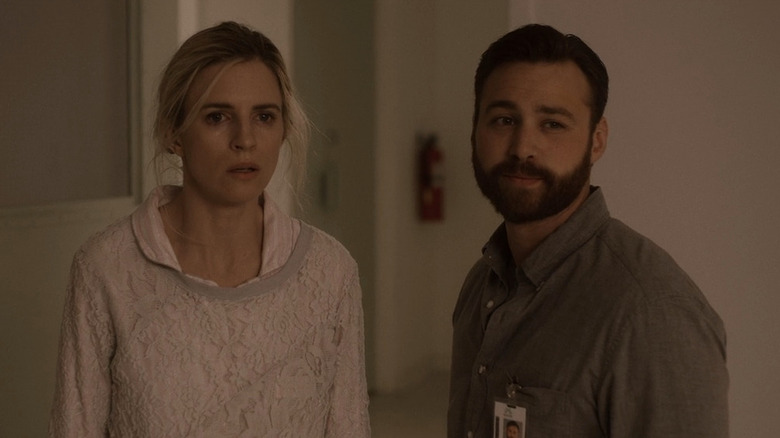
There isn't another show exactly like "The OA," and that's both good and bad. The Netflix original's first season follows a young woman named Prairie (Brit Marling) when she is discovered after having been missing for seven years. Not only is she found, but she's also no longer blind, as her parents point out in shock. The show offers a second timeline revealing Prairie's experiences during her absence, wherein she meets a man called Hap (Jason Isaacs) who abducts her and keeps her locked up with a small group of people, all of whom have had a near-death experience, including Prairie. Both timelines intertwine relatively well, and while there are some dumb things in "The OA" that viewers have to ignore in order to enjoy it, suspending that disbelief feels worth it during Season 1.
Season 2 finds Prairie in an entirely new dimension and fails to quickly answer any of the questions viewers were left with at the end of the first season. Netflix never gave a public reason for canceling "The OA" after Season 2, but there are several possibilities as to why the streaming juggernaut cut its losses. Instead of attempting to expand accessibility to new audiences in Season 2, the minds behind "The OA" leaned even further into the strangest parts of the show. Even some of the viewers who had stuck around through Season 1 couldn't find the patience to watch an all-knowing, telepathic octopus, and as a result,"The OA" is a TV show that will never be completed.
Squid Game
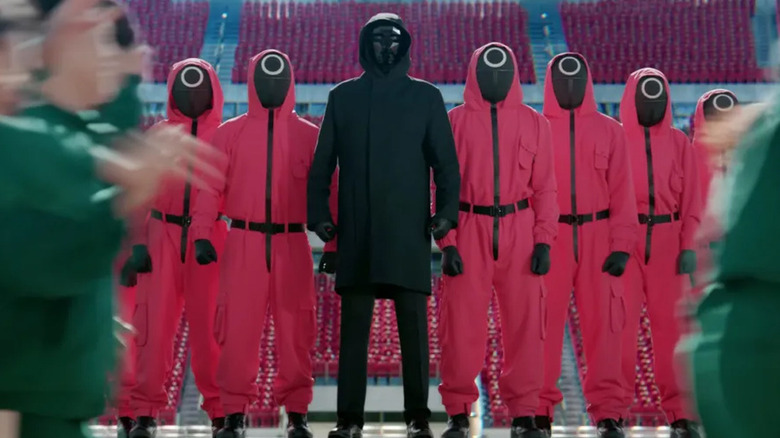
While the COVID-19 pandemic was a seriously trying time for people around the world, it also provided some rare opportunities for shifts in culture and industry. One such shift found Hollywood celebrating foreign films far more than ever before, largely because many American film projects were tabled, stalled, or canceled due to the pandemic. Movies like "Parasite," which, to be fair, had already attracted attention before the pandemic was fully acknowledged in the U.S., opened the door for non-English language projects to make waves with American audiences. After "Parasite" won Best Picture at the Academy Awards in 2020, a new, Korean-language series called "Squid Game" premiered on Netflix.
"Squid Game" was a veritable sensation and a huge success for Netflix. The dystopian series chronicles a mysterious competition wherein a group of financially jeopardized adults agree to play children's games for the chance to win a huge monetary prize. The first season was a perfect, self-contained story that found a perfect balance between providing intrigue and relatable characters and forcing a fair bit of discomfort on its audience; the ideal combination for encouraging discourse. But Hollywood loves to milk a successful story, and the success of Season 1 spawned a mildly entertaining but lackluster follow-up in Season 2. It also spawned a real-life version of the Squid Games game show (minus the violence), which is ironic, to say the least.