

10 TV Shows That Changed Networks And Became Even More Popular

It's always a sad day when your favorite show gets canceled, especially if the news comes out of nowhere. Whether it's a streaming service opting to axe something after a single season or a network ending a long-running series, losing a show that you've connected with always stings. However, it's not always the end. There are times when shows get saved, picked up by another network or streamer with the intention of giving it a second chance.
While plenty of shows change homes, it isn't always for the best. Sometimes the quality of the content suffers or it loses its audience during the transition, but there are some examples of a network switch being the best thing to happen to a series. All the shows on this list changed networks and managed to become even more popular after the switch. They had better ratings or viewing numbers, and some of them even became pop culture staples thanks to the change.
Brooklyn Nine-Nine
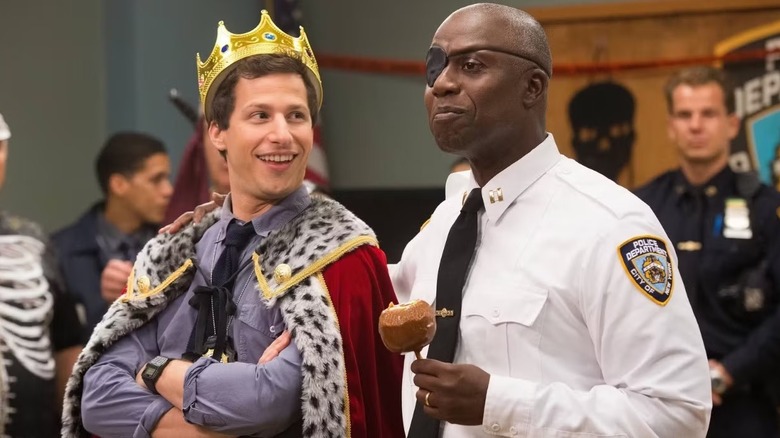
"Brooklyn Nine-Nine" started life as a comedy police procedural on Fox in 2013, following Jake Peralta (Andy Samberg). He's a detective with the New York Police Department who is good at his job, even if he's a bit childish at times. When the show — which tackled topics like police brutality and corruption through a comedy lens — ended in 2021, it wasn't on its original network. Fox canned the show after the first five seasons only for NBC to pick it up just a day later.
"Brooklyn Nine-Nine" lasted another three seasons on its new network, and it was a great move for the series. The Season 6 premiere brought a ratings bump, with viewership growing over 50% in both comedy demographics and general viewers. It marked the best ratings "Brooklyn Nine-Nine" had in two years at the time, which was huge, considering the network switch.
The comedy also maintained its strong Rotten Tomatoes scores, with Season 6 earning a 100% score, marking three seasons in a row that happened. The move was a win-win for everyone. Fans got to see the story continue, with the additional seasons giving the creative team more time to tie up on-going storylines and introduce plots that resonated with what was going on in the real world.
Lucifer
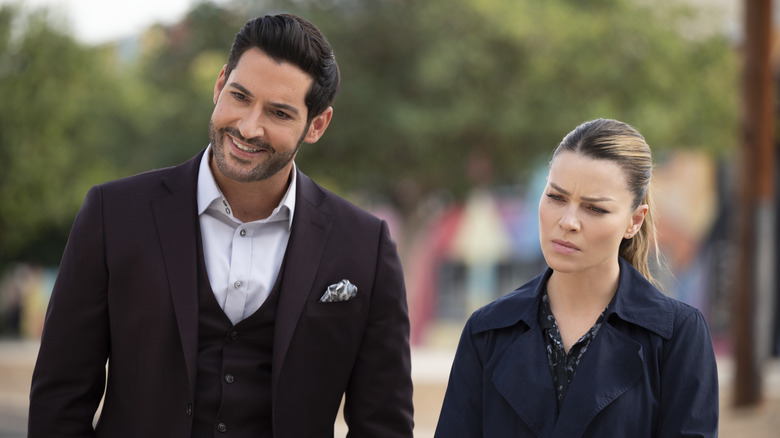
"Lucifer" follows the titular character, played by Tom Ellis, as he leaves Hell and moves to Los Angeles in search of greener pastures. Instead of spending the rest of his life welcoming souls to the underworld, he's running a nightclub and eventually helping a member of the Los Angeles Police Department solve cases. Everything you know about Lucifer being expelled from Heaven is still true, but this time, he doesn't let that define him.
The series started on Fox, lasting three seasons before the network canceled it citing ratings. Cost was also likely a factor in Fox's cancelation of "Lucifer." The outlay needed to produce the series apparently wasn't an issue for Netflix, which picked up "Lucifer" following a social media campaign by fans that involved the hashtag #SaveLucifer. The announcement was made on the same day the contracts for the cast were due to expire, so it came down to the wire.
"Lucifer" saw new life on the streamer and was consistently one of Netflix's best performing series when new seasons aired. In 2021, the final season even beat out "Squid Game" in the Nielsen streaming charts to be the most-watched original programming on a streaming service that year, with over 18 billion minutes streamed — that's right: billion. It also posted consistently solid Rotten Tomatoes ratings after finding its new home on Netflix.
American Dad!
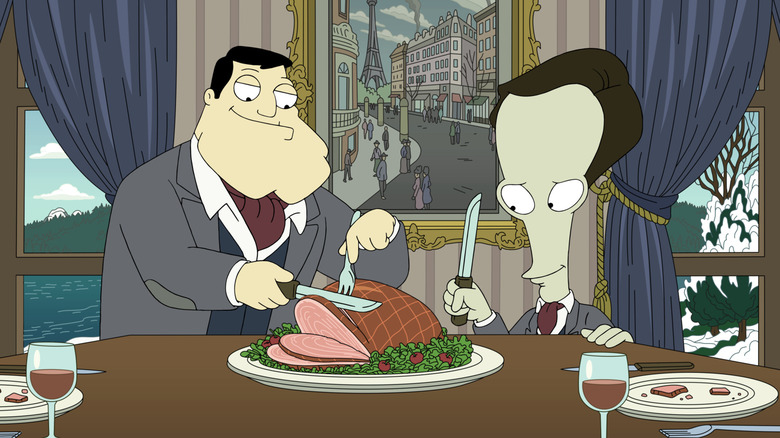
Seth MacFarlane's "American Dad!" started on Fox, but after 10 seasons, it moved to TBS. It wasn't the highest-rated animated offering on Fox, competing against MacFarlane's other series "Family Guy." There wasn't an official cancellation, but the network shift seemed to be an effort to give the show new life. And, it turned out to be the correct decision.
With the move to TBS, "American Dad!" — which follows CIA Agent Stan Smith and his family — viewership continued to grow. The final episode of the first TBS season logged better numbers than that season's premiere, which is uncommon. Additionally, some of the best-rated episodes of the series come from the TBS run, like the Season 17 episodes "Into the Woods" and "Trophy Wife, Trophy Life," and the best-rated season overall is Season 20.
The move allowed the show to produce some of its best content, which wouldn't have happened otherwise. After a great run on TBS, "American Dad!" has been reclaimed by Fox, where it will start airing again as of 2026. This came with several multi-season renewals for other animated shows and a continued agreement between Fox and Hulu for their animated series to be available on the streaming service, meaning "American Dad!" lives on.
You
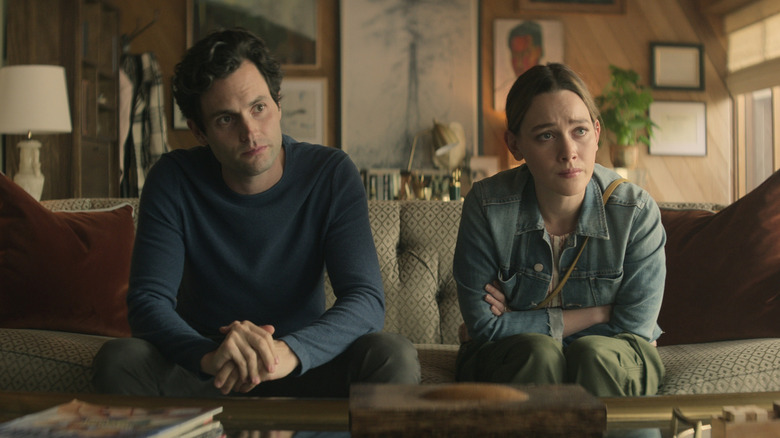
Though many associate Joe Goldberg as an iconic Netflix character, "You" began its time on screen as a Lifetime series. The network actually renewed it for Season 2 before Season 1 even aired, but Netflix jumped in and scooped up "You" for its own lineup. Because of the show's popularity on Netflix, many don't realize it wasn't originally one of the streamer's projects, even though the move made "You" what it is.
"You" saw an average of 1.1 million viewers when it aired on Lifetime, and the figures boomed after the Netflix move. This popularity continued as Netflix released new seasons, with the final season reaching 10 million views in just four days, putting "You" on the top of the Netflix chart during its release. Though the final season dipped when it came to critic ratings, earning 79% on Rotten Tomatoes compared to the 92% of Season 4, audiences still tuned in.
Star Penn Badgley credits Netflix for bringing the project to a new audience, which ultimately made "You" what it became in the pop culture zeitgeist. "There is no sense of bewilderment that the show had one reaction while it was on Lifetime and another when it went to Netflix," he wrote in an email to The Washington Post. "The difference in viewership is obvious, and it's indicative of so many different things, not the least of which is the way young people consume media."
Black Mirror
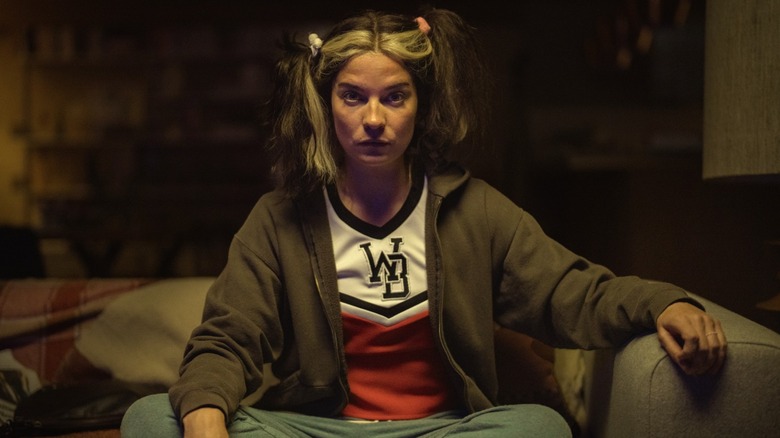
The sci-fi anthology series "Black Mirror" initially started on Channel 4 in the United Kingdom. When the first two three-episode seasons were added to Netflix, the show found a whole new global audience and production moved to the streamer, with an order for a dozen episodes that would become Season 3 and Season 4. The show's creator, Charlie Brooker, was convinced that Netflix was the right place for it to be, calling it "the most fitting platform imaginable" in a statement,
"Netflix connects us with a global audience so that we can create bigger, stranger, more international and diverse stories than before, whilst maintaining that 'Black Mirror' feel," Brooker added (via Time). "I just hope none of these new story ideas come true." It turns out that some "Black Mirror" episodes did indeed predict future technology. What also came true is that global audiences turned out for the series, which consistently topped the Nielsen streaming charts with new season releases.
With the release of Season 7 in 2025, "Black Mirror" broke its own record, bringing in 1.58 billion viewing minutes. In addition to growing the show's audience, moving to Netflix brought about the best (and most disturbing) episodes of "Black Mirror." According to IMDb ratings, nine of the top 10 episodes are from Season 3 onwards. Ultimately, "Black Mirror" wouldn't be the cultural phenomenon it is without the backing of Netflix. Being on the streamer grew the audience, created new episodes for people to obsess over, and cemented it as "The Twilight Zone" of the 21st century.
Futurama

Matt Groening's "Futurama" has had three homes since it debuted in 1999. The show, which follows pizza delivery guy Philip J. Fry (Billy West) after he accidentally cryogenically preserves himself for 1,000 years and wakes up in 2999, started on Fox. It was revived by Comedy Central after Fox canceled it, and then it had a third coming as a Hulu series a decade after Comedy Central axed it.
Hulu's revival brought "Futurama" to new audiences, and the show consistently does well on the streamer. When the premiere episode of the first Hulu season dropped in July 2023, it did so to impressive numbers: "Futurama" had over 500 million viewing minutes that week, placing it at number four on the Nielsen streaming charts. By the end of 2024, when it had two Hulu seasons under its belt, "Futurama" was the sixth most-streamed original series of the year, the only Hulu show in the top 10. It finished ahead of the likes of Netflix's "Fool Me Once" and Prime Video's "Reacher."
In addition to ranking well against other popular series, one of the best-rated episodes of "Futurama" came with the Hulu revival. On IMDb, it's tied with the classic episode "Jurassic Bark" with a rating of 9.5. This is no mean feat — "Jurassic Bark" is a beloved episode that's often ranked as the best "Futurama" episode ever, praised for its mixture of humor and heart. It shows that, despite the years in between revivals and network changes, "Futurama" is still resonating with audiences old and new.
Supergirl
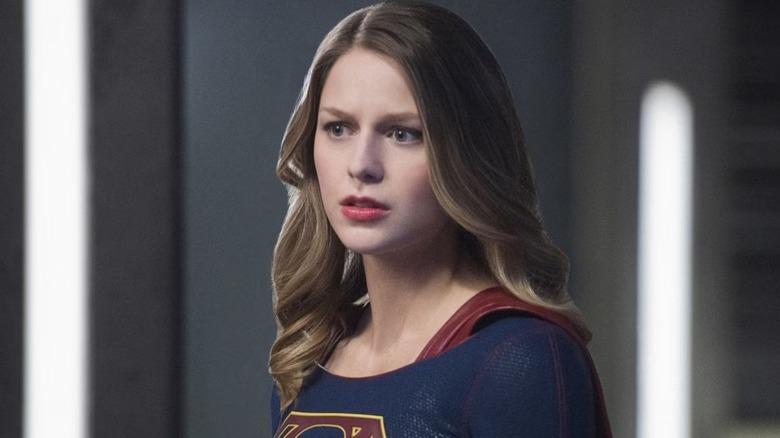
While many associate "Supergirl" with The CW's Arrowverse, it actually began on sister network CBS. The show moved to The CW after its first season, with news of the shift breaking alongside the Season 2 renewal. On its new network, "Supergirl" ran for an additional five seasons and was integrated into the Arrowverse, a group of projects on The CW all themed around DC Comics characters. The move was ultimately a win for both The CW and the show itself. While it initially struggled to match the numbers posted by the Season 1 finale on CBS, "Supergirl" saw considerable growth in its target audience age group of 18 to 34, increasing by 29% when compared to its last episode on CBS.
That kind of growth was important for the show's long-term success, securing additional seasons and cementing its place in the network's DC stable (if you're yet to experience the Arrowverse and you're curious about it, here's how to watch all the Arrowverse shows in order). That success continued as the seasons went on, with "Supergirl" regularly in the top five shows on the network. In the end, the move to The CW helped "Supergirl" connect with its intended audience, allowing it to thrive and carve out a place in the crowded superhero world. Some of the best Arrowverse episodes were on "Supergirl," including "Crisis on Earth-X, Part 1," which has a rating of 8.8 on IMDb.
Cobra Kai
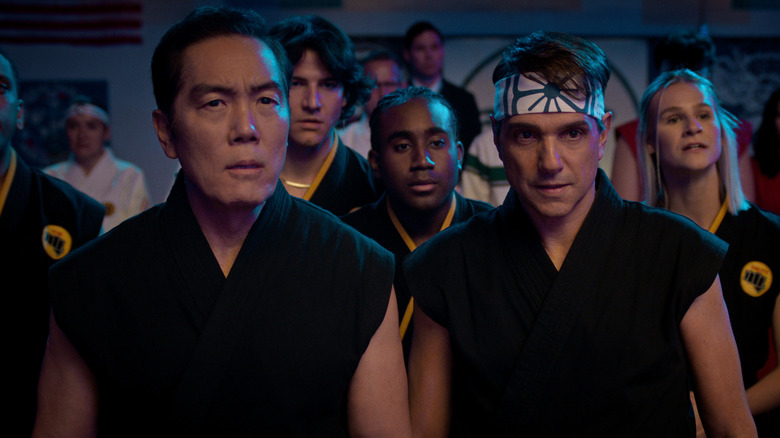
"Cobra Kai" began as a YouTube Red series before it found its forever home on Netflix. The first two seasons did well on YouTube Red, and then YouTube Premium, with the company reporting more than 5 million views within 24 hours of airing the first episode. However, YouTube moved away from scripted content at the end of the 2010s, focusing more on reality and documentary content. This, combined with the creative team behind "Cobra Kai" wanting more seasons than YouTube would greenlight, caused a move to Netflix.
"Cobra Kai" moved to the streamer in 2020 and the first two seasons followed later that year. The 20 existing episodes topped the Nielsen streaming charts in September, boasting an incredible 2.17 billion streaming minutes in one week. This put it ahead of "Lucifer" and Amazon Prime's popular superhero series "The Boys," showing that "Cobra Kai" would reach new heights on Netflix now that it was in front of a larger audience.
The viewership continued to grow as more seasons of "Cobra Kai" dropped, with Season 5 bringing in 107 million viewing hours in its first week. Though the multi-part release of Season 6 caused the show to lose a bit of stream, Part 1 still boasted 47.5 million viewing hours in just four days. With 1980s nostalgia on its side, moving "Cobra Kai" to a larger platform enabled the series to be everything it could be. It consistently reached a larger audience and gave the creative team the time they wanted to build out the show they envisioned,
JAG
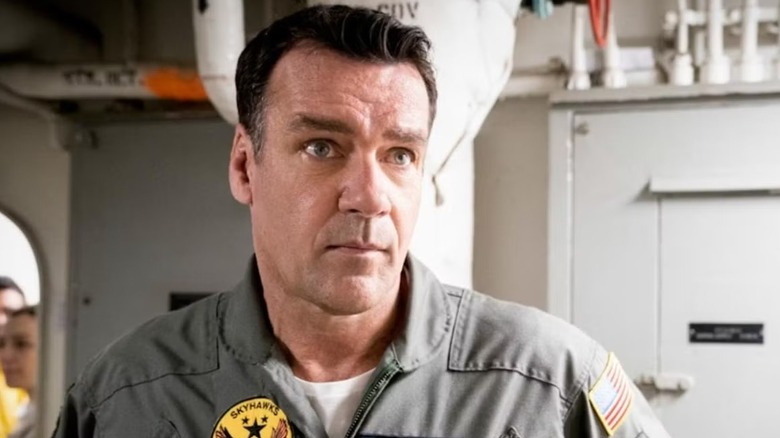
The military legal drama "JAG" launched "NCIS," one of CBS's most well-known franchises today, but before the series was with CBS, it had a single season on NBC. The network canceled the show due to low ratings, even leaving one episode unaired. CBS picked it up months later, developing a fifteen-episode Season 2 as a midseason replacement, and the tide turned.
"JAG" did incredibly well on CBS, hitting a peak viewership of 14.2 million people during Season 4. It continued to climb up in rankings as well, usually sitting in the 20s and 30s range, which is impressive when you consider that it placed 79th in its first season. This is notable not only because it was phenomenal growth, but because it was almost exclusively in an older demographic– "JAG" didn't appeal to the 18 to 49 crowd, but the 50+ audience continued to tune into the show in droves.
Two "JAG" episodes, Season 8's "Ice Queen" and "Meltdown," served as backdoor pilots for "NCIS," one of the most popular series ever on CBS and one of the longest running live-action projects on television. "NCIS" itself has numerous spin-offs, and none of it would be possible if CBS hadn't saved "JAG." Check out Looper's review for "NCIS: Tony & Ziva," the latest entry in the franchise.
Baywatch
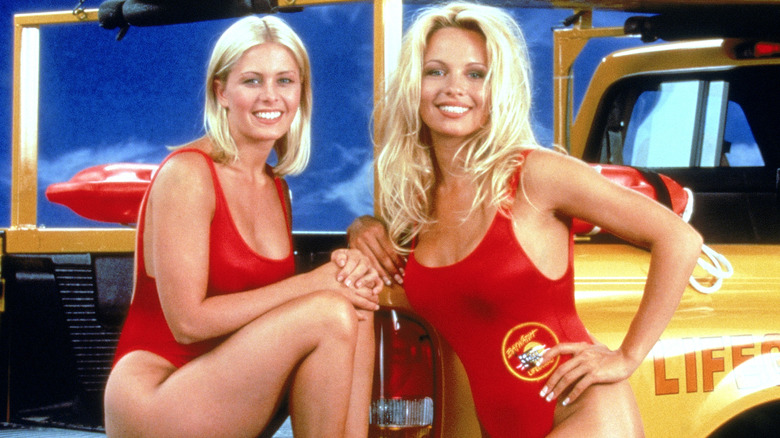
"Baywatch" began life on NBC. However, when the network canceled the lifeguard series after a single season, it found new life through syndication. Rather than be aired on just one network, it was on many, and "Baywatch" immediately found success that way, with 11 seasons and nearly 250 episodes. The audience grew exponentially after it left NBC, eventually making it one of the most watched television series in the world.
"Baywatch" even earned a Guinness World Record in 1996 for an estimated 1.1 billion people tuning in weekly across 142 countries. With that kind of viewership, it became a household name, inspiring a movie, spin-offs, and even a culture phenomenon known as the "Baywatch run," which is when people run in slow motion on a beach to mimic the characters from the show.
Without the network switch, "Baywatch" and the cast of the show wouldn't be the pop culture staples they are today. The series amassed an enormous audience, and with that came running jokes on sitcoms like "Friends" and a new meaning to the red bathing suit. Going to syndication was a huge risk, but it paid off and gave the series time to reach its full potential.