

5 Leonardo DiCaprio Box Office Flops That Every Fan Has To Watch At Least Once
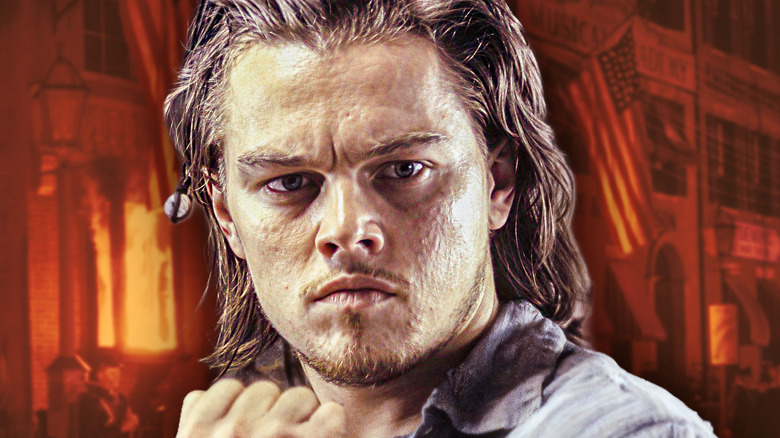
In many ways, Leonardo DiCaprio is one of the few major movie stars left out there. Evidence of that includes how, as late as the 2010s, the guy could turn any movie that wasn't "J. Edgar" into a $100 million-plus domestic grosser. From "Catch Me If You Can" to "The Wolf of Wall Street" to "The Departed," and of course the mega-success of "Titanic," DiCaprio has been known for anchoring not only lucrative features but also beloved adult dramas. DiCaprio doesn't get his box office numbers from anchoring motion pictures based on already popular toys or comic books. Instead, he's used his clout to turn original screenplays and adaptations of less widely known titles into immensely profitable endeavors.
Still, no movie star has an unblemished track record at the box office. That's just as true for Leonardo DiCaprio as anyone else. The face of hits like "Shutter Island," "Inception," and "The Great Gatsby" has had his share of box office misfires over the years. However, let it not be said that those financial mishaps are devoid of artistic merit. There are five particular box office duds in DiCaprio's filmography that are absolutely must-watches for movie lovers of all stripes. Each of these titles demonstrates a different corner of DiCaprio's acting prowess and pairs the performer with one of the most beloved directors of all time.
These five Leonardo DiCaprio star vehicles didn't instantly connect with audiences back in the day, no two ways about it. However, they're still rich in virtues and accomplishments as pieces of art.
The Quick and the Dead
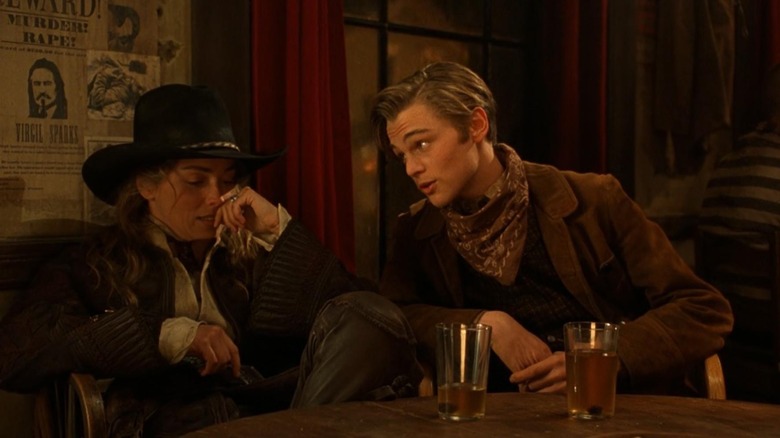
Five notable beloved Western movies that were box office flops reflect how initial financial matters don't always tell the whole story when it comes to how Westerns will be perceived long term. Ditto various '70s Western movies that flopped but are actually worth watching. Today's Western box office misfire could be tomorrow's beloved cult classic or influence a new generation of motion pictures. Leonardo DiCaprio got a crash course in this reality with his prominent role in the 1995 Sam Raimi directorial effort "The Quick and the Dead." This title, a high point among the seven Westerns Gene Hackman headlined, saw DiCaprio playing Fee "The Kid" Herod.
This figure was one of many colorful characters inhabiting a feature rich with Western archetypes, opening fire on each other in an extensive tournament, which also houses the vengeful gunslinger Ellen (Sharon Stone). Debuting two years before "Titanic" catapulted DiCaprio to levels of stardom few actors have ever experienced, this actor proves a fine addition to the ensemble cast of "The Quick and the Dead." Leaning into his youthfulness also ensures that DiCaprio offers something different compared to more world-weary performers like Hackman and Keith David.
Delivering solid work in a mighty fun Western wasn't enough to save "The Quick and the Dead," which only grossed $18.5 million domestically on a $32 million budget. An initially unprofitable enterprise, this title endures as not just a fun movie in its own right but an early glimpse into DiCaprio's chops as a performer.
Revolutionary Road
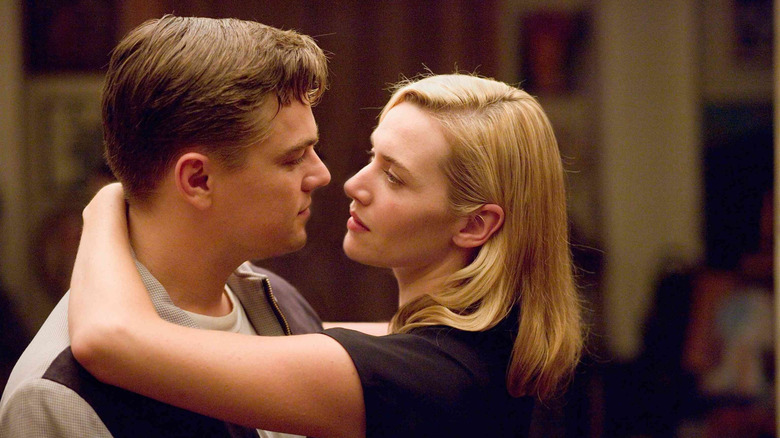
"Revolutionary Road" is one of those movies that couldn't escape the shadows of past motion pictures. For one thing, this title about suburbanites going mad in the middle of pervasive conformity was helmed by Sam Mendes, whose prior best picture Oscar-winning work, "American Beauty," covered similar territory. The film was also a "Titanic" reunion between DiCaprio and Kate Winslet. That 1997 box office phenomenon set a gargantuan standard for "Revolutionary Road" to live up to. Even beyond comparing it to 1990s hits that became Oscar darlings, "Revolutionary Road" didn't live up to box office expectations. This $45 million-budgeted movie topped out at $79.6 million worldwide, $22.9 million of which came from an anemic domestic run.
While not fully living up to its greatest artistic potential, "Revolutionary Road" still has some bleak charms worth considering. For starters, Winslet is phenomenal in the feature, even more so than in her turn in her other 2008 feature, "The Reader" (which scored her a best actress Oscar win). There are also great supporting turns from performers like Kathryn Hahn, David Harbour, and Michael Shannon. Mendes and cinematographer Roger Deakins imbue the proceedings with plenty of striking images, as one would expect from any title lensed by Deakins.
DiCaprio, who plays an unflinchingly messy and cruel character in this title, also continued his welcome willingness in the 2000s to portray profoundly flawed characters in "Revolutionary Road." That tactic has served him well long-term and ensured "Revolutionary Road" has commendable attributes all its own.
Gangs of New York
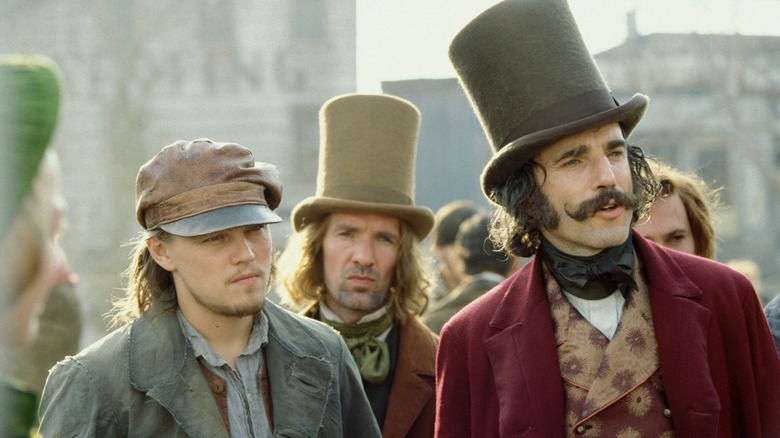
Leonardo DiCaprio provides "Gangs of New York" (his first collaboration with director Martin Scorsese) with its most frustrating flaw: his attempt at an Irish accent. His vocals don't sound remotely right and end up jumbling conceptually key dialogue in the script. This shortcoming reflects DiCaprio still being in the nascent stages of his post-"Titanic" career and getting his feet wet with more complicated, detailed roles. Despite that problem, DiCaprio is otherwise solid in "Gangs of New York" and the film, though flawed, is well worth watching. After all, Scorsese in epic historical period piece mode always produces must-see artistry.
At its best, "Gangs of New York" delivers stunning costumes, a commanding performance from Daniel Day-Lewis (who grabs attention with his mustache alone), and an ensemble cast stacked with remarkable talent. Its contemplations on who is defined as "the other" in a society built on immigrants are also more relevant than ever in the modern world. Despite all these virtues and Scorsese's assuredness behind the camera, "Gangs of New York" was initially mighty controversial and even dubbed one of those great movies almost ruined by one bad performance.
Costing a whopping $97 million to make, "Gangs of New York" only made $183.1 million worldwide, a disappointing sum. Ken Auletta's 2022 book "Hollywood Ending: Harvey Weinstein and the Culture of Silence" confirmed "Gangs of New York" did lose money. However, various Martin Scorsese box office bombs everyone needs to watch can attest that box office doesn't say everything about a movie's value.
Killers of the Flower Moon
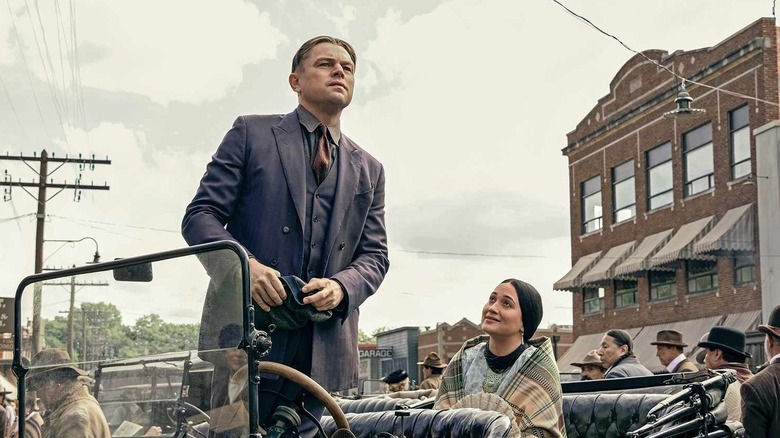
Part of what helped Leonardo DiCaprio solidify such a sterling artistic track record after "Titanic" was a willingness to take on projects often grappling with outright bleak topics. Committing to such grim and weighty productions ensured that the actor was associated with creative risk-taking rather than derivative mainstream star vehicles. Even by DiCaprio's standards, though, "Killers of the Flower Moon" is an especially grueling and challenging production (hence why it didn't take off financially). This Martin Scorsese directorial effort explores the real-life murders of Indigenous Osage people in early 20th-century Oklahoma. The orchestrators of all this bloodshed and colonialism are William Hale (Robert De Niro) and his nephew Ernest Burkhart (Leonardo DiCaprio).
The latter of that duo marries Osage woman Mollie Kyle (Lily Gladstone), who is often the eyes through which this harrowing story transpires. DiCaprio is not the centerpiece of "Killers of the Flower Moon," and his character is meant to be a despicable, often short-sighted buffoon with blood on his hands. "Killers of the Flower Moon" doesn't shy away from depicting colonialism's carnage. It also doesn't refrain from examining race and privilege through a nuanced lens.
"Killers of the Flower Moon" is a visual chronicle of real-world horrors told with some of director Martin Scorsese's most impactful filmmaking, not to mention unforgettable performances from the likes of Gladstone and Cara Jade Myers.
One Battle After Another
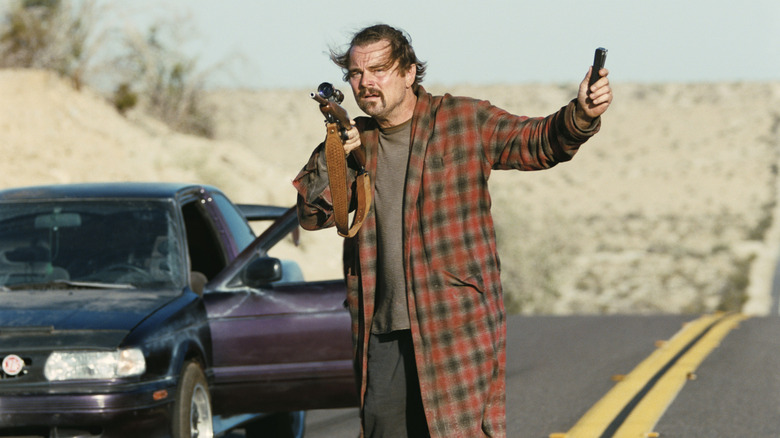
Despite receiving some of the best reviews of any American movie released in 2025, "One Battle After Another" ended up bombing at the box office. However, never let those figures (which really come down to the film's enormous budget making immediate profitability difficult) dissuade anyone from checking out "One Battle After Another." Director Paul Thomas Anderson and Leonardo DiCaprio finally uniting for a motion picture produced something truly excellent. Anderson ballooning his filmmaking scope to a significantly larger scale than any of his previous movies resulted in absolute wonders rather than a compromised version of the man behind "The Master" and "There Will Be Blood."
Like with "Killers of the Flower Moon," "One Battle After Another" gets tremendous mileage out of putting DiCaprio in a story that doesn't belong to him. This is essentially a family story concerning activist Perfidia Beverly Hills (Teyana Taylor) and Willa Ferguson (Chase Infiniti), with the latter character being the lead of "One Battle After Another." DiCaprio's work, meanwhile, involves being Willa's bumbling father, Bob, and reaffirming his mastery at comedic acting. DiCaprio is an absolute riot scrambling around looking for a charger or a hospital exit with his disheveled hair and bathrobe.
Committing so profoundly to a vulnerable and deeply human character like Bob Ferguson ensures "One Battle After Another" houses one of DiCaprio's best performances. However, he's far from the only great element in this sublime motion picture that deserved infinitely more business at the box office.