

5 Beloved Western Movies That Were Box Office Flops
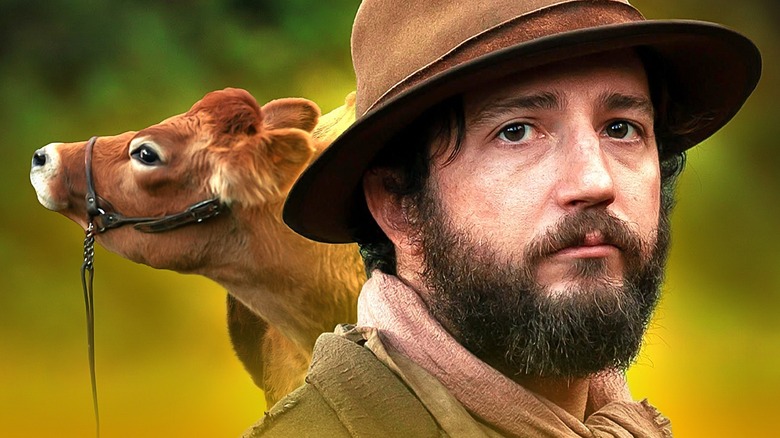
The 55 best Western movies of all time reflect the reality that there's endless artistic value in one of the most enduring genres in global cinema. Esteemed filmmakers from John Ford to Jane Campion to Kelly Reichardt (among many others) have seen their creativity and visual instincts flourish within the confines of the Western movie. These titles have not only proven consistently valuable artistically, but they've also often been major moneymakers for Hollywood studios. In the middle of the 20th century, especially, the Western was omnipresent in movie theaters everywhere and kept printing money.
However, just because the genre has frequently proven both long-lasting and lucrative doesn't mean that every single Western ends up making big bucks. Modern flops like "The Lone Ranger" and "A Million Ways to Die in the West" can attest to that first-hand. By the same token, struggling at the box office is not automatically a sign that a Western is deficient as a piece of art. On the contrary, plenty of major Westerns over the years have bombed before becoming cult classics over time.
There are all kinds of reasons why these Westerns didn't initially connect with audiences, just as there are boundless elements that led to them securing passionate fanbases over time. Box office numbers are rarely the entire story. The Western flops that became revered over time epitomize this truth, which is as eternal as the Western's appeal.
The Ox-Bow Incident
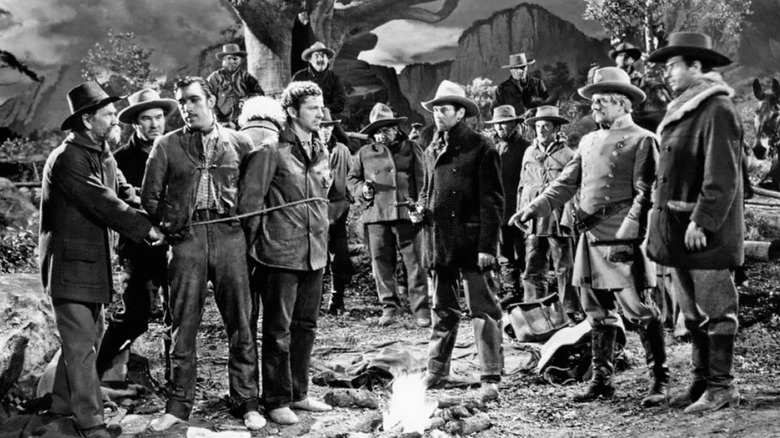
The 1943 Western "The Ox-Bow Incident" was not a moneymaker upon its initial release. Former 20th Century Fox head Darryl F. Zanuck even allegedly made comments disparaging the gap between the film's artistic merits and its ability to bring in a profit. Though it never came close to being one of the most successful Westerns ever at the box office, "The Ox-Bow Incident" proved its worth in matter far more valuables than dollars and cents. This William A. Wellman directorial effort (based on the novel of the same name by Walter Van Tilburg Clark) follows cowboy Gil Carter (Henry Fonda), as he encounters a town hellbent on revenge for a murdered priest.
Eventually a swarm of the townfolk find three men in in the wilderness, presume they're the culprits behind the murder and stolen cattle, and decide to lynch them. This inspires various disagreements and quarrels between those like Carter who do not want to resort to violence and those like Major Tetley (Frank Conroy), who's hankering for bloody immediate revenge. Within a 75-minute runtime, Wellman's filmmaking lays bare the horrors of mob justice and violent vengeance. This is one Hays Code-era American movie that doesn't retreat from the grimness of its central subject in the last few minutes.
Instead, "The Ox-Bow Incident" is a dark exercise to the very end, in its unflinching depiction of how bloodthirsty instincts motivate people. Those darker elements that kept it from initial box office success solidified its immense artistic stature.
First Cow
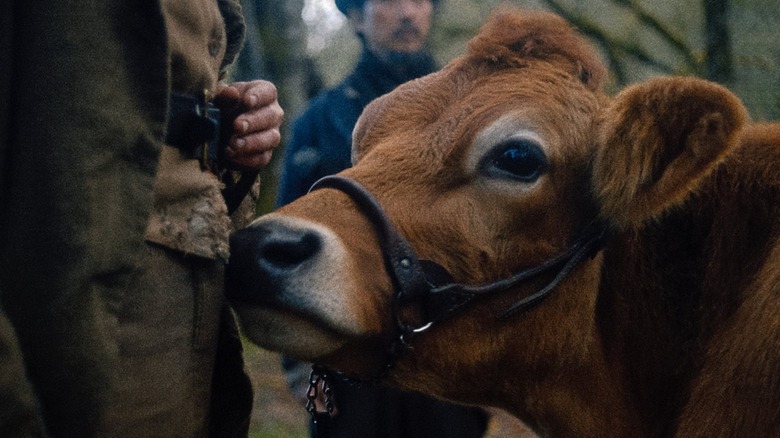
Even with the world thrown into chaotic disarray by the COVID-19 pandemic that year, the best movies of 2020 proved that glorious artistry hadn't taken the year off. Among those peaks of 2020 cinema was a modern masterpiece that had its box office run immediately capsized by the global health crisis. Kelly Reichardt's "First Cow" reached theaters on March 6, 2020, just under two weeks before theaters everywhere were closed in response to COVID. Of course it "bombed" at the box office since it couldn't play on the big screen, a tragic outcome for a movie that deserved much more.
The film follows two weary American loners (John Magaro and Orion Lee) in 1820s Oregon discovering a potential path to riches by taking milk from a wealthy man's dairy cow. While the Western is often a place where male characters inhabit fantasies of "dominating" the wilderness, Reichardt's subversive filmmaking means "First Cow" is a feature where the two leads surrender themselves to a bovine and the natural world. The luscious autumn-tinged backdrops littering "First Cow" make the outdoors something to marinate in and treasure, not an item audiences want to exact conquest on.
These qualities inform a masterful, richly drawn movie with a tender atmosphere and mesmerizingly precise cinematography (the latter stylized with the 4:3 aspect ratio). Kelly Reichardt's made many great movies, yet "First Cow" stands out as extraordinary even in her esteemed filmography.
McCabe and Mrs. Miller
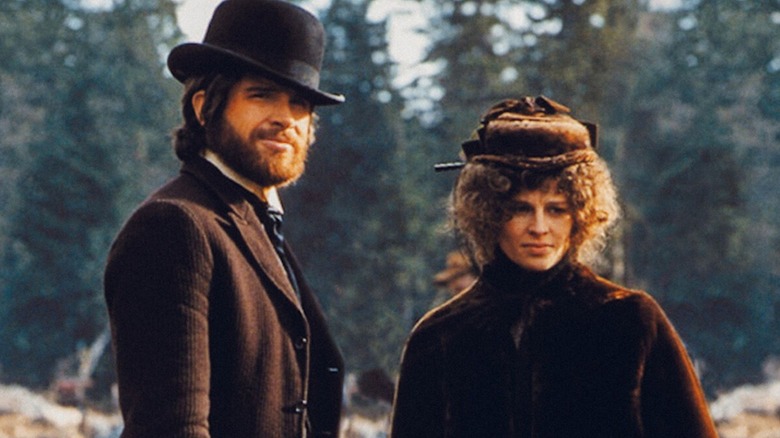
Many of Robert Altman's movies are today considered all-time classics, with several, like 1975's "Nashville," proving cornerstones of some of the greatest years in film history. Several of his titles, like 1982's "Come Back to the 5 & Dime, Jimmy Dean, Jimmy Dean," have even overcome initially chilly receptions to become cult classics. Save for the pop culture sensation "M*A*S*H*," though, few of Altman's movies became instant box office hits. His titles were always so subversive and challenging to American cinema norms that they struggled to take off as instantaneous crowdpleasers. This was unfortunately as true of his 1971 Western "McCabe and Mrs. Miller" as it was for other Altman productions like "The Long Goodbye."
Warren Beatty headlined several massively successful movies in the 1970s, including "Shampoo" and "Heaven Can Wait." However, that box office trajectory couldn't save "McCabe and Mrs. Miller" from being a financial misfire, with a meager $8.2 million gross. While audiences were showing up in droves for darker New Hollywood titles like "The Last Picture Show," "The French Connection," and "A Clockwork Orange" in 1972, more mainstream-skewing and commercial projects like "Million Dollar Duck," "Diamonds are Forever," and "Bedknobs and Broomsticks" were still racking in millions of dollars.
Not everything that subverted norms in 1971's cinema scene would automatically be greeted with open arms by the general public. The grim and intentionally uncathartic sensibilities fueling "McCabe and Mrs. Miller" initially alienated audiences, but also ensured it would become another Robert Altman classic in the long term.
The Assassination of Jesse James by the Coward Robert Ford
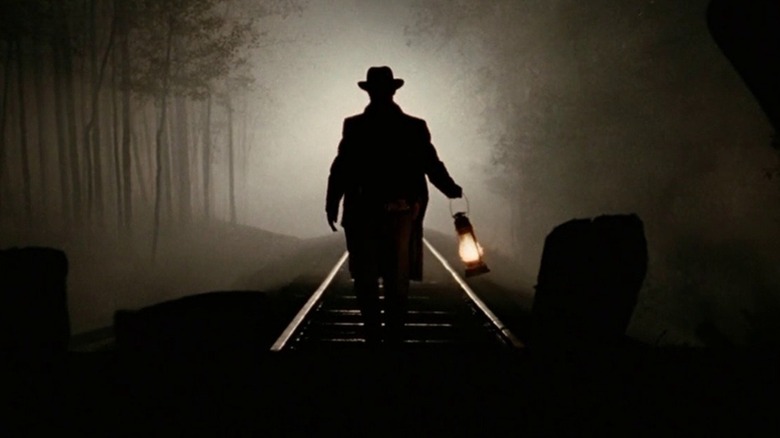
While every Brad Pitt movie, from the worst to the best, is part of a career has spanned decades, the peak of his box office prowess was arguably in the mid-2000s. After appearing in the first two "Ocean's Eleven" movies, anchoring the massive hit "Mr. and Mrs. Smith," and being a part of the ensemble cast of best picture Oscar nominee "Babel," Pitt was both a box office draw and an arthouse cinema favorite. Pitt's production company, Plan B Entertainment, really began taking off in 2007 as he started using his clout to get smaller, more challenging movies onto the big screen. One such title was director Andrew Dominik's "The Assassination of Jesse James by the Coward Robert Ford."
Dominik's films have focused on stripping away the mystique of legendary American figures. This adaptation of Rob Hansen's 1983 novel of the same name is no different, as it chronicles a very vulnerable and human incarnation of famed outlaw Jesse James (Brad Pitt), as he develops a relationship with his eventual killer, Robert Ford (Casey Affleck). But any hope that Pitt's name could get "Robert Ford" to even "Babel"-sized box office numbers proved ill-placed. The 2007 feature earned only $15.3 million worldwide on a $30 million budget, a far cry from several of Pitt's highest grossing movies.
Those numbers can't detract, however, from this film's many glorious elements, including its unforgettably haunting atmosphere and the outstanding cinematography by Roger Deakins.
Walker
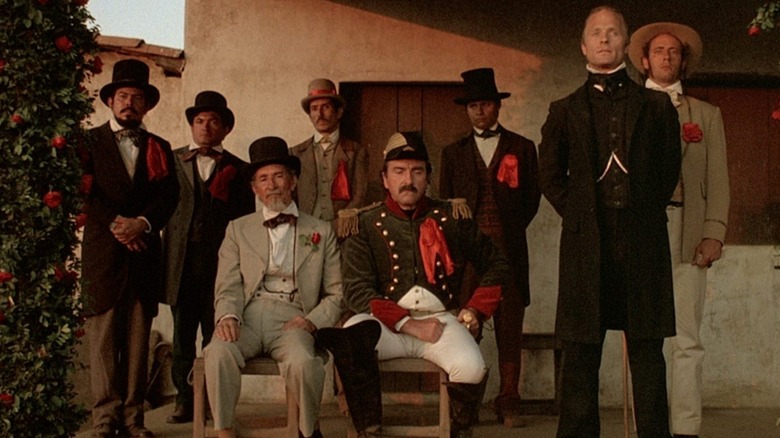
Of course director Alex Cox's 1987 film "Walker" bombed at the box office. This wasn't just a revisionist Western suggesting that myths about the Old West were slightly more toxic than one might believe. This was a scorched-Earth enterprise using the saga of William Walker (Ed Harris), an American who made himself Nicaragua's president in the 1800s, to eviscerate ideas about the "nobility" of American forces intervening in Latin America and the "glories" of colonialism. The film's heightened aesthetic also blurred the past and present ("Walker" characters, though existing in the 19th century, will sometimes hold up copies of Time magazines or drive cars) to reinforce how the horrors of William Walker are still being perpetuated by the U.S. in the modern world.
"Walker" was unceremoniously released into theaters and only grossed $257,043 domestically. Universal Pictures didn't want anything to do with a project this critical of America. However, what limited "Walker" commercially ensured that it became a gonzo Western classic. Cox's creative vision is so singular and audacious, that there's truly no other Western or even 1980s feature film like this one. Meanwhile, Ed Harris makes William Walker's descent fascinating to watch, while the practical sets and props lend immediate tactility to even the most outlandish "Walker" images.
Like more recent titles such as "Southland Tales" or "Babylon," "Walker" was always too unorthodox and weighty for mainstream success. Also like those 21st century classics, though, "Walker" absolutely rocks and takes no prisoners in pursuing its creative ambitions.