

'70s Western Movies That Flopped But Are Actually Worth Watching
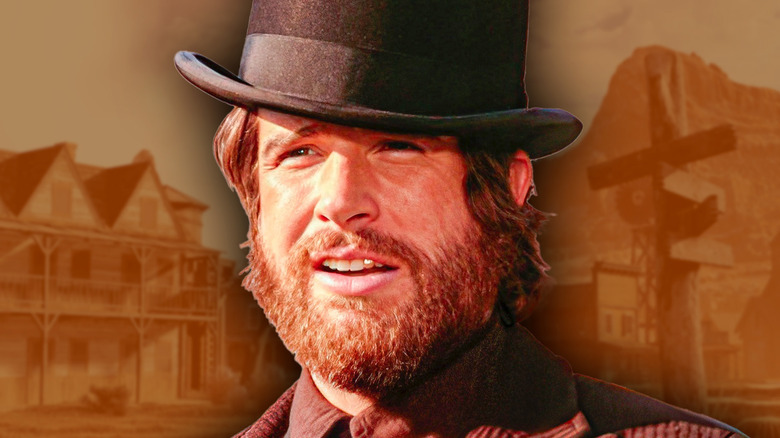
Westerns can be big moneymakers. After all, if there wasn't a historical trend of these movies turning major profits, studios wouldn't have a significant track record of cranking out these projects (especially in the mid-20th century). However, not every Western becomes a gargantuan box office hit. Obvious examples of this are modern major money-losers like "A Million Ways to Die in the West" and "The Lone Ranger," but sometimes even dismal financial fates befall various Westerns that are now considered unmistakable classics.
This is especially true for Westerns that arrived in the '70s. Though this decade produced several Western box office hits, this was also a challenging decade for cowboy movies as new forms of genre storytelling began dominating theaters. While Westerns took a financial hit, the artistic freedom of this era did ensure that the genre could incorporate fresh approaches to its stories. These five examples of 1970s Western box office flops that are actually worth watching epitomize the financial lows and artistic highs this genre faced in a decade defined by "Star Wars" and "Jaws."
There's no one single reason why each of these five movies came up short in theaters, nor is there a solitary factor that's since turned them into revered titles. However, all five of these films capture the reality that artistic successes, unfortunately, couldn't translate into major box office clout in this transformative era for American movies.
The Hired Hand
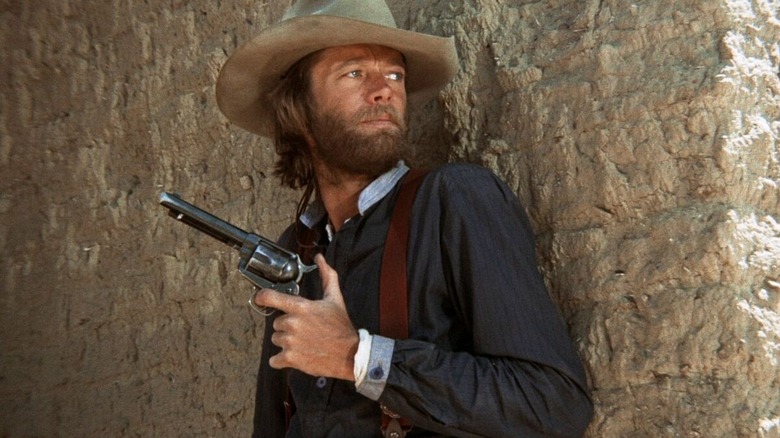
Headlining one massive movie doesn't guarantee that your next star vehicle will have similar financial success. The fact that Margot Robbie's "Barbie" blew everyone away at the box office, for instance, couldn't make 2025's "A Big Bold Beautiful Journey" a moneymaker. Meanwhile, Chris Hemsworth being so memorable in "Avengers: Endgame" couldn't prevent "Men in Black: International" from disappointing with its ticket sales. And decades earlier, Peter Fonda experienced the same fickle nature of the box office with his follow-up to 1969's pop culture phenomenon "Easy Rider."
While that feature took the world by storm, audiences weren't suddenly eager to see anything Fonda headlined, even if he was also directing the movie. Case in point: 1971's "The Hired Hand," which saw Fonda playing Harry Collings, a man whose attempts to return to his old life after years away end up going awry. When it hit theaters, "The Hired Hand" tanked at the box office. The 1990 book "Box Office Champs: The Most Popular Movies of the Last Fifty Years" observed that other Westerns like "Little Big Man" (which began its theatrical run in the last nine days of 1970) did well.
While "The Hired Hand" wasn't what audiences of 1971 wanted, the feature has endured thanks to its evocative imagery (among other virtues). No less than Martin Scorsese has argued that it's a masterpiece. Turns out Peter Fonda found some success immediately after "Easy Rider" after all.
The Ballad of Cable Hogue
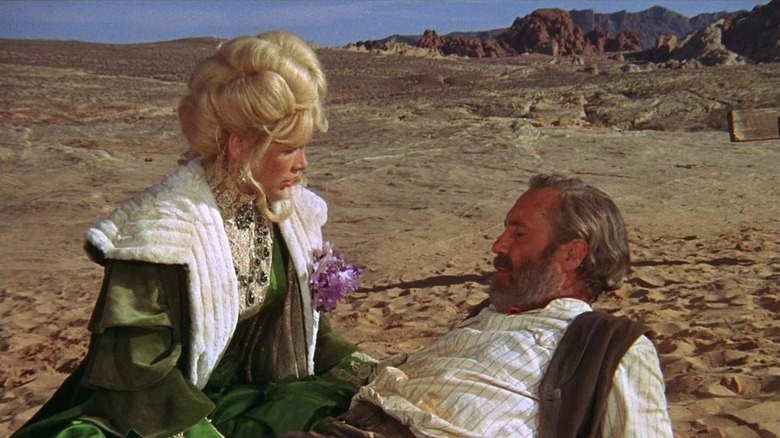
More movies should have the word "ballad" in their title. It's such a poetic expression and immediately suggests to potential viewers that something special awaits them; not just another story, but something unique. Alas, the box office returns of "The Ballad of Cable Hogue" couldn't have helped Hollywood perceive this title as something worth emulating. This Sam Peckinpah directorial effort arrived in 1970, one year after Peckinpah's 1969 classic, "The Wild Bunch." While that project had shocked audiences with its maximalism, "Cable Hogue" saw Peckinpah dancing across tones and often deploying restraint.
The result was a motion picture that failed to catch on at the box office. The tonal complexities of "The Ballad of Cable Hogue" didn't quite give audiences what they'd normally expect from a Western. That's in sharp contrast to "The Wild Bunch," which gave moviegoers the most outsized and blood-riddled iteration of the genre's hallmarks. While audiences turned a cold shoulder to "The Ballad of Cable Hogue," critics were all over it, with positive assessments of the movie enduring to this day. Peckinpah's creative approach to Westerns, as well as the bevy of memorable performances throughout the film, have given "Cable Hogue" a great reputation.
Ulzana's Raid
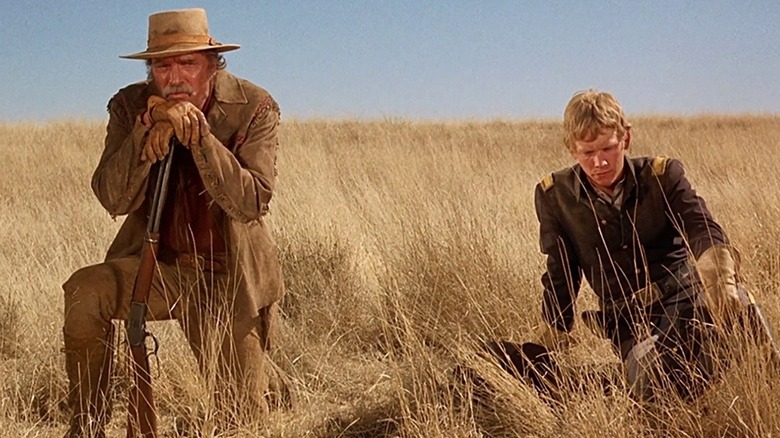
Many of the 95 best movies of the '70s opened in 1972, an exceptionally strong year for cinema, and it was an especially memorable year for Westerns. The debuts of "Jeremiah Johnson" and "Buck and the Preacher" alone solidified '72 as one for the history books when it came to the genre. But just because this was an artistically prosperous year for Westerns doesn't mean that every single entry in the genre made a massive profit in 1972.
Take "Ulzana's Raid," which came courtesy of legendary filmmaker Robert Aldrich. Burt Lancaster plays McIntosh, one of the men hired, alongside Ke-Ni-Tay (Jorge Luke) and Lt. Garnett DeBuin (Bruce Davison), to track down and stop an Apache by the name of Ulzana. What follows is a story that ends up taking a grueling look at the genocidal horrors American settlers inflicted on indigenous people. The darker sensibilities of this project served it well artistically, but also ensured that "Ulzana's Raid" couldn't hope to compete with more mainstream-friendly Westerns at the box office.
The same qualities that may have alienated moviegoers in 1972 have led to praise for "Ulzana's Raid" today, with Lancaster's performance considered by many to be one of his finest. Tragically, its saga of settlers tormenting indigenous populations is still relevant today.
Monte Walsh
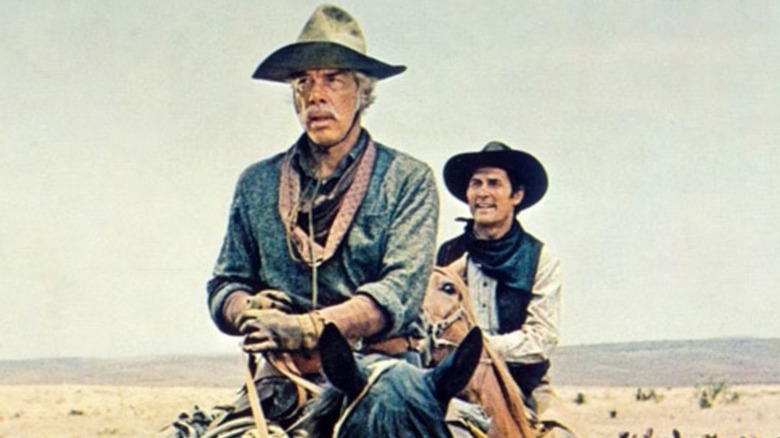
In his review of the 1970 feature "Monte Walsh," Roger Ebert observed that the film was one of several then-recent Westerns to carry a grimmer tone, rooted in the idea that the age of cowboys was coming to an end. This trait certainly permeated the Western at the dawn of this new era, possibly as a result of changing moviegoing tastes. With the New Hollywood movement in full swing and fresh visions of mainstream American cinema dominating theaters, filmmakers were gravitating more towards Westerns that actually confronted the idea of a changing world.
Such a potent, melancholy ambiance wasn't enough to save "Monte Walsh" from a grim box office fate, with the film failing to break even on its $5 million budget. Though "Monte Walsh" didn't come close to reaching the financial heights of the most successful Western ever, it did join the rarified pantheon of beloved Westerns that were also box office flops. Today, "Monte Walsh" remains highly lauded, thanks to its contemplative and even quasi-existential tone. A top-tier cast, including an achingly good Lee Marvin in the lead role, certainly hasn't hurt its artistic standing either.
Though it's been decades since "Monte Walsh" debuted, people still grapple with encroaching mortality and the concept that the world is passing them by. So long as those emotions fester in people's souls, this 1970 feature will have no trouble inspiring people to be as passionate about "Monte Walsh" as Roger Ebert.
McCabe & Mrs. Miller
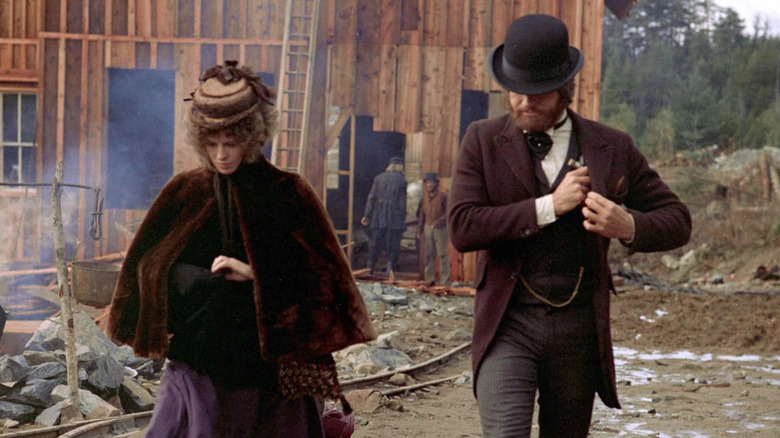
Box office success wasn't guaranteed for leading men who took off with late '60s counterculture hits before trying to headline '70s Westerns. Warren Beatty's 1967 breakthrough, "Bonnie and Clyde," was a sensationally popular project that spoke to the era's youth culture and their desire to rebel against authority. But his second movie after making film history with "Bonnie and Clyde" was "McCabe & Mrs. Miller," an unorthodox take on the Western from director Robert Altman.
As author Peter Biskind noted in his book "Easy Riders, Raging Bulls: How the Sex-Drugs-and-Rock 'N Roll Generation Saved Hollywood," one of the many ways "McCabe & Mrs. Miller" subverted audience expectations for the Western was in its ending, which covered the marketable Beatty's dead face in snow. This approach upended the star-driven nature of Westerns up to that point, which were all about wringing every possible dollar out of, say, John Wayne's craggy countenance.
Alas, neither those idiosyncratic qualities nor Beatty's post-"Clyde" reputation saved "McCabe & Mrs. Miller" from falling over at the ticket counter. Though it lost a good chunk of change in its initial theatrical release, those unusual artistic flourishes have kept "McCabe & Mrs. Miller" lingering around as one of Altman's all-time masterpieces.