

5 Sci-Fi Movies That Flopped Despite Being Directed By Hollywood Legends
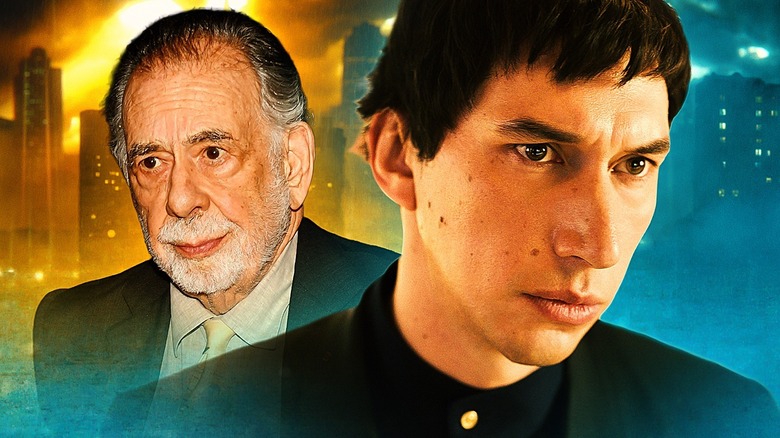
Every director has an off day, and even the biggest names in the business aren't immune to financial disappointments; even those who have had nothing but success, like Christopher Nolan, are still likely bracing themselves for the sting of that first flop. Even though a director will always have a built-in audience, they can't rely on name recognition alone for their movies to connect, especially when poor marketing campaigns and divisive reviews could skew the perception of their work long before an audience has seen it.
Let's look back through recent cinema history to five infamous bombs that underwhelmed upon impact, all of which have either been reclaimed by cinephiles or, we suspect, will inevitably be championed and reevaluated very soon. Some of these were critically respected but didn't find an audience, while others were so ahead of their time that they turned off viewers. But all of them are worth catching up with if you haven't seen them already. You might love them, you might hate them, but no other filmmakers could bring them to life.
We're charting these in order of release, starting with the earliest. And don't forget to read more on box office flops, from the biggest in movie history to our predictions for 2027's likeliest bombs, once you've finished this list.
Strange Days
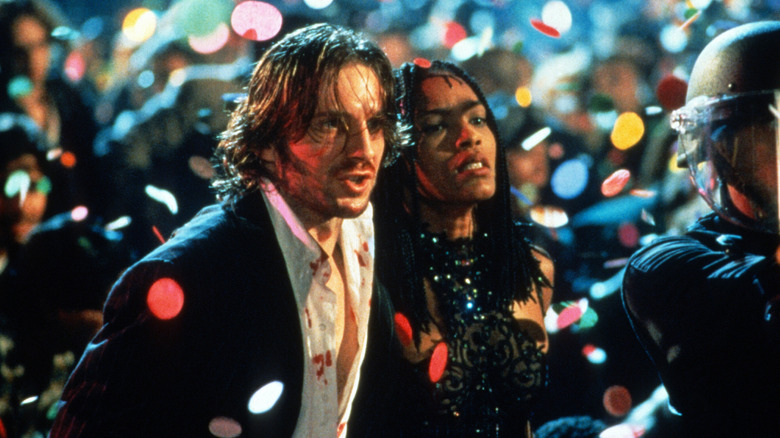
Kathryn Bigelow made history in 2010 as the first woman to win the best director Oscar — shamefully, she was only the fourth to ever be nominated – for "The Hurt Locker," an urgent war-on-terror thriller that transformed her into Hollywood's go-to political filmmaker of choice. It was a world away from the campier genre thrills of early vehicles like "Near Dark" and "Point Break," but one film provided a clear dividing point in her career that made this pivot natural: 1995's "Strange Days."
Set in a dystopian Los Angeles in an alternate 1999, just two days before the turn of the millennium, "Strange Days" stars Ralph Fiennes as Lenny Nero, a black-market dealer of a new illegal device that lets you view people's memories and experience the visceral emotions associated with them. He's pulled into a criminal conspiracy after he's given a disc depicting a sex worker's brutal assault and murder, partnering with bodyguard Mace (Angela Bassett) as their findings add further fuel to the fire of the widespread anti-police riots engulfing the city.
Now considered one of Bigelow's best, as well as one of the best sci-fi movies of its decade, "Stranger Days" premiered to mixed-positive reviews (although Roger Ebert gave it four stars) before completely cratering at the box office, making just $7 million globally from a $42 million budget. It's a shame, as this was a movie which spoke to the moment, offering a dark commentary on police brutality and the surveillance state in the wake of Rodney King. Co-written by Bigelow's ex-husband James Cameron, then at the peak of his powers, "Strange Days" has aged incredibly well as a retro-futuristic social allegory.
Solaris (2002)
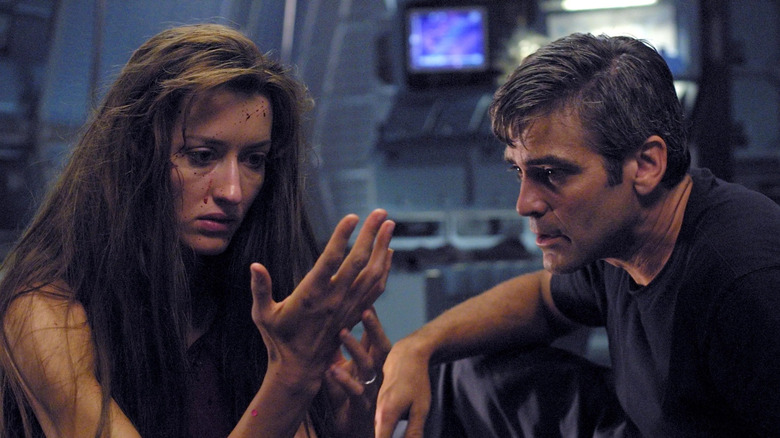
Steven Soderbergh was on top of the world in the early 2000s, receiving two separate best director nominations in 2001 for "Erin Brockovich" and "Traffic" (winning for the latter), and ending that year by delivering the beloved classic "Ocean's Eleven." Directing an epic science fiction film produced by James Cameron seemed like a sure bet going into the 2002-2003 awards season, but "Solaris" wound up alienating audiences immediately, becoming the rare recipient of an "F" Cinemascore on its opening weekend and grossing just $30 million against a $47 million price tag.
Revisiting the film's trailer, or even just the poster, reveals why — they primed viewers to expect an intergalactic George Clooney romance, when instead they got Soderbergh adapting one of the headiest novels in its genre. Previously filmed as a more nakedly unnerving epic by Andrei Tarkovsky in 1972, Soderbergh's "Solaris" mutes some of the paranoia to tell a more existential tale.
Clooney plays Dr. Chris Kelvin, a clinical psychologist who arrives at a space station orbiting the distant planet Solaris to find out why none of the astronauts on board want to return home. He discovers that several crew members have died, while the living don't want to explain themselves — and then his long-dead wife (Natascha McElhone) appears, and he realizes that these artificial resurrections are why nobody wants to leave.
Anybody expecting a romance based on this premise would have likely been alienated by Soderbergh's exploration of grief and memory, and the potentially self-destructive nature of both. Unfortunately, most viewers seemed united in their distaste; viewed now, you could argue that it's aged into something even better than the original.
Sunshine
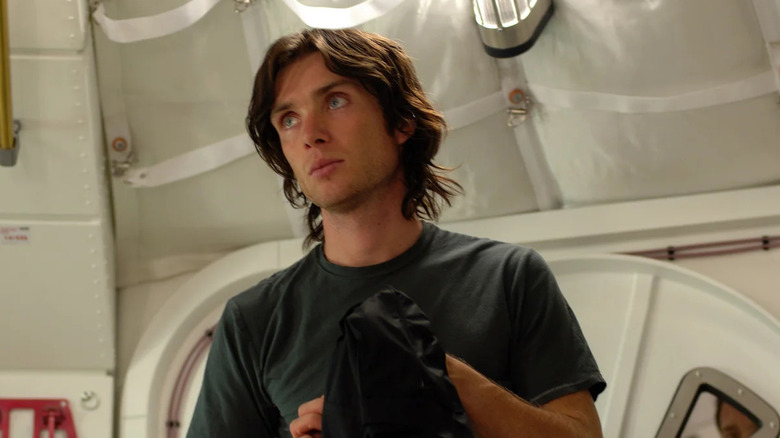
The success of "Slumdog Millionaire" gave director Danny Boyle's career a well-needed shot in the arm after two flops in a row. His family fantasy "Millions" barely made an impact in his home country, let alone outside of it, while "Sunshine," his return to working with writer Alex Garland after "28 Days Later," didn't perform much better, failing to recoup its $40 million budget.
Set on board the claustrophobic and appropriately named Icarus II, "Sunshine" is about a mission to save the sun from dying and Earth from freezing by detonating a bomb that will hopefully reignite it. The crew — led by Cillian Murphy's physicist Robert Capa — are distracted on their journey, however, when they receive a distress call from the Icarus I, which went missing on its voyage to the sun several years earlier. Changing their route causes damage to the ship, and paranoia grows among the group as things take a turn for the worse.
"Sunshine" was well-received as a paranoid space horror tale in the vein of "Alien" and "Event Horizon," but its underperformance in Boyle's native U.K. was due to the most ironic reason possible: it was released in a month with unseasonably hot weather, a rarity in the British springtime. Internationally, there was some criticism about the third act change to a slasher film, with even fan Quentin Tarantino saying it took a nosedive.
Cloud Atlas
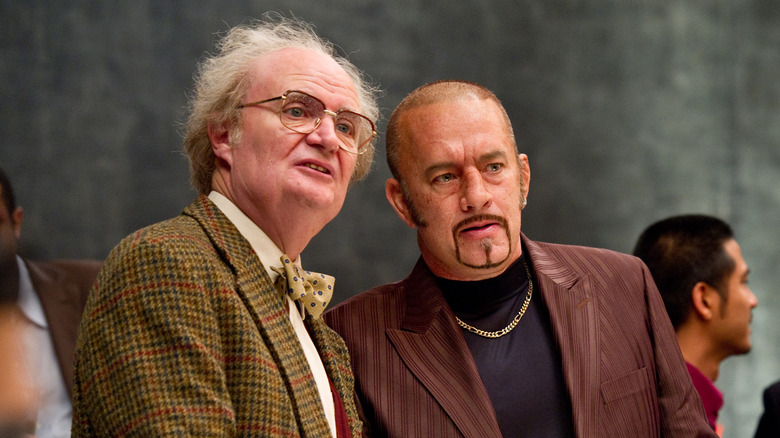
After their joyous family action adventure "Speed Racer" ran out of gas at the box office, the Wachowskis teamed up with German director Tom Tykwer for a 2012 adaptation of David Mitchell's 2004 novel "Cloud Atlas" — a book spanning centuries and continents widely considered to be unadaptable. However, "The Matrix" sounded impenetrable before anybody saw it, and the siblings' return to the sci-fi genre boasted an all-star cast led by Tom Hanks and Halle Berry, so just how inaccessible could it really be?
That the movie was produced independently, clocking up a reported $147 million budget (making it the most expensive indie movie of all time upon release), probably made some in Hollywood assume they'd play it relatively safe. Instead, it was the biggest, boldest swing in a career populated exclusively by insane risks, with even the first trailer clocking in at an epic six minutes.
Summing up "Cloud Atlas," beyond explaining that its timelines stretch from the era of slavery into a post-apocalyptic Hawaii in the 24th century, and that its cast are playing several characters each — as well as a mix of genders and races — remains difficult if not impossible, and its everything-is-connected brand of humanitarianism was either intoxicating or irritating, with no middle ground.
It ended 2012 on both best and worst of the year lists, and although it failed to make its budget back, a movie this uncompromisingly weird crawling to $130 million is something of a success in its own way. Not a "Matrix"-level sensation by any means, but some will argue that this is the better Wachowskis movie.
Megalopolis
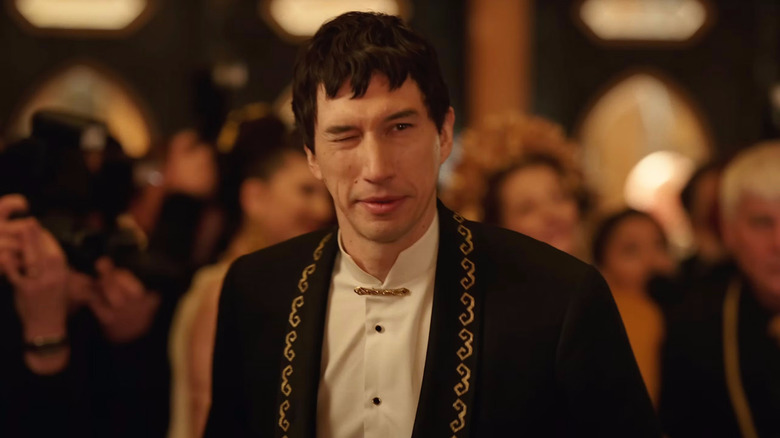
Speaking of insane independent productions, "Megalopolis" is the result of Francis Ford Coppola selling his vineyard to finance a film that nobody in Hollywood wanted to touch for 40 years. And it's not hard to understand why after just a few minutes of this bamboozling passion project, a contemporary "Fountainhead" (with a splash of "Batman Forever") set in a dystopian New York stylized after the final days of Ancient Rome, in which seemingly every actor thinks they're in a different movie.
Adam Driver's architect Cesar Catalina delivers sincere Shakespearean monologues in the same breath he tells a love interest to "go back to the club"; his rival, the city's mayor (Giancarlo Esposito), is an overly serious villain, while Aubrey Plaza, as the fabulously named journalist Wow Platinum, is the only performer treating this material with the campy remove it deserves. At times completely heinous (a subplot involving a faked sexual assault allegation is uncomfortable when Shia LaBeouf and Dustin Hoffman are in the cast), at other times winningly bizarre, it's the kind of misfire that is all but certain to have a complete cultural reevaluation in the near future.
We're not quite there yet, but we can't pretend we're not sympathetic to seeing a beloved director attempting to break new ground in cinema, with scannable QR codes in certain scenes and one scene that was intended to be fully interactive, with viewers invited to ask Cesar a question at a press conference (very few of these screenings went ahead, alas). It's a grand folly that bombed hard at the box office, but we can see a future where we gradually warm to its utter uninhibited madness.