

The Ending Of Tom Cruise's Digger Explained
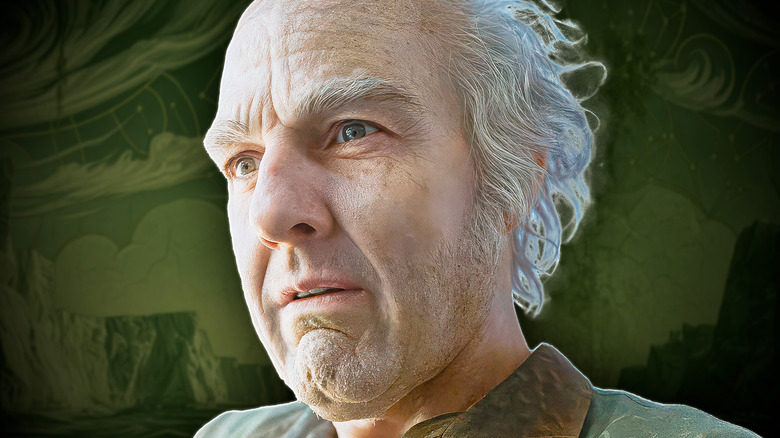
Before "Digger" premiered, there were rumblings that the marketing was hiding something crucial about the plot. As soon as the movie started screening for critics, they confirmed just as much without letting the big reveal slip, hinting only that it was a gamble that would split audiences. Based on the first wave of reviews, this likely isn't going to rank high among Tom Cruise's filmography, with critics torn between admiring a $125 million movie taking such an audacious swing, and finding its brand of political satire to be a major turn-off.
Almost immediately, the movie's Oscar hopes have died outside of craft categories, and it's tracking to be a box office flop. Some have reported it could open as low as $9 million in the U.S. If that came true, a debut in the top five might be out of the question. This would be a flop of historic proportions.
Below, we're diving into the twist that comes at the 30-minute mark, and how it shapes the world of "Digger," right down to one of the bleakest endings we've seen in a major studio release in recent memory. Naturally, there are many spoilers ahead as we unpack the timeline of the alternate history (and near-future) of this world completely obliterated by climate change, so only read on if you've seen it -– or are just morbidly curious about the unexpected left-turn. You know from the trailers things get apocalyptic, so brace yourself as we reveal just how weird things become.
What you need to remember about the plot of Digger
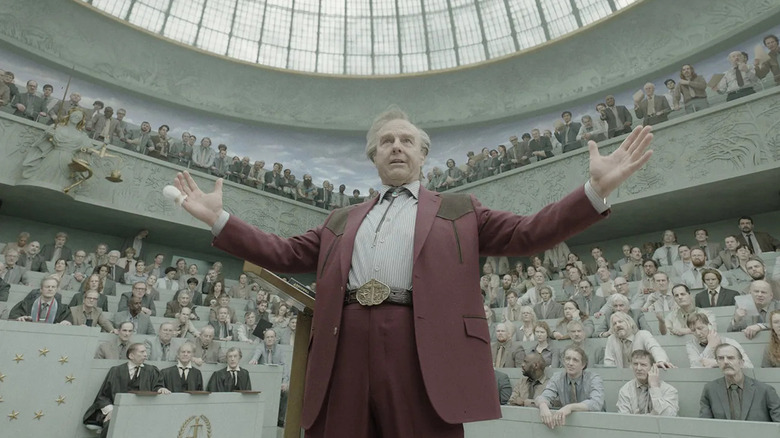
Half an hour in, oil tycoon Digger Rockwell (Cruise) and the terminally ill American President (John Goodman) are having a heart-to-heart revealing that an ice shelf named Judy –- 400 feet high and the size of Washington DC –- will imminently wash up on the shores of Oslo, triggering a climate catastrophe throughout Europe. Outside, a tree slowly falls over, and a runner leaps in place to correct it; we're witnessing the final rehearsals of a satirical play about this in-universe event, and not an authentic account of how it played out, a twist even our review had to hold off from revealing.
Director Alejandro González Iñárritu transformed a dark comedy about backstage drama into Oscar gold with his 2014 best picture winner "Birdman," and "Digger" feels like a spiritual sequel. We continue witnessing the fraught final act-through before the show opens, and lead actor Curtis Markson (Cruise) is struggling to find his character. He's watched 300 hours of interviews with the real Rockwell, who was a more "composed, seductive psychopath" than this over-the-top, Foghorn Leghorn-style caricature. Offstage, his daughter's flight from Jamaica has gone missing in a category five storm, and his nerves are shot even further.
The opening night performance is a success, and the crowd cheer in the final moments when Digger commits suicide, with Curtis learning his daughter is fine afterwards.The crowd wait in their seats, and a voiceover tells them to turn their mandated air filtration masks up to level four before heading back into the dystopian New York outside.
The timeline of Digger
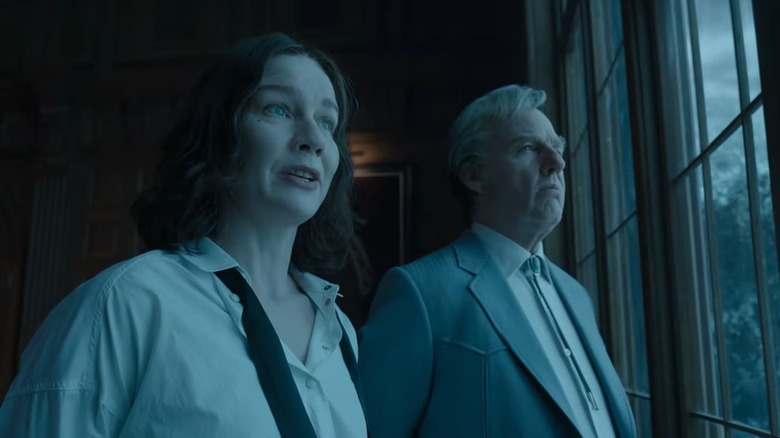
We learn this is a revival of the play "Fossil Fools," which premiered in London's West End 25 years earlier. Digger Rockwell's nephew Kenny (Jesse Plemons) experienced the opening night as a teen, and as we see a child actor portray him within the play itself, that means there's roughly five-to-ten years between Judy and the show's debut; no years are explicitly stated to push that this could be our future if we keep drilling for oil. The show is described by the revival's director (Sophie Wilde) as "cathartic" for its audience.
In the 24 hours following Judy, the President shifted blame to his VP (Michael Stuhlbarg), sending him to Europe to apologize to the booing members of the EU parliament. Scientist Ganesh (Riz Ahmed) had been given permission to reveal the truth that Digger knew and refused to act upon because it would mean losing billions. When Digger comes out to speak, he positions himself as offering the energy they needed for lifestyles they knew were unsustainable.
Leaving the parliament, a now-drunk Ganesh reveals that an even bigger ice shelf, Kimberly, is on a collision course with the Alaskan coast. Its 700 square miles wide and hiding a "concentrated nuclear reservoir" under the ice cap from the toxic waste dumped by the Russians (the U.S. rename it "Kremlinova" to start a war with Russia if necessary). The Americans bomb it, but just create 20 smaller icebergs, and horrors far closer to home.
The post-disaster years
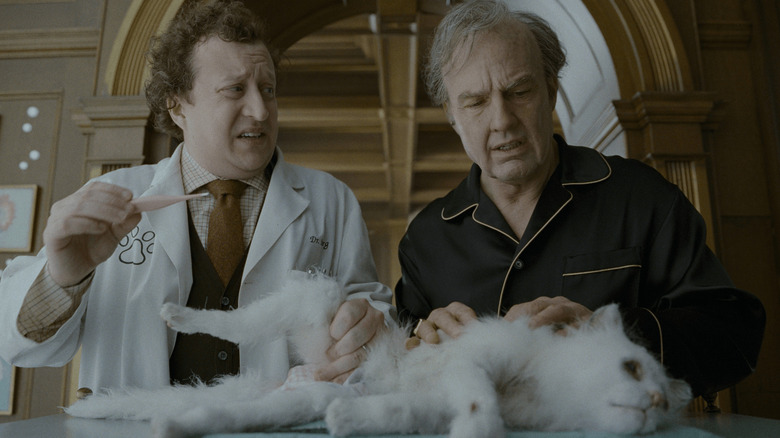
"Fossil Fools" skips forward five years later, revealing that Digger and his eco-entrepreneur half-sister Emma (Sandra Hüller) have been living in one of his company's oil rigs off the Alaskan coast. Now desperate for money, he's selling off Emma's green energy company, and as he makes that call, discovers that the new American President (potentially Stuhlbarg's VP from earlier, although this isn't stated) has finally stopped subsidizing his life in exile.
His crew and his military escort have vacated the premises, alongside most of his food and water, and cases stuffed with gold. Only a few chefs remain, as well as the previous President's corpse in a drinks fridge. It's unclear how long he's been dead, but the removal of services could be because he's only just kicked the bucket.
Digger scatters the ashes of his long-dead cat Maggie into the risen tides below, before leaping to his death. Things don't seem to have improved, with our final glimpses of New York suggesting a tech dystopia; monitoring that people are wearing their masks, surveillance drones and robots littering the streets, while gloomy news reports are projected onto screens in the skies.
One of the final things we see is a piece of Orwellian graffiti reminding citizens that "compliance is freedom." Is there any wonder the audience watching "Fossil Fools" would cheer so cathartically seeing one of the men responsible plummeting to his death?
Why is Kenny producing the play?
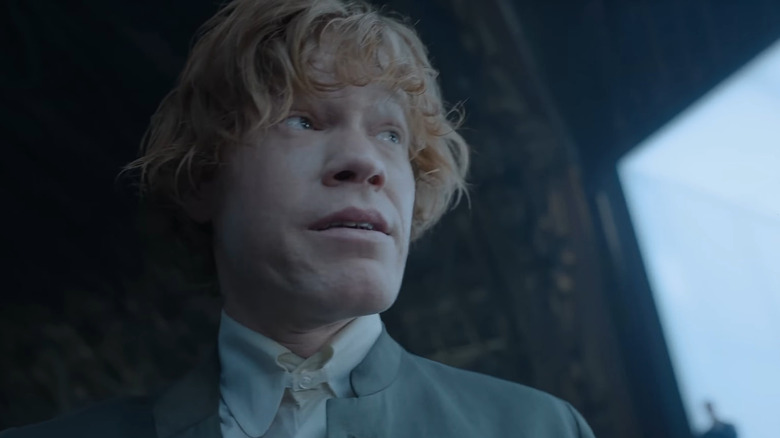
This is where the satire gets more interesting, although we'd argue it doesn't do enough with its most ingenious idea. After withholding Kenny's relationship to the show beyond his producer status, he delivers a monologue to the stressed-out cast about seeing "Fossil Fools" for the first time as a teen, cheering along with the crowd celebrating his uncle's death. Kenny is now the billionaire owner of a private security company and doesn't want to hide the sins of his family's past. Reading between the lines, it's clear his intentions are far from noble.
He bought the rights to the play several years earlier, hiring a director and a writer to update the original script, sparing no expense for casting and production design, wanting to give audiences a reason to leave their homes and brave the outside world. What's not being said is that he's now in control of the public perception of his family history due to owning the play's rights, and Curtis's anxieties about the play straying into over-the-top caricature shouldn't be settled like they are.
Rather than a "composed, seductive psychopath," Digger has been rewritten as a broad, deeply stupid villain, allowing Kenny to draw a clear line in the sand between his billionaire predecessors and himself, using his public status as a selfless patron of the arts to distort the reality. It's an evil masterstroke in managing public relations and rehabilitating the Rockwell name in a world his family destroyed.
Is Fossil Fools even a good show?
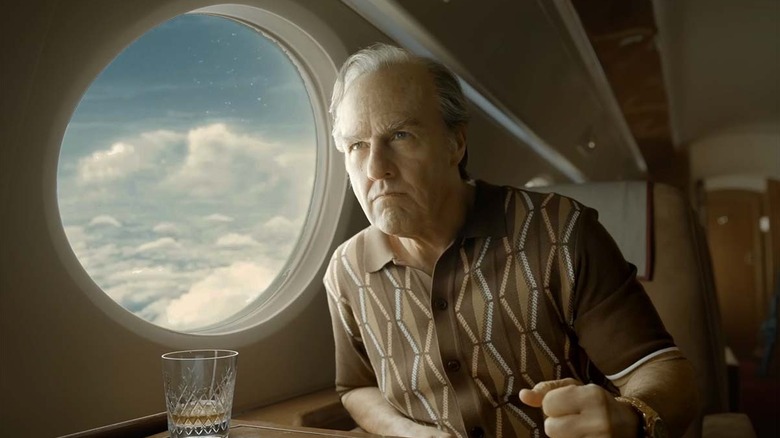
It seems like Iñárritu wanted to depict the creation of a compromised work of art -– but as he spends more time depicting the play, this gets lost in the mix. Even with the knowledge that theatrical revivals seldom mirror the original run, there are multiple signs that this iteration of "Fossil Fools" has warped the satire of the original to something far more cartoonish.
In a scene where Curtis is running his lines, his director informs him that there has been a last-minute script change, despite it being the final dress rehearsal. We see pages of crossed-out lines in the script, and given how this is presented coupled with Curtis's frustrations that the character is moving further away from reality, it suggests someone higher-up is interfering with the creative process. Listen closely to the director's impassioned defense of the satire as something somebody of Curtis's generation wouldn't "get," and it's clear that this is being reworked to give the public a historical bogeyman to blame for all their troubles.
It becomes apparent that the play has become a work of propaganda, successfully blaming long-dead figures for the current situation even if their actions aren't responsible for the totalitarian regime in power. They created the conditions for a dystopia, but not a ruling dictatorship; those with money and influence shape public perception through art so they never get held responsible for making the world they inherited even worse.