

5 Movies To Watch If You Like Robert Pattinson's Primetime
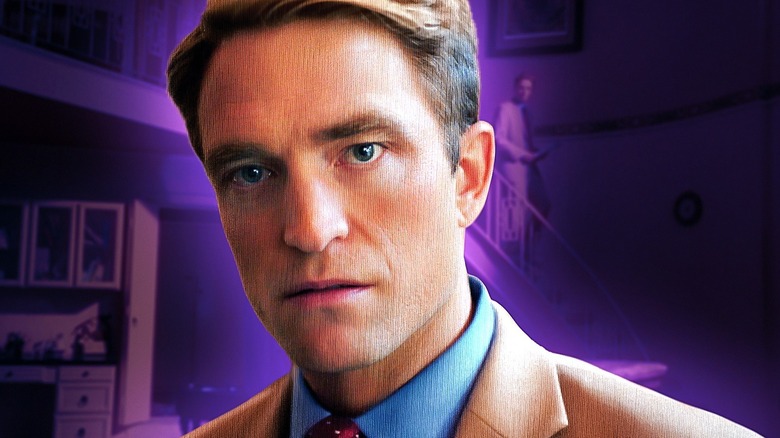
When the credits roll on "Primetime," your knuckles are bound to be clenched and your breath will need to be exhaled. This intense Lance Oppenheim directorial effort is a grim exercise that unflinchingly explores the human cost of TV ratings success above all else. It's one heck of an experience, especially since Robert Pattinson's version of Chris Hansen is mesmerizing. He's got all the tics everyone associates with Hansen down pat, but Pattinson infuses his version of the man with doses of chaotic unpredictability and social coldness that make this "Primetime" lead extra engaging.
Part of what makes "Primetime" work is how singular it is. Its visual and tonal idiosyncrasies aren't common in the modern film landscape, especially among major American movies. However, for those craving more titles in the vein of "Primetime," there are some compelling options out there. In particular, there's five must-see titles for those that liked Robert Pattinson's "Primetime." These motion pictures are perfect accompanying pieces on several fronts. Sometimes it's because they also feature extraordinary Robert Pattinson performances. Other times, it's because they also explore a story the way "Primetime" blurs its lines between fantasy and reality blur.
Whatever makes these five movies exceptional companion pieces to "Primetime," they're all quality movies worth seeing in any context. However, they're especially perfect for viewers fresh out of their "Primetime" screenings.
Good Time
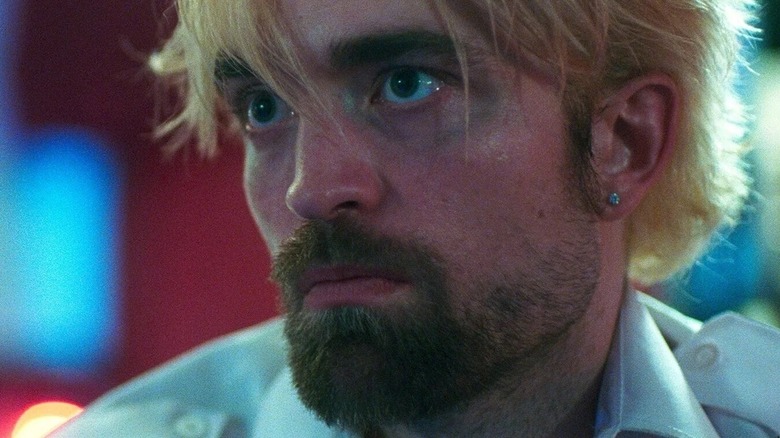
Robert Pattinson was never the same after "Twilight" in terms of his Edward Cullen role defining his star persona. If people were going to primarily link him with a sparkling vampire Casanova, though, then Pattinson would just have to go in the opposite direction for his post-"Twilight" roles. Thus, the actor embraced grimy roles full of anxiety and messiness to differentiate himself from Edward Cullen. This led to some of Robert Pattinson's best movie roles to date, as he's proven masterful at portraying weirdos in pulse-pounding and fascinatingly unorthodox atmospheres.
His penchant for such roles was apparent when he anchored the 2017 Josh and Benny Safdie directorial effort "Good Time." This title saw Pattinson playing Connie Nikas, who scrambles to get his brother, Nick (Benny Safdie), out of police custody. What follows is a nerve-racking story full of unforeseen complications where Connie is nowhere near as smart as he thinks he is. Pattinson is extraordinary as the centerpiece here. His work is so tangibly urgent that it feels like his beads of forehead sweat will drip onto your lap. He's also fascinating when depicting Connie's genuine but toxic love for his brother. There isn't an evil motive behind him wanting to save or love Nick. The problem is that Connie only brings trouble into his poor sibling's universe.
Pattinson handles morally complex material and the immediate, visceral achievements in "Good Times" with equal levels of deftness. Even in Pattinson's stacked filmography, this role still stands out as special.
Nightcrawler
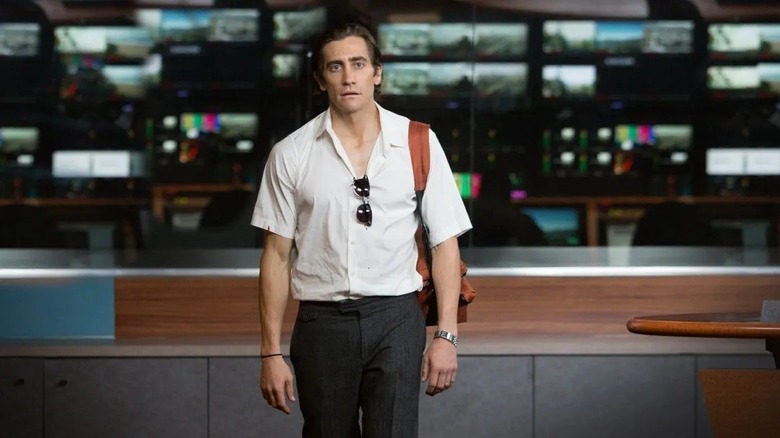
The core theme of "Primetime" is laying bare the dehumanization informing the reality TV world. Programs like "Kid Nation" are infamous for how badly people were treated just to make programming that advertisers and audiences might flock to. Similar phenomena underpins the world of TV news. In the pursuit of ever greater ratings, these programs often emphasize sensational storytelling and even demonize marginalized groups in lieu of getting valuable information to the public. Tapping into this made "Primetime" so special. Its willingness to confront the darkest parts of existence, a core tenet of the 14 most disturbing movies of all time, also flows through "Nightcrawler."
This Dan Gilroy directorial effort follows Lou Bloom (Jake Gyllenhaal), a Los Angeles denizen looking for any job that can get him money and power. That's when he comes into possession of a camera and begins making bank filming gnarly nighttime crimes. Corpses and bruised bodies on the side of the road become Bloom's ticket to steady income and fame. Gyllenhaal's "Nightcrawler" performance is rightfully the most famous element of this film and it is indeed a triumph of eerie acting. Gyllenhaal's Bloom creepily comes off as imitating human beings rather than being genuinely human (a feat Pattinson mirrored in his own extraordinary "Primetime" lead turn).
What's truly haunting about "Nightcrawler," though, is that Bloom's no anomaly in this movie's universe. He's just one of many looking to use people's pain as a ladder to glory.
The King of Comedy
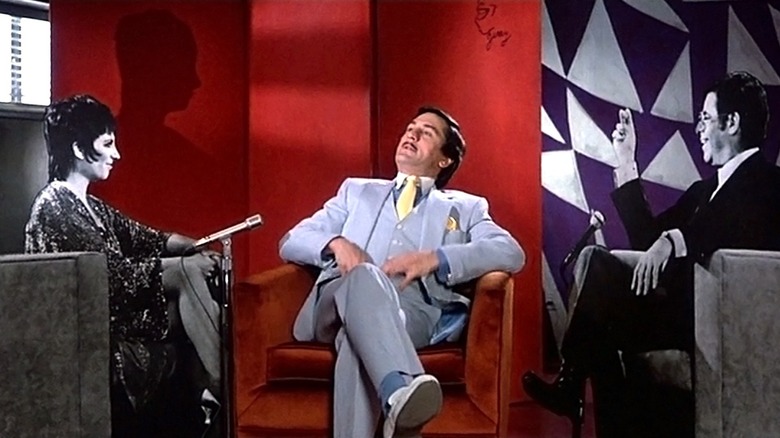
Long before Robert Pattinson's chilling version of Chris Hansen inspired shudders and cringes in movie theaters everywhere, there was Robert De Niro's Robert Pupkin. He too had both a hankering for the television spotlight and no qualms about doing whatever it takes to get to the top. Pupkin's obsession derives around talk show host Jerry Langford (Jerry Lewis), whom Pupkin believes is his key to success. When Langford brushes off this wannabe comedian, Pupkin refuses to give up. Thus begins an odyssey built on one man's delusions that allows writer/director Martin Scorsese (who penned the script with Paul D. Zimmerman) to contemplate the kind of figures held up as celebrities in American culture.
"The King of Comedy" failed to take off at the box office (or with audiences) upon its initial release, but it's endured as Scorses' box office bomb everyone needs to watch at least once. In this title, a filmmaker known for bleak masterpieces like "Silence" or "Killers of the Flower Moon" proves adroit at executing the kind of cringe comedy Nathan Fielder and Tim Robinson would revel in decades later. There's so many great squirm-inducing gags in here, several of them leaning heavily on De Niro's deeply committed and engrossing lead performance.
"The King of Comedy" absolutely sings in every regard, including how its plot keeps escalating out of control to riveting effect. Plus, its saga about celebrity and pursuing fame at all costs has only grown even more tragically relevant since its 1982 debut.
Friendship
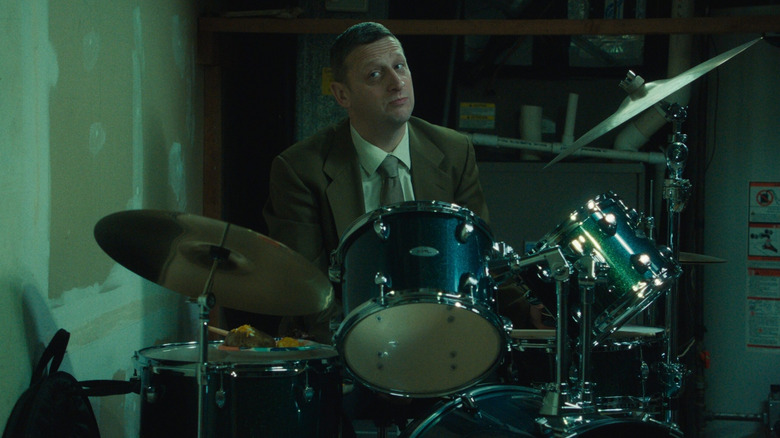
One shocking thing about "Primetime" is how skilled it is at visual comedy. Though it features incredibly unsettling moments and leaves you shaken by the time the credits roll, director Lance Oppenheim and company also prove adept at delivering imagery-based chuckles that are similarly impactful.
If you're seeking out other modern cringe-inducing A24-distributed films with dark laughs, look no further than Tim Robinson's inaugural foray into motion pictures, "Friendship." This film from writer/director Andrew DeYoung follows lonely Craig Waterman (Robinson) as he stumbles onto his new neighbor, Austin Carmichael (Paul Rudd), and tries to become his new best buddy. It all leads to the kind of unforgettably awkward yuks previously informing Robinson's exploits in the best "I Think You Should Leave" sketches. The laughs (and discomfort) come steadily in "Friendship," while DeYoung, in his feature length filmmaking debut, exudes commendable visual chops.
This profoundly funny exercise also doubles as an introspective piece of commentary on the struggles of male-identifying people trying to make emotional connections in the world. After anchoring a movie this good, Tim Robinson has clearly earned more feats to his name than just creating one of the Netflix shows way better than "Tires."
The Lighthouse
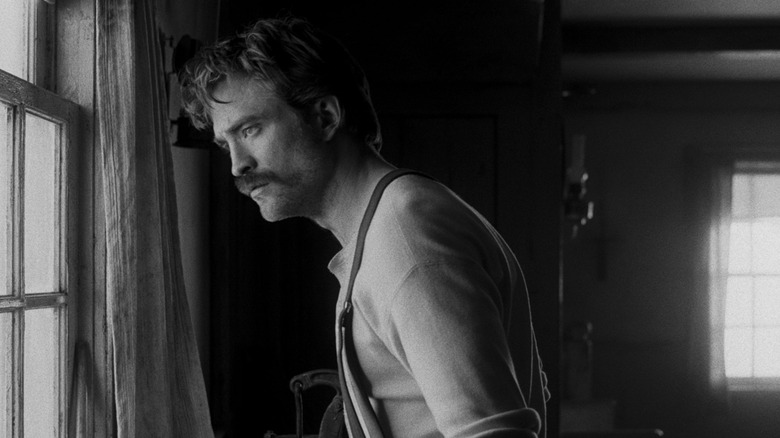
Writer/director Robert Eggers has become an epic director with his post-2019 efforts like "The Northman" and "Nosferatu." His titles now span multiple locations and time periods while involving large ensemble casts draped in intricate period-era clothing. This trend is bound to continue now that he's locked in to do an adaptation of "Romeo & Juliet." His ballooning cinematic impulses have proven engrossing, but one of the greatest Eggers movies is also his most confined work (even compared to his debut, "The VVitch.") 2019's "The Lighthouse" kept audiences — and its only two characters — confined to the titular location and was all the better for it.
Seven years before he engrossed audiences as Chris Hansen, Robert Pattinson played "The Lighthouse" lead character Ephraim Winslow, who is tasked with tending to a lighthouse with the crusty seadog Thomas Wake (Willem Dafoe). Eggers proceeds to frame the duo in monochromatic colors and a 1.19:1 aspect ratio as they try to survive each other and their crumbling grasp on reality. Dafoe's rightfully acclaimed work here is so outsized that it can be easy to forget how essential Pattinson is as Dafoe's counterpart. He's a fantastic foil, while Pattinson's portrayal of Winslow deteriorating from within is vividly realized.
"The Lighthouse" constricting itself to these two characters also means that Pattinson's acting has to work or else the whole film crumbles. He's more than up to that task in this masterfully streamlined film.