

5 Best Disaster Movies Of The 21st Century, Ranked

Disaster movies are a unique cinematic experience. They're the only genre where John Cusack, Tommy Lee Jones, Dwayne Johnson, and Jimmy Stewart can all be leading men without question. They're movies where lines like "God help us all" and "What're you doing with a gun in space?" can sound downright logical rather than bizarre. And they're places where audiences witness devastating destruction rain down on familiar global locales in a controlled environment. None of it is real, even while the imagery vividly reflects all kinds of horrific real-world tragedies and natural disasters, making the unthinkable and traumatic into safe popcorn entertainment.
Thanks to the rise of superhero films and other forms of blockbuster entertainment, the disaster film certainly doesn't have the cache it did in the '70s or '90s. Mentioning the genre today might just conjure up memories of "Moonfall," "Geostorm," or other recent misfires. However, that doesn't mean the disaster movie has been entirely AWOL or creatively bankrupt in the modern world. The five best disaster movies of the 21st century (ranked below from "least best" to best, based on the author's opinion) not only show that these kinds of movies can be aesthetically more than just Roland Emmerich pastiches, but that greatness can still be accomplished with this particular type of film. These 21st century disaster movies are keeping an enduring Hollywood genre alive and well.
5. The Impossible
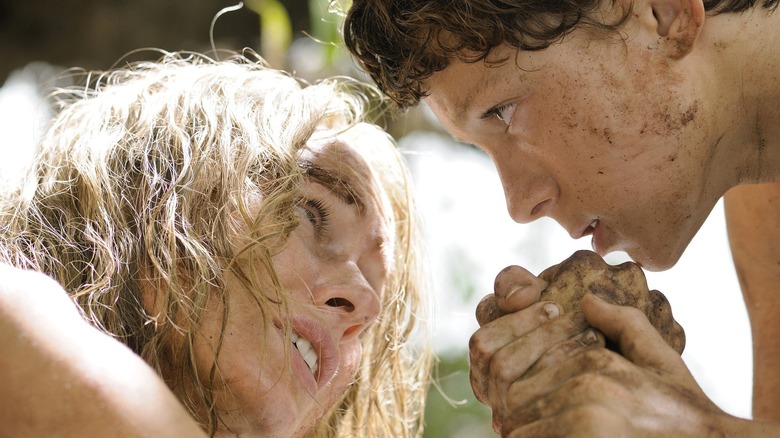
Director J.A. Bayona loves making movies that wear their hearts on their sleeves and inspire audiences' tears to gush. This approach resulted in 2016's criminally underrated masterwork "A Monster Calls," which chronicled coping with impending loss as a child, and 2023's "Society of the Snow," which sometimes suffered from broadly defined characters but largely worked as a grueling survival thriller. This cinematic style was vividly evident in his 2012 historical disaster film "The Impossible," which starred a young Tom Holland years before he played Spider-Man.
Inspired by true events, the film follows Maria (Naomi Watts) and Henry Bennett (Ewan McGregor) on vacation in Thailand with their kids, including Lucas (Tom Holland). However, during their stay, the Indian Ocean tsunami makes landfall, taking countless lives and separating the Bennett family, who struggle to reunite. "The Impossible" is an agonizing work buoyed by deeply moving performances, as in a tremendously impactful scene in which a tearful Henry just sits in front of a wall on a phone.
Holland also reaffirms his chops with his impressive work here, as he excels in sequences with Watts that rely entirely on their dynamic. Many disaster movies are about ordinary people navigating unthinkable natural horrors. "The Impossible" makes those struggles especially potent and tangible.
4. Contagion
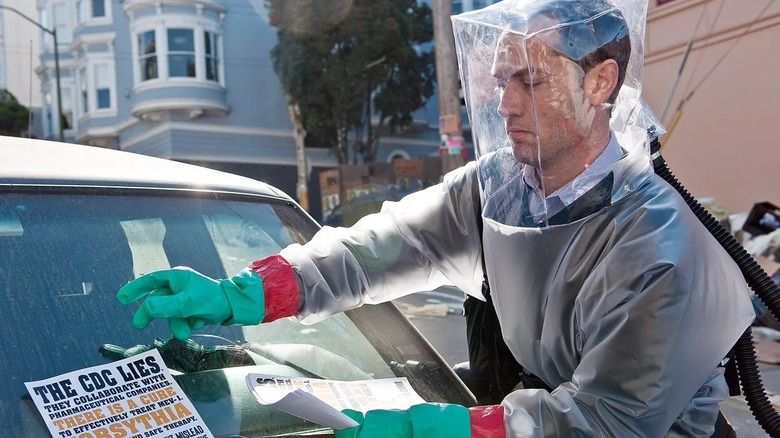
Many of the best disaster movies of all time see humanity reckoning with natural forces that are awe-inspiring in their clearly visible power. A massive tidal wave. A gargantuan asteroid hurling towards the planet. Earthquakes causing sizable cracks in the ground. Steven Soderbergh's "Contagion," though, proposes that the event wiping out the human race is invisible: a virus that spreads rapidly around the planet, eliminating people and ensuring the old "normal" never returns. As anyone whose lived through the ongoing COVID-19 pandemic knows, those are the scariest and most devastating disasters of all.
The unshakable terror stemming from those circumstances makes it unsurprising that people can't stop watching "Contagion." Soderbergh's 2011 film is incredibly compelling, its expansive scope giving so many different actors (ranging from Jude Law to Kate Winslet to John Hawkes, among others) so many chances to excel. Plus the commitment to a grounded, horrifyingly unsensationalized depiction of how a global pandemic would affect the planet ensures that "Contagion" delivers terrifying set pieces no other disaster movie could realize. This is a singular motion picture in every respect.
The script from Scott Z. Burns and score from Cliff Martinez are equally evocative and further accentuate the distinctiveness that "Contagion" wields among both disaster movies and films in general. Soderbergh's great at making fun "Logan Lucky-"style films, but "Contagion" reaffirmed his prowess in all kinds of tonal ranges. Other grim disaster movies, take note.
3. War of the Worlds
Disaster movies from the tail end of the 20th century, many of them '90s movies that critics were totally wrong about, had hopeful visions of humanity responding to extreme disasters. Whether it was a volcano suddenly sprouting up in California, aliens invading the world, or asteroids colliding with major cities, these '90s tentpoles presented people who united easily to defeate whatever obstacles were in their path. All it took was a stirring Bill Pullman speech for everyday people to suddenly have the tools needed to survive and conquer the greatest natural or otherworldly disasters.
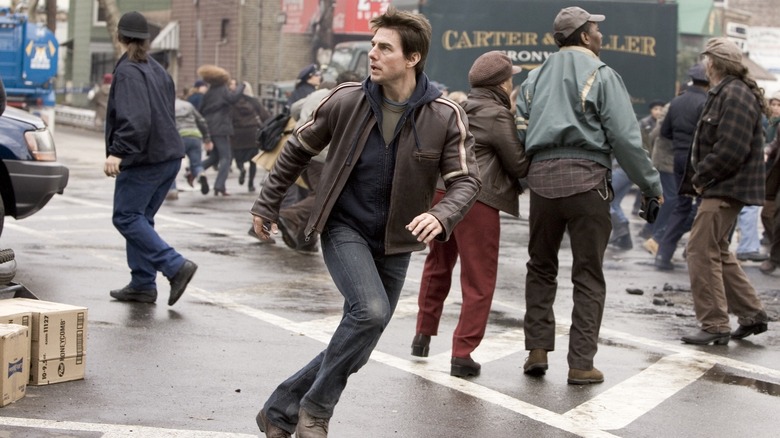
Compare that to director Steven Spielberg's "War of the Worlds," starring Tom Cruise as Ray Ferrier, a divorced dad who's not a hero in waiting. When aliens in their massive tripods begin attacking the Earth and wreaking havoc, Ferrier and others don't suddenly become superheroes who can withstand anything. They're constantly running, screaming and helpless. The vulnerability of human beings in the face of unthinkable chaos fuels the distinctly post-9/11 terror of 2005's "War of the Worlds." While "Independence Day" made shots of the White House getting blown up look cool, "War of the Worlds" uses scenes of highways getting obliterated to instill the fear of God into audiences.
Spielberg's dedication to such an ominous tone (while subverting Cruise's star image) makes for a fantastic and unique disaster movie. "War of the Worlds" has numerous, evocatively haunting sequences that you just normally wouldn't find in more hopeful genre entries.
2. Gravity
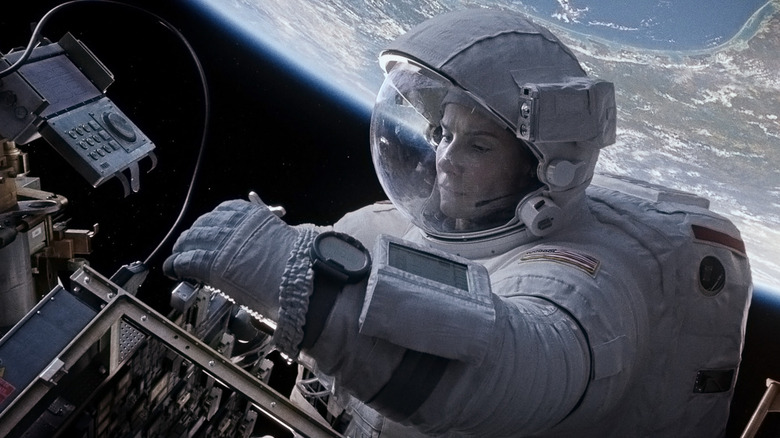
The last three decades of the 20th century delivered a steady stream of disaster movies (from star-studded '70s titles like "The Towering Inferno" to '90s projects like "Deep Impact") that established a distinct form for this type of American blockbuster. But the common visual and narrative hallmarks of these films have been subverted through the 21st century's better examples of the genre. It's like those pre-2000 entries in the genre were setting up bowling pins that the likes of "Contagion" and "War of the Worlds" were destined to knock down. The 2013 feature "Gravity," for example, vividly upends a key disaster movie standard: setting these stories on Earth.
Instead, writer-director Alfonso Cuarón sets this title just outside of Earth's orbit, as astronauts Ryan Stone (Sandra Bullock) and Lietenant Kowalski (George Clooney) suddenly encounter space debris that capsizes their entire mission. Stone, with minimal resources at her disposal, must now figure out how to get home without getting sucked into the endless vacuum of space. The suspenseful intensity, awe-inspiring images, and sights of gigantic objects crumbling into tiny pieces that people expect from disaster movies litter the runtime of "Gravity." However, Cuarón presents this material in an especially taut and visually precise fashion (just look at those unblinking single-take shots).
Plus, having normal humans cope with disasters in zero-gravity just beyond Earth's borders lends "Gravity" a sense of danger that no other entry in this genre can hope to match. "Gravity" is worlds away from classic disaster movies in many ways, and it's all the better for it.
1. Godzilla Minus One
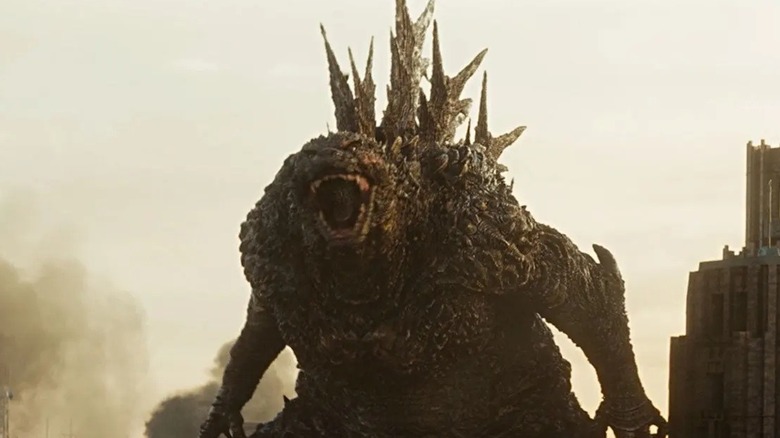
The best and worst "Godzilla" movies reflect the wide array of artistry that has contributed to this particular franchise. As with disaster films, "Godzilla" movies run the gamut of quality, but one of the greatest entries in either genre is "Godzilla Minus One," which made no bones about returning the titular lizard to being a terrifying force of nature. Like 2016's "Shin Godzilla" and so many of the greatest "Godzilla" adventures, "Godzilla Minus One" wasn't afraid to delve into deeply specific material profoundly relevant to the wider world. Oh, and a massive kaiju got to tear buildings apart.
This particular "Godzilla" movie is set in the 1940s just after World War II, where characters like Kōichi Shikishima (Ryunosuke Kamiki) are grappling with what their lives look like in that conflict's aftermath. That's when Godzilla emerges to provide even more chaos and give fictional figures plagued by guilt over not dying in the war something to live for. The character drama in "Godzilla Minus One" is tremendously engaging and leaps and bounds better than the obligatory melodrama making up many disaster movies. Grand spectacle-heavy sequences are also outstandingly realized, especially since the creative team are so skilled at making Godzilla genuinely scary.
In every respect, from its most intimate impulses to the most towering stabs at disaster movie imagery, "Godzilla Minus One" is a triumph. It's no wonder "Godzilla Minus One" blew everyone away at the box office, given that it's basically the pinnacle of disaster movies.