

5 Video Game Movies That Changed Hollywood Forever
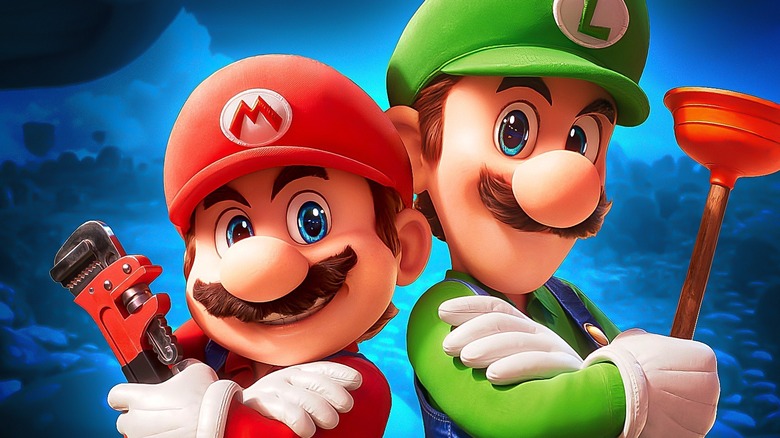
The history of the video game movie is exceedingly perplexing. It's basically 27 years of almost non-stop failures (save for the occasional hit like the original "Lara Croft" film, "Rampage," or "Pokémon: Detective Pikachu") until "Sonic the Hedgehog" suddenly ushered in a new golden box office age for these projects. Subsequently, the 2020s have been full of massive video game movies, including the Illumination "Mario" features, Blumhouse's "Five Nights at Freddy's" outings, "A Minecraft Movie," and sleeper indie hit "Iron Lung." Everything was so grim for these features for eons and then, all of a sudden, the drought got interrupted by a downpour.
Given this reality, one might expect there to not be much nuance in the history of video game movies. However, there actually have been several fascinating intricate ups and downs scattered throughout the over 30 years of these titles populating video game movies. This is exemplified in the five video game movies that changed Hollywood forever. Even if these titles were so often punchlines or shorthand for "bad movie," video game films could still have a profound impact on the broader culture. Sometimes, this was through positively upending perceptions of how popular these adaptations could be. Other times, video game movies upended Hollywood in dreadful ways that still send shivers up the spines of film geeks.
However they left their mark on the world, these five video game movies permanently altered the film industry and provided fascinating wrinkles to this subgenre's history.
The Super Mario Bros. Movie
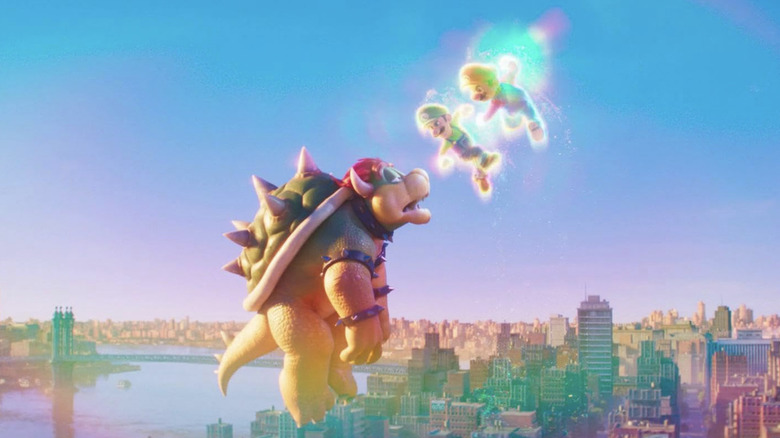
The first proper theatrical video game movie, "Super Mario Bros.," debuted in multiplexes 30 years before 2023's "The Super Mario Bros. Movie." Over the next three decades, video game films could sometimes deliver okay box office hauls, but they never reached that next level of success that comic book films or adaptations of famous fantasy novels exceeded with ease. For proof of this, look no further than the reality that, prior to "The Super Mario Bros. Movie," the biggest video game movie at the worldwide box office was "Warcraft," making $439 million globally (much of which came from an exceedingly frontloaded China box office run).
While this reality and the biggest video game movie bombs of all time hindered the reputation of these titles, "The Super Mario Bros. Movie" suddenly turned everything upside down. This kid-friendly, ultra-faithful adaptation of the classic "Mario" games was a massive box office smash that did more than just become the first video game movie to exceed $500 million worldwide. It grossed a staggering $1.3 billion worldwide, firmly putting it among the biggest animated movies of all time and more than tripling what "Warcraft" had delivered overall.
With this Chris Pratt star vehicle, video game movies weren't just suddenly profitable. They could now be as successful as the biggest features in cinema history. Video game films had finally come into their own at the box office after a couple decades of trial and error.
Mortal Kombat (1995)
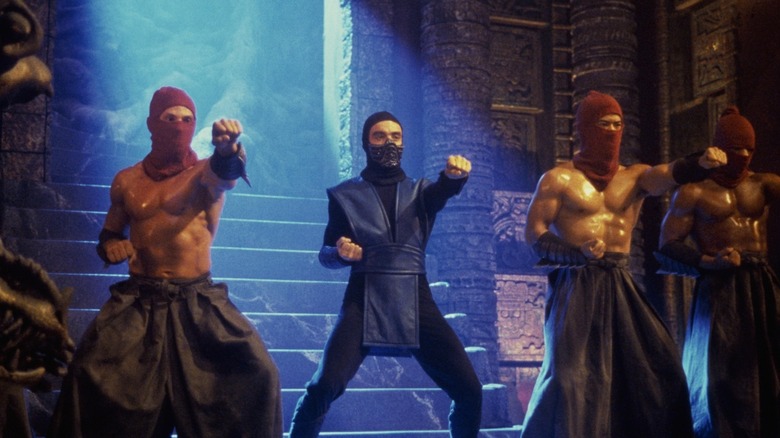
While it wasn't necessarily as big as the "Sonic the Hedgehog" or Illumination "Mario" movies, 1995's "Mortal Kombat" adaptation did prove a tidy moneymaker that reaffirmed that it was more financial viability to the video game movie than early flops like "Double Dragon" suggested. Among the flawless facts about the 1995 hit "Mortal Kombat" was that it grossed a robust $122.1 million worldwide, which is not too shabby for something that cost $20 million to produce and was dumped in late August. To boot, the $70.4 million domestic cume of "Mortal Kombat" made it the 22nd biggest movie of the year.
No matter what flops followed for the video game movie genre (including the "Mortal Kombat" sequel "Mortal Kombat Annihilation"), at least devotees to these titles could point to "Mortal Kombat" as a sign that these films weren't inherently doomed to failure at the box office. Meanwhile, the long-term legacy of "Mortal Kombat" isn't just confined to dollars. Its impact on video game movies was also felt in how it introduced director Paul W. S. Anderson into this terrain. In the years that followed, Anderson would helm a deluge of "Resident Evil" films and also "Monster Hunter," making him one of the most prolific video game movie directors.
While seeing his name on the posters for video game movies is common today, "Mortal Kombat" was the box office hit that established this status quo. In other words, "Mortal Kombat" achieved many "flawless victories" within the realm of video game films.
Silent Hill
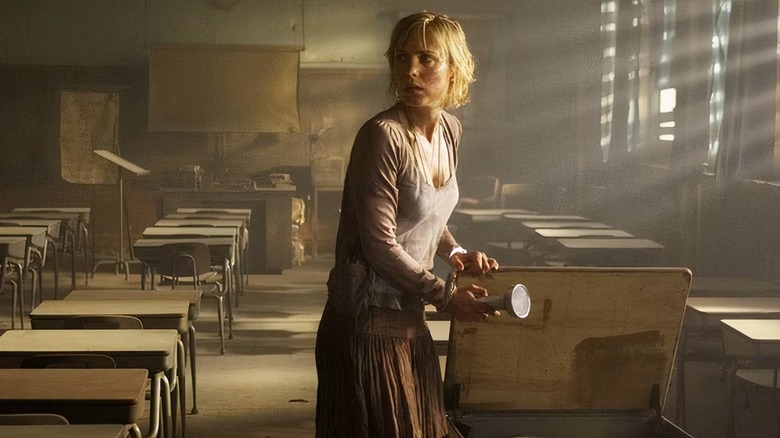
Unfortunately, the immensely disappointing sequel "Return to Silent Hill" becoming one of the worst movies of 2026 has overshadowed the fact that the original 2006 film "Silent Hill" actually garnered a solid reputation. For many viewers, this feature actually worked in translating its source material to the silver screen and delivered solid scares that could work for any viewer. Given the trajectory of theatrical "Silent Hill" movies since 2006, securing that level of quality alone would be enough to warrant "Silent Hill" some respect.
However, "Silent Hill" came out during a treacherous time for video game movies. All-time terrible duds like "Doom" and "Max Payne" were clogging up theaters in this stretch of the 2000s. Titles like "Final Fantasy: The Spirits Within" were becoming 2000s box office bombs that changed Hollywood forever. Uwe Boll adaptations of various video games were congesting multiplexes and scoring some of the worst reviews in history for any movie. These brutal financial realities were further hampering the entire perception of the video game movie. How could anyone take such adaptations seriously when they were so often connected to cinema's creative nadir?
"Silent Hill," meanwhile, has garnered praise and a cult following that's eluded nearly every other mid-2000s video game movie. In a harrowing time for such motion pictures, "Silent Hill" provided comforting refuge — ironic, given the titular location's haunting nature.
Lara Croft: Tomb Raider – The Cradle of Life
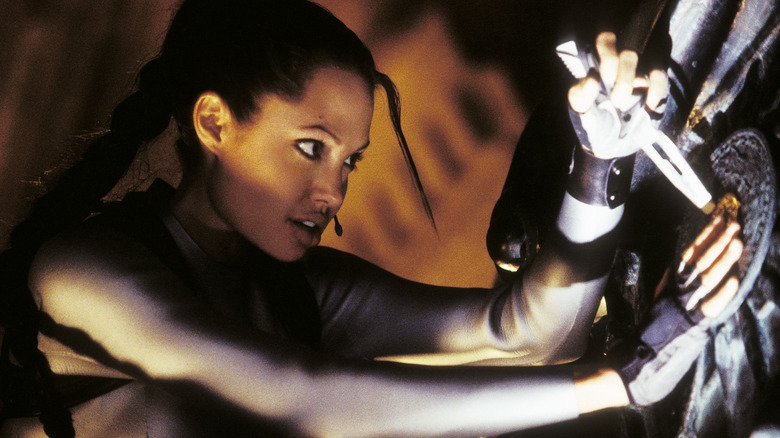
One thing you don't see a lot in the world of pre-2020 theatrically released video game movies is sequels (save for the endless sea of "Resident Evil" titles, of course). Some of that can be chalked up to the dismal box office numbers on many of these films. After all, "Prince of Persia: The Sands of Time" is one of those huge flops Disney wants you to forget about, so why would it spend money on a follow-up? However, there have been a handful of video game movies over the years that did score worldwide box office totals seemingly teeing up sequels. How come those titles never happened?
The absence of these follow-ups seems to have come from the box office failure of "Lara Croft: Tomb Raider — The Cradle of Life," a 2003 follow-up to Angelina Jolie's inaugural "Tomb Raider" adventure. While the original movie turned a healthy profit theatrically, this sequel only grossed $160 million worldwide on a $95 million budget, including a disastrous $65.6 million domestically. If Lara Croft (buoyed by Angelina Jolie's star power) couldn't sustain multiple theatrical movies, what hope did other video game movies have in spawning lucrative sequels?
Thus, even video game movies that technically proved profitable theatrically (like "Max Payne," "Need for Speed," or "Warcraft") never got sequels. In a pre-"Sonic the Hedgehog" world, "The Cradle of Life" cursed the idea of video game movie follow-ups.
Assassin's Creed
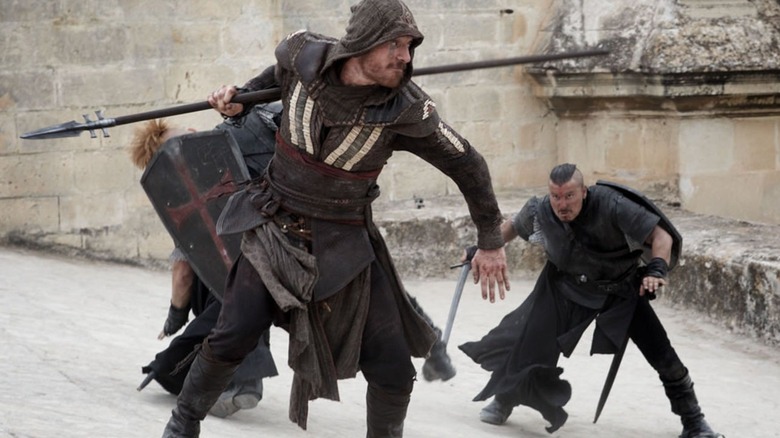
20th Century Fox put a lot of eggs into the "Assassin's Creed" basket. This Christmas 2016 tentpole starring Michael Fassbender had a mighty $125 million budget, a star-studded cast (Brendan Gleeson, Michael K. Williams, and Jeremy Irons were just some of the supporting players), and a brand name that was red hot throughout the 2010s. If there was going to be a video game movie that could spawn a new franchise, it looked like this one was it. Of course, that didn't happen. "Assassin's Creed" instead became one of the biggest box office flops of 2016, bringing in only $240.7 million worldwide and an anemic $54.6 million domestically.
This failure didn't just stop plans for further "Assassin's Creed" movies. It also dampened Hollywood's enthusiasm for further PG-13 video game movies. Save for 2018 titles "Tomb Raider" (which was already deep into pre-production to start shooting just a month after "Creed" premiered) and "Rampage," Hollywood wouldn't launch another PG-13 video game movie with a budget over $100 million until 2022's "Uncharted," a little over five years after "Assassin's Creed." PG-rated family movies like "Pokémon: Detective Pikachu" and "Sonic the Hedgehog" were successfully launched in theaters in that five-year span, but PG-13 video game movies were nowhere to be found.
In hindsight, it sure seems like "Assassin's Creed" curdled major studio enthusiasm for costly PG-13 video game movies for years. Now that video game adaptations are all the rage, that era has vanished from memory, but "Assassin's Creed" did temporarily put these titles in a precarious position.