

All 4 Aladdin Movies, Ranked From Worst To Best
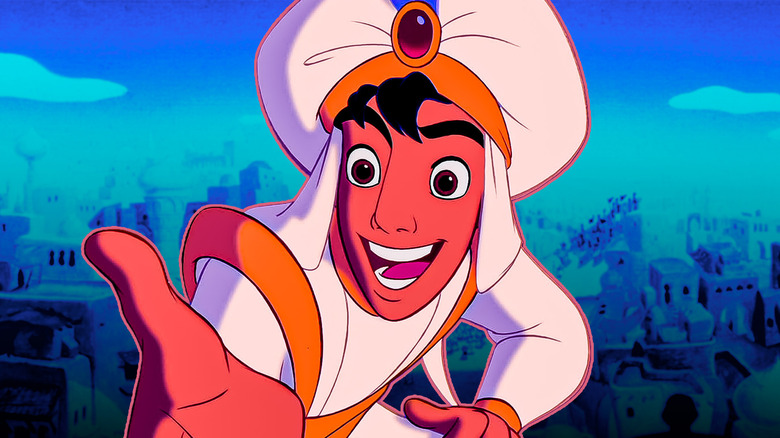
Most of the animated films within the Disney Renaissance have gone on to become cultural fixtures. However, many probably didn't know that classics like "Aladdin" had to endure a long creative process. The idea to adapt the Middle Eastern (yet also Chinese) folk tale of the same name came about in the late '80s by lyricist Howard Ashman, who wrote an entire pitch treatment and a series of songs with Alan Menken for what would have been a much different movie. "Aladdin" eventually took off once directors John Musker and Ron Clements chose it as their next project after "The Little Mermaid."
Going through all the work of bringing Ted Elliott and Terry Rossio onboard for rewrites, hiring Tim Rice to assist Menken in the wake of Ashman's passing, and getting Robin Williams to play the Genie was worth it in the long run. "Aladdin" ended up a critical and commercial darling that not only broke the record as the first animated film to ever crack $200 million at the box office, it was also the highest grossing movie of 1992.
In addition to winning two Academy Awards from its five nominations, "Aladdin" launched a multimedia franchise consisting of two direct-to-video movies, a television series, a Broadway show, and a live-action remake. With that in mind, let's rank all four films in the series and see which did the best at transporting us to a whole new world.
4. The Return of Jafar
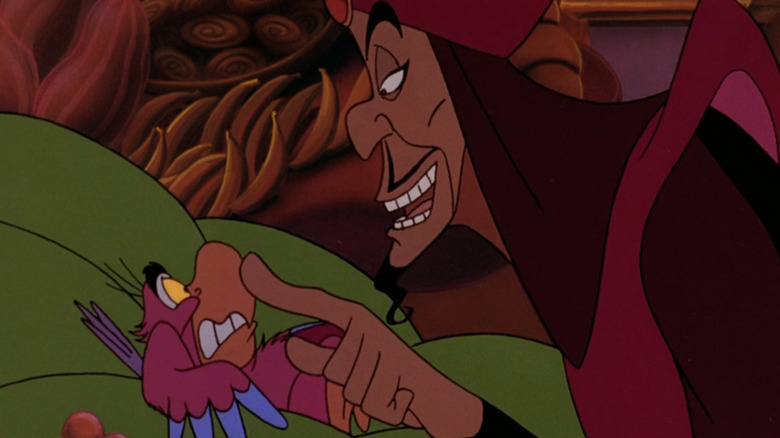
Given their track record, it's crazy that Disney didn't start commissioning sequels to their animated films until the 1990s. What changed Disney forever, however, was 1994's "The Return of Jafar," the company's first foray into direct-to-video sequels. While it certainly paid off for them, the film itself is a cheap, lazy cash-grab that's aged terribly.
"The Return of Jafar" has a decent hook considering the titular antagonist didn't die at the end of the last movie, but was rather sucked into his own lamp. It invites many possibilities for Jafar's (Jonathan Freeman) comeback while aided by the easily susceptible thief Abis Mal (Jason Alexander). The issue is that Aladdin (Scott Weinger), the person responsible for his imprisonment, doesn't learn about his nemesis' escape until nearly an hour into this 69 minute feature. The actual main character is cranky comic relief parrot Iago (Gilbert Gottfried) attempting to turn over a new leaf so he can live in the palace again, and it's just not enough to sustain a follow-up to one of Disney's biggest animated films.
Unsurprisingly, "The Return of Jafar" was born from merging several episodes that would have opened the "Aladdin" television series, and the inconsistent animation is an eyesore. This is also an easy contender for some of the most forgettable songs in any Disney movie. Dan Castellaneta doing the Homer Simpson voice for the Genie tells you everything you need to know about this being a considerable downgrade.
3. Aladdin (2019)
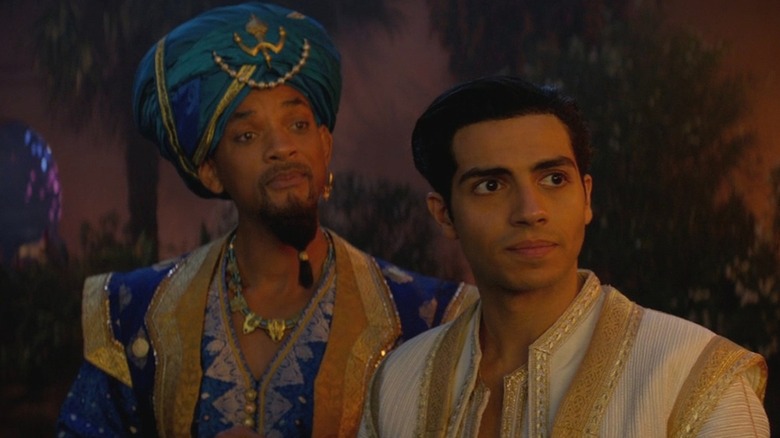
The trap that Disney's live-action remakes often fall into is recreating all the same iconography, albeit without the magic of what made them so beloved, and 2019's "Aladdin" is no exception. The film still follows impoverished street urchin Aladdin (Mena Massoud) who, upon discovering an eccentric Genie (Will Smith) within a magic lamp, uses his wishes to woo Princess Jasmine (Naomi Scott), all while the nefarious Jafar (Marwan Kenzari) seeks to use it for his own benefit. What makes this remake extra frustrating is that there was a great missed opportunity to learn from the criticism of the original's more offensive stereotypes.
Despite presenting Middle Eastern culture through a slightly less orientalist lens and casting actual talent of color (although even that came with its share of controversy), it rarely shapes the film into its own entity. Not to mention it's helmed by white director Guy Ritchie, and even then, there's virtually none of his flashy attributes on display. His "Aladdin" is anonymous work content that plays things safe, albeit with over a half hour of added material that only succeeds in bloating the film.
Will Smith's spirited performance as the Genie, however ugly to look at in his CG form, thankfully isn't a 1-1 copy of Robin Williams, and prevents "Aladdin" from being a total bore. In the end, this version is an immediately forgettable affair in which all of its best attributes make you wish you were watching the original.
2. Aladdin and the King of Thieves
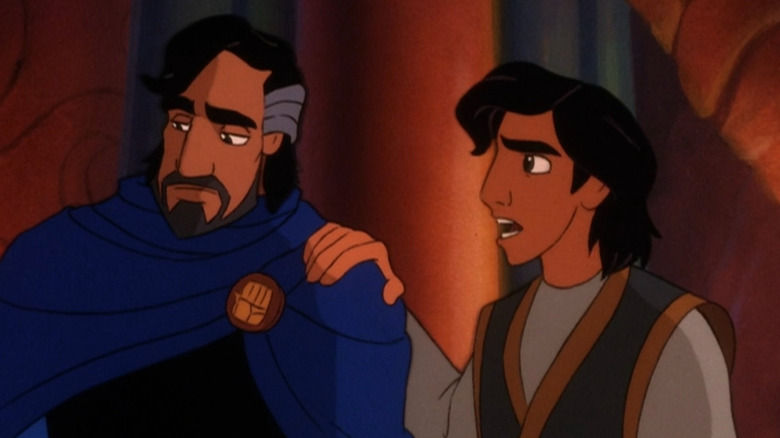
Whereas "The Return of Jafar" came across as an uninspired follow-up, 1996's "Aladdin and the King of Thieves" is a surprisingly good natural conclusion. While it technically acts as the series finale to the television show, it picks up from the '92 film with Aladdin and Jasmine (Linda Larkin) finally getting married. The ceremony is halted, however, when a group designating themselves the Forty Thieves crash the party to retrieve a mysterious staff from the palace. Amid the chaos, Aladdin discovers that his long lost father Cassim (John Rhys-Davies) is the King of Thieves, and struggles with reintegrating him back into his life.
"King of Thieves" is among the best of Disney's direct-to-video sequels by way of telling an interesting story with emotional stakes. It's a touching father-son tale that allows Aladdin to confront the man who inadvertently shaped him into who he became through his absence, and ultimately finding common ground. On top of that, the film is simply a fun adventure with oracles, sword fights, and a treasure that turns anything it touches into gold.
Even the animation, while nowhere near the first "Aladdin," is a noticeable improvement, as are the songs. "Welcome to the Forty Thieves" is one of Disney's more underappreciated tunes. A bit more tweaking could have given this the glow for a theatrical release, especially with Robin Williams' spirited and much welcome return as the Genie.
1. Aladdin (1992)
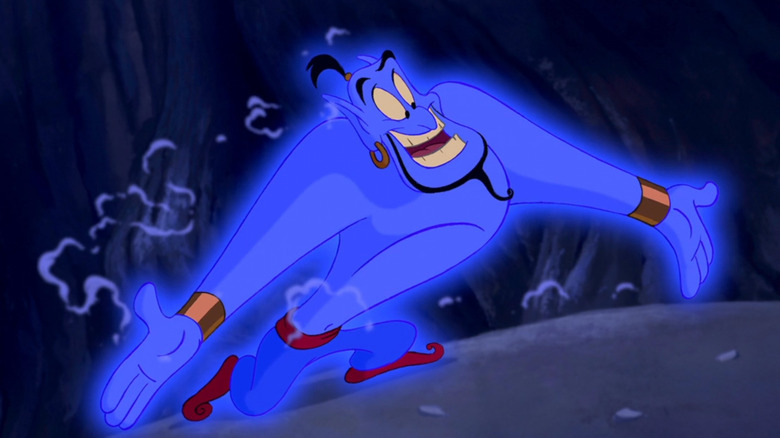
While "Aladdin" will always carry the stigma of a white creative team telling a story about a fictional Middle Eastern setting filled with orientalist stereotypes, it's easy to see how it became a classic. Its memorable characters, stunning animation, and catchy songs made it instantly beloved. It's a lively underdog story that thrusts the titular young thief on a grand adventure through back alleys, secret caves, and a grand palace on the horizon. Aladdin's kind heart makes him an easy character to root for even when he makes mistakes in trying to impress the strong-willed Princess Jasmine. Watching them discover the qualities they admire about one another from vastly different class perspectives makes for a delightful romance.
Disney essentially got to have their cake and eat it too by making an action-adventure movie with a charismatic male lead, while giving equal attention to the princess fantasies they've excelled at for decades. What makes "Aladdin" soar, however, is when it's hijacked by the Genie, an expressive and hyperactive Vegas comedian wishmaster voiced by Robin Williams. You just can't take your eyes off of him. Williams' casting may have opened the floodgates for celebrity-laden voices becoming the norm, but only a handful are as legendary as the manic, improv-laden performance he gave.
Over three decades later, "Aladdin" remains a hilarious, thrilling, and stunningly animated 2D extravaganza that stands among Disney's most entertaining flicks. It's such a singular, if complicated achievement in the company's history.