

5 Box Office Bombs Turning 40 In 2026
The 1986 domestic box office grossed $3.065 billion, propelled by massive hits like "Top Gun" and "Crocodile Dundee," "Aliens," and "Down and Out in Beverly Hills." Looking over the biggest movies from the year, it's fascinating to see how many haven't quite stood the test of time like, say, the various genre films littering 1982. You don't exactly see people sharing GIFs and quotes from "Down and Out in Beverly Hills" all the time in the 2020s.
Still, even if 1986's entire crop of biggest movies haven't endured as beloved masterpieces, there were plenty of moneymakers from that year, not to mention hits like "Aliens," that are still considered classics. However, no year is devoid of box office misfires and 1986 was no exception. This year had several bombs that have unfortunately festered as prime examples of when all the best artistic intentions and studio confidence goes horribly awry. Five notable 1986 box office bombs are striking instances of the financial nadir of a year that was chock full of lucrative motion pictures.
There was no single reason why any of these 1986 titles perished financially (though many of them did suffer from competing with the biggest movies of the year). However, four decades after their respective premieres, all of these movies prove endlessly fascinating in their box office journeys.
Big Trouble in Little China
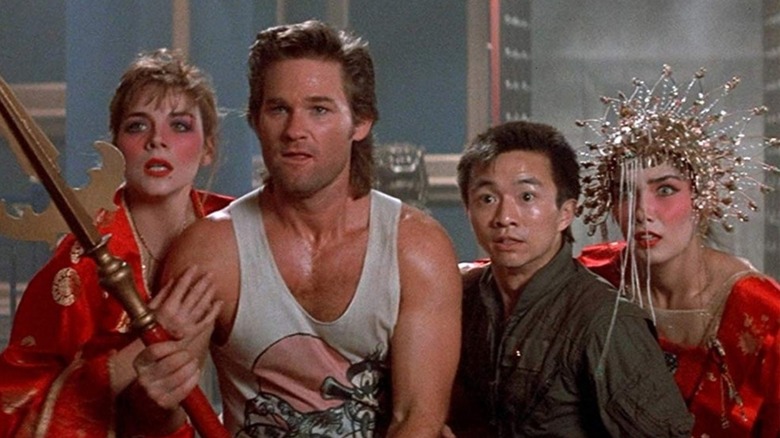
Director John Carpenter will forever be associated with his best horror movies. However, Carpenter's cinematic exploits have spanned a deluge of genres. That includes his 1986 gem "Big Trouble in Little China," a rollicking adventure featuring a terrific himbo Kurt Russell performance, lots of glorious practical effects work, and some great thrills. Around every corner, "Big Trouble in Little China" stands tall as the kind of entertainment that should be an instant crowdpleaser. However, back when it first hit theaters, "Big Trouble in Little China" failed to leave much of an impression.
Yes, "Big Trouble in Little China" is one of those '80s box office bombs actually worth watching. Grossing only $11.1 million in its initial domestic launch, despite a cushy 4th of July weekend release, "Big Trouble in Little China" was absolutely trounced by intense competition from popular summer 1986 titles like "Top Gun" and "Ferris Bueller's Day Off." Not helping matters was its more complicated premise, which was both a subversion and expansion of old-school adventure movie tropes.
Plus, several other Carpenter films, namely another Russell/Carpenter collaboration, "The Thing," had initially failed to take off at the box office. This man's work sometimes takes a while for people to wrap their brains around. Given its immensely popular standing today, it's reasonable to say "Big Trouble in Little China" eventually found its audience.
The Transformers: The Movie
Save for recent entries like "Transformers One" bombing at the box office, 21st century Transformers films have often been guaranteed moneymakers. Even films housing the most questionable moments in the Transformers franchise, like that cringe-inducing Romeo & Juliet scene in "Transformers: Age of Extinction," grossed over $1 billion worldwide. Starting with 2007's "Transformers," the eight theatrical Transformers movies have grossed over $5.4 billion worldwide combined. Those staggering grosses makes it shocking to remember that, the first time the Autobots and Decepticons duked it out on the big screen, the brand name experienced financial turmoil.
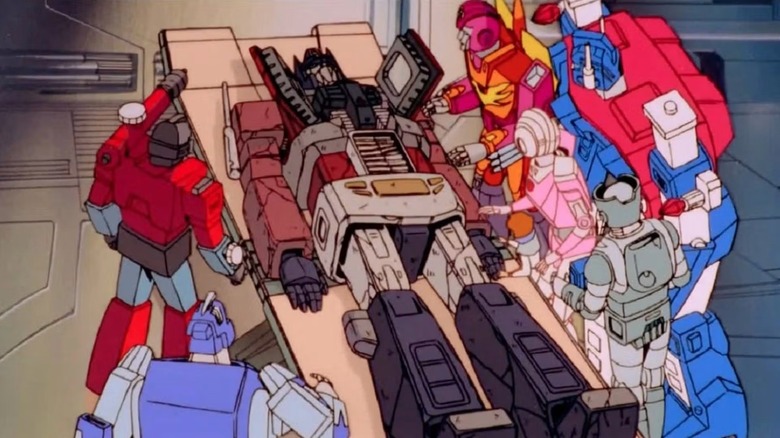
1986's "The Transformers: The Movie" only grossed an embarrassing $5.84 million worldwide, making it the 99th highest grossing movie of 1986 domestically. That put it behind the North American sum of "My Little Pony: The Movie" and "Care Bears Movie II: A New Generation." While the "Transformers" TV show was incredibly popular, a theatrical film hailing from an independent distributor and launching in a year chock full of films based on toys ensured it couldn't get a foothold with audiences. All the controversy stemming from the death of Optimus Prime (Peter Cullen) certainly didn't help its word-of-mouth either.
Luckily for everyone financing the live-action Transformers movies, later adaptations of this saga proved infinitely more lucrative (and also unfortunately more problematic) than "The Transformers: The Movie."
King Kong Lives
Part of the history of King Kong is that his cinematic exploits aren't just confined to that original 1933 movie or the various 21st century reimaginings. There was also a 1976 remake starring Jessica Lange and Jeff Bridges that updated the great ape's saga to the then-modern world, even climbing to the top of the World Trade Center instead of the Empire State Building. Though a costly venture, "King Kong" was a profitable production, which inevitably led to thoughts of how to further exploit this title.
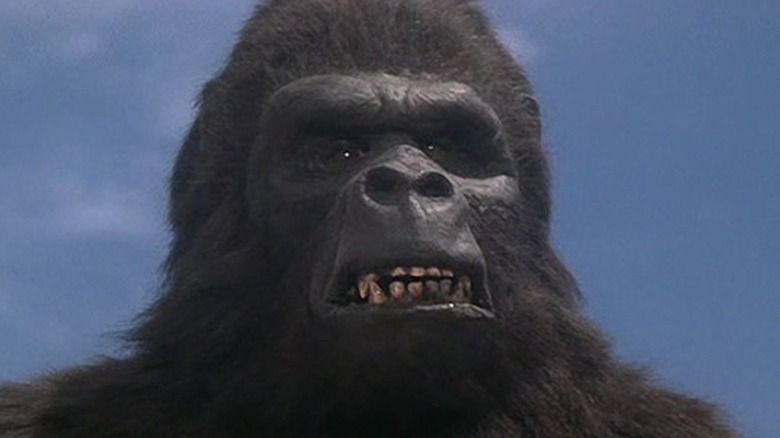
While today "Kong: Skull Island" was followed up by "Godzilla vs. Kong" just four years later (which would've been sooner if it weren't for COVID-19-induced delays), it took ten years for the 1976 "King Kong" to get a follow-up. 1986's "King Kong Lives" hailed from the De Laurentiis Entertainment Group and saw the titular ape getting resurrected and falling in love with a female member of his species. Grossing only $4.7 million domestically on a $10 million budget, "King Kong Lives" was a mighty flop that's box office fate was sealed by how long it'd been since its predecessor.
Certain films, like "Zootopia" or "The Terminator," can withstand lengthy gaps between sequels. 1976's "King Kong" wasn't remotely such a title. Throw in the cheeseball "King Kong Lives" premise and of course audience apathy killed this beast at the box office.
Labyrinth
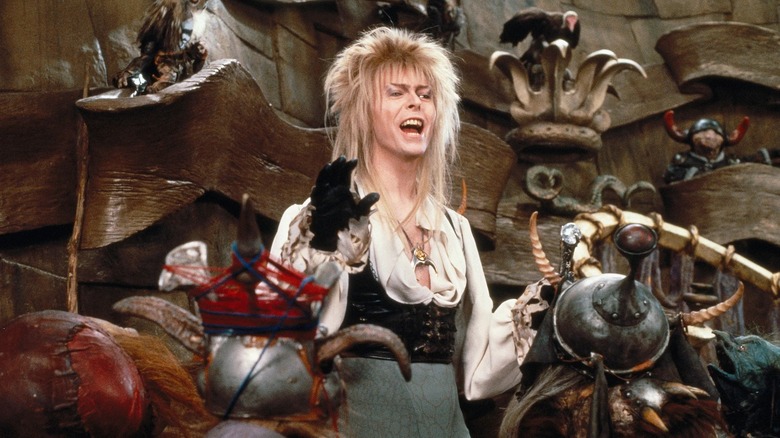
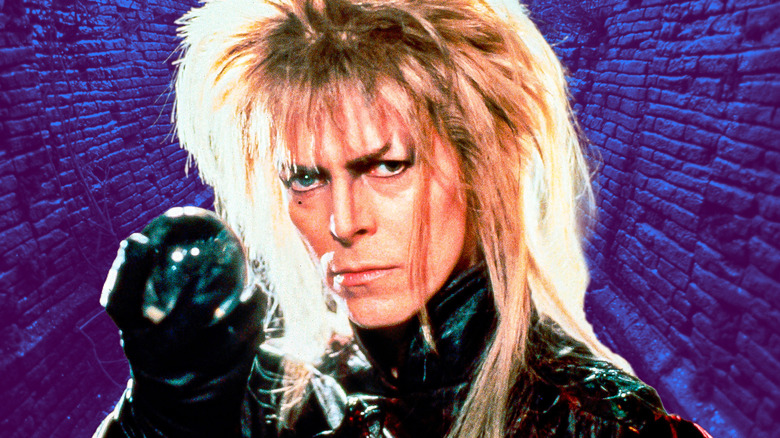
Today, Jim Henson's "Labyrinth" is unquestionably popular and beloved. Comic conventions all over the world are crammed full of cosplayers dressed as David Bowie's Jareth. Prolific museum exhibits offer a chance to witness the beautiful handmade artistry that went into it. The lyrics to the original "Labyrinth" tune "Magic Dance" are second-nature to countless theater kids. However, when it first came out, "Labyrinth" didn't just miss the mark at the box office. It was a colossal failure that stood in sharp contrast to the many instant hits Henson had been associated with throughout his career.
"Labyrinth" got a cushy launch before 1986 4th of July weekend and with marketing materials promising tangible spectacle. However, over its opening weekend, it debuted to a disastrous $3.54 million, coming in behind the third weekend gross of "Ferris Bueller's Day Off." The eventual 4th of July holiday and summer weekdays only got "Labyrinth" to $13.15 million worldwide, an anemic gross given its $25 million budget. That summer, audiences were more invested in stories firmly rooted in reality like "Ferris Bueller" and "Top Gun" as opposed to titles promising to sweep people off to fantasy worlds.
Its initially mixed reviews also didn't help "Labyrinth" convince 1986 audiences to take a chance on something so original and tonally complex. That initial grim financial outcome for "Labyrinth" would be incomprehensible to modern audiences who know the movie as a beloved cult classic.
Howard the Duck
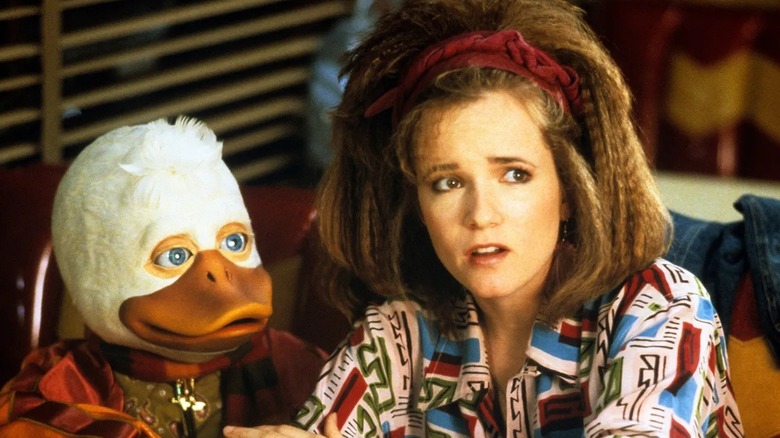
"To this duck, we say a toast/So get to bumpin' off of his case/No, he got too good to roast/'Cause he saved the human race." So goes the lyrics in the shockingly catchy "Howard the Duck" song from the movie of the same name crooned by the fictional in-universe band Dolby's Cube. Alas, having "saved the human race" wasn't enough to get general audiences invested in seeing "Howard the Duck" in theaters. This infamous misfire wasn't just a financial disappointment, but became one of those '80s bombs that changed Hollywood forever.
Costing $37 million to make, "Howard the Duck" only made $37.96 million worldwide, including a dismal $16.29 million domestically. Despite wielding such a major price tag and hailing from producer George Lucas, "Howard the Duck" didn't come close to winning over audiences who were clamoring to see summer holdovers like "Aliens" and "Top Gun." To boot, "Howard the Duck" received absolutely awful reviews, with many critics instantly claiming it as one of the worst movies of all time. Everywhere "Howard the Duck" looked, further bad news emerged.
While several summer 1986 films bit the dust financially, few were as embarrassing as "Howard the Duck." After all, what other summer 1986 box office dud got a Universal Studios executive fired while casting a toxic reputation over live-action Marvel movies for over a decade?