

5 Sci-Fi Movies Way Better Than Project Hail Mary
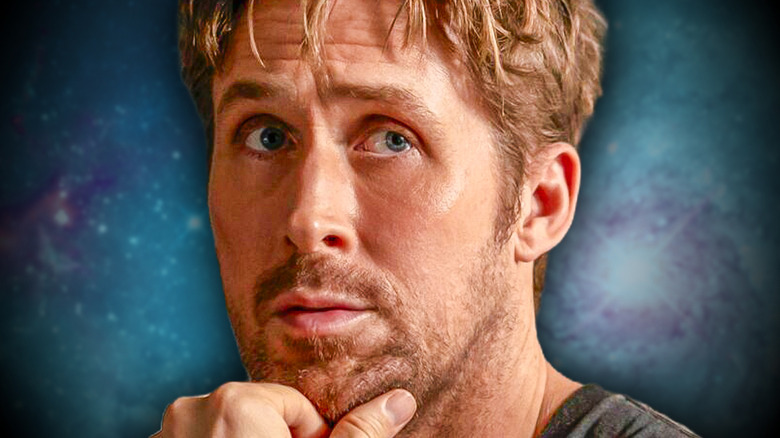
"Project Hail Mary" was the blockbuster kickoff to what's been a fantastic year at the movies, continued by "The Odyssey," "Spider-Man: Brand New Day," and, later this year, highly anticipated releases like "Dune: Part Three" and "Avengers: Doomsday." The Ryan Gosling vehicle's genre is a familiar one, especially for those who've enjoyed Andy Weir's stories in the past, but it pulls off the "lonely high-stakes space mission" schtick extremely well, with some stunning visuals and great dramatic pacing.
Where does "Project Hail Mary" rank among the best sci-fi movies of all time, however? That's another matter entirely. It's an incredible theatrical experience, with top-notch effects and a great leading performance, not to mention one of the best puppet characters moviegoers have seen in recent years. It's euphoric and hopeful, and if that's what you're looking for, it's tough to beat. But when speaking more broadly about levels of craft, impact, thematic depth, and narrative accomplishment, the history of sci-fi cinema provides a number of iconic movies that come out on top.
"Project Hail Mary" is fantastic. These five sci-fi movies are even better.
Annihilation

"Annihilation" does not take its audience to space, but is a story about venturing into the unknown for scientific purposes and encountering alien life. It's also one of the greatest sci-fi films of the 21st century, with a powerful creative vision from writer-director (and genre savant) Alex Garland, and a fantastic ensemble cast led by Natalie Portman and Jennifer Jason Leigh, alongside Gina Rodriguez, Tessa Thompson, and Oscar Isaac.
The 2018 film diverges pretty substantially from the 2014 Jeff VanderMeer novel it's based on, but the basic setup is essentially the same: a tract of wilderness in the St. Marks National Wildlife refuge begins to experience strange natural phenomena, prompting investigation by a shadowy government agency. In both versions, a team of female scientists is sent in. The film calls the area "The Shimmer" and explains that the transformation occurred after a meteor landed near the coastline. In the novel, the nature of the region, called "Area X," is more vague.
Both versions are exceptional and well worth your time. Science, truth, and the inherent terror of things we cannot understand are major features of the story as the team moves through the Shimmer, but the film is more about human nature — specifically, as explored in the film's defining monologue from Leigh's Dr. Ventress about our capacity for self-destruction. Like "Project Hail Mary," "Annihilation" is a visually stunning film that plays with ideas of isolation and discovery, but in much darker, more obfuscated ways. And the ending of "Annihilation" is one you will likely never forget.
Gattaca
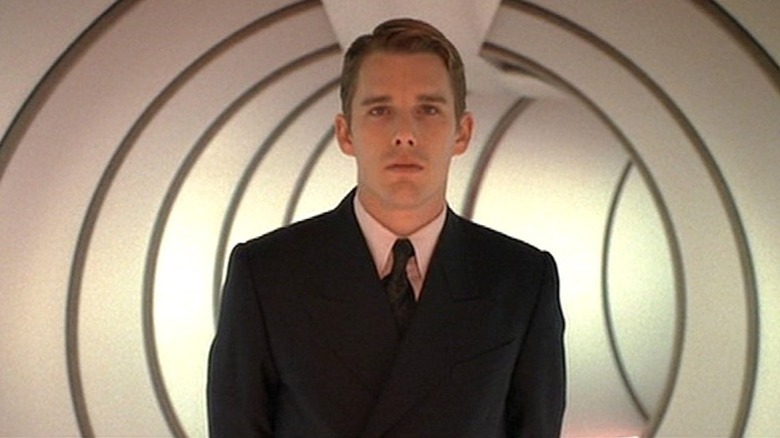
"Gattaca" is, in some ways, the inverse of "Project Hail Mary." Where the latter is bold, bombastic, and filled with visual wonder, 1997's "Gattaca" is quiet and contemplative. Both are films about brave voyages into space — journeys the characters may not come back from. Your taste in sci-fi will likely determine which better suits you, but "Gattaca" is an underrated masterpiece, even after many years of it slowly gaining favor in retrospect.
Ethan Hawke is a powerhouse in the lead role of Vincent Freeman, who dreams of going to space in a future when eugenics has created an underclass of people born without genetic modification. Vincent's "in-valid" genome prohibits him from the future he aspires to, forcing him to use alternative genetic material to pass checks in the hope of joining a mission to Saturn's moon Titan.
Uma Thurman and Jude Law are similarly outstanding in supporting roles, but "Gattaca" succeeds largely on the script and direction of Andrew Niccol, whose prescience about the future is accented by a sharp thematic intention, full of powerful symbolism and deeply human moments. Like "Project Hail Mary," "Gattaca" is a film about courage and triumph. While it may not be as explosive, those who appreciate a subtler brand of sci-fi may enjoy it even more. As Hawke said so eloquently in a 2007 interview with Stuart Mabey, "Its themes are that of individual rights, what makes up an individual. So rarely do films use the device of metaphor, or allegory, and 'Gattaca' really does it."
Alien
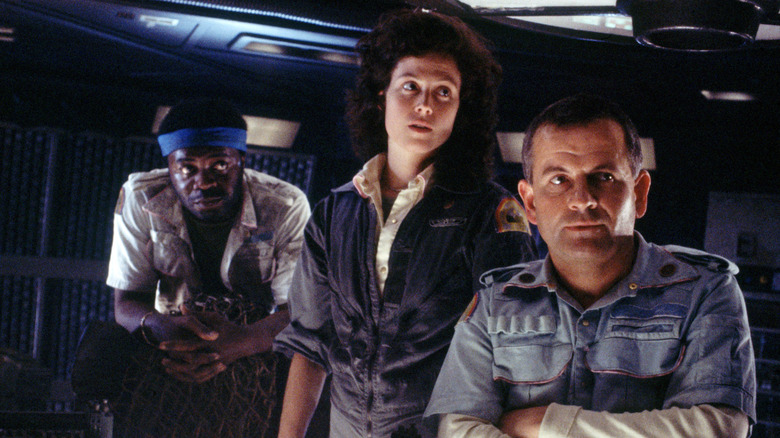
If you want to talk about sci-fi movies in which people are stuck on ships at the far reaches of space, then we have to talk about "Alien." Nearly half a century after Ridley Scott's horror masterpiece premiered in theaters in 1979, it remains the defining entry in the sci-fi horror genre, and the outstanding production design and pacing that made it such a phenomenon haven't aged a day.
What is there left to say about "Alien" at this point? It set new standards for everything from on-screen cryosleep, to alien monster design, to the grimy, lived-in, smog-coated science fiction aesthetic that Scott doubled down on just a couple of years later in "Blade Runner." But more relevant for our purposes here, "Alien" perfectly captures the terrifying, fascinating, beautiful allure of deep space, with all of its potential horrors and reality-shaking discoveries.
To be fair, Ryland Grace's experience with alien life is much friendlier and more wholesome than that of the crew of the Nostromo, all of whom would surely prefer Rocky to the frighteningly designed Xenomorph that sneaks its way onto their ship via facehugger and begins to take them apart one by one. While "Project Hail Mary" is exceptional, "Alien" is a pillar of modern science fiction — a film so perfect in its execution that directors are still trying to achieve what it did in '79. Even the more recent entries in the "Alien" franchise struggle to nail what makes the original so great. If horror isn't your vibe, "Hail Mary" will surely be the better choice, but when you account for legacy, timelessness, and groundbreaking film craft, "Alien" takes this one easily.
Arrival
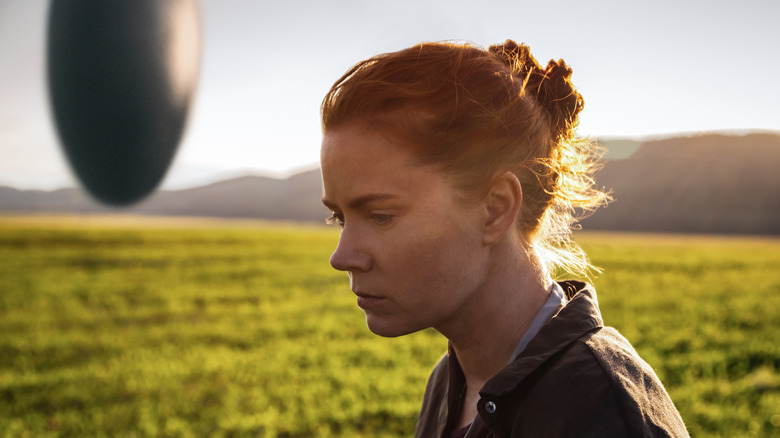
No single director has been as dominant or influential in the realm of sci-fi over the last decade than Denis Villeneuve, who really carved his mark on the genre in stone with the first two films of his "Dune" trilogy (with "Dune: Part Three," his highly-anticipated adaptation of "Dune Messiah," arriving later this year). But before the French-Canadian director got hold of Frank Herbert's epic, he made his entry into the sci-fi genre with 2016's absolutely fantastic "Arrival," starring Amy Adams as a linguist trying to establish contact with a visiting pair of alien beings.
It's hard to understate the ways this film has influenced the aesthetic of modern sci-fi in the years since, from the cosmically horrifying designs of the creatures to the smooth, round, almost mythic look of their ship. The story itself is similarly captivating. While both "Arrival" and "Project Hail Mary" show humans grappling with and growing from encounters with extraterrestials, "Arrival" is more sophisticated in its observations and more exact in its emotional core. It certainly isn't easy to deliver such a raucous, victorious feeling as the one captured in Phil Lord and Chris Miller's epic, but what Villeneuve achieves here is just as affecting, and more revelatory in the tonal space the film creates.
"That project was fundamental," Villeneuve told Adams in a 2024 retrospective with Vanity Fair. And indeed, you can draw a clear line from "Arrival" to the string of science fiction films that the director has made since — including the final movie on this list.
Blade Runner 2049
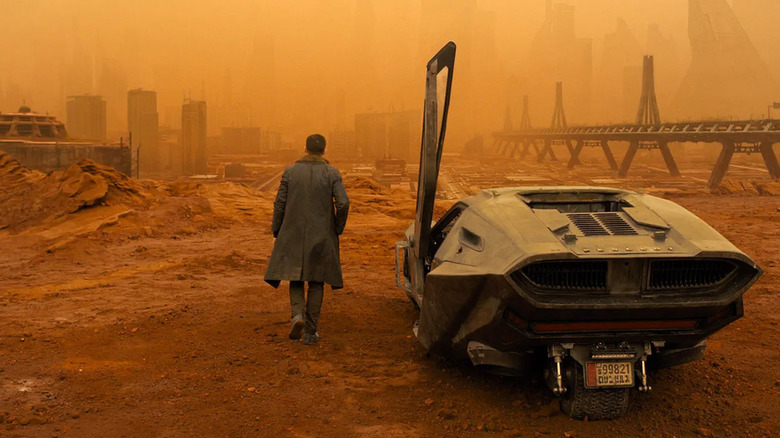
Yes, we're doing two Denis Villeneuve films. Who could possibly say that the man doesn't deserve it? And while "Blade Runner 2049" may not be about space (it is a little bit, actually), or aliens, it's a natural next watch for anyone who loved "Project Hail Mary" because it's another sci-fi star vehicle for Ryan Gosling. And this genuinely might be the best performance of his career.
If you loved the man in "Hail Mary," Gosling's turn as replicant blade runner K in "2049" is even better — an incredible balancing act that's calculated, measured, sometimes robotic, occasionally explosive, but always precise and riveting. And while "Project Hail Mary" is stunning to look at, "Blade Runner 2049" is in contention for the best-looking sci-fi film of the last 20 years. Even if you've never watched it before, you've probably seen some shots of the orange irradiated landscape, the fog-covered cyberpunk megalopolis, or Gosling lying down in the snow in the coolest coat anyone has ever worn in a movie (aside from the one he wears in "Drive").
"Blade Runner" may be the best sci-fi movie of all time, in some estimations, and while "2049" may not quite hit the highs of Ridley Scott's astounding "Final Cut" of its predecessor, it's still masterfully crafted, and a perfect choice for fans of both Ryan Gosling and visually striking science fiction.