

5 Sci-Fi Movies From The '80s Based On Must-Read Books

The '80s was a legendary decade for science fiction, from the big screen and television to some of the most impactful novels in the history of the genre. In just 10 years, we got everything from films like "The Empire Strikes Back," "The Terminator," and "Aliens" to TV shows like "Star Trek: The Next Generation" and books such as "Neuromancer" and "Ender's Game." Sci-fi is also a genre that's always shared influence across different forms of media, so some of the best (and worst) science fiction films of the 1980s were adaptations of novels that fans should absolutely check out.
Breakthroughs in special effects and a new model for the modern blockbuster in the wake of films like "Star Wars" and "Jaws" brought sci-fi cinema into a sort of revolution, with just enough time having passed since the colloquially dubbed "Golden Age of Sci-Fi" for those iconic stories to be ripe for adaptation. The stories of Arthur C. Clarke, Isaac Asimov, Philip K. Dick, Ray Bradbury, and others had formally entered the canon, and they became ideal material for the new wave of science fiction filmmaking. And then there was a little up-and-comer named Stephen King, whose own forays into the genre would fuel enough adaptations to form a subgenre unto themselves.
Let's take a look back at some standout sci-fi movies from the '80s based on must-read books, and how the versions differ.
Blade Runner

There is arguably no more famous or important '80s sci-fi adaptation than Ridley Scott's "Blade Runner," which adapts the 1968 Philip K. Dick novel "Do Androids Dream of Electric Sheep?" Scott unquestionably got the better title, but the book is one of Dick's best — lacking the overt cyber-future aesthetic that would become ubiquitous in part because of "Blade Runner," but carrying all the same central meditations on consciousness, synthetic life, nature, and the self.
The protagonist, Rick Deckard, is the same, played in the film by Harrison Ford in one of several career-defining roles. But he's simply called a bounty hunter in Dick's version, not the more flowery moniker of "Blade Runner." Both versions follow Deckard as he pursues a group of escaped androids, or "replicants" in the film, all the while circling the drain on a sneaking suspicion that he may not be as different from them as he thinks.
The cyberpunk genre was yet to be conceived in 1968, and Dick's future Earth is more of a barren wasteland, sparsely populated by dwindling human settlements as the planet's ecosystem continues to fail and more and more humans leave for extraplanetary colonies. There's also an increased focus on environmental devastation and the "electric animals" that have been created to take the place of real ones as species continue to die off.
Both versions depict stark visions of the future, our capacity for violence toward one another, and our destruction of the natural world. "Blade Runner" remains a must-watch cyberpunk movie, and if you love it, or if you just love good, classic sci-fi, "Do Androids Dream of Electric Sheep?" is a must-read as well.
1984
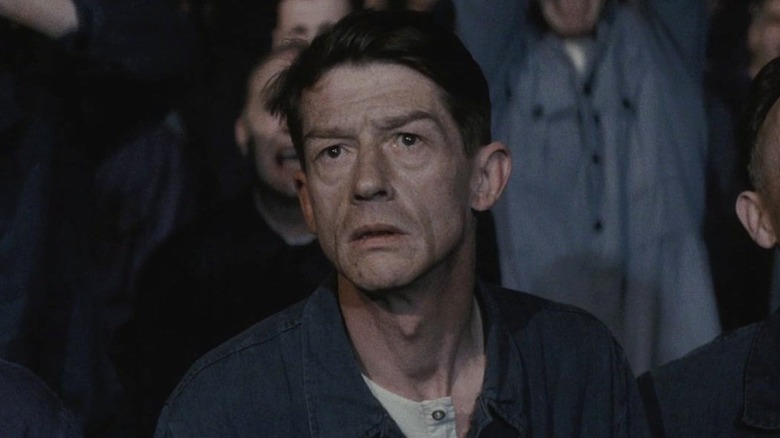
Would you believe that someone had the gumption to make a film adaptation of George Orwell's "1984" in 1984? Well, that someone was writer-director Michael Radford, with a cast led by sci-fi icon John Hurt as Winston and screen legend Richard Burton as O'Brien (in the actor's final film performance before his death that same year).
The movie is a pretty faithful adaptation, detailing Winston's life under the oppressive authoritarian government of Oceania, his journey down a path of resistance, and his arrest by the regime's brutal "Thought Police." It earned strong reviews and is generally seen as the definitive adaptation, though it's certainly more interested in getting everything right than it is in doing anything especially bold or new. The tie-in to the actual year was a big part of the marketing for the film, and 35 years after the novel's 1949 publication, it was arguably even more timely. As discourse around the growing surveillance state, Flock cameras, and digital scrutiny grows, modern viewers will surely still find plenty that's sobering, relevant, and terrifying in both versions.
"Michael Radford's brilliant film of Orwell's vision does a good job of finding that line between the 'future' world of 1984 and the grim postwar world in which Orwell wrote," Roger Ebert wrote in his review. "What is remarkable about the movie is how completely it satisfied my feelings about the book; the movie looks, feels, and almost tastes and smells like Orwell's bleak and angry vision."
Alien from L.A.
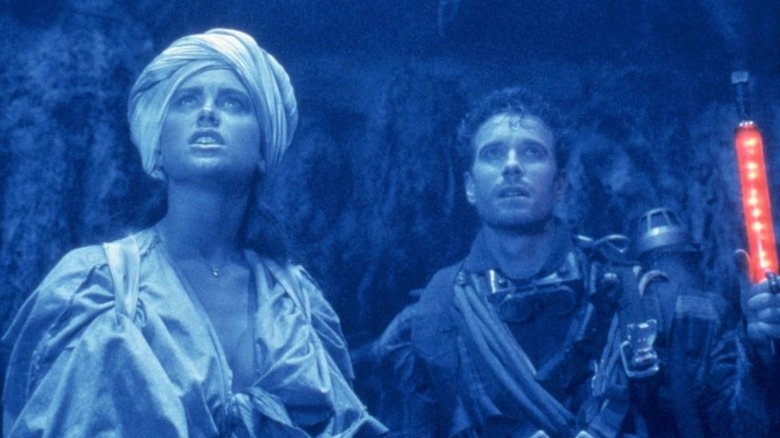
They can't all be bangers, right? While a lot of all-time great movies came out in the '80s, it was also an era filled with cheap schlock — remnants of a B-movie infrastructure from the previous decades that still had a lot of life in it. Few filmmakers of the decade gained as much notoriety for their efforts on these sorts of low-budget films as "Cyborg" and "Nemesis" director Albert Pyun, who, in 1988, helmed "Alien from L.A."
The film follows a socially awkward woman named Wanda (Kathy Ireland) who goes on an adventure underground to find her archeologist father and eventually encounters the lost empire of Atlantis. Despite that description, the movie is loosely based on Jules Verne's seminal science fiction novel "Journey to the Center of the Earth." The production company, Cannon Films, brought Pyun in to complete work on a different adaptation of the Verne novel after canning the previous director. Pyun agreed on the condition that he also got to make his own version of the story. So Cannon wound up releasing two extremely loose adaptations in two years — "Alien from L.A." in 1988, and the more directly-titled "Journey to the Center of the Earth" in 1989.
Neither rise above their B-movie essence, with "Alien" even getting panned in an episode of "Mystery Science Theater 3000." The story in both films, that Atlantis was actually an alien spaceship that sank to the center of the Earth, is entirely untethered from the source material. For sci-fi fans, Verne's book is still well worth reading — a bit retro in its style, but also thrilling in the way it paints its subterranean world, filled with strange creatures and ancient mysteries that it never fully explains.
The Running Man
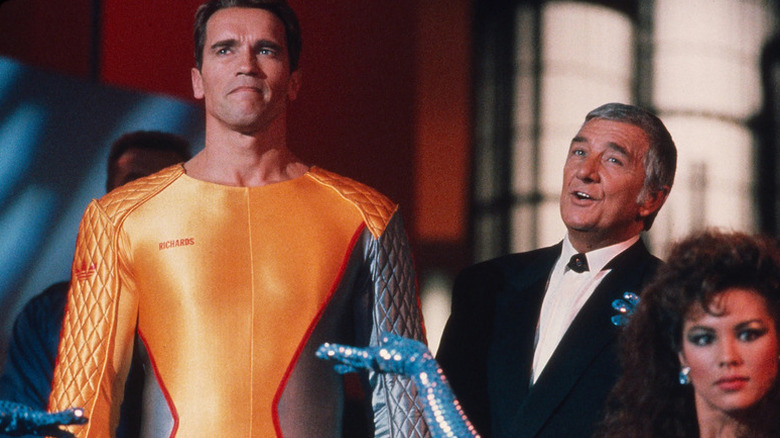
There wasn't a movie star bigger in 1987 than Arnold Schwarzenegger, nor an author more popular than Stephen King. So it only made sense to put the two together. The result was 1987's "The Running Man," based on the King novel of the same name — a dystopian sci-fi thriller about a game show to the death where contestants are hunted by professional bounty hunters for the entertainment of the oppressed masses.
The basic premise is the same in both versions, but the '87 film changes the details up quite a bit. In the novel, lead protagonist Ben Richards enters the eponymous contest to earn money for his daughter, who needs medicine. In the film, Richards is a former cop framed for the massacre of civilians protesting the regime. After he escapes prison, he gets caught again and put on the show for a ratings bump. The nature of the program is also very different: in the book, Richards is hunted through the real world, where normal people can turn him in and try to get the bounty on his head. The film's game takes place entirely within a cordoned-off and abandoned sector of the old city.
Edgar Wright's 2025 version of "The Running Man" is far more faithful to the book, but the '87 version is great for its own reasons. Classic Schwarzenegger action, a surprisingly sophisticated take on media control and the importance of reading, and a fantastic soundstage aesthetic all make "The Running Man" one of the best cyberpunk movies of all time. And yeah, you should read the book too.
Dune
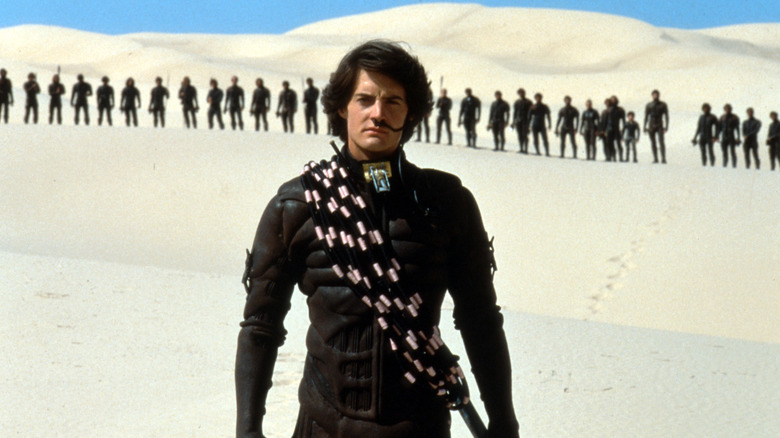
Denis Villeneuve has turned "Dune" from the book your sci-fi book friends won't stop telling you to read into the film franchise your sci-fi movie friends won't stop telling you to watch. And yes, you should probably do both. That annoying guy who won't shut up about how Frank Herbert's novel is one of the most important works of speculative fiction ever is, unfortunately, spot on. But before we had the shiny new Villeneuve "Dune" movies, we had David Lynch's version.
Lacking the polish of modern effects and somewhat infamous as an adaptation, the 1984 "Dune" is still well worth watching. Every David Lynch movie or TV show is going to feature the director's strong perspective, a high level of weirdness, and some one-of-a-kind creative choices. All of those things make his "Dune" less comprehensible than Villeneuve's, but also faithful in a different way to the source material. Herbert's book is, after all, filled with extremely wacky stuff, and Lynch translates those moments in memorable ways, even as the film itself falls a bit short of its intentions.
Lynch's "Dune" famously bombed at the box office, and the massive success of the modern films has buried it even deeper. But for those who love Lynch, or the more bizarre elements of the "Dune" novels, it remains a fascinating piece of sci-fi cinematic history.