

5 Cyberpunk Movies Everyone Needs To Watch At Least Once
The cyberpunk genre wears its aesthetic on its sleeve, serving up a grimy cocktail of neon lights, megacities, corporate feudalism, environmental collapse, and cyberspace. In many ways, the aesthetic is the genre, with all of the above being an essential part of the package. But while the aesthetic of cyberpunk has found a place in mainstream pop culture, the genre itself isn't nearly as wide as you might think. Cyberpunk as a concept isn't even half a century old yet, and the seminal novels and films from the '80s and '90s are still the primary drivers behind the genre today.
TV and video games have added some notable modern additions to the canon with entries like "Altered Carbon" and "Cyberpunk 2077," which is getting the live-action treatment. But if we're talking solely about the movies that define cyberpunk, you're still mostly looking at those first couple decades for the cream of the crop. If you haven't yet taken the dive into the genre, consider this a reading list of films to get you started. Even if you don't click with cyberpunk, you won't regret watching these classics. Here are five cyberpunk movies that everyone needs to see at least once.
Blade Runner: The Final Cut
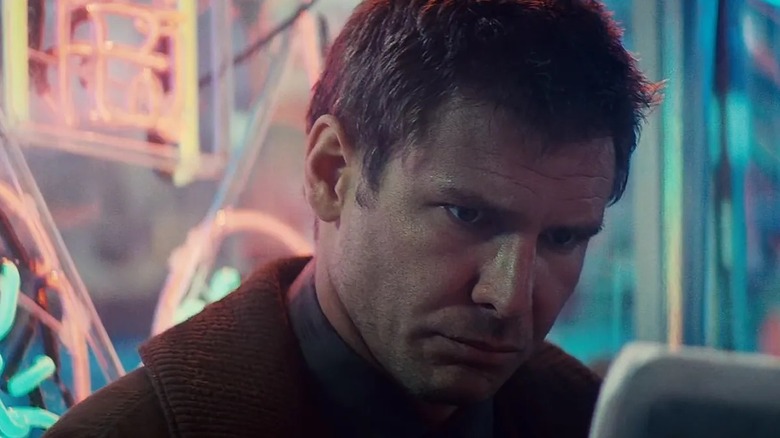
There is no other place to start with cyberpunk cinema than here. To this day, "Blade Runner" remains one of the greatest sci-fi movies of all time. Released in 1982, the same year William Gibson's short story "Burning Chrome" coined the term "Cyberspace," Ridley Scott's dystopic future noir about androids seeking freedom from slavery has been one of the pillars of the genre ever since. In a real way, the cyberpunk genre was born in 1982, and at least half of that birth is due to "Blade Runner."
The Philip K. Dick novel on which the film is based comes from an earlier era of science fiction, and its future Earth is more an eviscerated wasteland than a decrepit urban jungle. As a result, and because cyberpunk as a genre had yet to be fully defined, "Blade Runner" has a bit less of the neon-glinted feel that later genre staples would adopt, but the big hallmarks are here: massive, polluted cityscapes full of dehumanizing architecture, tech corps with unchecked power, and a blurred line of human consciousness as artificial intelligence encroaches more and more onto daily life.
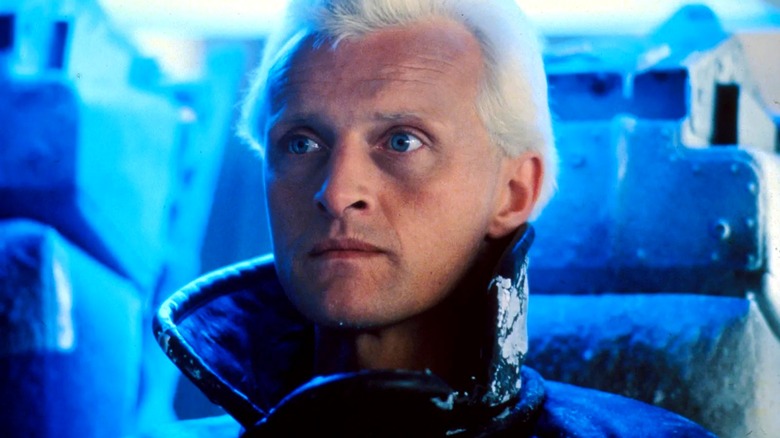
Android hunter Rick Deckard (Harrison Ford) is your lens into this world, but let's not go so far as to call him the protagonist. "Blade Runner" is one of those rare instances where watching a later cut actually does matter a lot, so for the proper experience, track down "The Final Cut," which removes the heavyhanded detective narration of the theatrical release and makes a number of other changes, emphasizing both the cyberpunk themes and the depths of Deckard's character in important ways. Like all cyberpunk, the aesthetic is a big part of what makes this tick, but the pièce de résistance is Rutger Hauer's soul-rending turn as escaped android "replicant" Roy Batty.
Ghost in the Shell
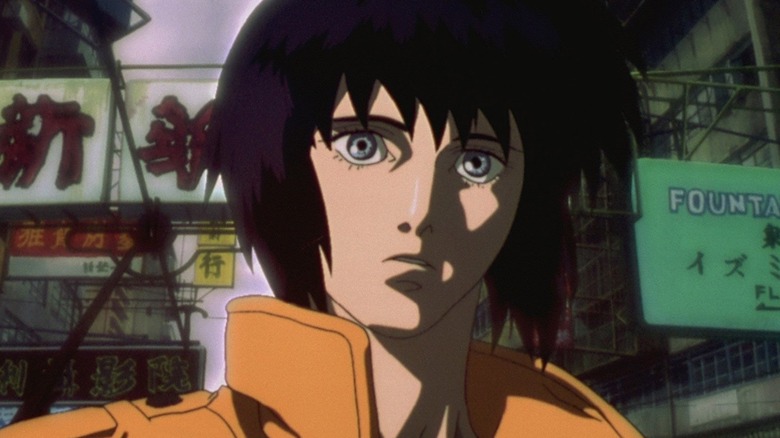
We can't discuss the creation of cyberpunk without talking about the influence of '80s and '90s Japanese manga and anime. There are several anime films we could have chosen for this list (1988's "Akira" is a must-see for cyberpunk fans, for example), the clear answer is 1995's "Ghost in the Shell," directed by Mamoru Oshii and based on the beloved manga by Masamune Shirow. If "Blade Runner" got the ball rolling in terms of the cyberpunk aesthetic, "Ghost in the Shell" picked it up and ran with it at full tilt.
Unlike "Blade Runner," you'll want to stick to the original version, not the "2.0" re-release, which throws in some unnecessary CGI updates that haven't aged well compared to the original, which still looks fantastic to this day. The story is rich with ruminations on sentience, human systems, and identity, and there's plenty of high-genre action here as well, from frenetic car chases and gunfights in open-air markets to high-rise assassinations. But it's the moments when the film pauses for breath that it really shows off.
Every three or four minutes, the film will fall into a tableau so striking you may feel compelled to pause. These quiet shots are brought to another level by the transcendent score from composer Kenji Kawai, which blends ethereal vocalizations and classical stylings over a montage of gray cityscapes. The sky is gray in "Ghost in the Shell," perpetually. The city is gray, and the water. Everything is metal, and the metal is rusting, and the digital billboards overlap and cram together, and it's horrifying, and claustrophobic — and, somehow, gorgeous.
The Matrix
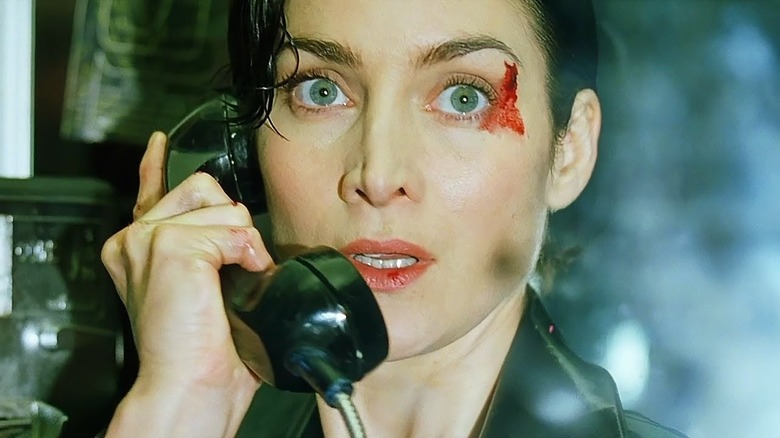
1999's "The Matrix" is a curious case when it comes to cyberpunk, because it is both one of the most seminal and influential texts in the entire genre, yet it doesn't bare the hallmark aesthetics. This is a post-apocalypse story set in a virtual reality world based on the real Earth of the late 1990s rather than a vision of the near future. Yet, the core themes and ideas here are unmistakably cyberpunk, to the point that, for many people, this is the first film they think of when discussing the genre.
If you watch "The Matrix" right after "Ghost in the Shell," you'll notice a lot of similarities, from the green digit aesthetic to the way Trinity (Carrie-Anne Moss) feels directly inspired by protagonist Motoko Kusanagi. In fact, "Ghost in the Shell" is one of the three classic anime movies that inspired "The Matrix" (with the other two being "Akira" and "Ninja Scroll"), and the Wachowskis famously used "Ghost in the Shell" footage when pitching "The Matrix." Both films are interested in how perception defines reality and the idea of machine sentience. But "The Matrix" is more of a fable, using biblical allegory, fairy tail references, and Hong Kong-style wire work to tell its own story about revolution and the self.
The leather-and-sunglasses look of "The Matrix" left its own mark on cyberpunk (and pop culture at large), and the story of humans escaping from an AI-built virtual reality influenced a whole wave of cyberspace fiction going into the 21st century. But beyond being important to the genre, or to martial arts films and science fiction writ large, "The Matrix" is just an incredible movie, and it only gets better with every re-watch.
Johnny Mnemonic: In Black and White
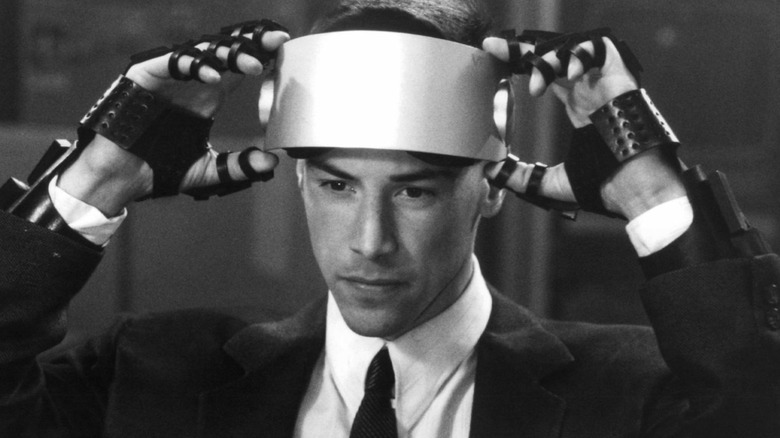
The same year that "Ghost in the Shell" came out, cyberpunk fans also got a big-screen, live-action adaptation from William Gibson's sci-fi universe — specifically, his 1981 short story "Johnny Mnemonic." The film foreshadowed Keanu Reeves' soon-to-be-massive role as an icon of cyberpunk, and while the reviews at the time weren't as favorable as most of the other films on this list, time and retrospection have been kind to it.
It would be wrong to create a list of essential cyberpunk films and not have Gibson's work represented (his novel "Neuromancer" is widely considered to be among the seminal cyberpunk texts), but beyond simply paying tribute to the godfather of the genre, "Johnny Mnemonic" is fun, and weird, and full of '90s sci-fi style. Yes, the writing and performances can be pretty over the top, but camp and cyberpunk sometimes go hand in hand, and it plays well here. The story follows Reeves as a data courier hunted by corporate operatives during a particularly high-stakes job. The action and pacing are frenetic, capturing the essence of Gibson's writing.
The overall aesthetic is magnified exponentially in the 2022 black and white re-release. Director Robert Longo has said that the monochrome version is more in line with his original vision, as he took inspiration from a number of black and white films, and it shows. The fantastic sets and costumes, combined with a pounding soundtrack from "Terminator" scorer Brad Fiedel, all come into sharp relief under the harsh, colorless contrast.
Dredd
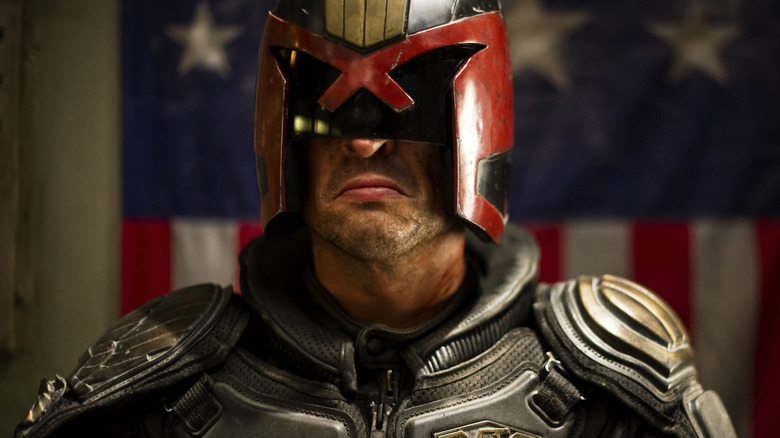
There haven't been a ton of new high-caliber cyberpunk movies over the last 20 years, with most of the biggest new additions to the genre coming in other media. But "Dredd," the 2012 "Judge Dredd" adaptation from Pete Travis and sci-fi legend Alex Garland, absolutely fits the bill. Any story set in a place called "Mega-City One" has to qualify as cyberpunk, and it's important to note that the whole genre isn't just about VR and artificial intelligence. Urban neglect, ecological devastation, tyrannical regimes, mega-corporations — these are all cyberpunk too, and they form the building blocks of "Dredd." The film itself is more in the mold of "Die Hard," however.
Titular future super-cop Judge Dredd (Karl Urban) and his new rookie prospect Cassandra (Olivia Thirlby) enter one of the city's titanic housing blocks only to be set upon by crime lord Ma-Ma (Lena Headey) and her enforcers. It's a grim, gritty, bloody, and grimy action flick with a fantastic look and feel, and while it may not have all the neon that the cyberpunk genre is known for, it more than makes up for it in dystopian edge and visual flair. Sadly, we'll likely never get a "Dredd 2," but that doesn't take away from "Dredd," which ends on a satisfying note. Yes, it bombed at the box office, but, like "Johnny Mnemonic," it's undergone revaluation over the years and is now considered a must-watch for cyberpunk fans.