

5 Disney Movies The Studio Probably Wants People To Forget
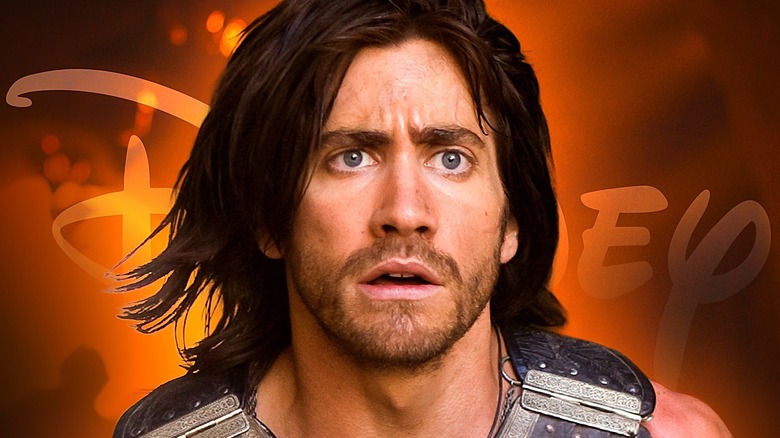
The best Disney movies of all time have cultivated a positive reputation for the studio. The most impactful Mouse House projects, like "Fantasia" or "The Jungle Book," still enchant audiences decades after their respective releases. However, not every Disney feature ends up being a beloved moneymaker, as vividly reflected by its biggest box office bombs. However, it isn't just in financial losses that Disney's released some regrettable titles over the years. Several features from the studio have amassed truly appalling cultural legacies that are nothing short of embarrassing.
Thanks to Disney's many different film divisions over the years, including the adult-skewing Touchstone Pictures and Hollywood Pictures, as well as six years worth of DreamWorks SKG releases, there are more of these titles than you might think. Across this litany of cinematic misfires, though, are five especially egregious motion pictures that Disney wants people to forget. Some of these films perpetuated racist stereotypes that were already inspiring groans and controversy when they were released decades ago. Others were such colossal, infamous artistic misfires that even having the Disney name attached couldn't help their legacy.
These five films may not immediately register as "Disney" fare. However, they all came from some part of the Mouse House and are deeply regrettable chapters of the studio's history.
Bringing Down the House
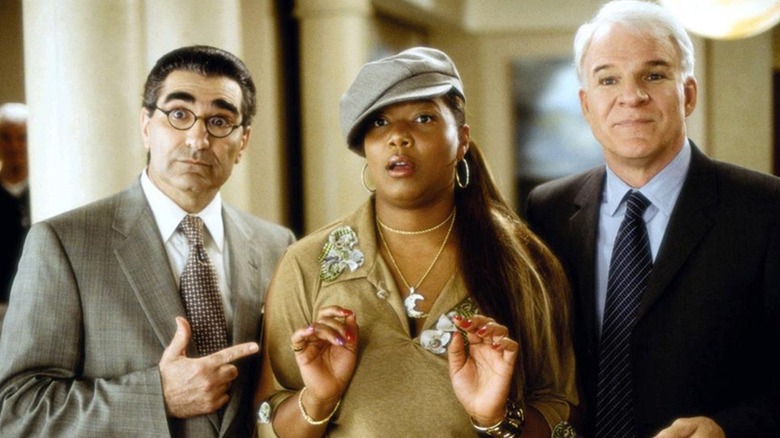
There's no denying the legendary status of the best Steve Martin movies. 2003's "Bringing Down the House" is not one such title. This was one of the more lucrative 21st century examples of the broad comedies Disney's Touchstone Pictures division specialized in. The premise for "House" concerns lonely uptight lawyer Peter Sanderson (Steve Martin) meeting a woman through online dating. When they finally meet in person, she turns out to be Charlene (Queen Latifah), who just got out of prison and demands Sanderson help prove she didn't commit a felony.
Through convoluted means, Charlene ends up staying with Sanderson and getting into all kinds of wacky shenanigans that boil down to "she's Black!" Writer Jason Filardi and director Adam Shankman center "Bringing Down the House" entirely on cringe-inducing Black stereotypes and ironic racism jokes. Even when the joke is how clumsy or out of touch white people are, "Bringing Down the House" keeps coming back around to mocking Black women. Not even deeply talented performers like Martin, Latifah, or Eugene Levy make moments like Levy saying "you got me straight trippin', boo" funny.
The only thing "Bringing Down the House" proves is that, unless he's directing 2007's joyous "Hairspray," Adam Shankman really is one of the worst mainstream filmmakers working today.
Prince of Persia: The Sands of Time
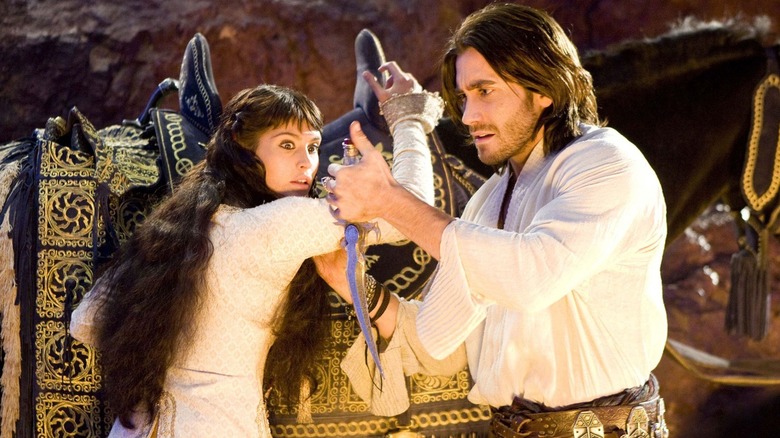
One of those huge flops Disney wants you to forget about, 2010's "Prince of Persia: The Sands of Time" was an obvious attempt to make the "Pirates of the Caribbean: The Curse of the Black Pearl" magic happen again. Not only did it hail from "Pirates" producer Jerry Bruckheimer, but it was also a retro-adventure film hailing from an unusual source material. "Black Pearl," though, was based on one of the most famous Disney properties ever, a theme park ride that had enchanted people for decades. "Prince of Persia: The Sands of Time," meanwhile, stems from a video game series that had started in 1989, more specifically the popular 2003 reboot of the same name.
Needless to say, this wasn't the kind of timeless material Disney usually exploited for box office hits. The end result wasn't just boring, it also engaged in egregious whitewashing by having Jake Gyllenhaal and Gemma Arterton as the leads (the only non-white person in the principal cast was Ben Kingsley as, of course, the nefarious baddie). Just nine years before titles like "Aladdin" at least cast non-white performers for its leads, "Prince of Persia" excluded anyone from the Middle East in its adventure.
These troubling racial politics crop up a lot in Disney's library. "Prince of Persia," though, provided an especially high-profile (and costly) example of that phenomenon.
Holy Matrimony
Disney releasing a lucrative movie over the Thanksgiving weekend is nothing new. The Mouse House has been launching new in-house animated films in that holiday frame for decades. In 1987, though, Disney's Touchstone Pictures division launched they year's biggest movie domestically with the comedy "Three Men and a Baby." Combining Tom Selleck, Ted Danson, Steve Guttenberg, and a rowdy newborn was a recipe for box office success. This project marked Leonard Nimoy's first proper non-Star Trek theatrically-released directorial effort and, after making so much money for Disney, Nimoy was a go-to filmmaker for the company's adult-skewing divisions, even helming the video portions of the Disney theme park ride "Body Wars."
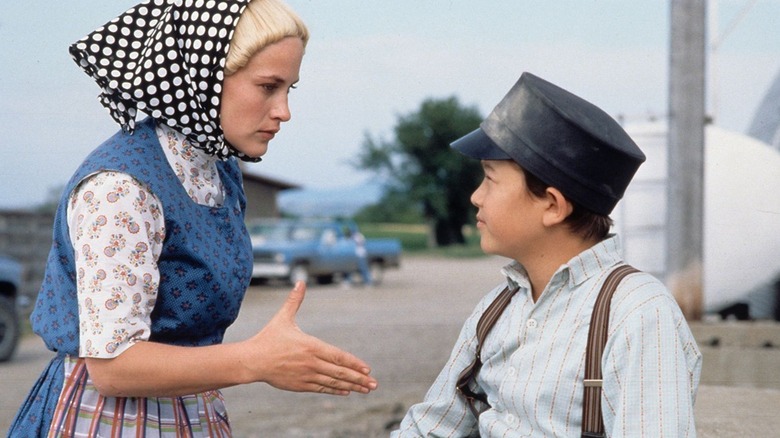
Both Nimoy's connections to Disney and his feature film directorial career were ground to a halt with 1994's "Holy Matrimony," a comedy for Disney's Hollywood Pictures label with a bizarre and off-putting premise. Betsy "Havana" Iggins (Patricia Arquette) is forced to wed 12-year-old Ezekiel "Zeke" Jacobson (Joseph Gordon-Levitt) to secure a $12 million fortune that Jacobson's older brother and her former lover, Peter (Tate Donovan), left behind. The central conceit of an adult women marrying a minor (even under coercion) is unspeakably creepy.
To boot, the film's schmaltzy mainstream comedy sensibilities means "Holy Matrimony" never grapples with this truly horrifying plot point. Juxtaposing a tremendously unnerving premise with this hokey aesthetic makes for a deeply regrettable movie that you won't see promoted on Disney+ anytime soon.
An Alan Smithee Film: Burn Hollywood Burn
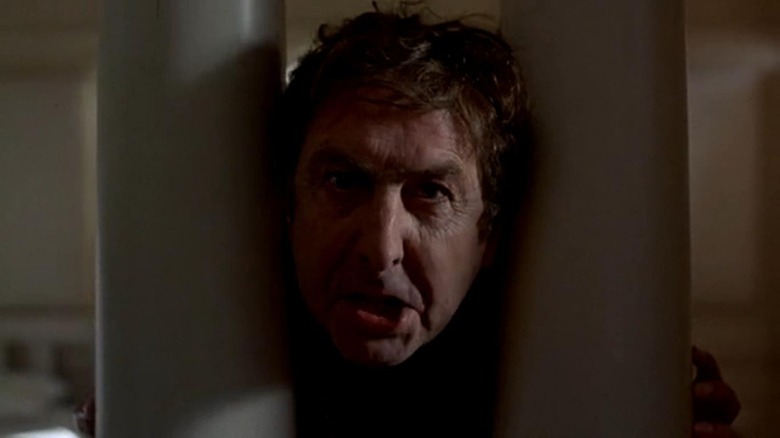
It goes without saying that the best satire movies of all time are vastly superior to the 1998 Hollywood skewering "An Alan Smithee Film: Burn Hollywood Burn." The feature, with a title employing a common pseudonym directors used to deploy when they didn't want credit for a movie, is a total mess scrambling to deliver even mild chuckles. The saga of fictional director Alan Smithee (Eric Idle) stealing his newest, revolting movie is chock full of celebrity cameos. Whoopi Goldberg, Jackie Chan, Sylvester Stallone, Billy Bob Thornton, and even former legendary Paramount Pictures head Robert Evans are among the many famous faces appearing as wacky versions of themselves.
No amount of star power, though, can salvage something this disastrous. "Burn Hollywood Burn" just reheats the same old jokes about Hollywood and filmmaking that have been made countless times before. Released in early 1998 by Disney's Hollywood Pictures division, "Burn Hollywood Burn" was plagued by behind the scenes drama and absolutely abysmal reviews.
No studio has a perfect track record, and the worst Disney movies of all time prove that the Mouse House is no exception. Still, it's one thing to deliver a critically derided film like "Wild Hogs" that still makes moolah. The anemic box office numbers for "Burn Hollywood Burn," meanwhile, added another layer of problems to this nightmare production. From every angle, this woe begotten enterprise was unspeakably regrettable.
Krippendorf's Tribe
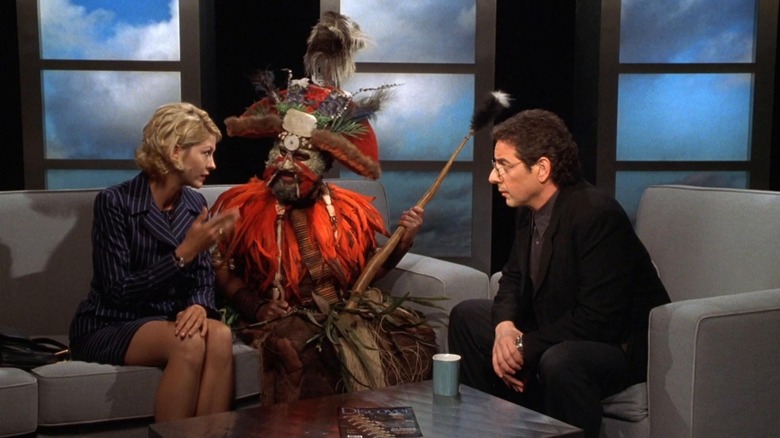
Many bad movies start from noble places. The divisive "Megalopolis," for instance, may register as awful to many, but at least writer/director Francis Ford Coppola had a conceptually noble intent. The dissonance between those starting points and the final result can be fascinating. Then there are bad movies that are rancid from the word "go," like "Krippendorf's Tribe." This was a cynical attempt to mimic the success of other Touchstone Pictures comedies starring Richard Dreyfuss, like "Down and Out in Beverly Hills" and "What About Bob?"
Cringeworthy derivativeness is far from the only problem here. Here, Dreyfuss plays Professor James Krippendorf, who, for convoluted reasons, poses himself and his family as a tribe of indigenous New Guinea people that he "discovered." This means white actors like Dreyfuss and Jenna Elfman dressing up in Blackface, "tribal" garbs, and engaging in stereotypical indigenous behavior that would've made the producers of 1933's "King Kong" recoil. Whereas dark comedies like the works of Bobcat Goldthwait use despicable people as springboards for bleak examinations of societal rot, "Krippendorf's Tribe" is a surface-level work wanting audiences to cheer on Krippendorf for getting away with his scheme.
The shocking racism and dehumanizing jokes permeating every inch of "Krippendorf's Tribe" are absolutely outrageous. These gags and caricatures were never okay, let alone in 1998. Disney needs to dump every "Krippendorf's Tribe" DVD in the same cavern "Song of the South" is confined to.