

5 Best Western Movies Of The 21st Century, According To Letterboxd
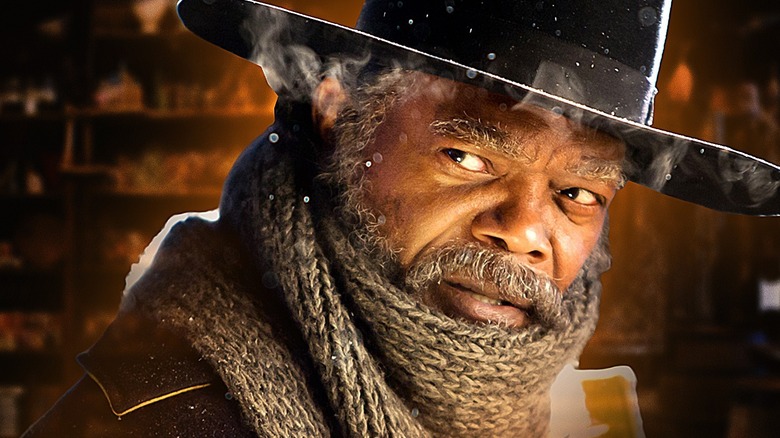
The golden age of the Western may be behind us, but there have still been a number of masterpieces in the genre released this century which rank among the very best in cinema history. Don't just take our word for it: The community of 25 million+ cinephiles on Letterboxd have rated dozens of this century's throwbacks and revisionist tales alongside the classics, with the top 100 featuring titles such as the Coen brothers' "True Grit," brutal and subversive tales like "The Proposition," and modernizations of the genre such as "Hell or High Water" and "Wind River."
None of those movies, however, have cracked the top five 21st century Westerns with the highest Letterboxd average rating. All films eligible for inclusion, according to user ClinTarantino (who curated the list based on site data), are those with a minimum of 2,000 logs from users, had a theatrical release, and weren't documentaries or animated films. In total, 16 movies from the 21st century are currently ranked within the Western top 100, and the titles listed below are all in the top 30 at the time of writing, with the first movie on the list currently sitting comfortably at No. 29.
Although we're fans of all the movies below, these aren't our personal picks. If you need more modern takes on the genre for your watchlist, you can check out our list of the 12 best Westerns of the 21st century here – but before you head there, these are the top five with the widest cinephile approval, courtesy of Letterboxd.
5. The Rider
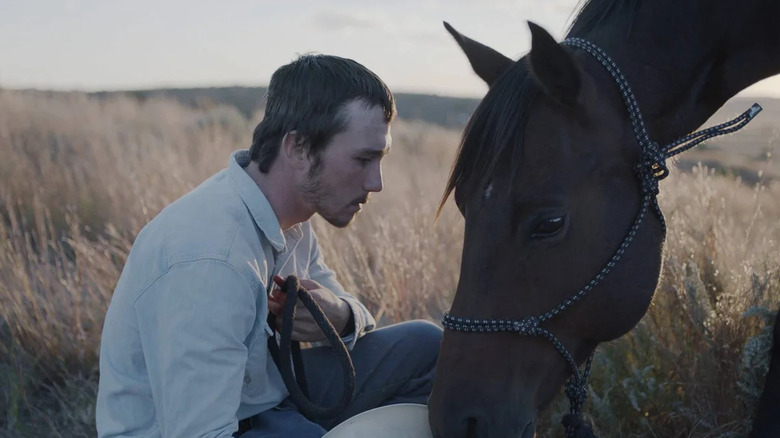
Before "Nomadland" brought her Oscar success and mainstream attention, director Chloe Zhao took us to South Dakota for this intimate 2017 drama, following a once-promising rodeo star (Brady Jandreau) who is still adapting to life after a severe brain injury caused by an accident in the ring. Zhao wrote "The Rider" specifically for the non-professional lead actor Jandreau, meeting him when visiting the Pine Ridge Reservation where her debut film "Songs My Brothers Taught Me" was shot.
Seeing him train a horse had her convinced that he was the new Heath Ledger and that he could carry a movie on his own, but it would take a few more years and several failed drafts before she settled on what her slice-of-life drama would be. Inspired by Jandreau's own brain injury — caused by a horse stamping on his skull, which landed him in a coma for three days, and footage of which is weaved into the drama — Zhao crafts a moving story about life in a cash-strapped town, and the tragedy of a man's gift that could get him out of there being the one thing which could end his life.
For deeper authenticity, Zhao built a cast comprised almost entirely of locals from the reservation playing lightly fictionalized versions of themselves (including her lead actor's own family and friends), working with them to ensure a naturalistic depiction of their community and culture. In our opinion, Zhao has yet to top this, despite making a classic indie with "Nomadland" and directing a blockbuster ("Eternals") right afterward. "The Rider" is one of the great Western tearjerkers.
4. The Hateful Eight
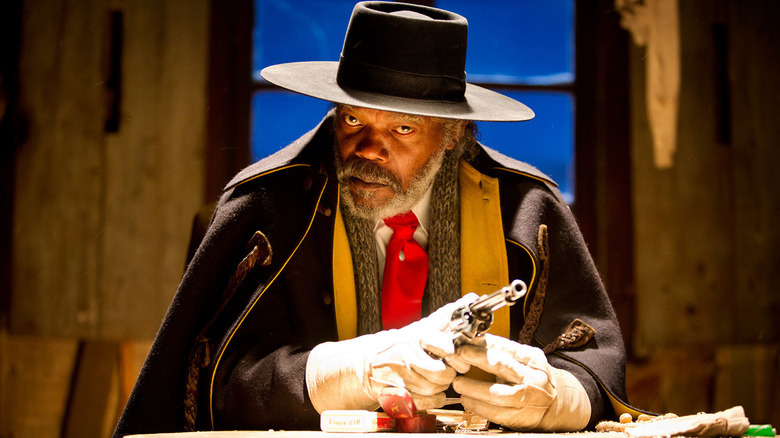
Quentin Tarantino is, of course, no stranger to controversy, but his 2015 Western reinvention of an Agatha Christie-style drawing room murder mystery seemed to be asking more than usual for a backlash. It was his second film in a row to directly wrestle with the racist sins of America's recent past, with the characters of "The Hateful Eight" thrown together as they shelter from a blizzard in a haberdashery, all broadly representing different sympathies and segments of a sharply divided society still reckoning with the Civil War's fallout.
Because this is Tarantino, this was represented in the least subtle way conceivable, with open, consistent racism, brutal violence against the lone female (Jennifer Jason Leigh's Daisy Donaghue), and a lone Black man (Samuel L. Jackson) who uses a forged letter from Abraham Lincoln to attain social currency in such a hostile climate. It was more divisive than any other Tarantino movie of this period, as well as the only one of his last four efforts to miss a best picture nomination and not achieve the same level of box office success (although an intimate chamber drama making $161 million is still a cause for celebration).
However, it has grown in esteem over the past decade to now have a 4.0 average rating among Letterboxd users, placing it as the 23rd highest rated Western on the site overall, and one of the best of this century. The reason why is as simple as it is unfortunate; it's not a period piece so much as a mirror held up to modern America, where the same divisions are rearing their ugly heads again. Revisited in 2026, it feels prophetic.
3. The Assassination of Jesse James by the Coward Robert Ford
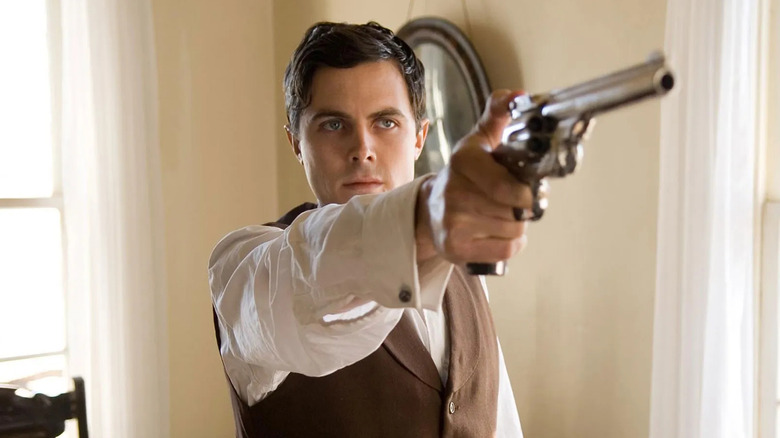
One of the most historically accurate Westerns ever made, director Andrew Dominik's 2007 film adaptation of Ron Hansen's acclaimed work of speculative fiction has a painstaking attention to detail when it comes to recreating the infamous final years of Jesse James' (Brad Pitt) life. To write his 1984 novel, Hansen pulled from sources including newspaper clippings, court reports, and recovered firsthand accounts to ensure the recorded facts remained at the backbone of his narrative, and Dominik followed suit when it came to faithfully adapting the source material.
The result is a true American epic which demythologizes one of the most legendary figures of the Old West, juxtaposing the ruthless outlaw with the directionless man (Casey Affleck's Robert Ford) eager to ride on his coattails. It's a story about the quest for fame and power, wrapped up in one of the most faithful biopics of an enduringly fascinating historical figure released this century.
On Letterboxd, "The Assassination of Jesse James by the Coward Robert Ford" is currently ranked just one spot above "The Hateful Eight" as the 22nd best-rated Western on the site. There are several reasons for its continuing appeal among cinephiles, including its poetic visual style (inspired by director Terrence Malick), which transforms set pieces like an early train robbery into transcendent moments of pure cinema. But it also endures because of its still-relevant insights into the pursuit of success, proving prescient in the social media era when everybody is trying to become an influencer at all costs; there are millions of clout-chasing Robert Fords walking among us.
2. No Country for Old Men
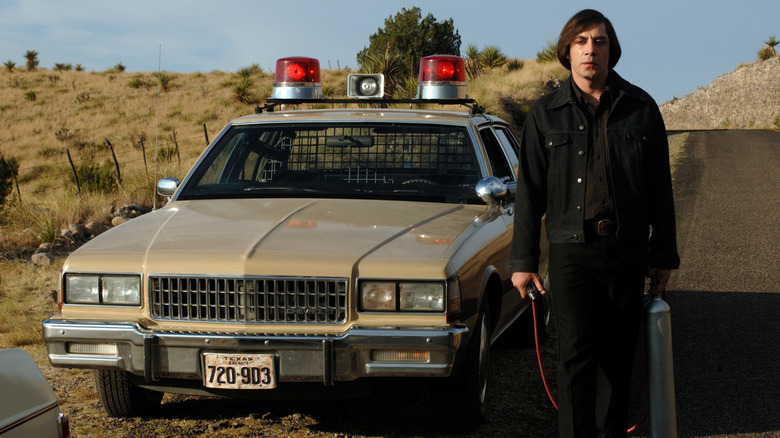
The fourth highest-rated Western of them all on Letterboxd, with an impeccable 4.3 average rating – making it the 151st highest-rated movie on the site altogether as we write this — Joel and Ethan Coen's 2007 adaptation of Cormac McCarthy's Texas-set neo-Western might be their definitive masterpiece in a filmography filled with them. Like most of McCarthy's work, "No Country for Old Men" is another tale exploring morality and fate with a near-biblical sense of divine punishment for anybody who violates society's codes — themes the Coens have often revisited in the many blackly comic noir films like "Fargo," "Blood Simple," and "Miller's Crossing" that anchor their filmography.
This might be their ultimate, and most thrilling, exploration of this morally knotty terrain, as hunter Llewelyn Moss (Josh Brolin) encounters dead bodies and a briefcase with $2 million linked to a drug deal gone wrong in the Texas desert. Taking that money puts him in the crosshairs of hitman Anton Chigurh (Javier Bardem), one of the most unfeeling psychopaths ever depicted on the big screen.
Although less elusively drawn than in McCarthy's source novel, the character is still a mysterious, almost supernatural embodiment of pure evil in Bardem's hands. He's a chilling eccentric who feels both out of time and out of place, with a nihilistic view of fate that acts as his grim justification for killing. It might not be the most traditional Western due to its contemporary setting, but you'd struggle to argue against Chigurh as one of the genre's most terrifying villains.
1. Django Unchained
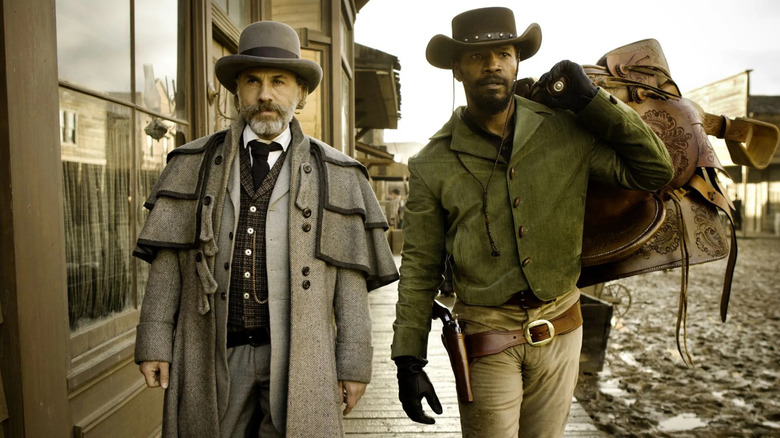
The third highest-rated western on Letterboxd, as well as the current 115th highest-rated film in the site's database, is Quentin Tarantino's blood-soaked 2012 tribute to Sergio Leone, a revenge movie that aims to offer the catharsis the history books can't. Whereas his previous movie, "Inglourious Basterds," imagined a massacre of the Nazi high command — including the execution of Adolf Hitler himself — "Django Unchained" moved back across the Atlantic to follow freed slave Django (Jamie Foxx) and eccentric German bounty hunter Dr. King Schultz (Christoph Waltz) as they navigate the Antebellum South to find Django's enslaved wife (Kerry Washington).
Along the way, plantation owners, Klan members and various others who profit from slavery are killed, and their worthwhile path of retribution leads them to plantation owner Calvin Candie (Leonardo DiCaprio), who forces his slaves to fight to the death.
The movie was Tarantino's biggest box office hit and the source of endless controversy because of its over-the-top, violent maximalism — but then, anybody expecting a nuanced, historically accurate depiction of humanity's worst crimes from this director should have known better. This is a movie which takes pleasure in ripping up the facts to get revenge on some of America's greatest villains. It's uninterested in being a tasteful, sensitively handled exploration of a period where unspeakable evil was so casual.
Depending on where you stand, it's either a rip-roaring crowd pleaser with larger-than-life villains you're eager to see killed, or a deeply offensive attempt to make popcorn entertainment out of unparalleled human suffering. Based on the consensus from Letterboxd users, it hasn't aged badly in the years since it was originally released; it may be an OTT revenge fantasy, but it never downplays the real-life horrors of its period setting.