

5 Most Historically Accurate Westerns Ranked
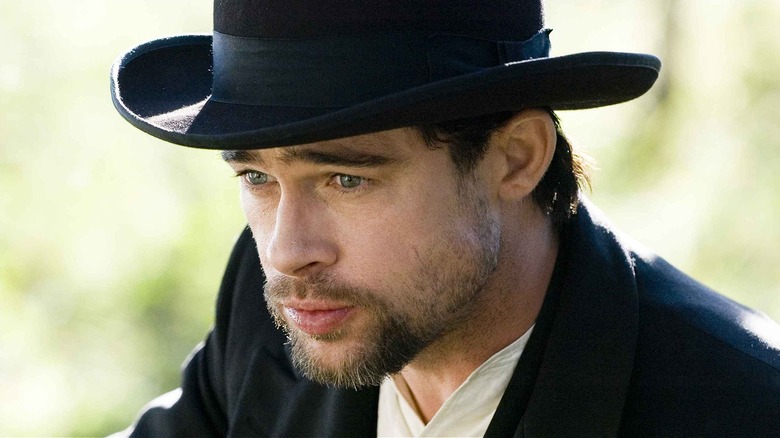
Perhaps the most famous quote of the Western genre arrives at the end of one of the all-time greatest, John Ford's 1962 film "The Man Who Shot Liberty Valance," released long after the genre's heyday: "When the legend becomes fact, print the legend." It's not only a summation of decades of Hollywood movies that mythologized the American West, but also a mission statement that filmmakers who arrived later would aim to subvert, with the idea of the countercultural revisionist Western gaining steam later in the 1960s. Not interested in traditional tales of heroism, the Western would increasingly become faithful to the history books; countering those mythical legends with darker, fact-driven narratives that borrowed liberally from recorded accounts of bygone eras.
The following five movies represent the best examples of this brand of historically accurate Westerns, flipping the script by disregarding old conventions and making something truer to the harsh realities of life. The demythologized titles on this list all offer realistic accounts of different events ripped from the history books, offering a more thoughtful perspective on American history via examining its darker corners.
Anybody who thinks a Western should be about showdowns between sheriffs, cowboys and outlaw gunslingers might be left cold by most of the titles below, but those who are desperate for grittier, more truthful accounts of survival during such a lawless time will find plenty to chew on here. Sometimes, the facts should be legends in their own right.
5. Bad Company (1972)
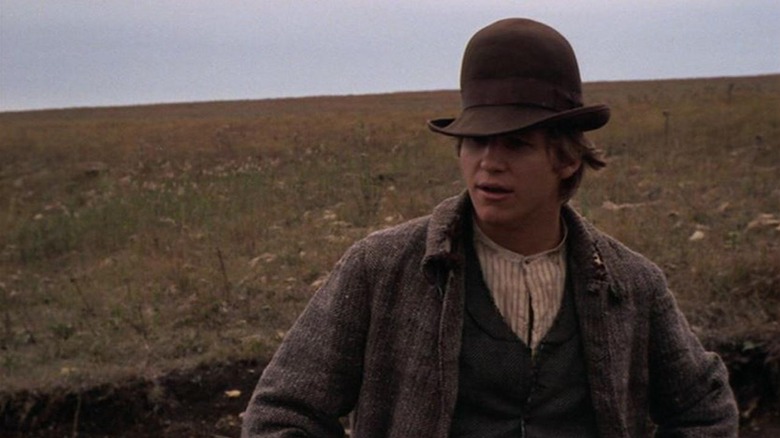
Alongside the rise of New Hollywood, a subversive wave of Westerns emerged in the late 1960s and early 1970s that aimed to demythologize the genre, which critics dubbed the "acid Western." The 1972 directorial debut of Robert Benton (who would make the Oscar-winning "Kramer Vs Kramer" later that decade) is one of the most scathing, with its Civil War setting barely disguising a critique of the Vietnam War draft.
The odyssey charts the experiences of a group of young men dodging conscription to the Union Army, using what little money they have to evade capture by the authorities and make it to the American West. Jeff Bridges leads as the charismatic thief Jake Rumsey, whose ragtag group grows further apart as they prove inept at making the ruthless decisions they need to survive in such an unforgiving landscape.
Told with a narrative structure closer to a series of vignettes than a conventional arc, "Bad Company" is impactful because of the way it documents the realities of life in the old West away from the romanticized tropes of a classic Hollywood Western. Watched now, it's more interesting as a historical document, capturing the damning anti-Vietnam sentiment of the time more vividly than many other movies during this period. Through modern eyes, the sprawling structure makes it seem less focused now that the subject matter is less prescient. Still, it lands with a punch, and should be considered essential viewing for anybody interested in the Civil War or the cultural fallout from Vietnam.
4. Heaven's Gate (1980)
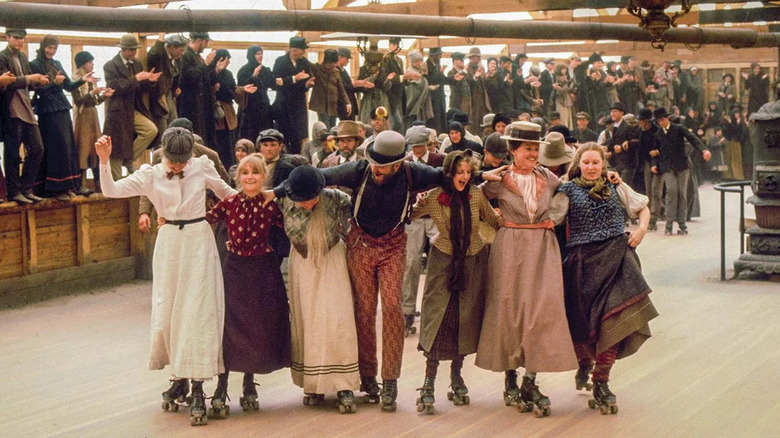
A box office bomb so infamous it remains a shorthand for a blockbuster flop nearly 50 years later, the critical consensus on director Michael Cimino's follow-up to the Oscar-winning "The Deer Hunter" has gradually swung back towards misunderstood masterpiece territory in recent years.
At an exhaustive 207 minutes, it's as epic a Western as they come, and certainly as brutal — it charts the Johnson County War in 1890's Wyoming, in which wealthy cattle barons drew up death lists of European immigrants. That dark, under-discussed moment in American history had also inspired "Shane" a few decades prior, although that was a far more traditionally crowd pleasing Western; "Heaven's Gate" closes out with a bloodbath that follows hours of existential despair. It's almost a joke that the movie is named after the roller rink that provides one of the few light scenes.
Cimino's film is a heavily researched account, but the depictions of real-life figures — such as Kris Kristofferson's Sheriff Jim Averell, and his partner Ellen Watson, played by Isabelle Huppert – deviated heavily from recorded fact. Both were killed two years before the conflict began, with no record that they knew Nate Champion (Christopher Walken), the third axis in their love triangle, or that Ellen operated a bordello. These inventions feel like the darkest parts of Cimino's research of the era were superimposed onto reality, which is why it's such a beguiling oddity. It's playing fast and loose with some facts, whilst remaining faithful to the overarching events in all their darkness. As an unforgettable epic it deserves its critical reassessment. There's still plenty here that needs to be taken with a grain of salt.
3. Meek's Cutoff
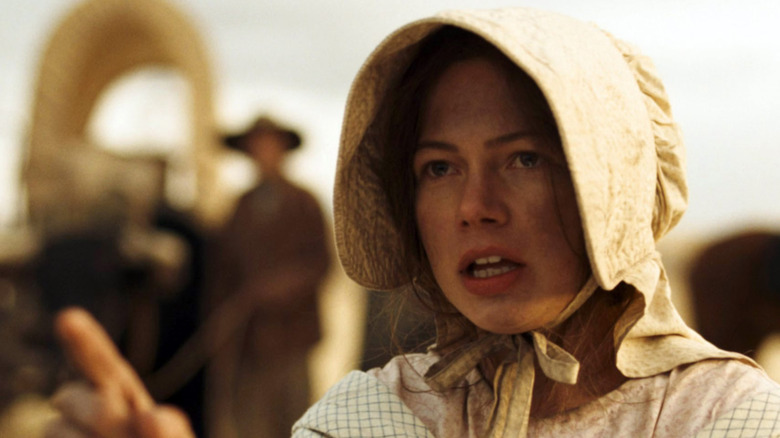
Kelly Reichardt is one of the most interesting American directors working today, and even with recent films "First Cow" and "The Mastermind" generating an increase in critical attention, it still feels like she hasn't received proper due for her subversive, textured approach to traditional genre filmmaking. Her take on the Western, 2010's "Meek's Cutoff," was born after discovering the true tale of Stephen Meek, whose 1845 attempt to lead a group of settlers through the Oregon Trail ended badly after he got lost on the way.
In addition to a painstaking attention to period accuracy — Reichardt and screenwriter Jonathan Raymond read extensive diaries from women who embarked upon the trail, capturing as much of their monotonous daily routines on the frontier as possible — "Meek's Cutoff" feels as realistic as a survival story can, in ways which confront the myth-making of the genre.
Throughout, she directly contrasts the cowboy imitating persona of the fur-trapper Meek (Bruce Greenwood) with the impoverished families entrusting him on their journey, exploring the stark imbalance of power between them, as well as the relationship between a mythic archetype and the graver realities of a hard to tame land. Although one of the shorter films on this list, at a brief 104 minutes, Reichardt's absorbing anti-Western demands audience patience as it slowly unravels genre conventions with an expertly researched account of survival. If you can get on its wavelength, you'll be rewarded with one of the most historically accurate 21st century takes on the genre.
2. The Assassination of Jesse James by the Coward Robert Ford
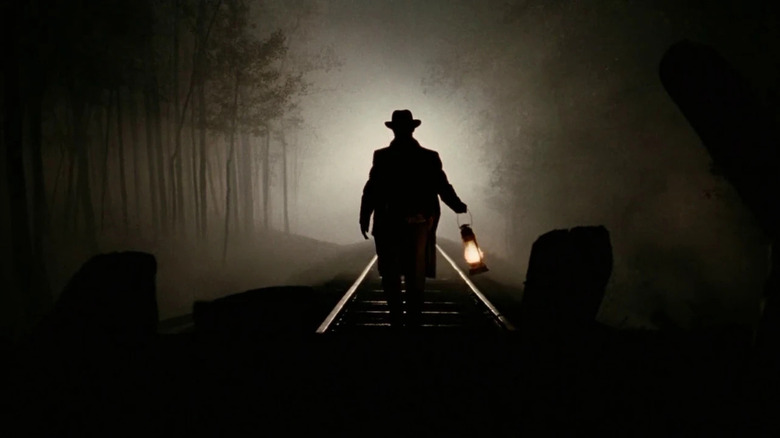
Adapted from the 1983 novel of the same name by Ron Hansen, "The Assassination of Jesse James by the Coward Robert Ford" was the rare work of revisionist historical fiction to be warmly received by skeptical historians. In the source material, the author pulled from a wide array of sources including newspaper clippings, court reports and recovered firsthand accounts to construct his narrative, pairing this with a contemplative point-of-view from its titular characters that further deconstructed their mythology without straying from recorded fact.
Several critics dubbed the novel "cinematic," so it's a surprise that not only did it take another 23 years for an adaptation to arrive, but that it failed to connect with audiences. Admittedly, this is likely because director Andrew Dominik drew inspiration from the work of Terrence Malick, whose distinct, absorbing mix of period Americana and contemplative internal monologues (such as "The Tree of Life" and "The Thin Red Line") are a fitting influence, albeit one that was always going to leave the mainstream cold. Even Malick said it was "too slow" for him.
This is a shame, because as well as offering one of the most gorgeously realized depictions of the ruthless old West ever put on film — the early train robbery sequence is pure cinematic poetry, staggering beauty co-existing with visceral brutality — "The Assassination of Jesse James by the Coward Robert Ford" effectively deconstructs the archetypes of the genre by retelling the story of the most famous outlaw of them all. Dominik described the film as a "dark examination of fame and infamy," but it goes beyond the central case study of twisted hero worship to interrogate who creates the myths that turn minor historical figures into legends.
1. McCabe and Mrs. Miller
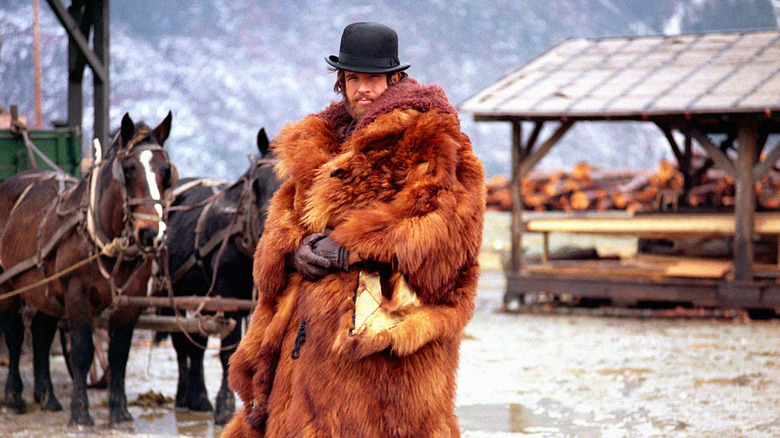
Another revisionist Western that was greeted with a cold shoulder by critics and audiences, Robert Altman's "McCabe and Mrs. Miller" took a quicker path towards a cult audience due to the director's string of masterpieces throughout the 1970s. Adapted from Edmund Naughton's 1959 novel "McCabe," Warren Beatty stars as the titular gambler. He arrives in a small Washington church town to establish a brothel, teaming up with the shrewd British expat Constance Miller (Julie Christie) to build their business further. When a mining organization known for killing off rivals who don't want to sell their business come knocking, the unlikely pair must stand against a string of hired guns.
Unlike many of the other titles on this list, "McCabe and Mrs. Miller" doesn't have its basis in recorded historical fact. It still offers a raw, more authentic look at life in this time and region than much else in the genre, breaking from Western archetypes to offer a grounded approach. This was entirely by the director's design, later admitting that his attraction to the source material was because it was "the most ordinary common Western that's ever been told" and "no great piece of writing," featuring every cliched genre stereotype you could come up with.
Altman was interested in finding the authentic truth that pre-dated the archetypes, researching costumes and dialects, and ensuring his hero remained a "blustering kind of guy" rather than a hardened outlaw. Placing this front and central within a traditional narrative structure for the genre produced something singular and unforgettable, making it our top pick.