

5 Box Office Hits From The 2000s That Changed Hollywood Forever
The first decade of the 21st century was a momentous time for theatrical cinema. This artform was now a little over a century old, yet people were still flocking to big screen wonders utilizing cutting edge visual effects and new approaches to storytelling. The 2000s delivered countless all-time great masterpieces from all over the world ranging from intimate dramas to sprawling epics. Great movies can look like anything, and the apexes of 2000s filmmaking reaffirmed this truth with startling artistry.
Then there were the box office titans of this decade. The 2000s not only possessed tremendous moneymakers, but there were also hits that proved lastingly influential on every corner of cinema. While the 2000s saw more films open to mighty numbers only to crumble after opening weekend than ever before, there were also lucrative enterprises that influence movies to this very day, with five especially notable box office hits from the 2000s changing Hollywood forever. How did they permanently upend the film industry?
Some of these films reaffirmed the financial viability of once doomed genres. Others solidified the filmmakers who were in vogue with audiences. Whatever informed their legacies, ripple effects from these five 2000s box office hits are still reverberating through modern cinema.
Knocked Up
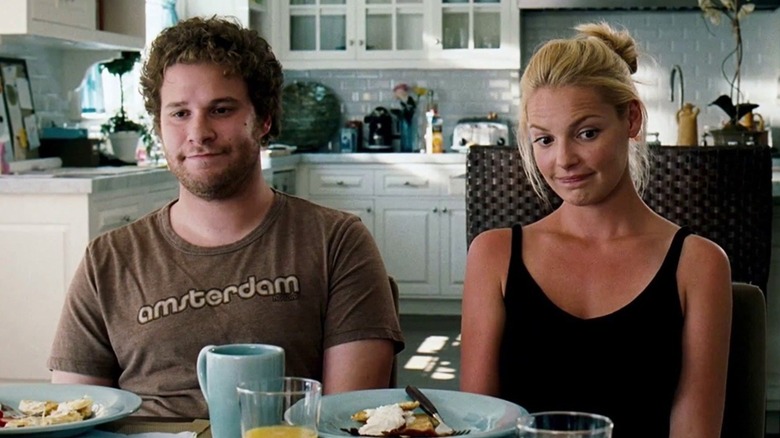
Though its worldwide gross wasn't as gargantuan as the other four films on this list, Judd Apatow's 2007 "Knocked Up," widely considered one of Seth Rogen's best movies, was as toweringly influential as any other 2000s hit. The 14th biggest movie of 2007 domestically and the year's second biggest R-rated movie, "Knocked Up" was, at the time, the sixth biggest R-rated comedy of all time. That put it alongside R-rated yufkests like the first two "Beverly Hills Cop" installments or "Scary Movie," which had action scenes or franchise appeal that bolstered their success. "Knocked Up," meanwhile, was a grounded comedy following ordinary people relying on improv-driven comedic dialogue.
The success of "Knocked Up" didn't just prove that Apatow's 2005 "The 40-Year-Old Virgin" wasn't a box office fluke. It also reinforced that comedies didn't necessarily need an outsized wacky character like Austin Powers or the high-concept premises underpinning many Jim Carrey star vehicles to dominate the box office. The Judd Apatow style of R-rated comedy became prominent from then on, delivering further moneymakers like "Bridesmaids," "The Heat," and even "The Hangover."
Even in the 2020s, theatrical comedies like "Bros" clearly take cues from what made "Knocked Up" such a box office monster. This 2007 Rogen/Katherine Heigl vehicle didn't just upend the big screen comedy. It totally redefined how it operated.
The Lord of the Rings: The Fellowship of the Ring
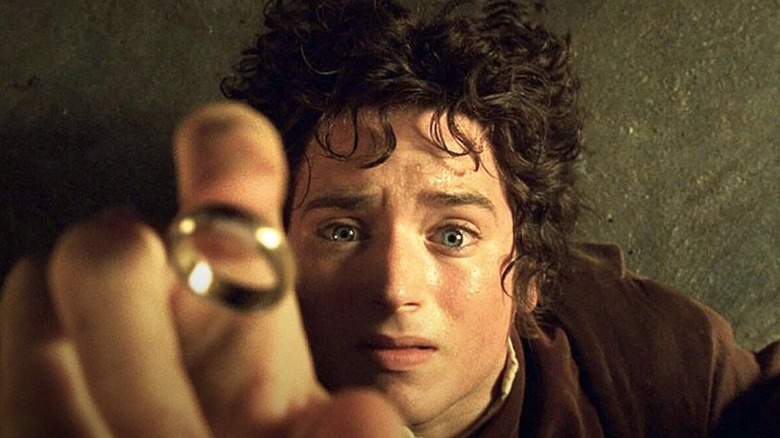
Today, all three features comprising the "Lord of the Rings" trilogy are considered the best fantasy films of all time. However, before beginning with 2001's "The Lord of the Rings: The Fellowship of the Ring," it was seen as nothing short of madness for New Line Cinema to invest so much in a trio of adaptations of seemingly unfilmable novels. "Maybe it'll stink. Or maybe it'll be 'Star Wars,'" former New Line Cinema head Michael De Luca declared about the proposed trilogy in 1999 (via Newsweek). As late as January 2001, "Fellowship of the Ring" was still seen as a potentially catastrophic enterprise in the making. Of course, nobody had any reason to worry, as Middle-Earth proved a sublime realm to make major box office dollars.
With $313.36 million alone from its initial domestic release (subsequent re-releases have brought it up to $325.87 million) and $897.53 million worldwide, "Fellowship of the Ring" was a massive hit. Not only were the next two "Lord of the Rings" installments good to go in their box office prospects, but the once risky process for making these films became the go-to mold for big Hollywood franchises. Shooting multiple sequels simultaneously became a common occurrence for sagas like "The Matrix" and "Pirates of the Caribbean."
While this ubiquity resulted in the worst two-parter movies of all time, it nevertheless reflects the impact "The Fellowship of the Ring" left on the Hollywood landscape.
Batman Begins
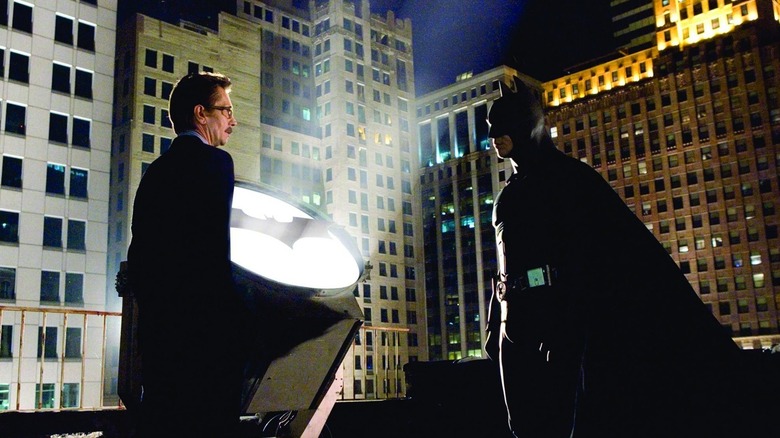
"Batman Begins" did far more than revive the Batman brand name for Warner Bros. after 1997's "Batman & Robin." It also established a new mold for how Hollywood could exploit familiar brand names. Remakes? That was so 1997. The hot new term on the lips of every studio executive was "gritty reboot." Taking recognizable intellectual property and giving it an origin story emphasizing tactile reality was seen as an easy way to print money. 2006's "Casino Royale" proved this mold worked for James Bond, making "Batman Begins" no fluke.
From here on out, "Batman Begins" was the go-to reference point anytime Hollywood wanted to revamp some old IP. Titles ranging from "Sherlock Holmes" to 2014's "Godzilla" to "The Amazing Spider-Man" took obvious cues from "Batman Begins" in making their titular leads "relevant" again. Of course, the endless list of reboots that bombed at the box office prove that this corporate modus operandi wasn't a surefire way of revitalizing franchises. Still, this surface-level approach continued even a decade later with titles like "Terminator: Genisys."
Christopher Nolan's inaugural foray into blockbuster cinema was nothing short of a game-changer. Even franchises that existed before Tim Burton's "Batman," like the "Star Trek" films, started delivering reboots emulating "Batman Begins." And to think, Batman didn't even need "hockey pads" to change tentpole filmmaking forever.
Spider-Man
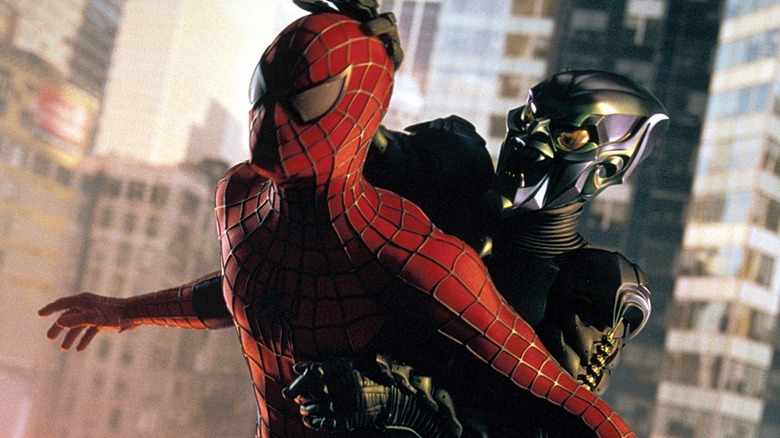
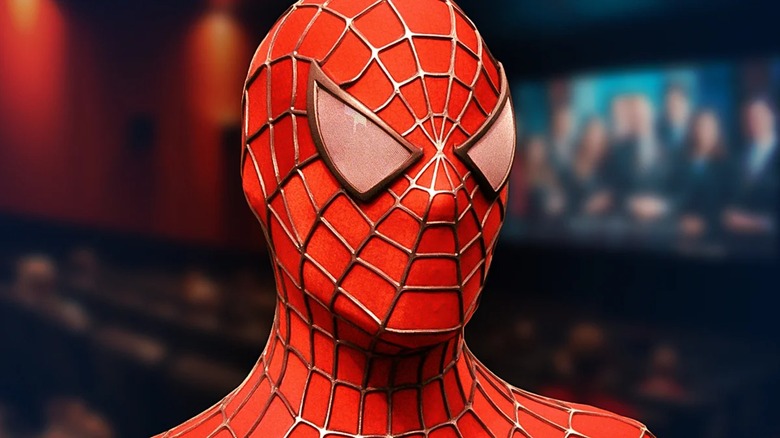
1998's "Blade" finally brought live-action Marvel Comics movie adaptations back to respectability after "Howard the Duck," one of those '80s box office bombs that changed Hollywood forever, seemingly tainted such titles permanently. Then there was 2000's "X-Men," which further suggested that "Blade" wasn't a one-off. 2002's "Spider-Man," though, really opened up the floodgates and showed just how massive superhero films could be. In its domestic opening alone, "Spider-Man" rewrote all box office rules with a $114.8 million debut, the first time ever a movie cracked $100+ million domestically over its opening weekend.
From there, its $400+ million North American sum was a rallying cry for movie studios. Though major 2003 Marvel Comics movie adaptations like "Daredevil" or "Hulk" were already either filming or deep in pre-production when "Spider-Man" debuted, these box office numbers sent Hollywood scrambling for more. Just three years after "Spider-Man," Marvel Studios was established to make independent homegrown movies based on its characters. Batman and Superman returned to the big screen by the middle of the 2000s, studios like 20th Century Fox and Disney got any superhero movies (ranging from "Fantastic Four" to "Sky High") green-lit, while Sony/Columbia Pictures continue producing new Spider-Man movies to this day.
If you ever wonder why your local theater is crammed with superhero movies, it all comes down to "Spider-Man" excelling at the dawn of the 2000s.
Transformers
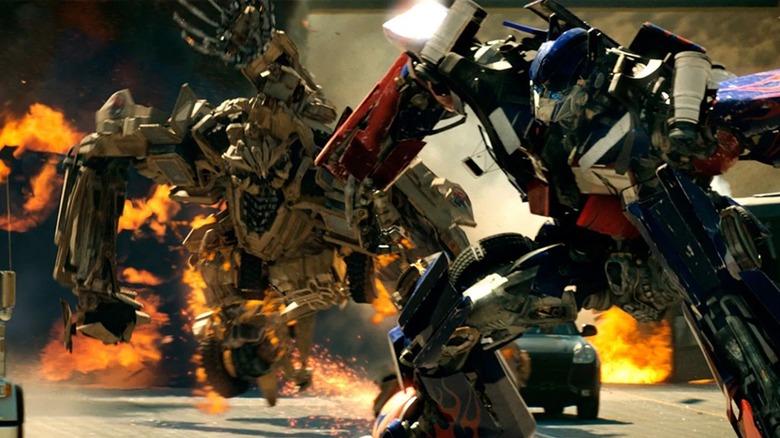
"Battleship," a box office bomb from the 2010s that changed everything, ensured that "Transformers" didn't precede an endless deluge of movies based on toys. While it didn't immediately catapult Hollywood into a world of "Stretch Armstrong" and "Monopoly" movies, "Transformers" left a lasting impact on the American film industry. Director Jon Favreau took serious cues from the title when conjuring up the visual effects for "Iron Man." Specifically, visual effects house Industrial Light & Magic's breakthroughs on metallic surfaces for "Transformers" convinced Favreau that this entity could handle fully CG versions of Iron Man's mechanical armor, while the movie later influenced its promotional lead-up.
Similarly, early 2010s titles like "Real Steel" featured robots clearly taking cues from the live-action incarnations of the Autobots and Decepticons. Then there was the sonic legacy of "Transformers." The whirring and clanking noises that the film's robots emit when transforming is one of the title's most distinctive elements. Hollywood took notice and began deploying the "Transformers" sound team at every opportunity. Since his work on the 2007 title, sound designer Erik Aadahl has worked on all kinds of blockbusters, including "Project Hail Mary" and the "Sonic the Hedgehog" trilogy.
The enduring influence of the "Transformers" sound team only further reflects that it's LadiesMan217's world, and we're just living in it.